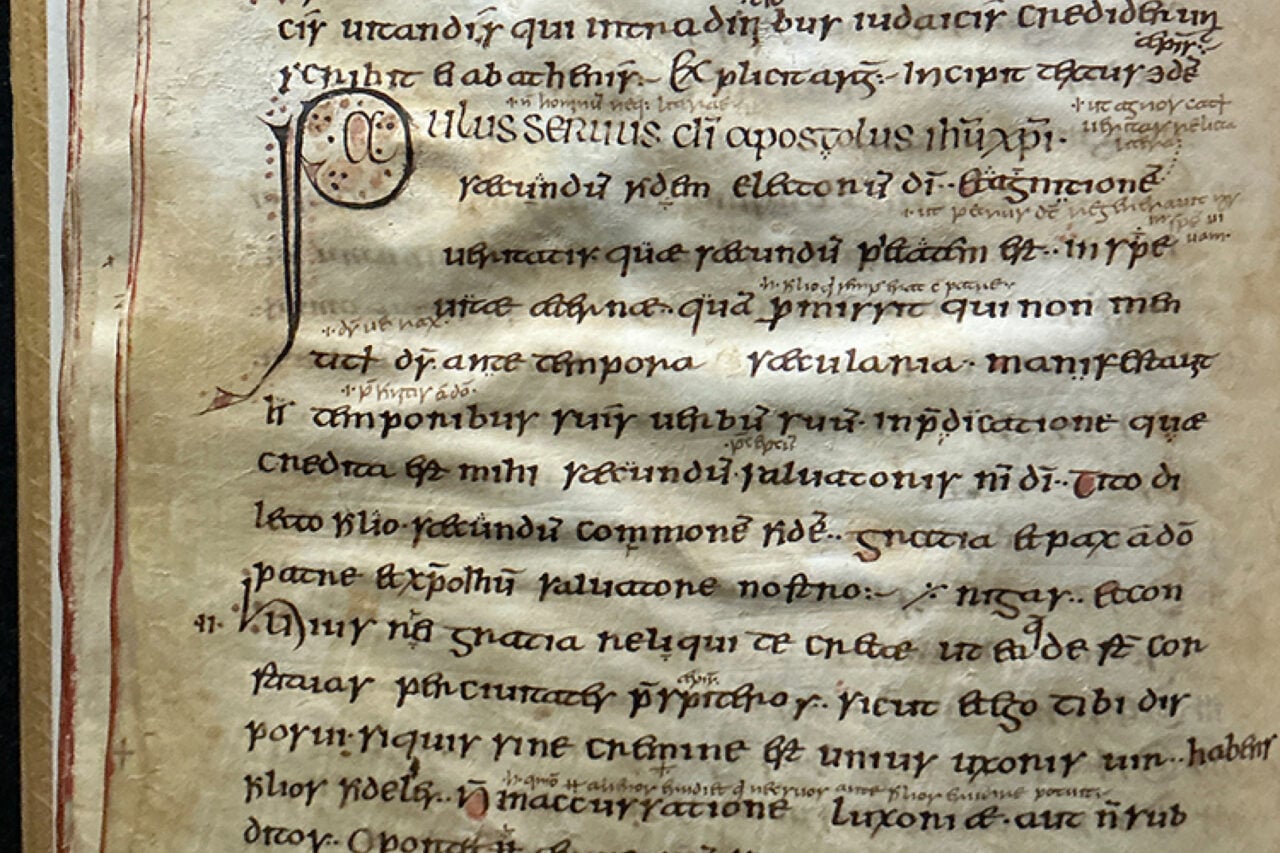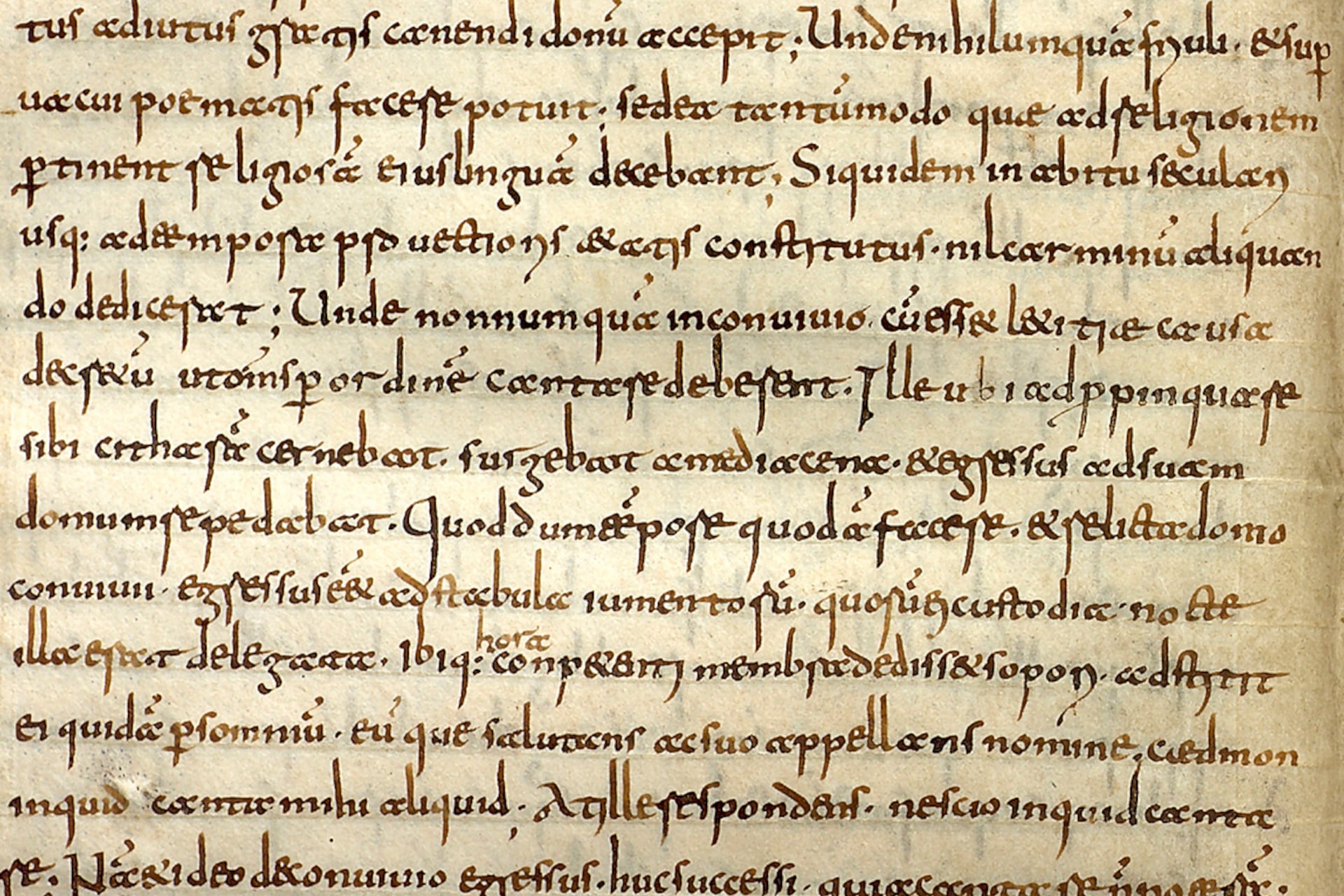
The poet who composed the oldest surviving English poem was apparently illiterate, unmusical, and a common cowherd from Whitby, North Yorkshire, in what is now the U.K. And we now have the original manuscript written in Old English.
To be clear, this is the third discovered copy of the poem Hymn by Caedmon the cowherd. The manuscript was included in the Ecclesiastical History of the English People by Bede, a northern English monk, and dates between the years 800 and 830. Although the two previously found copies are slightly older, these were mostly written in Latin with some Old English in the margins or at the end. By contrast, the newest discovery has the poem’s main body text in Old English, demonstrating a growing interest in the language at the time, according to a recent study on the findings, published in Early Medieval England and its Neighbours.
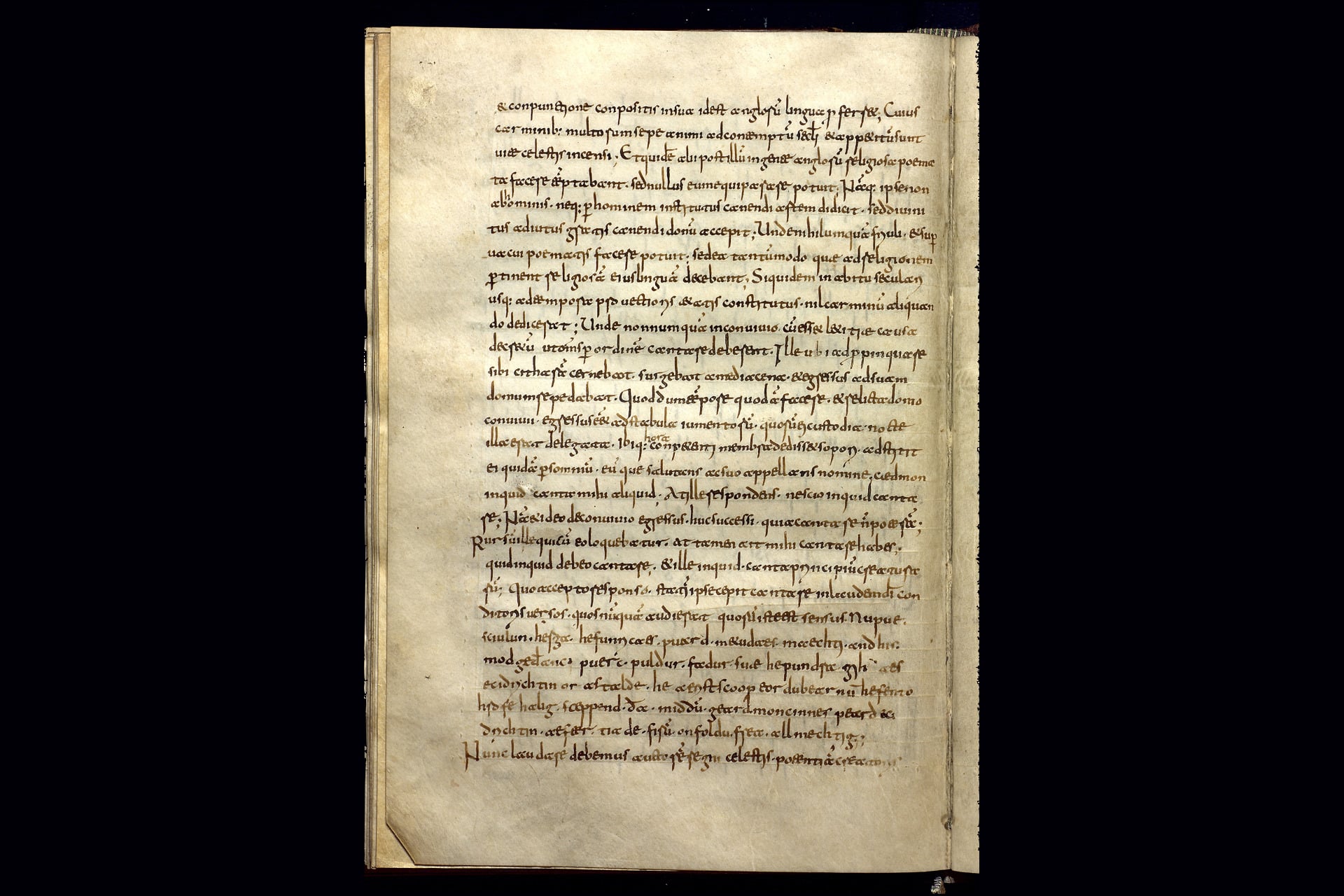
“Unearthing a new early medieval copy of the poem has significant implications for our understanding of Old English and how it was valued,” Mark Faulkner, the study’s co-author and a historian at Trinity College Dublin in Ireland, said in a statement. “It is a sign of how much early readers valued English poetry.”
A tumultuous history
Caedmon’s Hymn reportedly emerged from a divine visit that allowed the illiterate laborer to recite “nine lines of intricately woven poetry praising God for creating the world,” according to the statement. Bede included the poem in his book, initially written around 731 CE but transcribed by his followers in later periods.
Researchers believe there are at least 160 surviving copies of Bede’s History, but the latest discovery suffered a particularly “torrid” history, the researchers explained. After someone transcribed the copy in Italy between 800 and 830 CE, the manuscript was stolen during the Napoleonic Wars in the 1810s. Then the document passed through several private collections before the National Central Library of Rome in 1972, according to the paper.
But its troubled provenance meant some scholars thought the manuscript was lost to time, Elisabetta Magnanti, the study’s co-author and a historian at Trinity College, told The Guardian. It was thanks to the library’s decision to digitize its collections that Magnanti and Faulkner were able to identify the old poems.
“When we saw it, we looked at each other and I said, ‘No one knows about this,'” she said. “To make sure I wasn’t dreaming, I double-checked the catalogues and there was no mention of it. It was a huge surprise, a very good one.”
English before it was cool
The newly discovered manuscript offers some refreshing insights into the English language, according to the researchers. For instance, the team notes how the text given in Old English opens up alternative translations for certain parts of the Hymn, which was previously available only in Latin. At the same time, the presence of Old English in a significant piece of literature from the era suggests that it was “valued by Bede’s readers,” the team said.
“Bede chose not to include the original Old English poem in his History but to translate it into Latin,” Faulkner said in the statement. “This manuscript shows that the original Old English poem was reinserted into the Latin within 100 years of Bede finishing his History.”
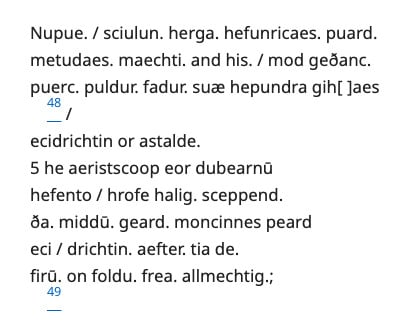
What’s more, the poem was punctuated with a full stop after nearly every word. This implies that word spacing was a relatively new invention at the time, Faulkner explained to The Guardian. As such, the poem represents historical evidence of how English grew to be the language we’re familiar with today.
“About three million words of Old English survive in total, but the vast majority of texts come from the tenth and eleventh centuries,” Faulkner said in the release. “Caedmon’s Hymn is almost unique as a survival from the seventh century—it connects us to the earliest stages of written English. As the oldest known poem in Old English, it is today celebrated as the beginning of English literature.”