The historical lore behind the Shroud of Turin is fascinating. Notwithstanding the grand claim that the linen cloth enveloped Jesus Christ himself, the exact origins and genetic content of the relic have long been contested by experts and history enthusiasts alike. But the latest study of DNA traces on the shroud suggests that confirming the presence of anyone—let alone Jesus—might be near impossible.
The findings follow a 2015 study led by the same researcher, Gianni Barcaccia of the University of Padova in Italy, which suggested the shroud was manufactured in India. The latest paper, which has yet to be peer-reviewed, found an achingly diverse array of medieval and modern DNA belonging to humans, animals, and plants. In fact, the collection is so varied that metagenomics—the study of genetic samples extracted from the environment—won’t grant us much definitive evidence for its true age or genetic origin.
“The shroud came into contact with multiple individuals,” the researchers wrote in the paper, currently available as a preprint on bioRxiv, “thereby challenging the possibility of identifying the original DNA of the shroud.”
Some quick history
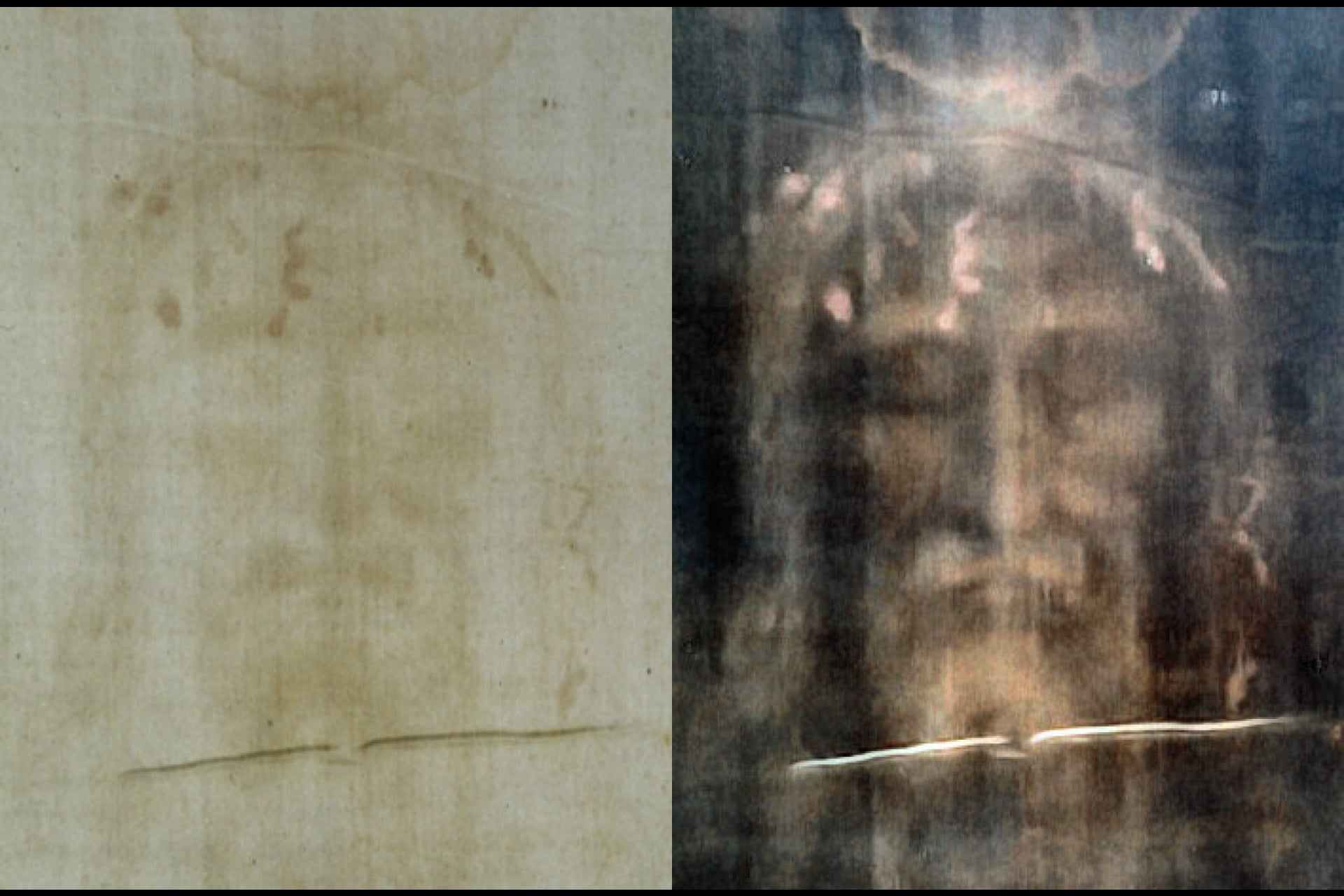
The Shroud of Turin is a piece of linen cloth about 14.4 feet (4.4 meters) long and 3.6 feet (1.1 meters) wide. Imprinted onto the fabric is an image of a crucified man that “millions believe to be Jesus of Nazareth,” according to a webpage published by the Shroud of Turin Education and Research Association, Inc.
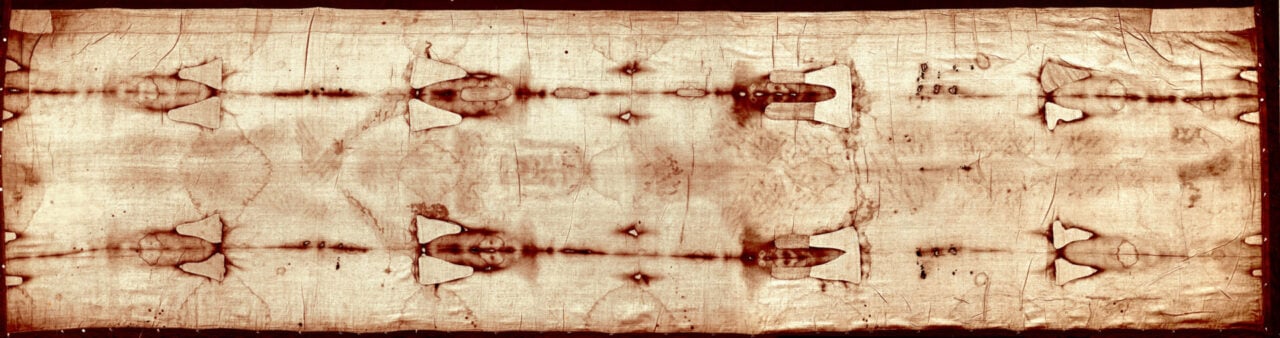
According to PBS, the shroud’s first “definite” historical appearance comes from a 1389 document that called the relic a forgery. The cloth then underwent multiple changes in ownership—even surviving a fire—until landing at Turin, Italy, where it has generally remained since. Currently, the shroud rests at the Chapel of the Holy Shroud (yes, dedicated to the shroud) in Turin.
And some science
In 1988, a team of British, American, and Swiss researchers gained permission from the Vatican to perform independent radiocarbon dating tests. A 1989 paper on the analysis concluded that the shroud likely dated back to between 1260 and 1390 CE—long after the passing of Jesus (presumed to be sometime around 33 CE). This study garnered some resistance from other scholars, but “most researchers consider it sufficiently robust,” Anders Götherström, a paleogeneticist at Stockholm University in Sweden who wasn’t involved in the new work, told New Scientist.
On a different note, direct investigations into the shroud have been rather limited, as papal authorities are reluctant to offer up any more samples from the treasured cloth, according to a Chemistry World column.
Revisiting old DNA
For the latest study, the team studied 12 samples collected from the shroud in 1978, taken from “different parts of the body image,” as well as threads from the shroud gathered for the 1988 investigation. To see how human DNA could contaminate cloth, the team also created an artificial sample and obtained DNA samples from the purposely contaminated linen, according to the paper.
The analysis traced genetic data back to at least 19 plant species common to the Mediterranean and others from China, the Middle East, and the Americas. There were also whiffs of animal and fish DNA. Overall, the team wasn’t able to confirm when these plant and animal contamination events occurred.
As for the human DNA, there appeared to be at least 14 humans of different geographic ancestry, with 55.6% corresponding to “lineages from the Near East” and 38.7% of Indian descent, the latter of which the team believes is linked to where the fabric itself came from.
What now?
The study concludes on somewhat of a bland note: “Collectively, our findings illuminate important aspects of the shroud’s preservation history.” That is, the few samples directly taken from the shroud reveal less data about the relic’s inception and more about its constant exposure to human activity.
The pessimistic take is that, perhaps, we’ll likely never know for certain the exact origins of the shroud. But as Götherström told New Scientist, the 1989 study is probably correct in its conclusions that the shroud came from France between the 13th and 14th centuries.
Also, here’s the thing—and I say this as a baptized Catholic—even if the shroud isn’t from 1 CE, its documented history alone seems to me a genuinely fascinating tale of religion, science, and history. As Italy’s own page on the Chapel notes, “regardless of opinions about the authenticity of the shroud,” you’ve got to admit that the thing is an important piece of cultural heritage.
Correction: April 2: The article was updated after publishing to better reflect the year of Jesus’ passing, which is still contested.