Theoretically speaking, black holes should breathe stuff out as they suck stuff in. But for 50 years, astronomers weren’t able to confirm this was true for the supermassive black hole in our own galaxy—until now.
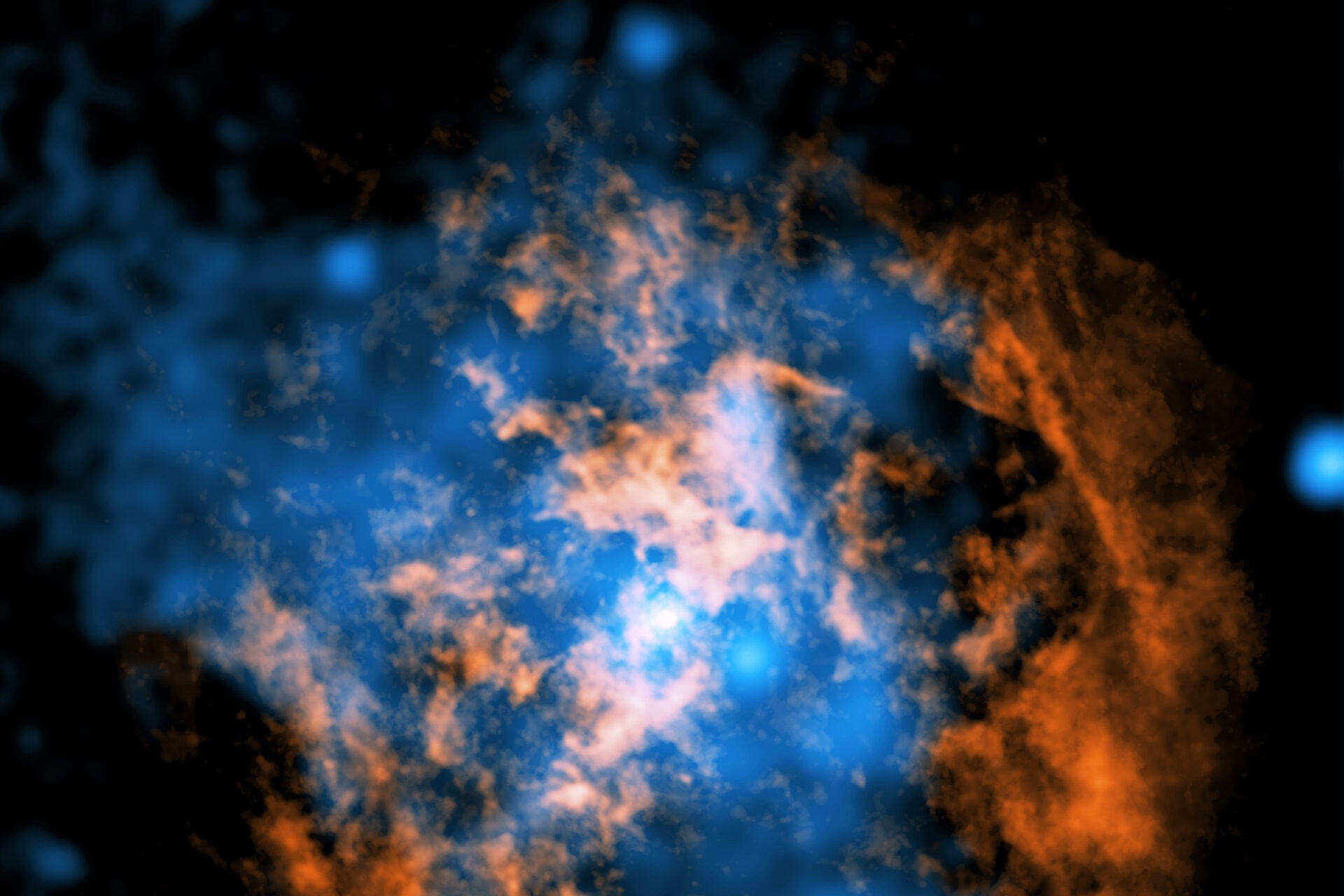
In a study published yesterday in The Astrophysical Journal Letters, astrophysicists at Northwestern University presented potential evidence of a giant, cone-shaped hole in the cold gas surrounding Sagittarius A*, the supermassive black hole at the center of the Milky Way. When the team calculated how much energy was required to create this cavity, they found there had to be some input from the black hole—something like a powerful wind or jet. To arrive at these conclusions, the team compiled five years’ worth of observations by the Atacama Large Millimeter/submillimeter Array (ALMA) in Chile.
“Unless a black hole exists in a perfect vacuum, it must blow a wind somehow,” study co-lead author Mark Gorski said in a statement. “With new observations, this is the first time we’ve had a clean enough view to see the wind’s imprint. We looked at the data and said, ‘There it is. There is the thing that everybody’s been looking for for 50 years.’”
The edge of chaos
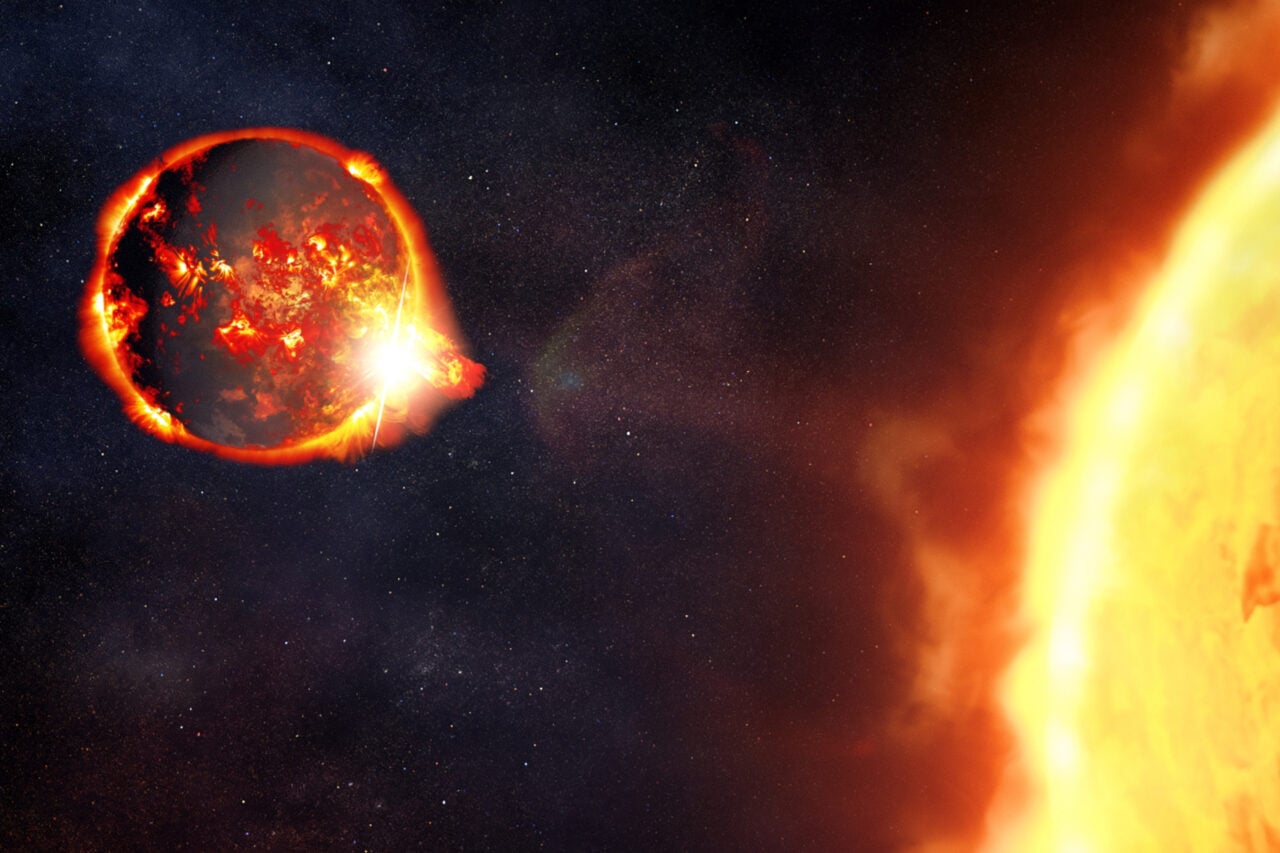
All sizeable galaxies have a supermassive black hole at their center. According to the study, these black holes are crucial to galaxy evolution. As black holes are “fed” materials, the stuff getting sucked in spirals inward and eventually approaches the speed of light. The energy and pressure generated in this process produce hot, powerful winds that fly outward from the black hole, the paper explained.
Existing theories are fairly good at capturing these processes—partly why astrophysicists predicted in 1971 that Sagittarius A* would also generate winds and jets. However, given the logistical challenges of studying black holes, there hasn’t since been a “universally accepted signature of a presently active wind from Sagittarius A*,” the study noted.
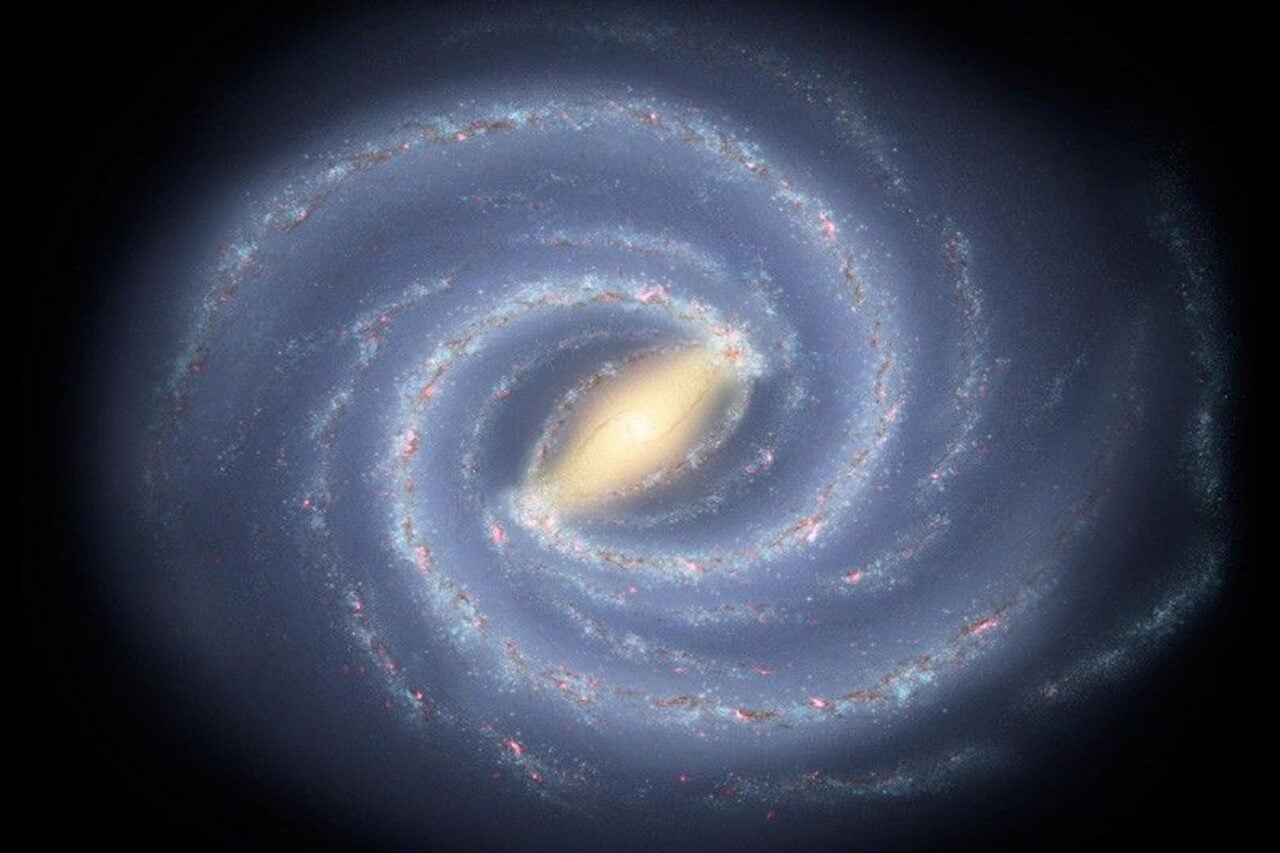
“To observe our own black hole, we have to look through the plane of our galaxy,” co-lead author Elena Murchikova explained. “That means we have to peer through gas, dust, and ionized structures, and you can’t really see through all of that easily.”
Seeing past the chaos
With ALMA data, Gorski and Murchikova managed to see through all of the gas, dust, and ionized structures. After carefully removing the black hole’s radio glow, they landed on a sharp image of a giant, cone-shaped cavity devoid of cold molecular gas. The discovery left the pair “gobsmacked,” according to the statement.
“It’s a huge absence of material,” Gorski said. “We calculated how much energy was needed to create this cavity. It is more than can be provided by the stars in that area. Basically, there has to be input from the supermassive black hole. And, if you follow the shape of the cone, it’s pointed directly at the black hole.”
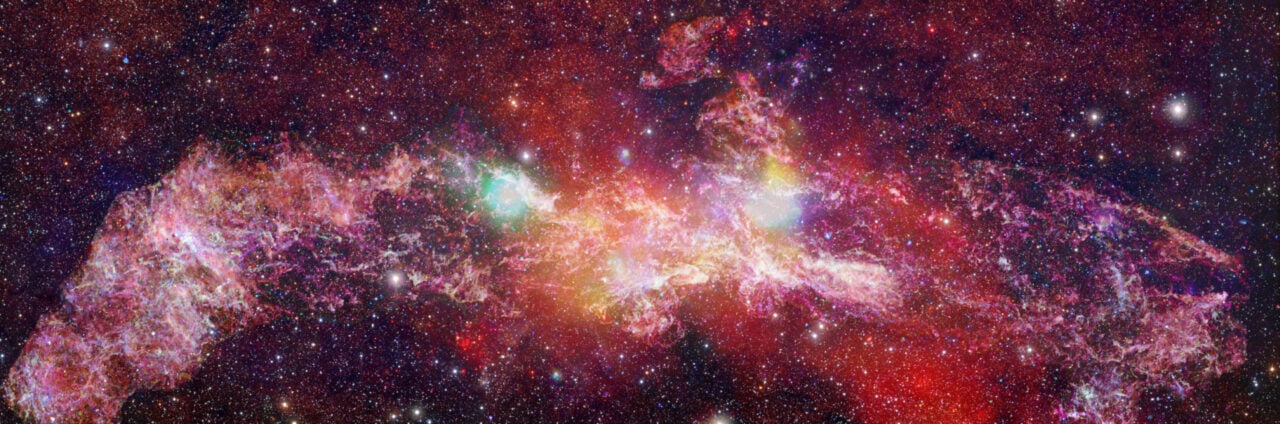
In fact, the cone was so strange that Murchikova’s first instinct was to doubt her own analysis. But the researchers’ apprehension faded as additional X-ray data from the Chandra Observatory “slotted in perfectly” with their initial results, Gorski added.
Not an exception
Once the team became certain of its discovery, the researchers put together a list of what they currently understood of the wind, such as its orientation, activity, and strength. The study’s estimates indicate the wind has been active for at least 20,000 years. Compared to some other known galactic jets, the wind is on the weaker side.
Perhaps most importantly, Sagittarius A* is a “typical example” of underfed, dormant supermassive black holes in the universe, the paper noted. Certainly, it’s “very attractive to study black holes when they are in the fireworks stage, but that’s not actually their dominant state,” Murchikova said. Given Sagittarius A*’s relative closeness to us, the findings may inform future investigations into our local black hole and, by extension, new insights into the activity of similar entities.