Stellar evolution can be really chaotic, so it’s no surprise that a planet or two—or more—gets sucked into the abyss at some point in cosmic history.
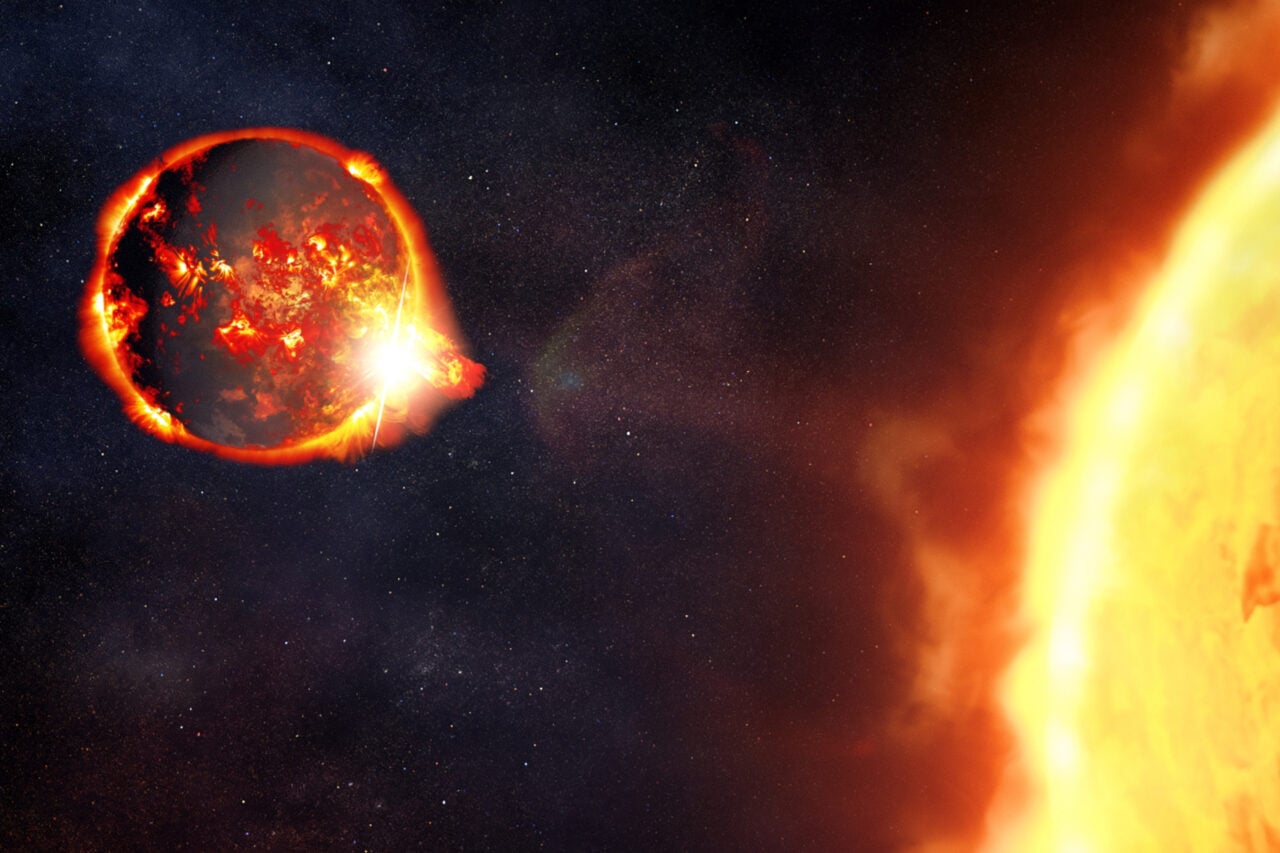
According to new research published in the Monthly Notices of the Royal Astronomical Society, billions of years ago, our young Sun may have gobbled up a planet around 5 to 10 times Earth’s mass. Importantly, the latest analysis strongly suggests that it’s possible to find detectable “fingerprints” of this lost planet inside the Sun. What’s more, this particular model also matches independent measurements of the Sun’s interior, bringing astronomers closer to solving this galactic murder (?) case.
“Our new study suggests that a planet several times more massive than Earth may have fallen into the young Sun and left a lasting chemical imprint deep inside it,” Mutlu Yildiz, the study’s sole author and an astronomer at Ege University in Turkey, said in a statement.
Powering a star

The latest work stems from two separate mysteries. First, conventional solar models generally had trouble replicating actual observations of the solar convection zone, or the star’s outermost layer. Second, compared to other stars, the Sun’s surface had a notable deficiency of lithium compared to similarly sized stars.
The reason the latter was an issue was because lithium—composed of three protons—should be among the earliest elements to emerge from stellar evolution. To this peculiar observation, Yildiz had a peculiar proposition: What if an old planet’s consumption altered our star’s chemical composition?
“We were interested [in] whether these problems might have a common origin in the early chemical history of the Sun,” Yildiz explained. “Since planets are made of material that is chemically different from the gas in the disc, we wondered whether the early engulfment of a planet could have left a chemical signature inside the young Sun.”
Finding the best fit
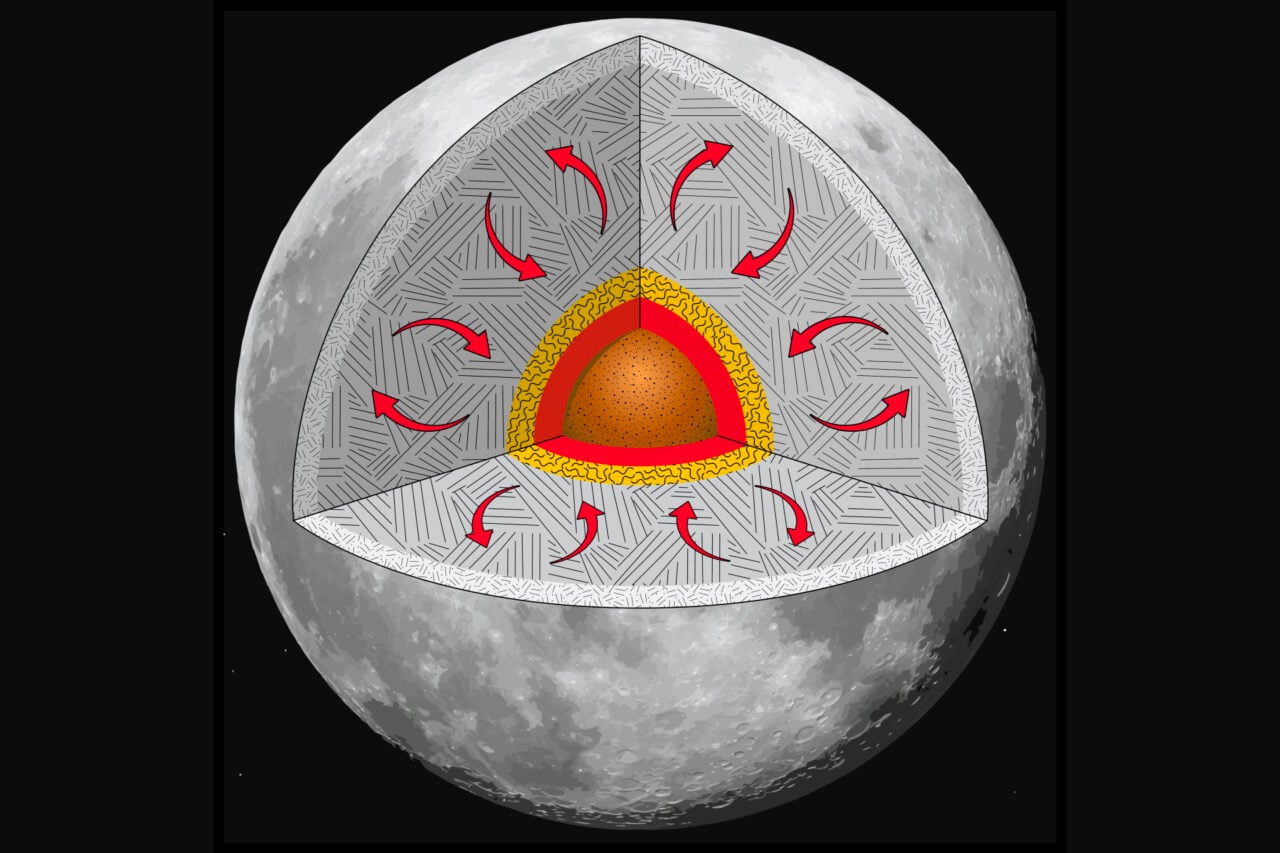
For the study, Yildiz used an open-source module to map stellar evolution across a wide range of theories, exploring different scenarios of accretion that would result in the Sun as we know and see it today. The model that fit best was, indeed, a hypothetical that included the Sun’s consumption of a “super-Earth-mass” planet billions of years ago.
The numbers are also consistent with known measurements of the Sun’s interior and lithium content. It also may explain why, compared to similar stellar systems, our solar system doesn’t have as many super-Earth-sized planets.
“We thought planetary engulfment might affect the solar structure but did not expect the calculations to converge on such a specific super-Earth mass range,” Yildiz added. “That was one of the most interesting outcomes of the study.”
A cold case?
In concluding the paper, Yildiz stressed that his calculations “strengthen the physical plausibility” that our Sun swallowed a super-Earth planet. It is not confirmation that this actually happened. Still, the results are a tantalizing candidate for the “key missing ingredient” in our solar and stellar models, according to the paper. So, future theoretical and observational work might want to keep this scenario in mind.
“Our paper asks whether the Sun itself could still carry observable evidence that such an engulfment actually happened, and we believe it could,” Yildiz said. “The next step is to see if these fingerprints can be independently detected.”