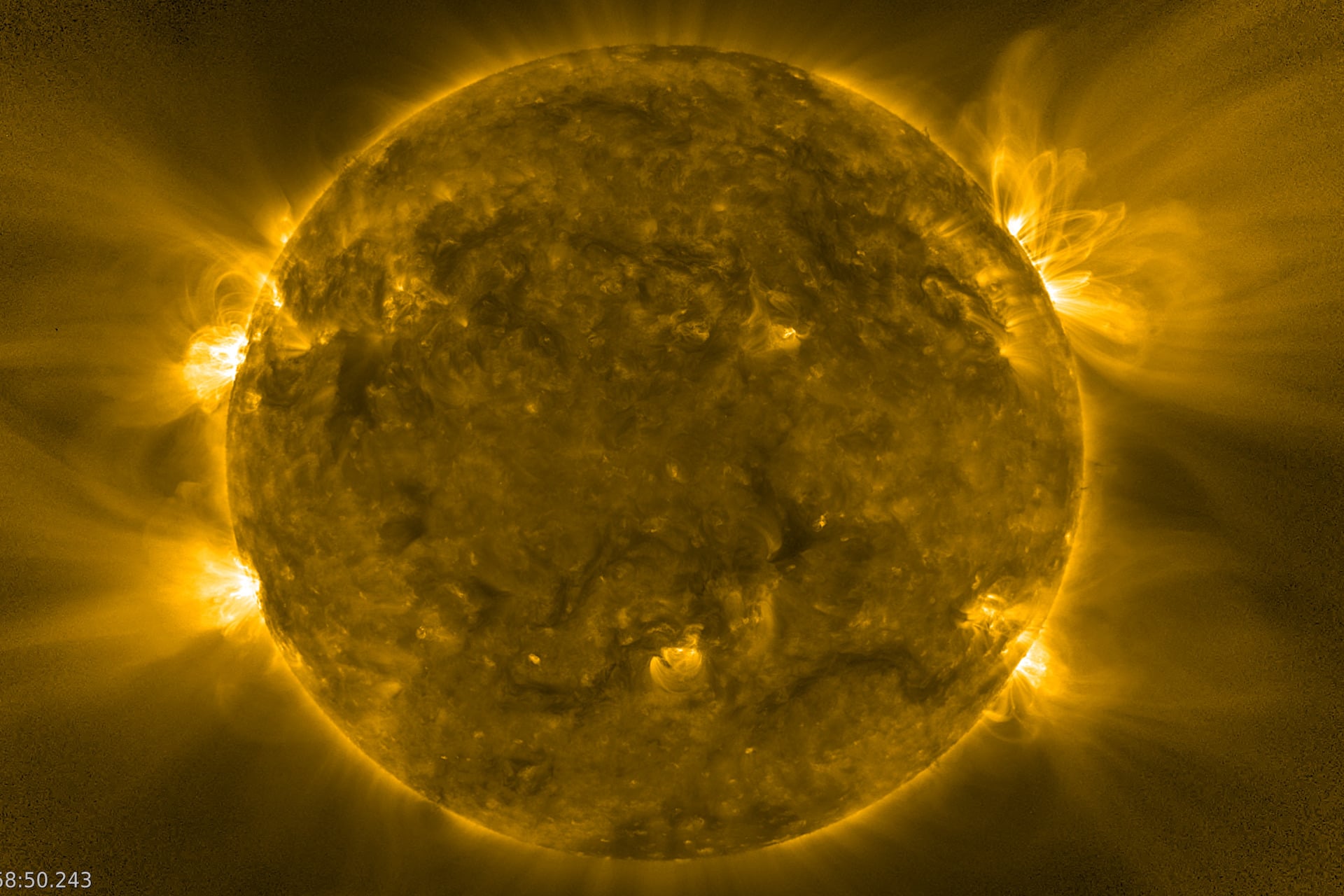
In 2022, a Sun-observing probe flew through an S-shaped stream of charged particles pouring out of the star. These mysterious kinks, known as a switchback, can help scientists better understand what fuels dangerous solar storms—but their origin has remained a mystery. Now, by fingerprinting the particles that make up this stream, the Solar Orbiter spacecraft was able to pinpoint where it came from.
In a new paper published in Nature Astronomy, a team of scientists identified the source of the switchback to the Sun’s surface, revealing the intricate mechanics of the star’s magnetic field in unprecedented detail. The finding reveals how the Sun heats its atmosphere and accelerates solar wind particles out into space, helping scientists better predict extreme space weather events that have an impact on Earth.
Solar fingerpint
The Sun’s magnetic field is one of the most important—and surprisingly mysterious—forces shaping our solar system. It helps drive solar flares, launch enormous eruptions of plasma into space, and influence the streams of charged particles flowing away from the Sun. These streams of charged particles can twist, snap, or fold back on themselves on their journey through the Solar System.
A magnetic switchback is a sudden, dramatic bend in the Sun’s magnetic field that can make it appear to briefly fold back on itself as it travels through space with the solar wind. By watching the Sun up close, the Solar Orbiter spacecraft spotted one such switchback.
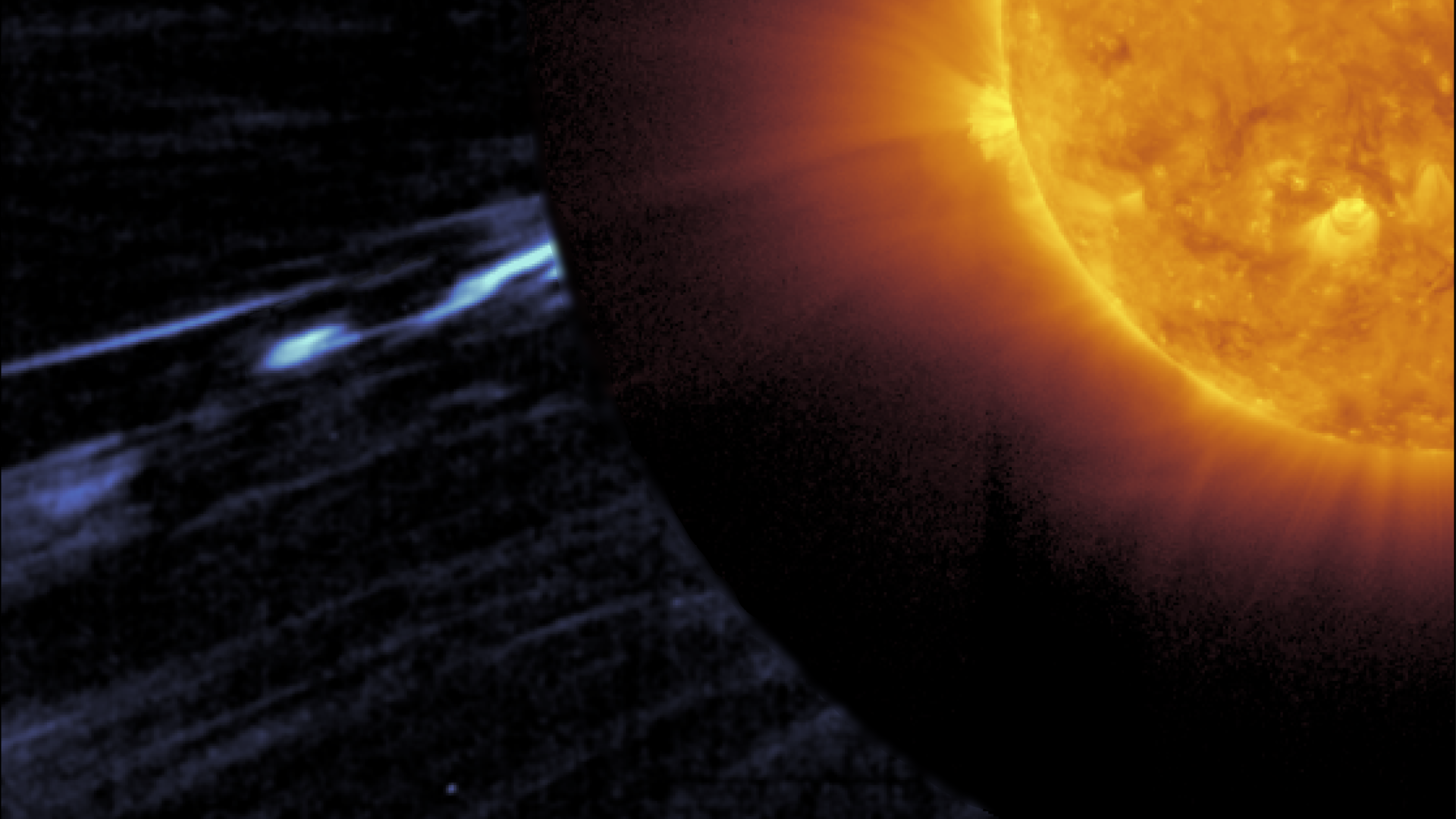
The observations first confirmed that the switchback is shaped like an S, something that had not been directly seen until then. A team of scientists then used Solar Orbiter’s Solar Wind Analyser instrument (SWA) to sample the plasma making up the switchback.
Within the switchback, they found a mix of charged oxygen and carbon particles. That meant the charged particles formed within hot magnetic field loops at the surface of the Sun. “There are two main competing theories for how a switchback, and by extension the solar wind, forms,” Jesse Coburn, a researcher at the French National Centre for Scientific Research and lead author of the new paper, said in a statement. “The specific mix of particles detected by Solar Orbiter is the smoking gun for a formation process known as ‘interchange reconnection’.”
This process takes place when parts of the Sun with different magnetic properties interact. It then causes lines to crowd together, snap open, and reconnect in different ways, allowing plasma that was previously trapped in a loop to escape to space.
Watching the Sun
The researchers behind the new study created a model to identify the source of the switchback on the Sun’s surface.
The finding reveals that the Sun’s atmosphere imprints its signature onto the particles making up the solar wind, giving scientists a possible way to read the history of its charged particles. It also provides new insight into the Sun’s magnetic field, which is the main instigator behind solar storms.
“As humans on Earth – and in space – our lives are entangled with what’s happening on our star. The solar wind ties the Earth to the Sun, and our understanding of its dynamics has key implications for how we keep our planet safe from extreme space weather events,” Daniel Müller, the European Space Agency’s project scientist for Solar Orbiter, said in a statement. “The more we know, the better we can prepare for solar storms to protect our space-based infrastructure and technology.”