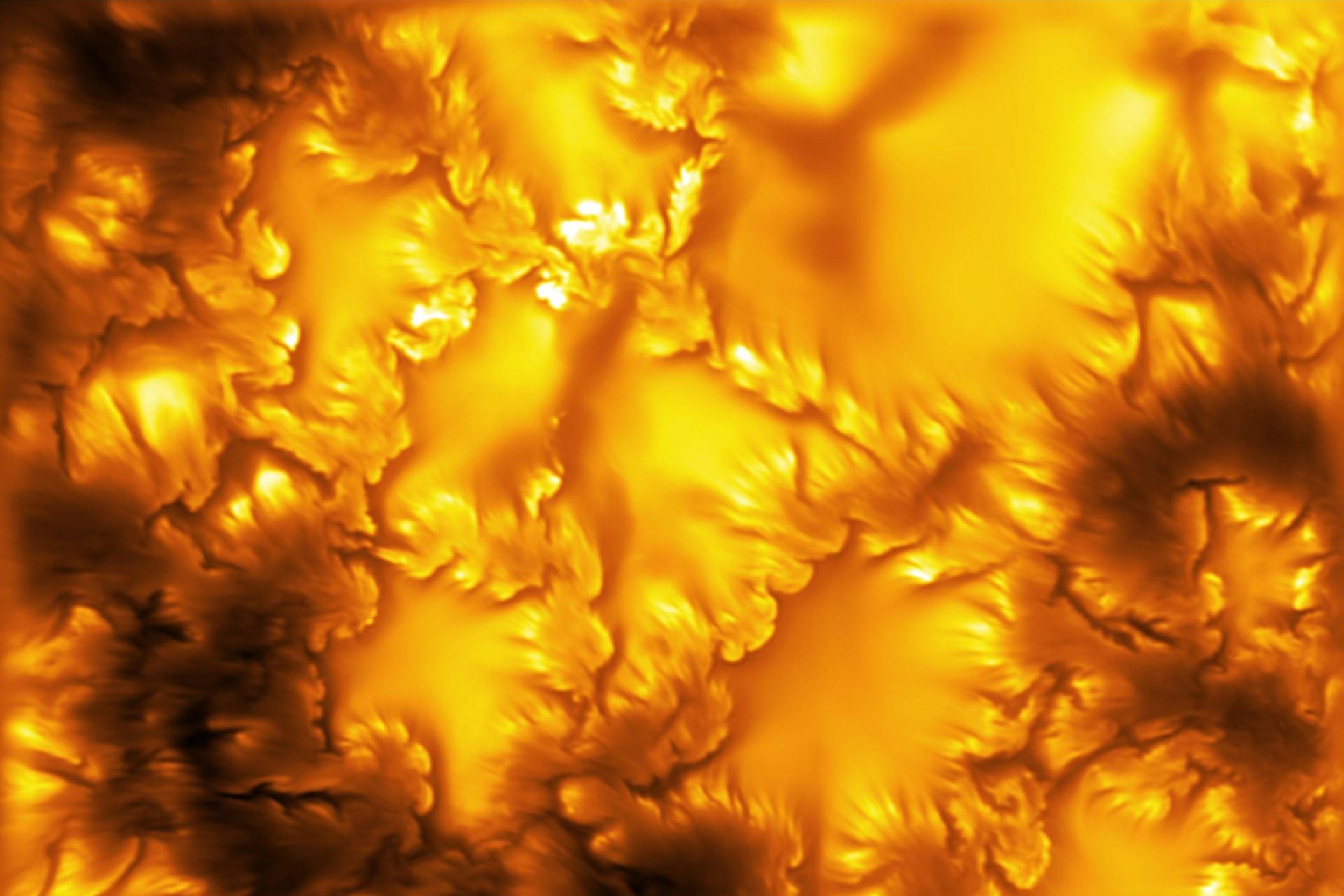
You’ve never seen the Sun like this before.
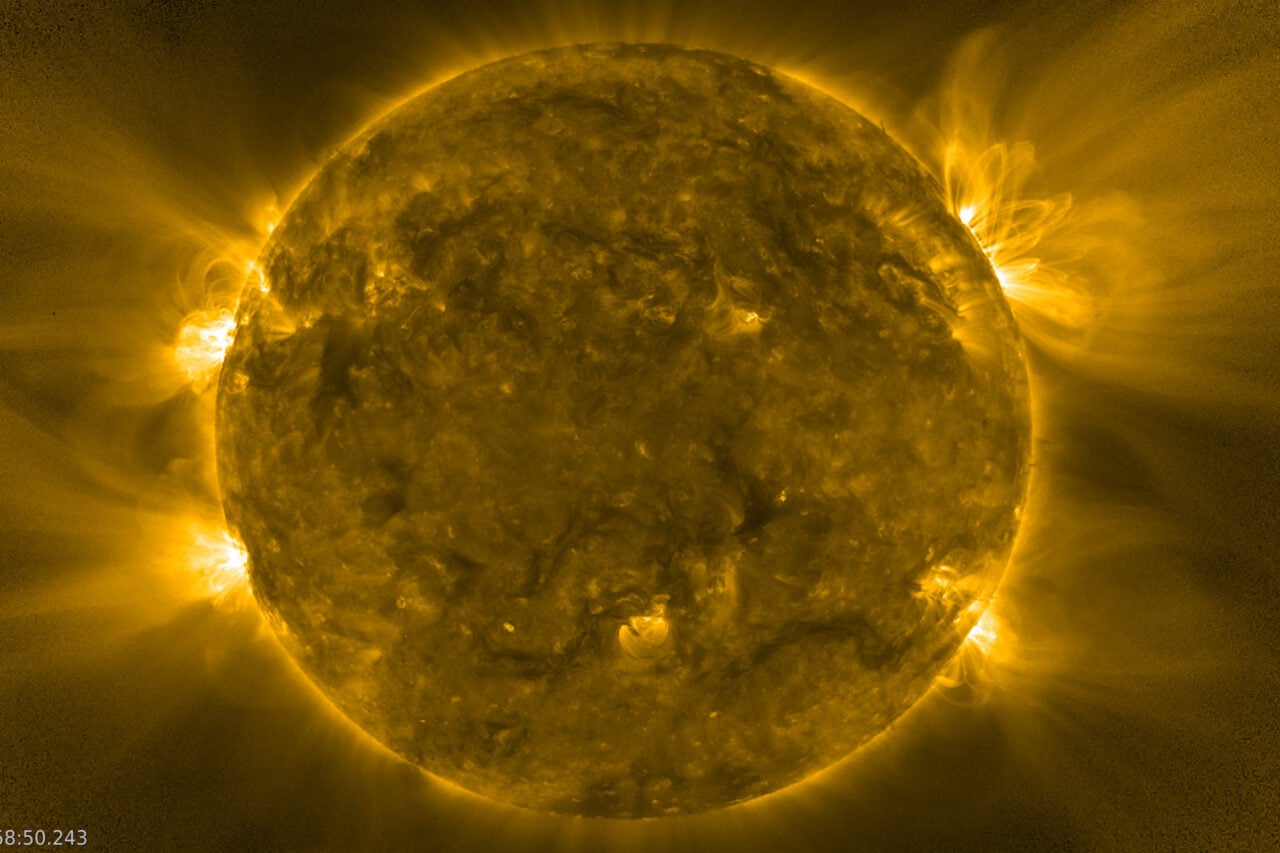
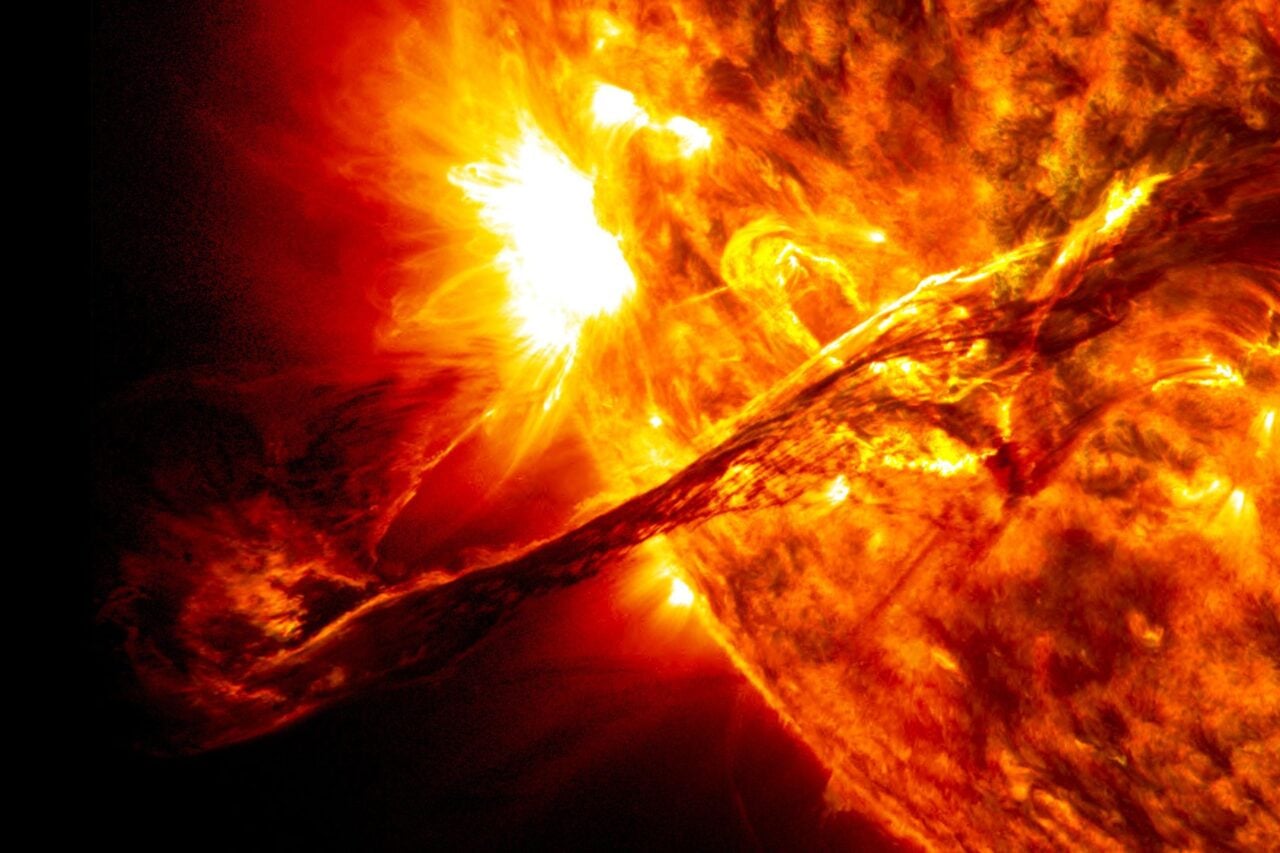
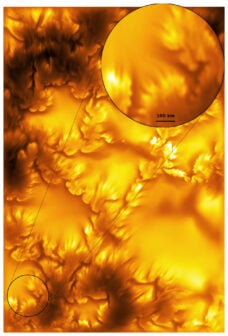
In a study published today in the journal Nature, researchers present the highest-resolution images of the Sun’s visible surface, or photosphere, ever obtained. The images are more than beautiful—they’re packed with critical information about the fundamental physics of our home star, including the first experimental confirmation of a long-theorized phenomenon that only the high spatial resolution of the Inouye Solar Telescope could reveal.
“It is very important to understand what is going on at the Sun at the microscopic level,” first author David Kuridze, an astronomer at the National Solar Observatory, told Gizmodo. “This is very important if we want to understand the Sun, its magnetism, its global dynamics. We need to understand those small-scale microscopic fields.”
Zooming in on the Sun
The National Science Foundation Daniel K. Inouye Solar Telescope, seated near the summit of the Haleakalā shield volcano in Maui, is the world’s most powerful solar telescope. With an unmatched mirror size of 13 feet (4 meters) across, it collects seven times more sunlight than any other, allowing it to produce exceptionally clear, detailed images of the photosphere.
Kuridze was part of an international team of scientists who originally set out to find the best way to fully realize the Inouye Solar Telescope’s capabilities. Developing and testing different techniques to improve image quality ultimately led to the striking solar close-ups unveiled today.
“When I was sitting there with my colleagues and we looked at these images for the first time, we immediately recognized these Kelvin-Helmholtz patterns, and we were super excited right away,” co-author Friedrich Wöger, a senior scientist at the National Solar Observatory acting as the Inouye Solar Telescope’s instrument program scientist, told Gizmodo.
Kelvin-Helmholtz instability (KHI) occurs when two fluids slide past each other at different speeds, creating a “shear” at the interface that causes small disturbances to grow into wave-like or spiraling vortices. KHI on the Sun’s photosphere has long been predicted by theory, but until now, researchers had never directly observed the signatures of this phenomenon.
“That we were able to see them and eventually clearly prove that they are due to Kelvin-Helmholtz instability—that’s just a very satisfying and beautiful feeling,” Wöger said.
Answering big questions in solar physics
This discovery could help solve some scientific mysteries, such as the coronal-heating problem, according to the researchers. While the Sun’s surface temperature measures around 10,000 degrees Fahrenheit (5,500 degrees Celsius), its outer atmosphere—the corona—measures closer to 2 million degrees F, according to the Princeton Plasma Physics Laboratory. That’s about 200 times hotter.
This is puzzling because the temperature should decrease as distance from the hot surface increases. Researchers have hypothesized that KHI contributes to coronal heating, and these new, detailed observations could help them investigate this more thoroughly.
They could also help explain why the solar magnetic cycle is so short. The Sun’s magnetic poles flip every 11 years or so, which is very quick compared to cosmic timescales. For this rapid cycle to work, the Sun’s magnetic fields must be able to dissipate and reorganize with great efficiency, but current models struggle to explain how that happens. KHI could be a missing piece of the puzzle because it is very effective at dissipating magnetic fields.
Equipped with the high-resolution data from the Inouye Solar Telescope, the researchers now plan to use computer programs to automatically spot and study the swirling signatures of KHI. This will help them determine the prevalence of this phenomenon in the photosphere, how much energy KHIs can carry up into the Sun’s corona, and how much they affect they way magnetic fields spread out in the Sun’s lower atmosphere.
“This discovery opens up whole new avenues of how to tackle some of the biggest problems and mysteries we have in solar physics at this moment,” Kuridze said.