Digit Party, an online brain teaser, has attracted hundreds of thousands of math lovers since its launch three years ago. But the creators of the game—two mathematicians—now have a confession to make. Your high scores were probably fake.
In a recent paper published in Math Horizons, mathematicians Robert Brignall and Vincent Vatter, of The Open University in the U.K. and the University of Florida, respectively, admitted that they did not know how to calculate the true high scores. They’re coming clean as they’ve now solved the issue, specifically by precomputing the true “perfect score” for every possible game. Technically, the average error was small, at about 2 points, with the maximum being 6 points off, and the game “lied” 55 times out of the past 1,096 puzzles. At the same time, this “lie” demonstrates a surprisingly common problem in practical mathematics, namely optimization hurdles also present in scheduling, logistics, and manufacturing.
“We knew there was this issue, but we didn’t know how to fix it,” Vatter said in a statement. “We had a number we knew nobody could beat. Most of the time it was actually reachable, but about 5% of the time it wasn’t, and we had no way to tell the difference. We knew it this whole time, and it bugged us.”
How to play
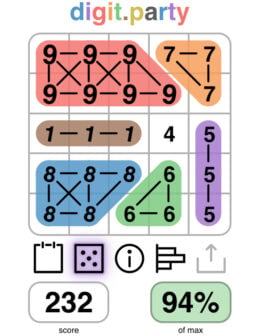
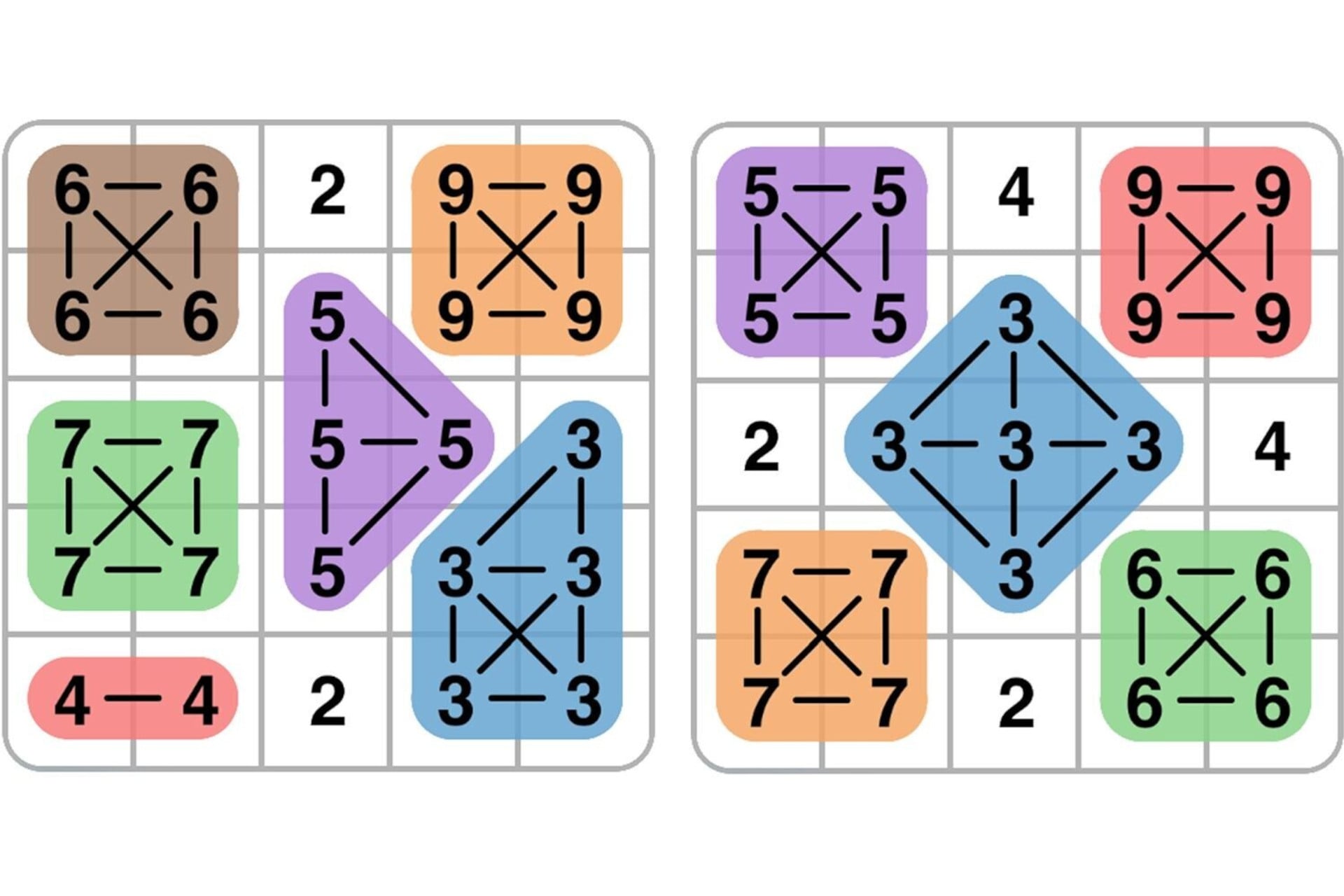
Digit Party’s formula is simple and oddly addicting. The goal is to arrange 25 digits from 1 to 9 on a 5-by-5 grid. You get one number and a preview of the next number. You can place a number anywhere you’d like, but to score points, you have to place the same number next to each other (horizontally, vertically, or diagonally), and you score points equal to that digit’s value. According to the paper, the game displays your score as a percentage of a theoretical maximum—that is, a perfect score that assumes the player sees “all 25 digits in advance and place them with perfect foresight.”
“At least, that’s what we claimed,” the pair wrote in the paper. “We have been lying to players for three years. In our defense, it wasn’t on purpose.”
In truth, the “maximum score” was an approximation based on an upper bound. It didn’t properly represent the optimal arrangement of each group of equal digits. To be fair, the error margins weren’t huge. For instance, if one day’s true maximum was 186, the approximation would calculate players’ percentages based on an upper bound of 192.
Finding the true maximum
In the statement, Vatter likened the issue to packing a suitcase. You might start by figuring out how best to arrange your shirts, then your suits. But sometimes, you just have too many clothes, and “something has to get crumpled,” he explained. The so-called “optimization” question then concerns the “smartest thing to sacrifice,” or “crumple,” for any combination of packing lists.
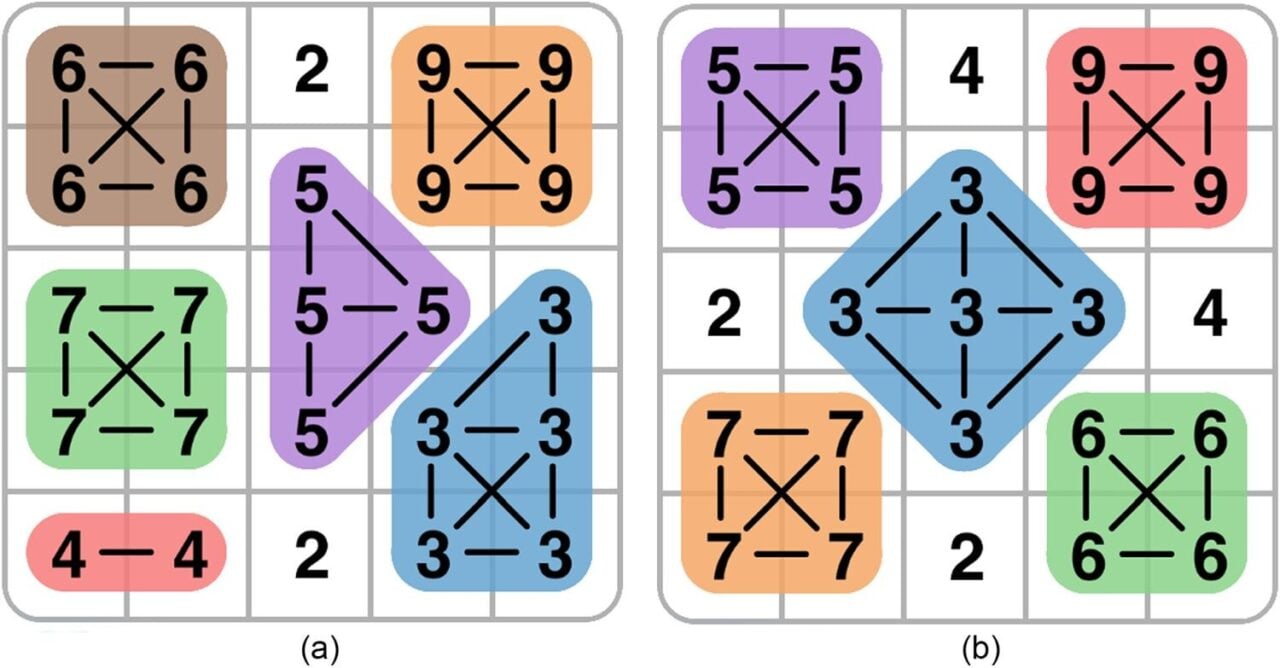
Solving this issue for Digit Party wasn’t easy. The pair could technically “ship an integer programming solver to every player” or cram in some extra code that might make the game “melt your phone.” Clearly, that’s not ideal. And so, the mathematicians decided to “precompute the true maxima for every possible board and encode the answers in the code.”
That added up a dizzying number of possibilities—13.9 million different sets of digits—which dropped to 1,291 once the mathematicians grouped the results according to shared patterns of repeated numbers. And within those 1,291, 891 outcomes didn’t require any trade-offs. For the remaining 400, the pair manually computed the highest possible score; for example, if a player can’t fit all 4s and 8s, it’d be smarter to drop 4, as matching 8s would give you a higher score.
Having said that, the team finished its confession with another admission: What’s the best strategy? We don’t actually know.
“We still have no idea how to play,” Vatter said. “Robert and I play quite differently, and nobody knows who’s better.”