We are consuming beyond our means.
Numerous scientific studies over the years have painted a picture of an Earth stripped of natural resources, stretched thin, unable to catch up with the consumption appetites of its primary inhabitants. The result has been rapidly accelerating environmental damage.
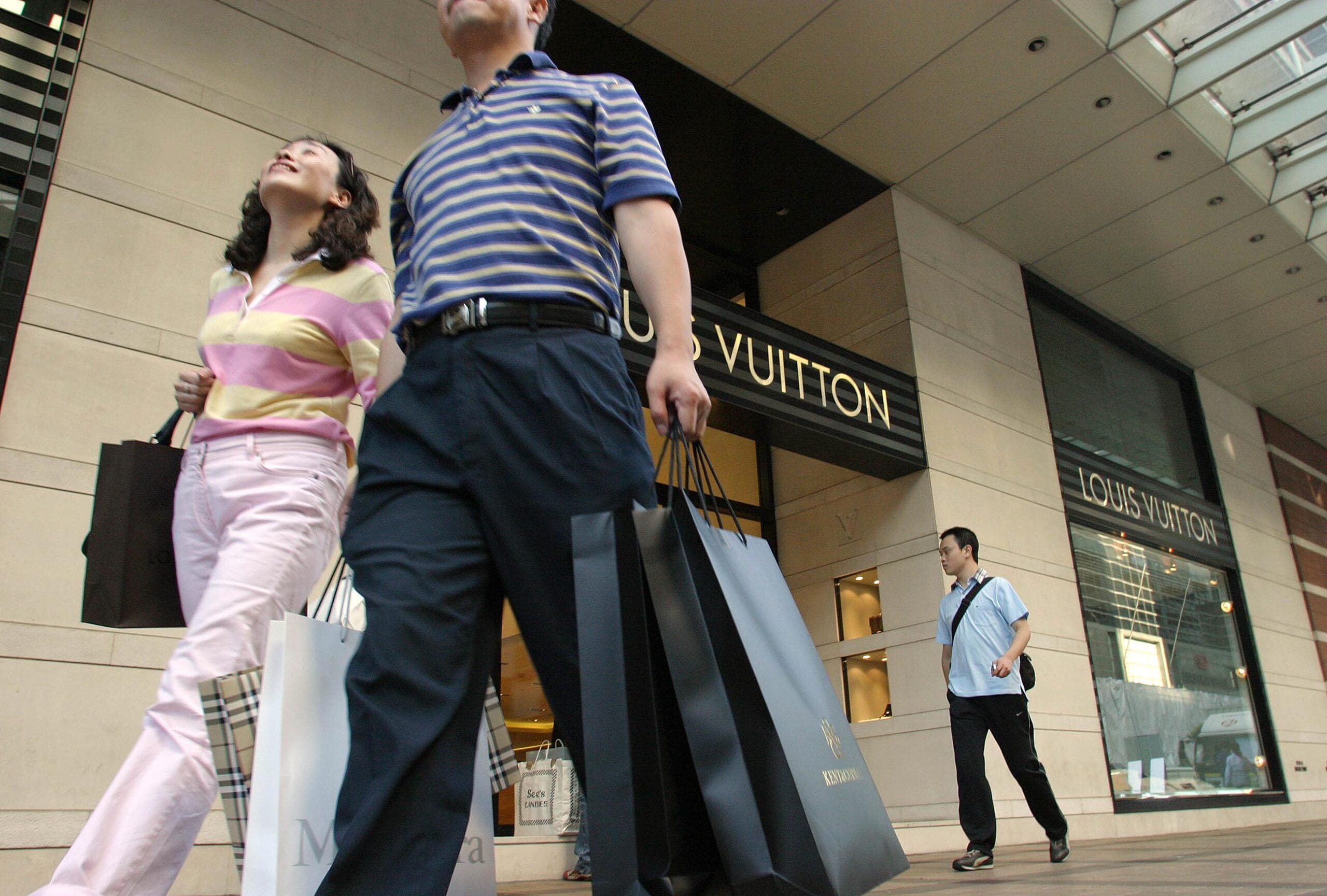
Although everyone had some role to play in the current trajectory of environmental degradation, that responsibility is not equally shared. According to a study published in Nature’s Communications Sustainability journal on Thursday, the highest-consuming 10% of the world’s population causes up to $5.7 trillion worth of environmental damage every year. Even at the most conservative estimates, the damage is worth $1.7 trillion a year, high enough that it could easily pay for the combined amount needed to both reach the UN’s 2035 climate financing target and bridge the gap for the 2030 biodiversity financing target.
The average member of the world’s top 10% of consumers causes up to $7,500 in environmental damage each year, according to a study by researchers at Leiden University in the Netherlands and the University of Oxford in the United Kingdom.
Even the worst-case scenario is likely conservative, the researchers say, because only direct consumption is being studied. Among the highest earners in this heavy-polluter group, investments account for roughly half of their emissions—but those emissions were excluded from the analysis.
“The top 10% are important not only because they cause the most damage but also because they hold the most leverage to reduce it,” Oxford professor and co-author of the study Paul Behrens said. “The capital they invest, from pensions to infrastructure, decides which industries expand, the firms they run set the choices for everyone else, and the lifestyles they pursue shape what people consider as normal. They often have out-sized agency, not only individually as consumers, but also as investors, employers, trend makers, and market shapers. Their power to cut emissions is even larger than their share of them.”
But how that bill should, theoretically, be fairly divided is contentious. The researchers found that more than 60% of the world’s top 10% of consumers live in the United States or in the European Union, with over half of the American population falling into this category.
But just as the bill for environmental damage is not distributed equally among countries, so is the financial responsibility within a specific country’s population. For example, even though over half of the American population consumes far more than their international counterparts, there is an even smaller group of Americans within that category that somehow manage to consume immeasurably more and thus have an even larger impact on the environment. According to the study, the top 10% of consumers within the U.S. had the highest per-person bill of any other country studied, causing up to $63,000 worth of environmental damage per year. Among the six countries whose populations were studied further, Germany and China had the next largest per-person bill, while India and Egypt had the lowest.
How to monetize the environment
The study calculates this bill by looking at something called planetary boundaries. Scientists believe there are nine fundamental environmental systems, and each fundamental system has a limit on the amount of pressure it can handle, called planetary boundaries. As long as humanity stays within these boundaries, for example, by limiting our freshwater consumption or preventing climate change, we will theoretically be in a safe, habitable spot for humanity. But crossing them makes long-lasting and potentially irreversible damage to Earth increasingly more likely.
The four planetary boundaries that the scientists examined in this study are the climate, biosphere integrity (including biodiversity), freshwater, and the biogeochemical cycle, which is the cycle of nutrients essential for healthy soil and water ecosystems. To monetize the changes in these systems, the researchers used the Environmental Prices Handbook, a guide that assigns monetary value to the societal damage and welfare losses caused by environmental pollution. Then they combined this with the environmental footprint of the top 10% of consumers, building on data found by a previous study.
What they found was that the top 10% of global consumers were disproportionately responsible for putting pressure on these boundaries, causing things like drought, heat stress, ecosystem degradation, and “ultimately human and animal suffering.”
The findings could be used as the basis for a highly debated climate policy called environmental taxation. In theory, green taxes, such as a carbon tax, would not only hold the biggest polluters responsible by putting a higher tax on the activities that pollute the most, but they would also limit pollution and carbon emissions by disincentivizing the activities that lead to environmental damage.
“While I find it uncomfortable to put a price on the environment, as nature’s true value is infinite, showing total damage in money terms does show the size of both the damages and responsibility of the top 10%,” the study’s lead author, Inge Schrijver, said. “The damage bill is higher than the money needed internationally for climate and biodiversity funds. If the polluter pays and that money goes to solutions, it would make a huge difference.”
The authors argue that in high-income countries, taxing luxury consumption over basic goods would be more progressive and fair. In the U.S., the top 10% of consumers’ annual damage bill would equal 6% of their income in the most conservative estimates, all the way up to 20% of income in other scenarios.
“Financing climate investments through a wealth tax on the top 1% would decrease wealth inequality (they would then own an estimated quarter of all wealth by 2050) while addressing the unequal burden of climate damages on lower-income communities,” the study concludes.