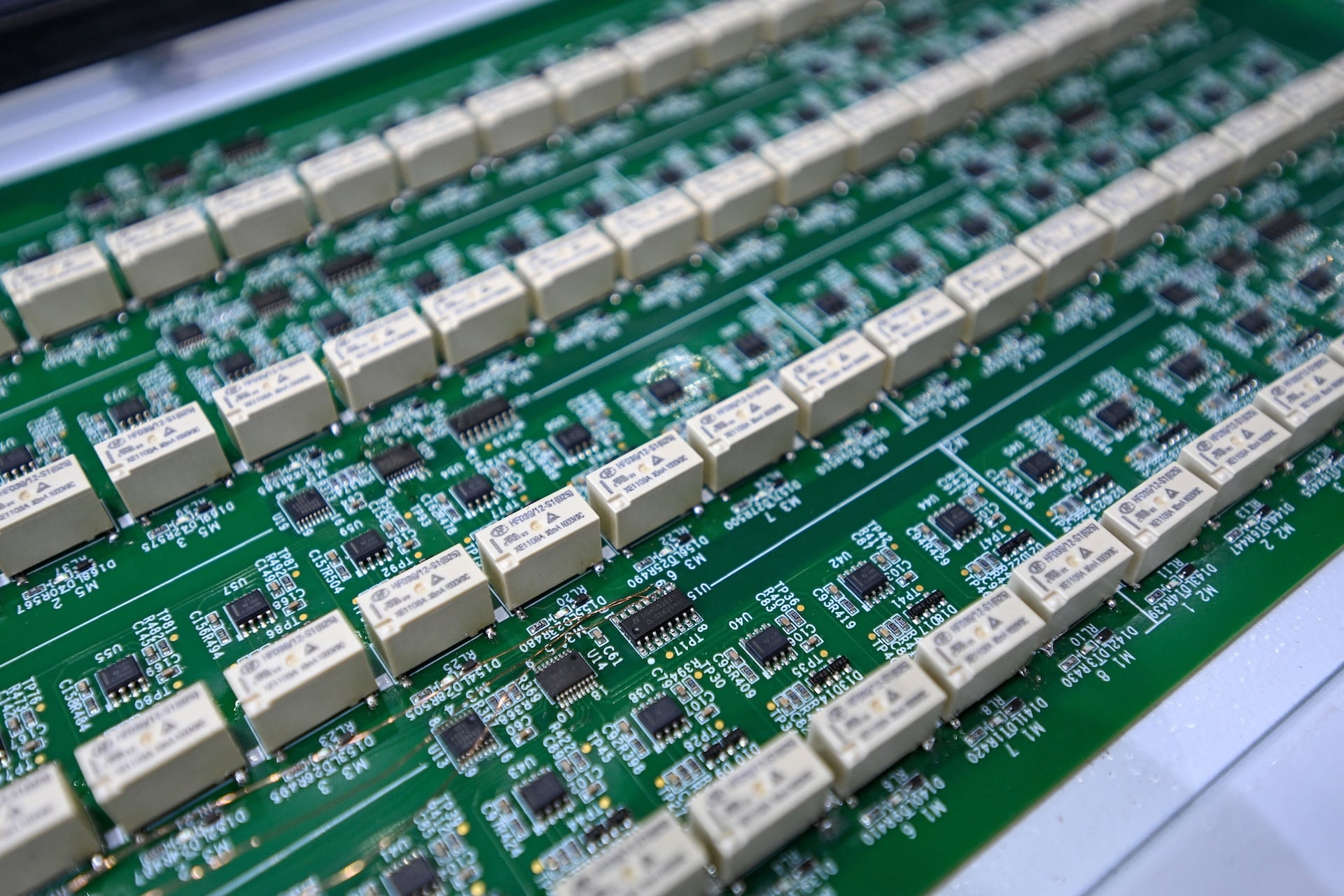
President Donald Trump launched a war against Iran on Feb. 28, seemingly convinced he could declare a quick victory and the world would move on. But the war has seriously disrupted the supply chain for materials that power our lives, including the printed circuit boards (PCBs) used in virtually all of our electronic devices.
Reuters has a new report about the disruptions, and things are looking pretty bleak. PCB prices have jumped roughly 40% in April compared to a month earlier, driven by surging material costs.
One of those materials is high-purity polyphenylene ether (PPE) resin, produced at Saudi Arabia’s Jubail petrochemical facility. Iran’s military launched medium-range missiles and one-way attack drones against the facility on April 7. The attacks came after Israel launched strikes against Iran’s petrochemical plants at Asaluyeh near the South Pars gas field on April 6.
Other materials that have risen in price include glass fiber and copper foil, according to Reuters, citing an executive who didn’t want to be named “due to sensitivity of the subject.” Copper foil prices are reportedly up 30% this year. And that’s important since Reuters reports that copper accounts for roughly 60% of the total raw material costs for making PCBs.
Tom’s Hardware reported last week that some purchasers have become so desperate for chips that they’re willing to buy what previously may have been considered scrap chips. Oddly enough, that’s helped Intel’s bottom line, as there’s suddenly a demand for lower-quality electronics.
All of this chaos was very predictable. President Trump started his war against Iran without a clear goal in mind, suggesting at different times that it was about stopping Iran from obtaining a nuclear weapon or promoting regime change. Trump’s first late-night video announcing the strikes on Feb. 28 insisted that the people of Iran should rise up against their government. But that message later dissipated, and the president’s focus seemed to stray into talk of nuclear weapons or “keeping the oil,” as he’s fond of saying.
Trump also threatened to destroy the entire civilization of Iran, not exactly the message that would inspire a mass movement of people to have faith that America had its best interests at heart.
Roughly 20% of the world’s oil and liquid natural gas travels through the Strait of Hormuz, which is effectively closed. Iran initially closed the Strait by threatening missile and drone attacks on any ship passing that wasn’t approved by the government. But Trump decided to declare that it’s actually the U.S. that has closed the Strait and he’s enforced a blockade to this day. Trump argues that it deprives Iran of oil revenue, which is certainly true, but it also keeps the rest of the world from obtaining the materials necessary for our modern, high-tech lives to exist.
It’s all a mess, and there’s no end in sight, as the cost of gasoline worldwide has skyrocketed and some poorer countries are rationing fuel. Even wealthy countries are struggling with a shortage of jet fuel and rising energy costs. And Trump’s adversarial attitude to some of America’s longstanding allies has caused leaders in Europe to lose patience.
German Chancellor Friedrich Merz criticized Trump’s decision to go to war in comments on Monday, explaining, “The problem with such conflicts is that you don’t just need to start them, you also need to end them,” according to the Wall Street Journal.
Merz said the U.S. was being “humiliated” by Iran, and the damage done by higher energy prices probably wouldn’t be fixed anytime soon, “because the Iranians seem to be stronger than we thought and the Americans don’t appear to have a convincing strategy for the negotiations.”
Consumer sentiment has plummeted to a record low in the U.S., and the average price for a gallon of regular gas in the U.S. is currently $4.11, up from $2.90 before the war, according to AAA. Experts expect those costs to be passed on to consumers in the months ahead.