For decades, the music and film industries have generally responded the same way to the emergence of any new technology capable of recording and distributing content: with a barrage of hostility. Many readers will remember the legal campaign against (alleged) file sharers conducted by the Recording Industry Association of America (RIAA) during the 2000s, and perhaps also earlier campaigns around “illegal” video cassettes, copying video games, and so on.
The industry’s bugbear back in the early and mid-1980s was the audio cassette, and their response to its ubiquity was the “Home Taping Is Killing Music” campaign, which launched in 1981 and spent several years trying to shame, litigate, and generally browbeat fans into refraining from recording their favorite music onto the format. But it turns out that one plucky Chicagoan was blithely ignoring the rhetoric—and in doing so, he was creating the beginnings of an archive that would end up spanning multiple decades and do more to preserve generations’ worth of music than the RIAA et al would ever do.
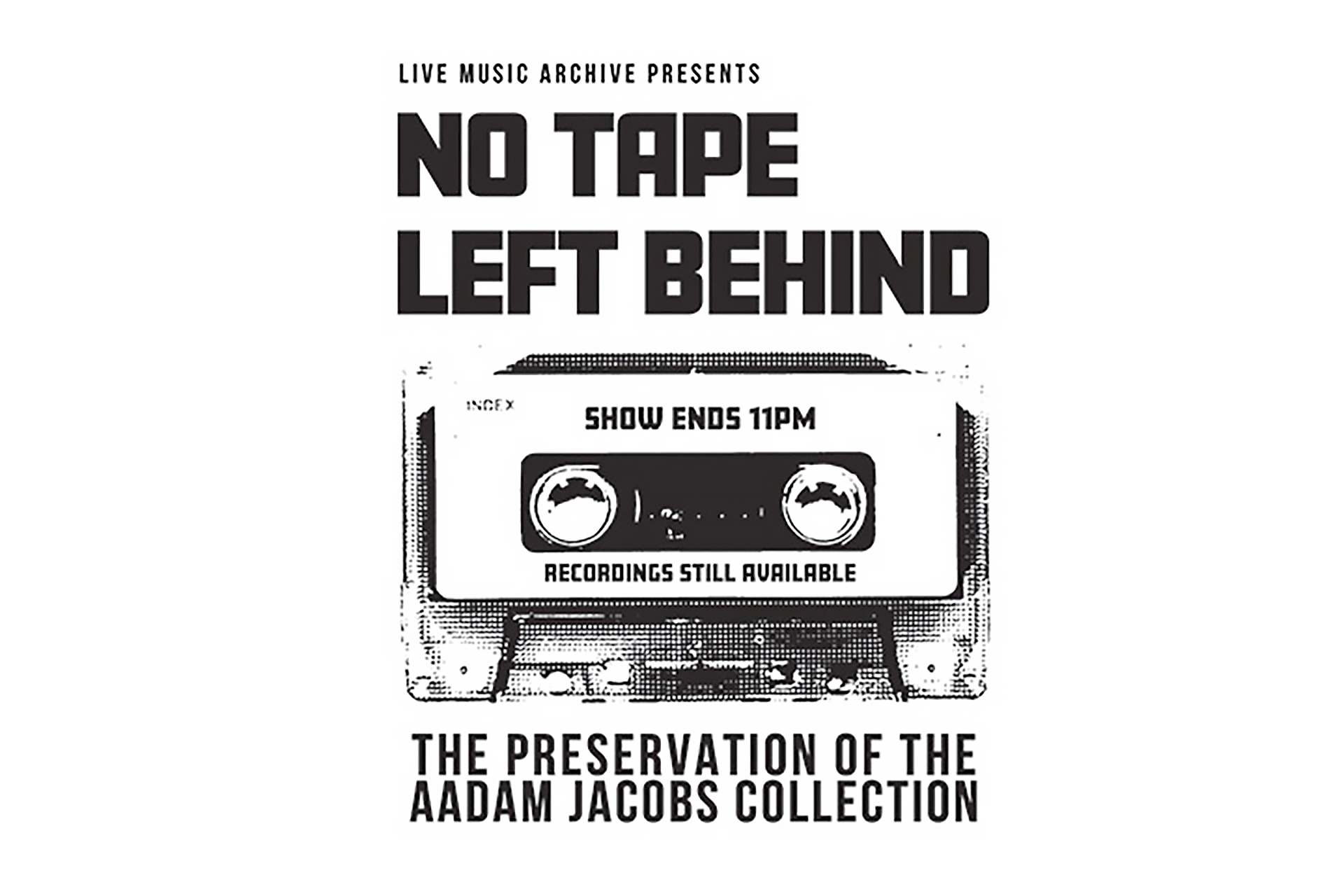
Aadam Jacobs first took his Dictaphone to a show in May 1984, when he ventured to a venue called the Arts Bar to see British free jazz psychonauts AMM. It was the first of hundreds of shows he’d record over the coming decades, and his extensive library of bootlegs live recordings is now in the process of being digitized and uploaded to The Internet Archive. As of April 2026, there are 2,443 recordings available, with many more to come—as per the Associated Press, Jacobs’ complete archive contains over 10,000 recordings, which represents a lifetime’s worth of truly heroic gig attendance (and has us worried for the state of his knees).
Even Jacobs’ very earliest recordings are of surprisingly good quality, despite being recorded on what was essentially a Dictaphone. By early 1985, he’d apparently invested in a Sony tape recorder and was also given to using a full-sized tape deck, which he would bring to shows in a backpack on the off chance that the sound guy would let him plug it in.
Arguably the most historically significant recording is Nirvana’s Chicago debut at punk club Dreamerz, a show that was apparently attended by “a mostly silent, unenthusiastic audience of about 15-20 people, maybe less.” (It subsequently became one of those shows that has about 1000 people claiming to have attended for every person who was actually there.)
But there are plenty of other gems, especially from Jacobs’ early gig-going years. Fancy some Daydream Nation-era Sonic Youth? Look no further. How about a very, um, refreshed-sounding Nick Cave, complaining circa 1986 that “we’re so fuckin’ sick and tired of this fuckin’ country… I’ve been locked in jail for three fuckin’ days, [and now] I have to come to this fuckin’ city and play to a bunch of morons”? We got you.
The archive also includes a smattering of interviews and in-studio performances that Jacobs taped off local radio, a practice that would doubtless have had industry bodies frothing at the mouth. But it turns out that the guy with the tape recorder wasn’t killing music—he was preserving a priceless record of shows that would otherwise have existed only in the memories of people who were there and the stories of people who wished they had been.
Correction: A previous version of this article cited ABC News; the source was actually the Associated Press.