Skyrocketing gas prices, crushing grocery bills, and negligible wage increases are all symptoms of the current affordability crisis in the United States, but according to a new watchdog report, Americans can add surging water bills to the list.
Food & Water Watch, a Washington D.C.-based NGO, compiled and analyzed drinking water billing data for the 500 largest community water systems in 2025. These systems collectively served 155 million Americans, or about 45% of the national population. Comparing typical household drinking water bills in 2025 to those in 2015 revealed that the average community water system raised bills by a whopping 62% over the last decade.
On average, household drinking water bills rose 1.6 times faster than inflation, twice as fast as grocery prices, and 19% faster than median household income, according to the report. But of course, costs varied by state and by water system.
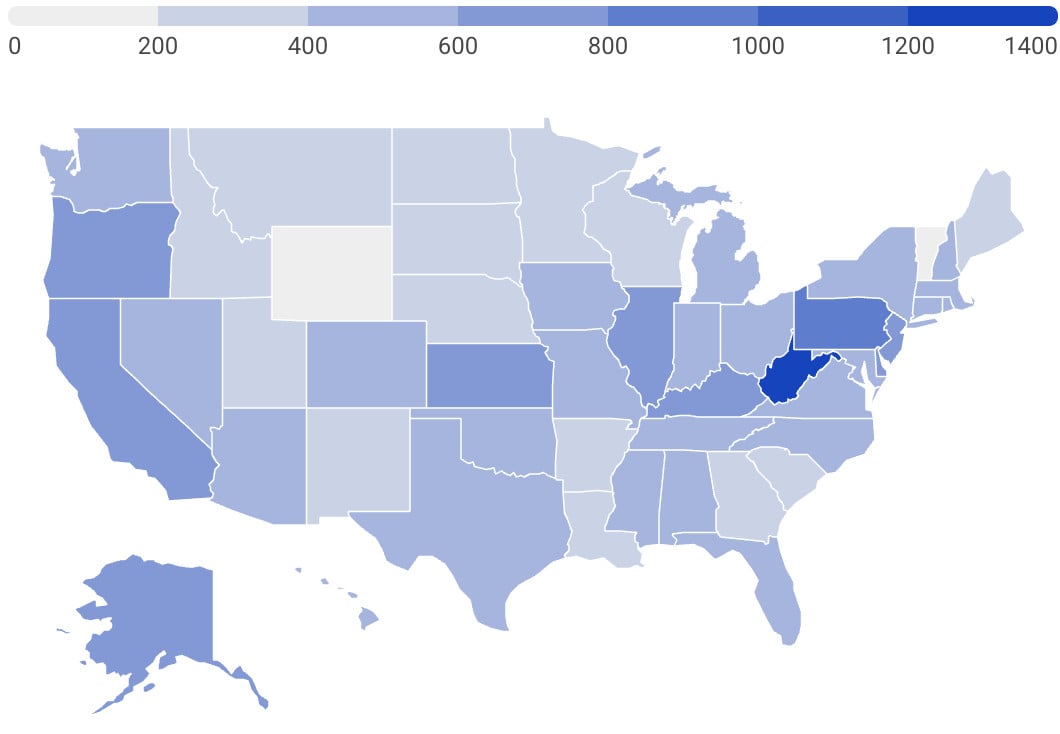
The average water system charged a typical household $531 for drinking water service in 2025, but the 25 most expensive systems charged households more than $1,000, while the 25 least expensive systems charged less than $260. Of all states, West Virginia had the highest bills. Its two largest systems—both owned by American Water—charged households an average of $1,383. Other states with particularly expensive water bills included Pennsylvania, Alaska, Oregon, Illinois, and California.
“Without action to restore federal support for public water systems and rein in corporate water abuses, water bills will continue to increase faster than households can reasonably absorb,” the report states. “Every level of government must take action to ensure safe, affordable, locally controlled water for all.”
Corporations sucking wallets dry
There are several factors contributing to the rising cost of drinking water in the U.S., but according to the report, corporate control of water systems is a key driver. Among the nation’s 500 largest systems, private, for-profit water utilities such as American Water, Essential Utilities, and California Water Service Group charged 67% more on average than public systems.
The impact of corporate ownership varied by state, and that’s largely due to varying levels of regulatory control, the report states. An independent study based on data from a 2015 Food & Water Watch report found that water prices are higher in states with corporate-friendly regulatory environments and that private ownership was the biggest factor associated with higher costs.
Over the last decade, the average private water utility raised bills 67% while the average local government raised bills 62%, according to the new report. Water corporations were already charging higher rates back in 2015, but the gap has since widened by an additional 12%.
“In fact, the average local government charged less in 2025 ($494) than the average corporate system charged in 2015 ($501),” the report states.
Water supplies and infrastructure are suffering
As private water utilities increase their rates, climate change is straining water supplies and infrastructure.
Most of the U.S. is currently grappling with drought. Over the summer, the nation’s largest reservoirs dropped to record-low levels largely due to a historically snowless winter that was made four times more likely by climate change. As global temperatures continue to rise, experts predict flows in the Colorado River—which provides water to some 40 million Americans—could drop another 30% by 2050.
At the same time, the continued expansion of water-intensive industries such as factory farming and hyperscale data centers is putting increasing strain on the nation’s dwindling water resources, according to the new report.
To meet this surging demand and adapt to climate change, utilities urgently need to upgrade their infrastructure, but this requires huge investments that further drive up costs for ratepayers. A report from the American Water Works Association published earlier this year estimates that, over the next 25 years, total drinking water infrastructure needs are projected at $2.1 to $2.4 trillion.
The authors of the Food & Water Watch report state that federal support for these improvements has failed to keep up with water systems’ needs, causing state and local spending on water infrastructure to quadruple over the past 60 years. They urge the federal government to restore federal funding to address the nation’s water affordability crisis and hold corporations accountable for straining supplies.