Theoretically, the Sun shares its chemical origins with meteorites that are billions of years old. But for decades, astronomers wondered why our star appeared to contain significantly less silver than those ancient space rocks. The answer may be that we just weren’t looking closely enough.
In a recent Astronomy & Astrophysics paper, researchers explain that more realistic modeling of the Sun’s atmosphere shows that it actually contains about 55% more silver than previous estimates. This value is much more aligned with the chemical history of the earliest meteorites and advances our understanding of how heavier elements like silver are produced and processed in the stellar cycle. Fascinatingly, the findings are a result of more refined, not necessarily novel, measurements of the solar environment.
“The new knowledge about the Sun’s composition is important for the understanding of other stars, planets, and cosmic material, because the Sun is one of astronomy’s key reference points,” Sema Caliskan, the study’s first author and currently a postdoctoral researcher at the University of Liège in Belgium, said in a statement.
Extraterrestrial time capsules
Every element has a unique spectral signature, which represents how that element absorbs light. These patterns act as fingerprints for stellar history, as starlight passing through atoms in space produces specific spectral lines that astronomers can reference against the spectra of known elements.
According to the paper, certain elements like silver are valuable tracers of how heavier elements are formed in stars, which by extension has implications for how they ended up in planets and other things in our stellar neighborhood. But previous models had resulted in a “puzzling discrepancy” in silver content between the solar system we observe today, meteorites—untouched time capsules from the Sun’s earliest days—and the Sun itself.
Modeling complexity
In the study, the researchers posit that this may come from oversimplified models of the solar atmosphere, as well as an insufficient understanding of how silver interacts with light and other particles. In other words, the goal of the latest work was to devise a model that more accurately captured the complexity of the Sun’s outer layers, as well as the physics of silver atoms.
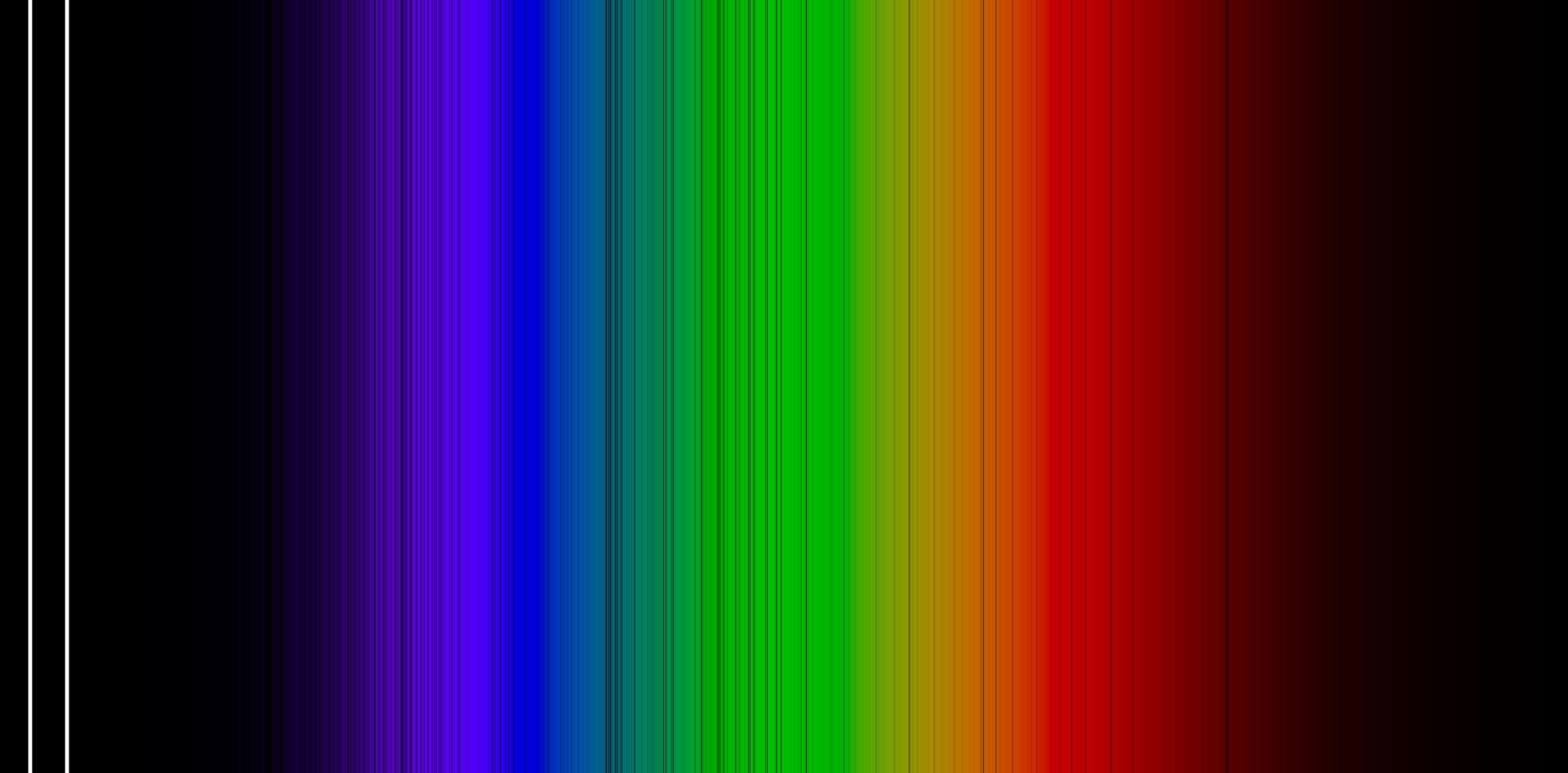
Using the new model, the team arrived at a revised interpretation of solar spectral lines, Caliskan, who conducted the study as a PhD student at Uppsala University in Sweden, explained. The results were clear: the Sun’s silver was never “missing.” Our approach was just off the mark. What’s more, the correction is in much better agreement with meteorites presumed to come from the same stellar dust and gas cloud as the Sun.
Following the stars
That said, in the paper, the team outlined a couple of tasks to better validate the findings. One of these refinements, checking for potential biases that other metal elements may introduce, will appear in a subsequent paper, it explained. Still, the researchers believe that the new method could easily be applied to studying other stars. As they wrote in the paper, the Sun is an “important reference point” for investigating stellar dynamics. Since the model appears to work well for our host star, the obvious next step would be to try elsewhere, they said.
“By studying the light of stars of different types and ages, we hope to understand where silver is formed in the universe and how it has been distributed throughout the Milky Way over time,” Caliskan concluded.