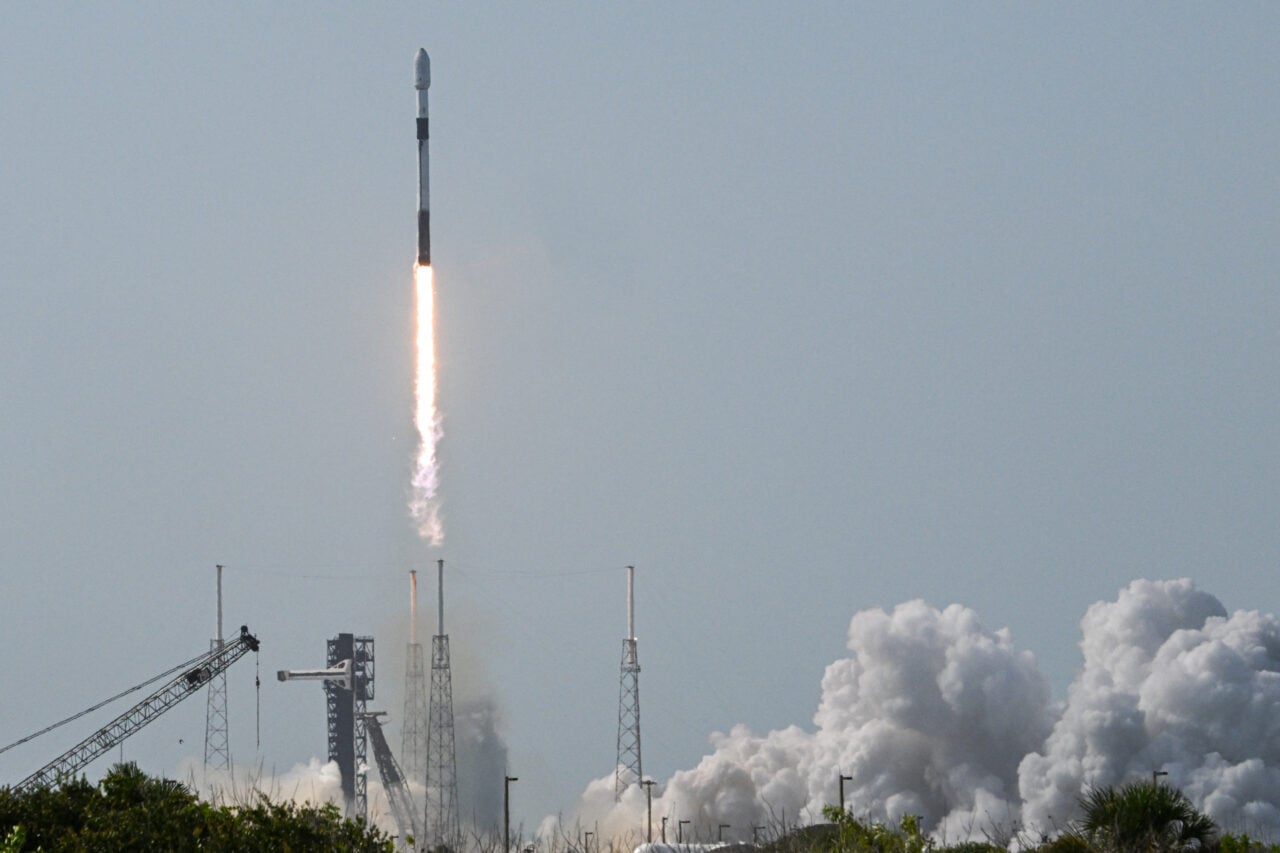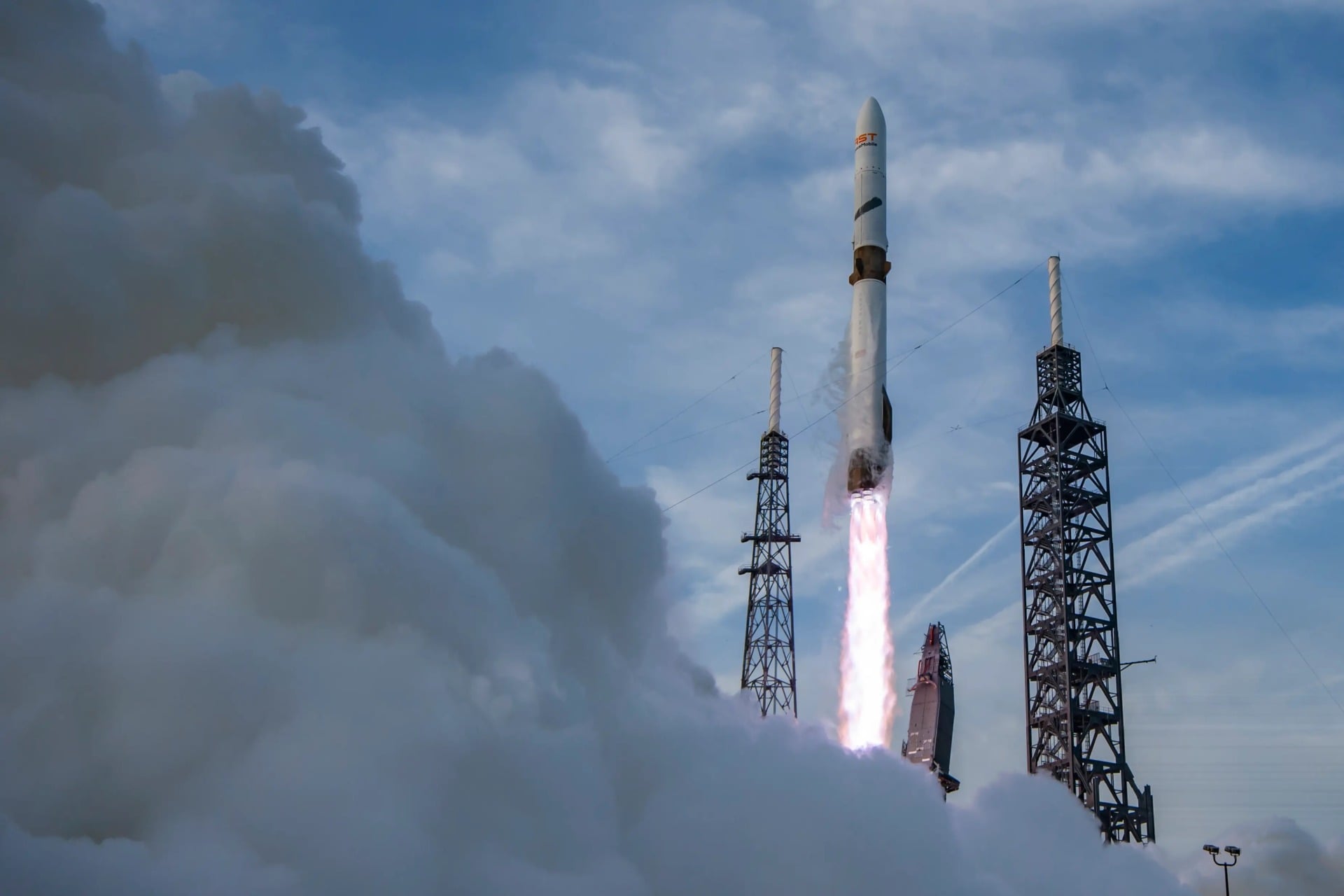
The third launch of Blue Origin’s New Glenn on Sunday was both a major success and an embarrassing failure. While the rocket nailed the booster landing, an issue with the upper stage caused it to put its payload in the wrong orbit—whoops.
The Federal Aviation Administration has grounded New Glenn while Blue Origin investigates the mishap. On Monday, CEO Dave Limp said on social media that initial data points to a thrust anomaly during the second upper stage burn.
“One of the BE-3U engines didn’t produce sufficient thrust to reach our target orbit,” Limp explained. The payload was AST SpaceMobile’s Bluebird 7 satellite, part of a planned constellation designed to provide direct-to-smartphone broadband service.
Blue Origin revealed that the satellite was placed in an “off-nominal” orbit about one hour after the scheduled payload separation. AST SpaceMobile later declared the satellite lost and said it would be de-orbited because its altitude was too low to sustain operations using its onboard thruster technology.
You win some, you lose some
The upper stage anomaly took the shine off what otherwise would have been a huge win for Blue Origin. This third mission, NG-3, flew with the same booster used for New Glenn’s second flight in November. This first re-flight of a New Glenn booster aimed to demonstrate its rapid reusability, and that it did.
Shortly after launch, the booster began its descent back to Earth, successfully touching down on a barge called Jacklyn in the Atlantic Ocean. The landing marked a major achievement for Blue Origin. The company has reused the New Shepherd rocket’s smaller, suborbital booster several times, but New Glenn is much larger and designed for wider commercial use.
Demonstrating the reusability of this heavy-lift launch vehicle is essential to the company’s goals and to solidifying its relationships with customers like AST SpaceMobile. Just two days after New Glenn botched the Bluebird 7 launch, the Federal Communications Commission approved AST SpaceMobile’s application to build a 248-satellite constellation. To do that, the company will need reliable, high-cadence launch providers.
Blue Origin may be on track to ramp up New Glenn’s launch cadence, but the NG-3 mishap has thrown the rocket’s reliability into question. AST SpaceMobile uses several launch providers, namely Blue Origin, SpaceX, and the Indian Space Research Organization (ISRO).
Despite what happened during NG-3, the company said it still expects an orbital launch every one to two months on average during 2026, with a goal of putting about 45 satellites in orbit by the end of the year. In his statement, Limp said Blue Origin has been in steady communication with AST SpaceMobile and that his team was looking forward to many flights together.
Much at stake
It’s not yet clear how this upper stage mishap will impact the rest of New Glenn’s 2026 launch schedule, but there’s a lot on the line. Blue Origin has some important missions planned for the rocket this year, including a demonstration flight of the company’s Blue Moon Mark 1 (MK1) lunar lander and the biggest deployment of Amazon Leo satellites to date.
The MK1 cargo lander is a precursor to Blue Origin’s Blue Moon Mark 2 (MK2) crew lander, which NASA could use to send astronauts to the Moon on Artemis 4. The agency hopes to test a modified version of MK2 in orbit next year, so it’s important that MK1 development proceeds smoothly.
In response to Limp’s statement about the NG-3 mishap, NASA Administrator Jared Isaacman said he is confident that the company’s “sustained achievements” will keep the agency “on track for success with the Artemis program.”
Amazon Leo’s deployment is important to Blue Origin owner-founder Jeff Bezos, who also founded Amazon, the satellite network’s parent company. Bezos posted a video of the successful New Glenn booster landing on Sunday but has not publicly commented on the satellite deployment mishap.
More details about the anomaly—and what Blue Origin is doing to resolve it—should emerge as the company’s investigation proceeds. This will provide more clarity on how upcoming New Glenn flights could be impacted and whether the rocket’s ambitious launch manifest will remain on track.