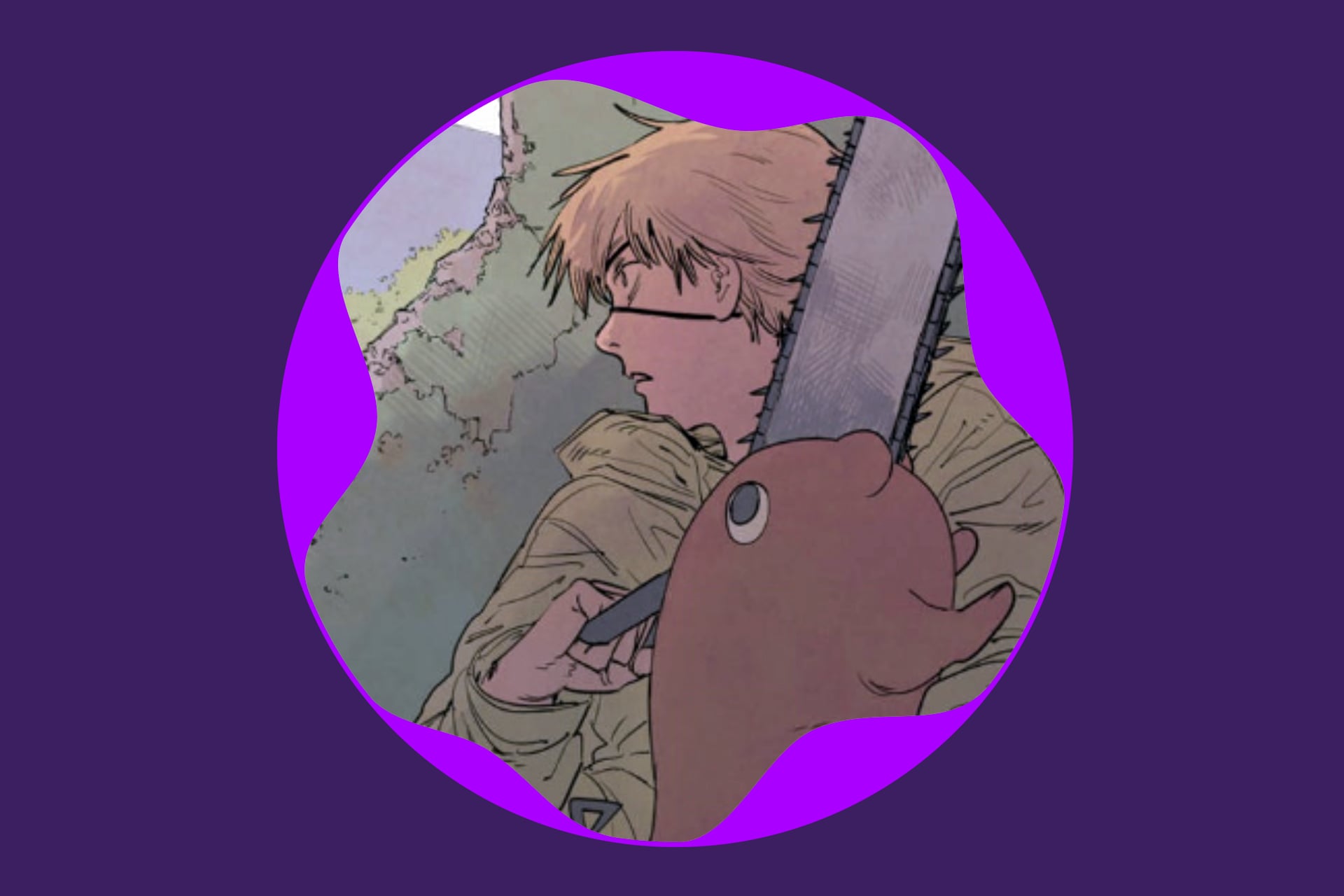
The Chainsaw Man manga is over, and like its predecessor, Fire Punch, it’ll have years worth of unpacking for its fandom to decipher the ambiguity of its “themes and such” in the afterlife of its series finale, just like Neon Genesis Evangelion before it. Rather than Johnny-come-lately throwing my hat in the ring with a fan theory of my own, I had a bit of a eureka moment in the afterglow of reading the manga about its cutesy doggo-shaped friend, Pochita. More specifically, what his powers actually do and the yokai that shares its traits.

The reason Pochita/the Chainsaw Devil is the most feared—in a universe where humanity’s fears, like falling, guns, and war, are made flesh—is that he can remove those concepts from existence by eating them. It was an especially funny gag in Chainsaw Man Part 2, where the concept of ears was removed for a couple of chapters, leading to a couple of funny panels with elephants drawn without ears. So when the series’ penultimate chapter saw Pochita declare to Denji that he’d eat himself and create “a world in which Chainsaw Man doesn’t exist” and by proxy himself, there was a bit of confusion amongst fans when Pochita made a cutesy little appearance in its final chapter. There, Denji’s heart skipped a beat upon reencountering Asa Mitaka when she thanked him for saving her from tripping and eating shit, calling him “Chainsaw Man.”
Much of that confusion stemmed from earlier chapters, which clearly showed that whenever Pochita consumed concepts like death, characters like Denji would forget what the word even meant. Characters also would never die, creating a Sisyphean problem during Denji’s climactic battle with Yoru, the war devil. So, when Denji winds up in a quasi-rebooted universe where characters could say the words “Chainsaw” and “Chainsaw Man,” and Pochita cheekily smiled like a 3 appearing as an X-ray of Denji’s heart while he was already vaguely recalling his past life and meeting Power, the question among fans arose whether Pochita was even the Chainsaw Devil to start with.
As I mentioned earlier, I’m not getting involved in this fan theory at all. Mainly because I see Chainsaw Man as a manga where I don’t overanalyze every detail of its story, mostly because Fujimoto’s broader works have told us that, at the end of the day, he’s a creator that firmly believes in his own vision, and everything else is just someone’s read on it. It’s not that deep! That being said, my eureka moment about how Pochita’s powers are literally like the slept-on Japanese yokai, Baku, added a new texture to the manga’s ending that felt especially interesting, especially in the wake of many readers feeling troubled by its ambiguous ending.
Baku is a chimera yokai—part elephant, bear, cow, rhino, and tiger—and in Japanese folklore, it’s known as the dream eater. The story goes that children call upon Baku three times to devour their nightmares; he appears, does exactly that, and lets them slip back into peaceful sleep. It’s kinda like Bloody Mary if she were a mystic Pokémon (see: Drowzee, Hypno, Munna, and Musharna, all inspired by the yokai).
But there’s a catch: call on Baku too often, and in the hunger left over after finishing a child’s nightmares, he’ll start consuming their good dreams too—their hopes, desires, everything—leaving them hollowed out. Pochita is basically a baby-faced Baku, swapping the trunk for a cutesy lil’ chainsaw nose. And that dual nature—the guardian who protects dreamers but warns them not to overindulge in their gifts—is Denji and Pochita’s relationship to a T.
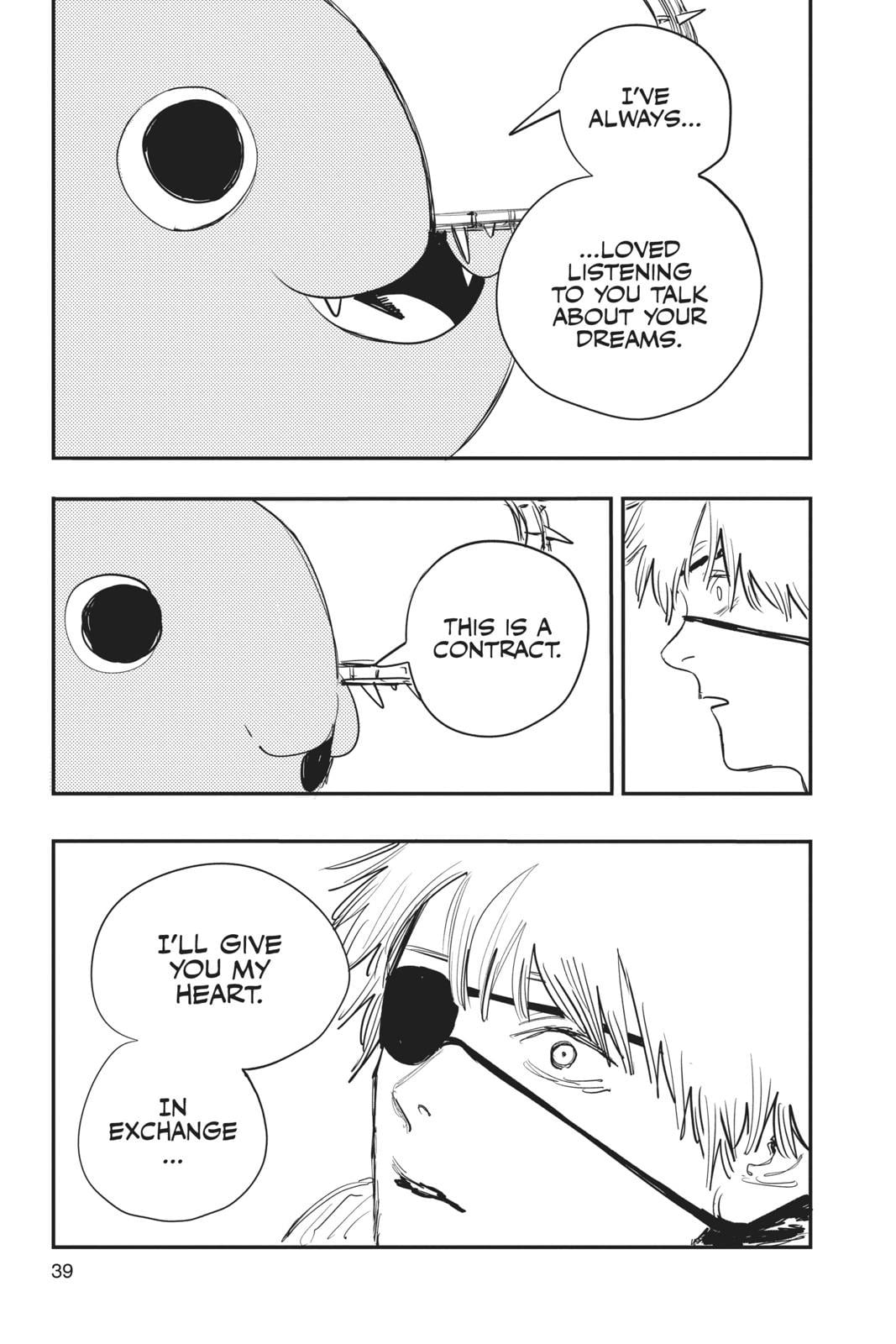
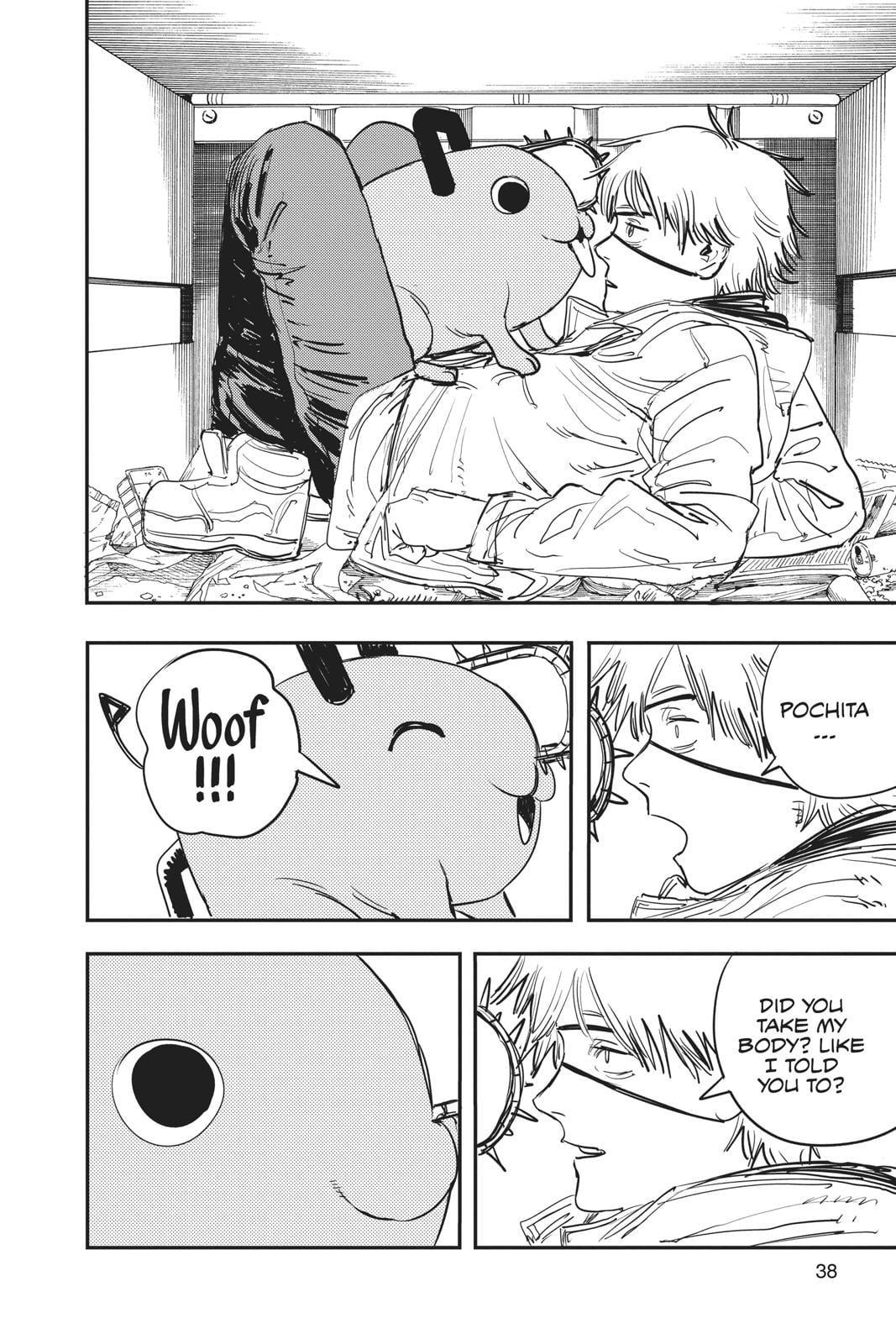
When Pochita first meets Denji, Pochita enters into a contract with him, asking him to share his dreams. Granted, those dreams were to live the life of cute girls, good food, and hugs that he’d always dreamed of. But Pochita would grant him that wish by literally bringing him back to life to achieve it—even at his own detriment. Pochita would also revisit Denji a couple of times in Chainsaw Man Part 2—after leaving the majority of his appearances in between chapter pages, reacting to the events that unfolded—asking again what Denji would want to dream of next. At the time, that was Chainsaw Man again, leading to a visceral moment when Denji was the happiest he’d ever been, even as his domestic life with his dogs and kid sister was literally in flames.
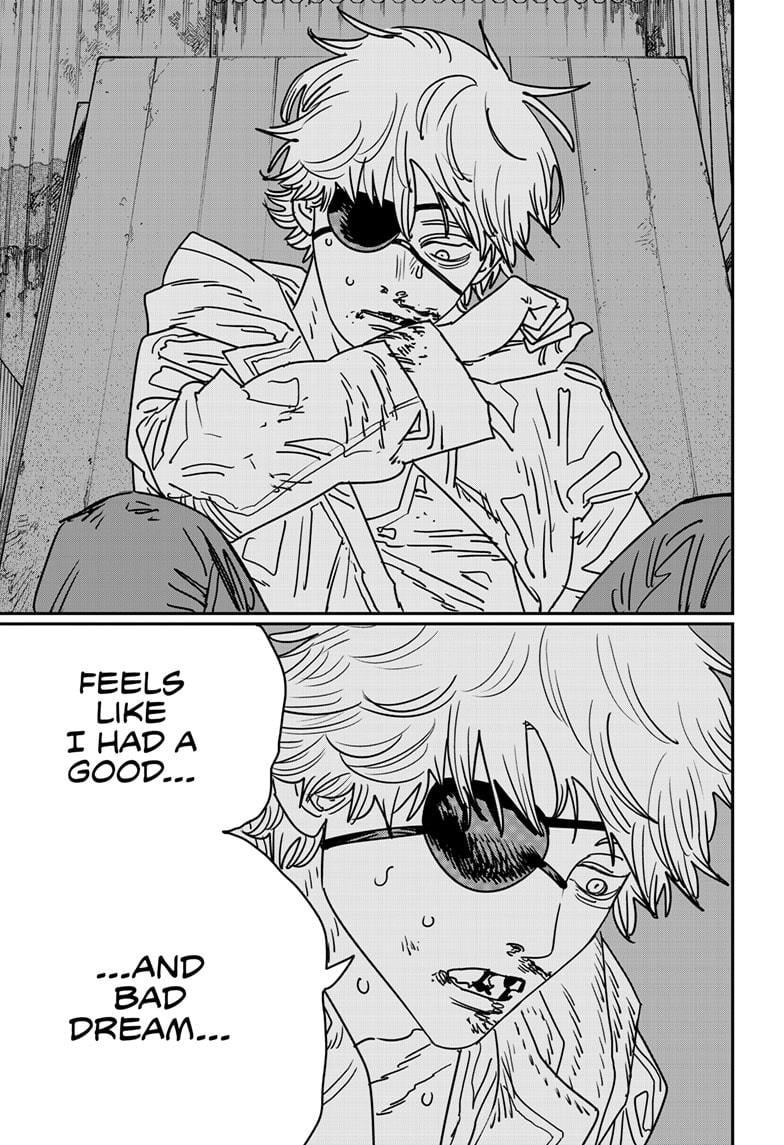
Having Pochita flip the whole Baku dream-eating idea around by telling Denji it’s better he didn’t have dreams of “gettin’ to have sex” and “unlimited kisses” was hilarious as hell. It’s both a critique of Denji’s regression into his shortsighted dreams and a clever twist on folklore, with its resident devil warning its reckless target that they’re in over their head. And true enough, when Denji wakes up in his new reality, he says he feels like he woke up from a good and a bad dream. Though I’d wager that the life he’s bound to lead beyond the pages of Chainsaw Man’s finale isn’t an empty one like Baku’s victims, because Pochita also had a similar dream Monkey’s Paw scenario with Denji’s best buddy, Power.
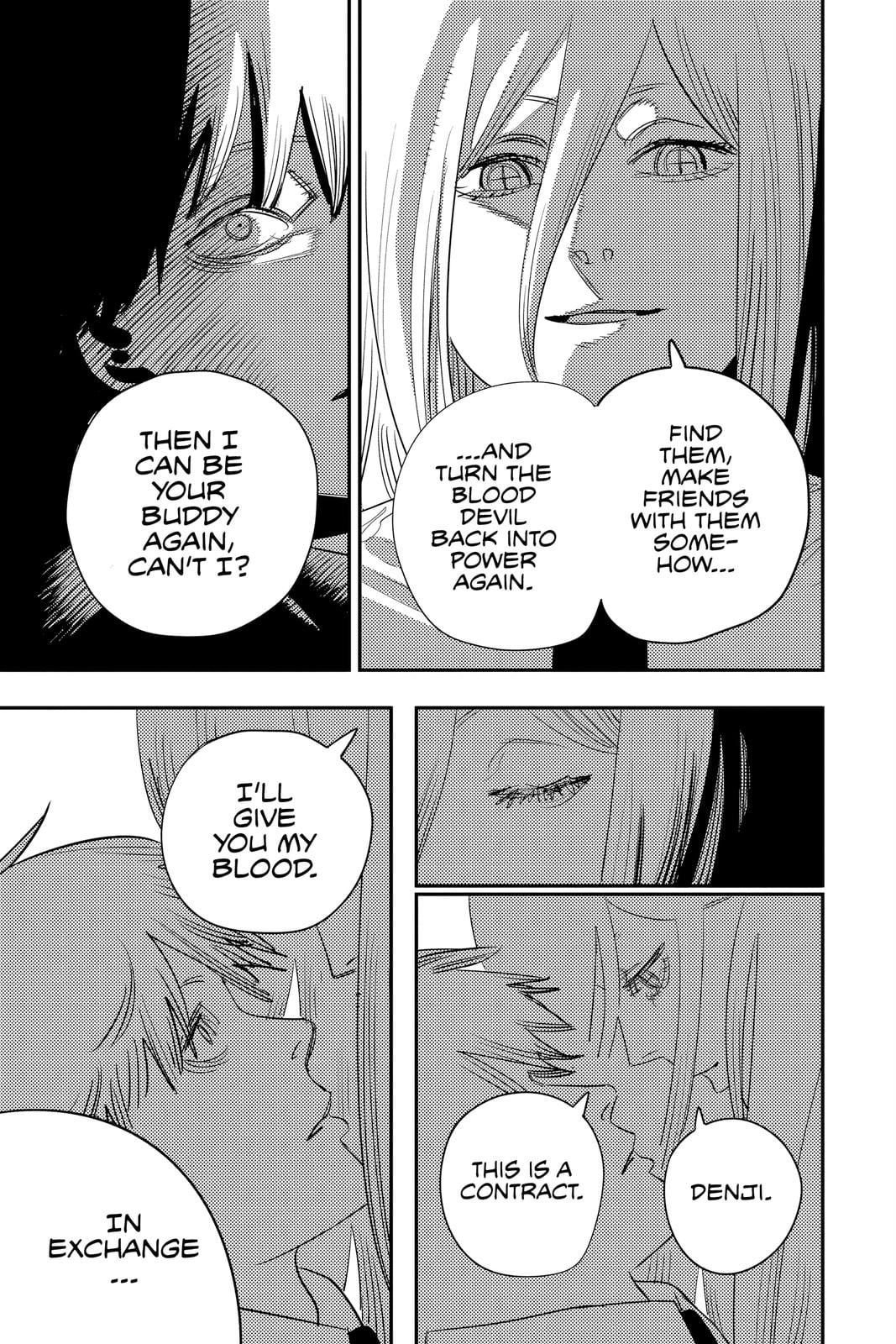
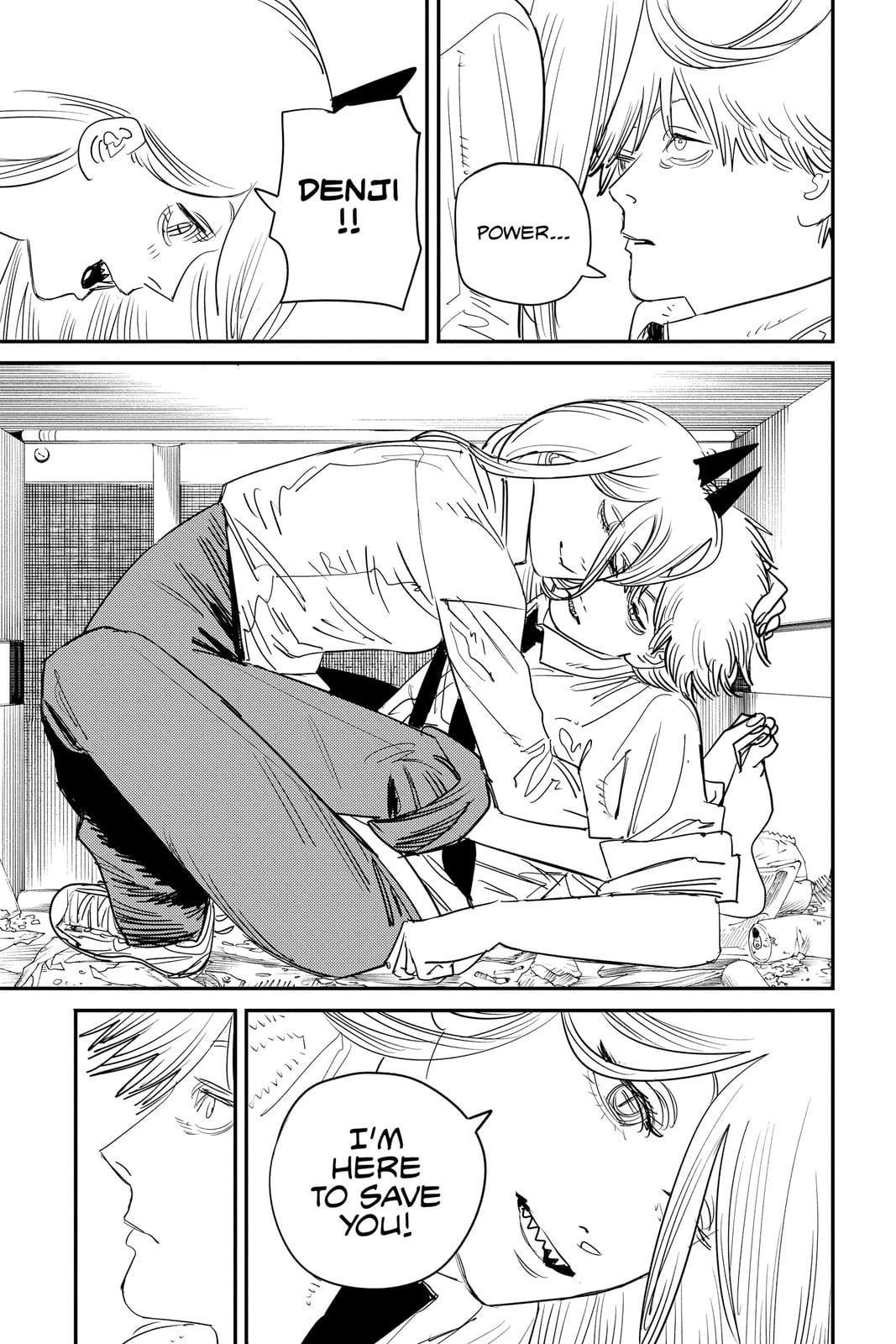
At the end of Chainsaw Man Part 1, Power meets Pochita while she’s “sleeping,” and he asks her if she’s willing to cannibalize him (don’t ask) to save Denji. She says, of course, because Denji’s her buddy. I choose to believe that Power returning in its finale is the result of her similar contract with Denji so he can find her and be buddies again—and lo and behold, that’s pretty much the first thing that happens in Chainsaw Man‘s final chapter. A bit of wish fulfillment, sure, with fans seeing their favorite character make her grand return. But it also saw the duo sharing a single brain cell, immediately falling back into their hectic sibling dynamic.
While there’s a loud sect of fans who read the final chapter as wanton wish fulfillment—a take that’s pretty much been lobbed at the entire manga—it’s always felt more like Fujimoto dragging Denji across barbed wire and broken glass to chase a shortsighted dream. And the punchline, of course, is that he eventually realizes the thing he truly wants isn’t fame or kisses but a friend like Power again.
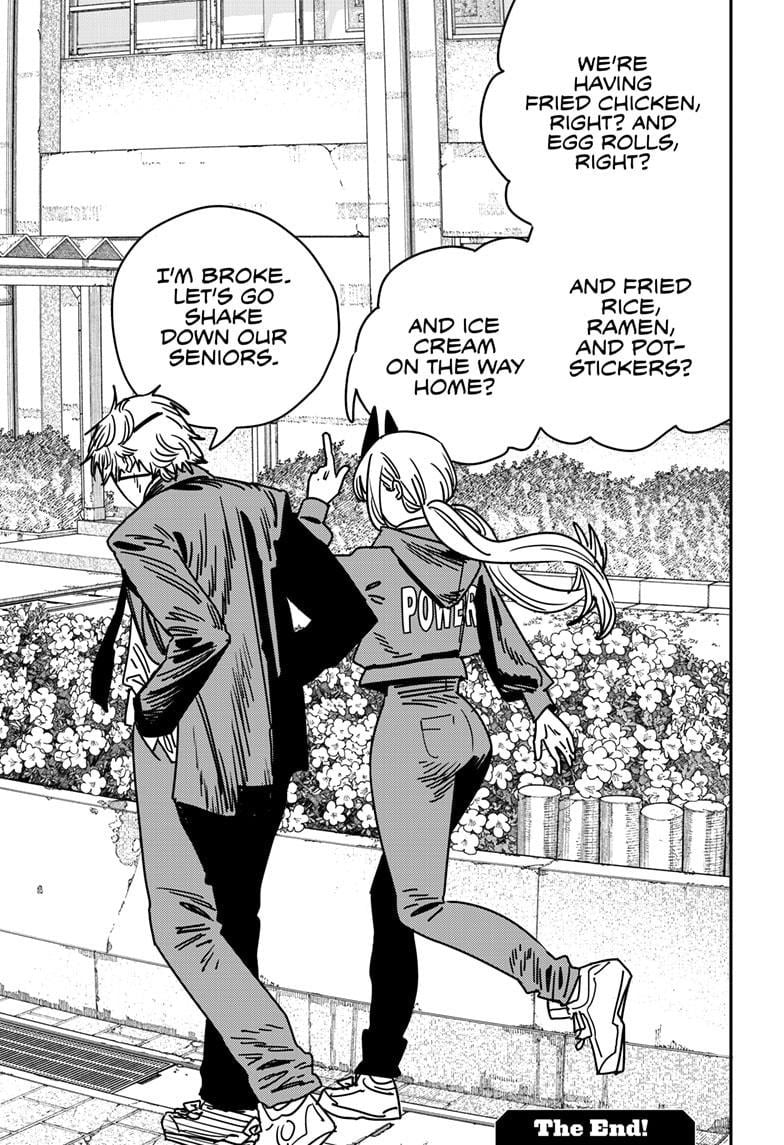
Chainsaw Man‘s final chapter delivers a double whammy where one can posit Fujimoto played the long game with binding contracts, mixing dream-scenario wish fulfillment with Pochita’s blood running through Power’s veins as a kind of net-positive Baku outcome. I choose to believe Pochita’s Baku‑esque powers shaped an ending where Denji’s life isn’t hollowed out but instead cracked open—giving him the chance to dream of something better beyond the confines of Chainsaw Man’s shonen suffering olympics narrative. And that’s beautiful.
Want more io9 news? Check out the best movies and TV shows to stream this month and all the upcoming sci-fi, fantasy, and horror books that should be on your radar.