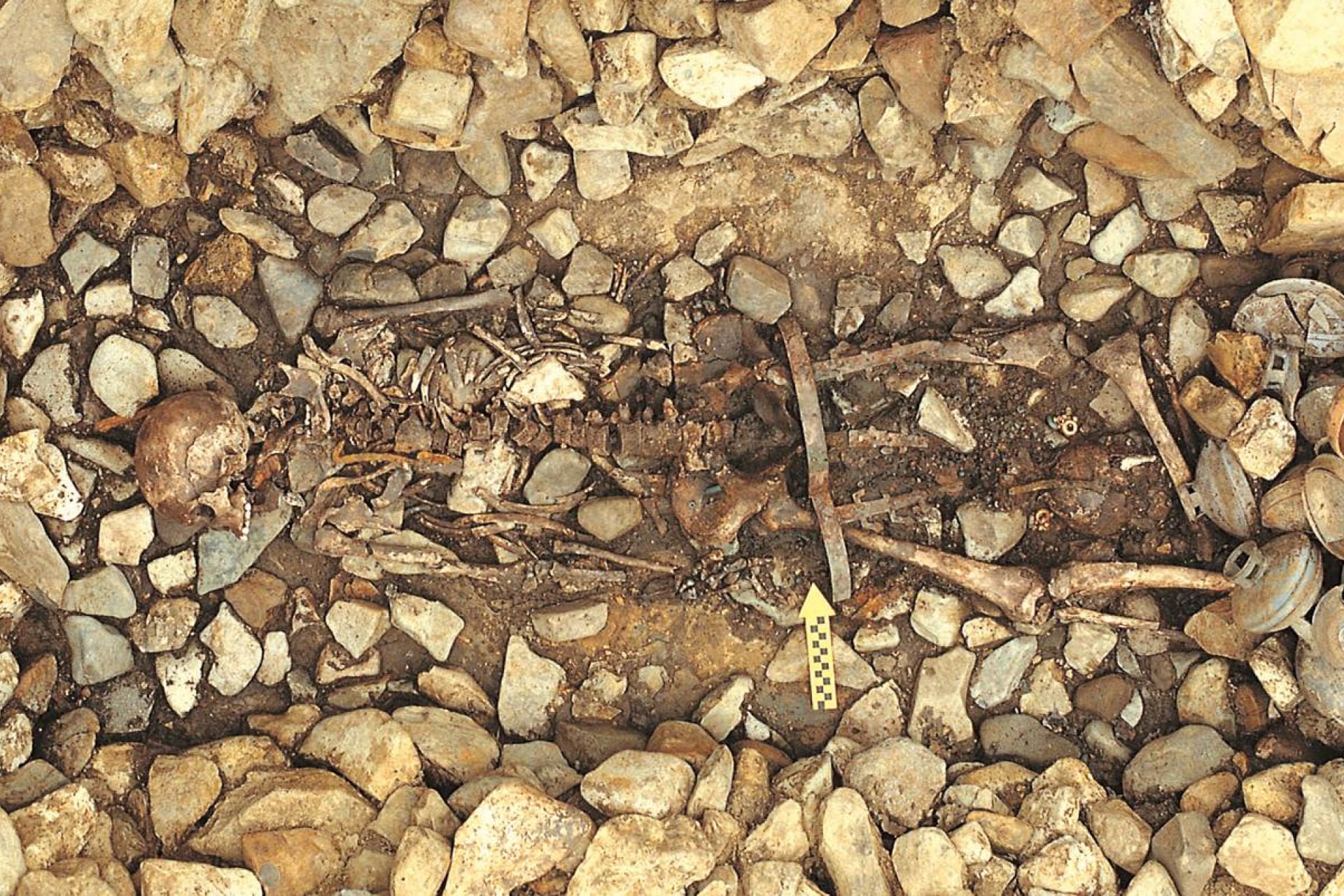
Studying ancient history means encountering some unsettling traditions. For me, that included learning about “sunjang,” a funeral practice in which servants were buried alive with their masters. With advances in genetic technology, scientists are now gaining new insights into the motivations and characteristics of this grim tradition.
In a recent Science Advances study, an international research team conducted a DNA study of 78 skeletons from a Korean cemetery dating back to between 57 BCE and 668 CE, during the Three Kingdoms period. The tomb, attributed to the Silla Kingdom, turned up genetic evidence of inbreeding and exogamy that distinctly “differ from patrilocal systems observed in ancient Europe,” the paper noted.
“Based on archaeological data, we posed questions regarding blood relations and kinship structures in Silla society,” Daewook Kim, the study’s co-lead author and a curator at Yeongnam University Museum in South Korea, told Gizmodo. “These questions were addressed by integrating bioanthropological analysis of human remains with molecular genetic evaluation of ancient DNA, ultimately leading to our archaeological conclusions.”
Til death do us part… literally
Sacrificial burials like sunjang have actually been recorded around the world in ancient times, for reasons including, but not limited to, “resource conflicts, ritualistic practices, and justification of the accumulation of wealth and power,” according to the paper. In Silla, historical records indicate that the practice was to consolidate the rank and social status of nobelmen.
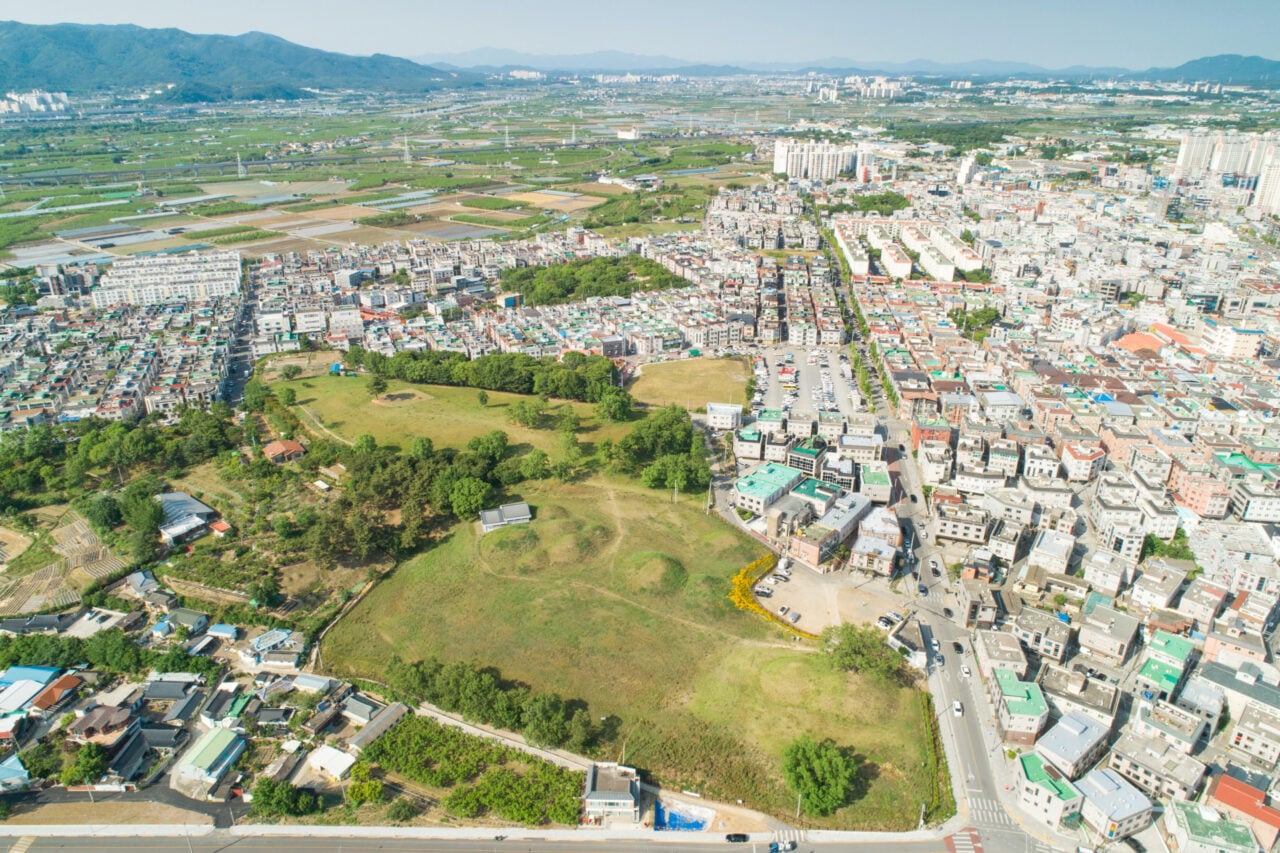
“This practice reflects both the authority to take lives for the sake of the afterlife and the hierarchical nature of the society at the time,” Kim explained. “Numerous cases of sunjang have been identified at the Imdang and Joyeong-dong tomb complexes in Gyeongsan, which were the focus of this study.”
According to the Encyclopedia of Korean Culture, kings and social elites were buried with servant women, soldiers, coachmen, and more—individuals that the tomb owner “required,” presumably in the afterlife. Sacrificial victims were typically in their late teens to thirties and appeared to be in relatively good physical health. The practice was banned in 502 CE.
Both local and international scholars knew of sunjang and similar practices through historical records and archaeological discoveries. However, genetic studies to confirm that such mass burials actually happened as suspected were scarce, particularly for ancient civilizations outside of Europe.
Grave genetics
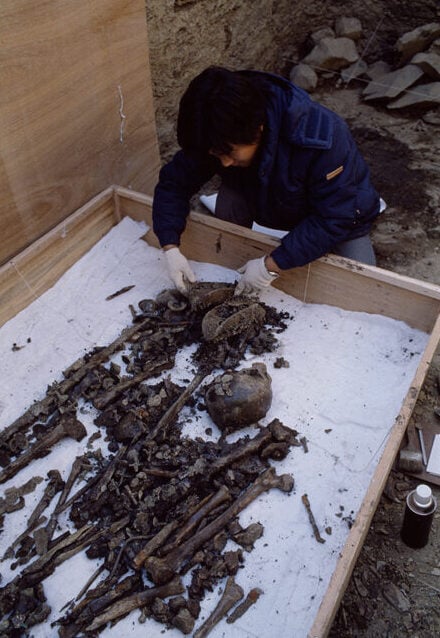
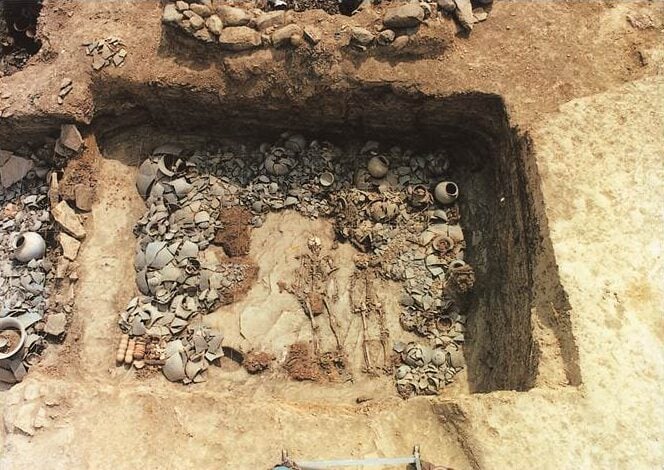
The new study sought to address this issue by studying the cemetery complex in Gyeongsan, a city known to host many archaeological sites for Silla-era burials. The DNA results both confirmed previous suspicions and revealed new insights. Based on the various artifacts and accessories in the graves, the team was able to identify the “tomb owners,” or the elite individuals who got their own burials. The individuals sacrificed in sunjang displayed different burial patterns that indicate they were buried together in mass graves.
As for genetic relations, the team discovered 11 pairs of first-degree relatives (parents, children, or siblings); 23 pairs of second-degree relatives (cousins or grandparents); and 20 pairs of more distant relatives. In three cases, parents and children were sacrificed together in retainer graves, supporting historical records suggesting that entire families “participated” in this tradition, according to a statement from Seoul National University.
There were also five cases of close-kin marriage for both tomb owners and sacrificed attendants, which implies “close-kin marriage “may not have been a practice exclusive to the royal elite but a broader societal custom,” Ji-won Oh, a biologist at Yonsei University in South Korea who wasn’t involved in the study, told Donga Science.
Ancient funerary customs
That said, and as the team admits in the new study, the results are constrained by the “ambiguous burial status” of some bodies—which, again, are presumably more than 2,000 years old. The tombs analyzed for this study also represent a limited region and cannot characterize funerary customs as a whole.
Still, the team is excited to expand paleogenomic investigations beyond European sites, as the findings could inform similar investigations in Asia. Jack Davey, director of the Early Korean Studies Center in Cambridge, told Live Science that the study is meaningful in that it studied skeletons from the ancient Three Kingdoms, which itself is rare. For instance, the discovery of household-wide sunjang practices “raises questions about institutionalized violence, slavery, and social mobility in this 1,500-year-old Korean kingdom,” explained Davey, who wasn’t involved in the new work.
“Bioarchaeological research based on human remains has the potential to continue expanding, including studies on ancient pathogen DNA, genetic diseases, and stress patterns,” Kim concluded to Gizmodo. “Such research will allow us to reconstruct the lives of ancient people in much greater detail.”