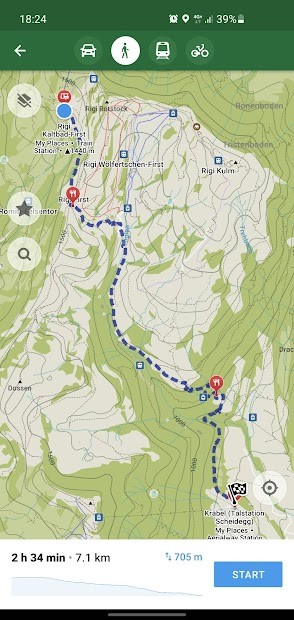
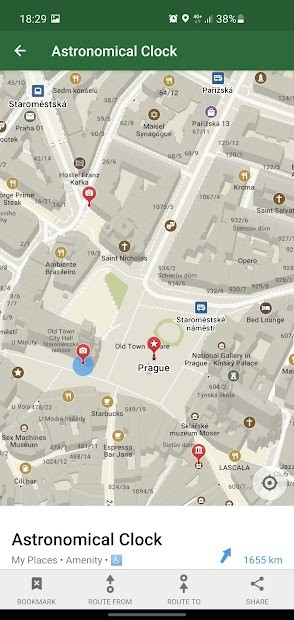
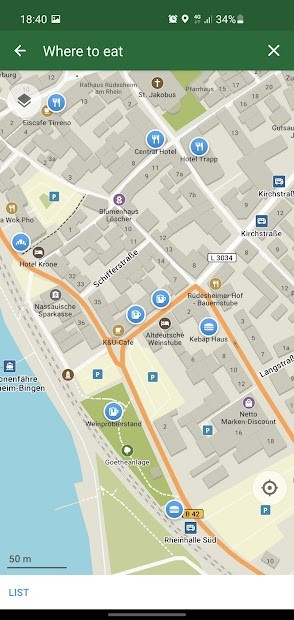
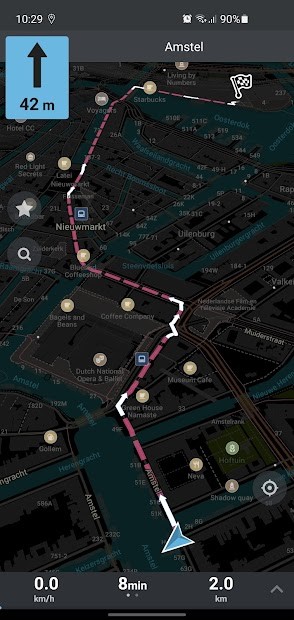
Travelers, hikers, cyclists, and regular explorers (on foot or with a car) can use the open-source Organic Maps navigation application to move around because it upholds privacy protection while remaining easy to use and anonymous. The application operates as a navigation system that does not trace user movements.
The application maintains total privacy by not monitoring your movements while staying free of advertisements. It also operates in the background without data theft. Organic Maps stands out today because of its rare dedication to privacy, and this element has allowed it to create its unique position. This application serves those who require location guidance without having their personal identity revealed.
The basic principle behind this project involves developing a map application that combines functionalities with user convenience while ensuring complete protection of personal data. And that’s what it delivers. Customers rely on OpenStreetMap for data distribution, since active users maintain and enhance map information through their updates. Whatever your travel location becomes, the Organic Maps application will provide relevant mapping information, including remote villages or minimally charted trails.
The app makes no attempt to record your search history or track your movements while operating exactly as described in its terms of service. You can access search features plus directions and routing and make bookmarks without any requirement to share your storage space with the application. The map application works without connection and launches immediately while presenting an uncluttered interface. It’s navigation, minus the noise.
Why Should I Download Organic Maps?
Hundreds of navigation applications exist among the choices available in the market. So why pick Organic Maps? This application stands out since it refuses to trick users for its own gain. The application tracks your habits without invasion and avoids marketers' use of location information and unrequested screen updates. It's just a map. In some instances, having a straightforward map is exactly the tool you require.
You will experience major speed improvements on Organic Maps compared to the draining map solutions you have tried before. It’s light. It’s fast. The application functions without expecting an active internet connection. After downloading the necessary maps, you can use them without requiring mobile signal connectivity. Such functionality proves essential for people either venturing into mountainous terrains or traveling through rural zones, and for anyone who needs to conserve their mobile data.
The main benefit of selecting Organic Maps originates from its focus on providing easy and straightforward navigation. No flashy gimmicks. No learning curve. The application chooses simplicity by abstaining from life prediction. The application will only generate destination suggestions after receiving an explicit request from users.
Every destination request you make results in the simplest possible route to reach your destination. The application shows all travel routes in an uncomplicated manner, with no unexpected random rerouting unless you need alternative directions because it considers itself more knowledgeable than its users.
Also, it’s open source. The available source code enables inspection by any person, who can also verify and extend its functionality. The open-source nature of the software builds extra trust because people can check behind-the-scenes operations at a time when mobile applications feel suspiciously invasive. The secrecy about the Organic Maps system functions is eliminated because you can view all activities within the app. Digital navigation maintains personal freedom because a group of volunteers runs the open-source platform. All platform functions are accessible to the community members who seek to protect navigation rights through voluntary actions.
It’s especially helpful for travelers. Mobile data service absence when traveling abroad does not restrict viewers from using the app to navigate cities while finding hotels and locating public transportation, and marking noteworthy places. The application provides sufficient orientation without requiring paper-based directions or user speculation. The application serves both individuals who want to disconnect from pop-ups and data trail monitoring and people who need map-based guidance when abroad without mobile data access.
The high quality mapping tool Organic Maps deliver reliability together with calmness and honesty, so it earns your full attention. The app concentrates on delivering one simple thing without any unnecessary attempts at expansion.
Is Organic Maps Free?
The mapping service Organic Maps does not require any payment from users. Users can use the app for free since the platform avoids charging its users and keeps all premium content outside paywalls. The open platform has emerged from a worldwide community dedicated to free access for all users across the world.
What Operating Systems Are Compatible with Organic Maps?
The application of Organic Maps functions perfectly on devices that run either Android or iOS software systems. Users of both Android and iPhone smartphones can visit their specific app stores to download the app, followed by immediate navigation activation. The application maintains a lightweight operation that enables smooth performance across devices even on older models while conserving battery charge and system speed. Organic Map Support ensures users can depend on the app in remote locations or while operating on slow data connections.
The application lacks support for computer operating systems, while the website function remains unavailable. But that’s intentional. The application functions exclusively from your mobile phone, which you always keep close at hand. The application achieves its best performance when used in combination with locations that feed it minimal demands for return benefits.
What Are the Alternatives to Organic Maps?
Several applications with similar concepts exist as alternatives to Organic Maps, yet they take slightly different approaches to open mapping and offline navigation. The main priority of Organic Maps is privacy and user simplicity, but alternative navigation systems take different paths.
The software relationship between Organic Maps and Maps.me exists because Organic Maps originally originated from Maps.me development. Maps.me maintains offline map services and routing, but presents ads and background tracking systems following changes in its business strategy. The change in policy at this stage became a critical factor that caused numerous users to switch to Organic Maps. Maps.me maintains a strong user interface, together with substantial user support. Users finding the combination of commercial navigation features with a less centralized and private user experience can use this application.
Another alternative to Organic Maps is the free open-source map platform OpenStreetMap or OSM. It organizes its development through a massive community composed of users, including both you and me. OpenStreetMap functions like Wikipedia does for mapping platforms, since large numbers of volunteers worldwide contribute to its creation and maintenance. Users can freely edit the mapping content and add new roads or add locations while fixing any encountered mapping mistakes.
Gaia GPS is geared more towards outdoor adventurers, hikers, and backcountry travelers. It offers detailed topographic maps, trail overlays, weather information, and recording features for your routes. Unlike Organic Maps, Gaia is not completely free, and many of its advanced features require a subscription. But for someone who spends a lot of time off-road or exploring national parks, it might be a good fit.