Geologists know that the Colorado River has been descending from the Rocky Mountains down into western Colorado for at least 11 million years—but where the river used to end up way back then has long remained a mystery.
The trail ran cold in northern Arizona, where the river hits the Grand Canyon. Past evidence had confirmed that the Colorado River burst forth through the ravines that it had helped carve into that canyon system roughly 5.6 million years ago, which implies a puzzling and nearly five-million-year gap of missing time. But now, a sediment analysis points toward an ancient, long-since-dry lakebed where a new study contends that the Miocene Epoch’s version of the Colorado River once pooled up into a giant natural reservoir—located just east of the Grand Canyon.
“Geologists have proposed over a dozen hypotheses for the canyon’s formation and the Colorado River’s path,” geologist John Douglass, a coauthor on the new study, said in a statement.
Douglass, a professor at Paradise Valley Community College in Arizona, worked with researchers from the U.S. Geological Survey and a host of universities across the American West to rigorously test their new findings against telltale fossils and geological records. The researchers believe that the Colorado River once flooded into the Bidahochi basin on what is now Navajo Nation land, before spilling over the top of the Colorado Plateau into the old gorges that would become the Grand Canyon we know today.
The disappearance of Bidahochi Lake
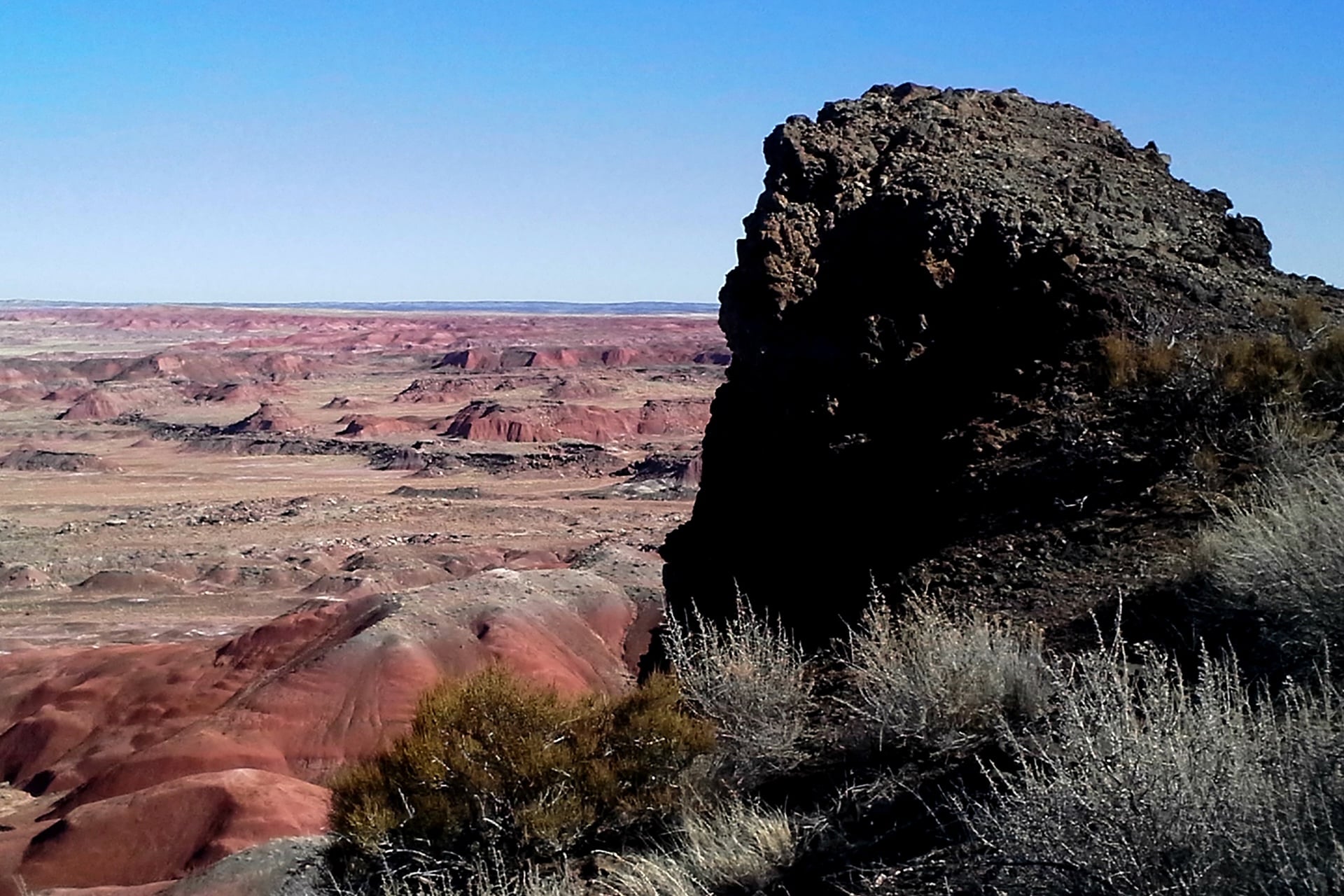
The collaborative project began when Douglass met up with John He, a geologist at the University of California, Los Angeles, and Emma Heitmann, a doctoral student studying hydrogeology at the University of Washington, on a field expedition to study remnants of Bidahochi Lake. The body of water that had once settled down into what is now known as the Bidahochi Formation has never been fully explained. There’s been plenty of theories, but no consensus on how big the lake was, what rivers fed into it, or why it eventually dried up.
The team’s own version of the case rests on old and very hardy microscopic crystals called zircons, washed into the Bidahochi’s sandstone and sediment. Zicrons change very little from the moment they are formed from molten magma cooling on the Earth’s surface—so, in this case, these crystals can act almost like a tracer as they are washed downstream from the shifting flows of the Colorado River.
“Zircons are some of the oldest fragments of our Earth,” He, the new study’s lead author, said in a press statement. “They’re like little time vaults, and by looking at the age and geochemical signature of zircons, we can tell where a sediment that has been moved by a river originated.”
The researchers employed a technique called detrital zircon geochronology, which measures identifying ratios of uranium and lead isotopes across hundreds of zircon samples, to estimate the age and possible origins of these sediment deposits along the Bidahochi Formation. Their results, published Thursday in the journal Science, matched zircons found in 6.6 million-year-old Bidahochi sediment deposits to zircons deposited both downstream and upstream along the Colorado River
“The entire ecosystem probably changed as a result of the arrival of the Colorado River into the basin,” He noted.
A fishy appearance
While the new study might not convince the most skeptical geologists, who have argued for decades against the Bidahochi “megaflood” theory, the team also turned to past paleontological evidence to confirm their results.
Fossils of large fish species unearthed in the upper Bidahochi Formation, first interrogated in a 2008 paper by the Geological Society of America, showed suggestive physical traits similar to modern species well-equipped for a life swimming in the Colorado’s fast-flowing river rapids.
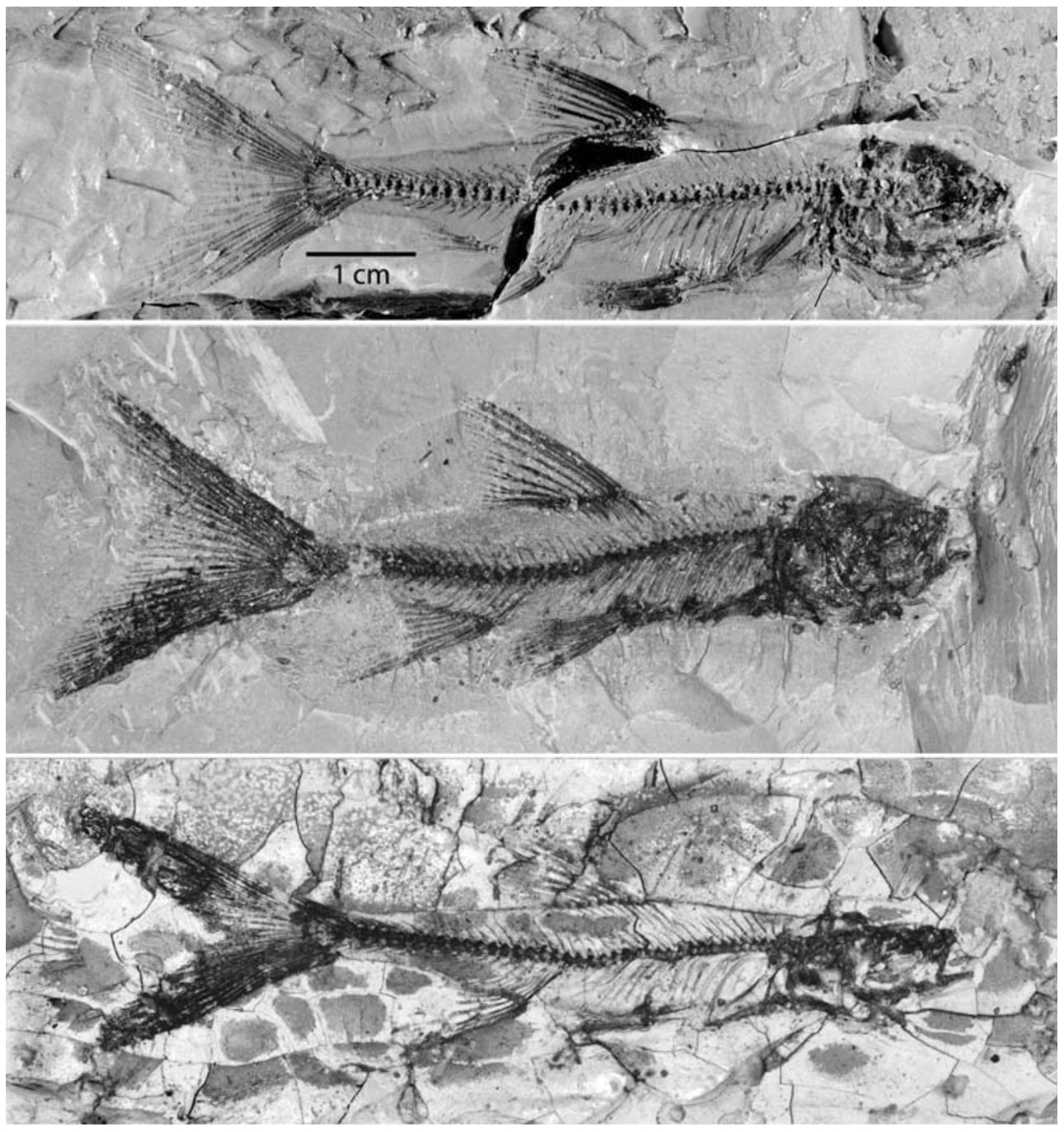
Three fossil specimens in particular displayed enlarged fins and slender joints, or “caudal peduncles,” at the base of their tail fins: features typical to four species of fish known to inhabit the Colorado River, fish from the genus Catostomus (“suckers”) and the genus Gila (“western chubs,” and stop laughing at these fish names. Have some respect).
“In some ways, you could really think of it as the birth of the Colorado River that we know today,” according to He. “I think there is something unique and disquieting when the planet’s history is laid out before our eyes, but we cannot fully read it.”