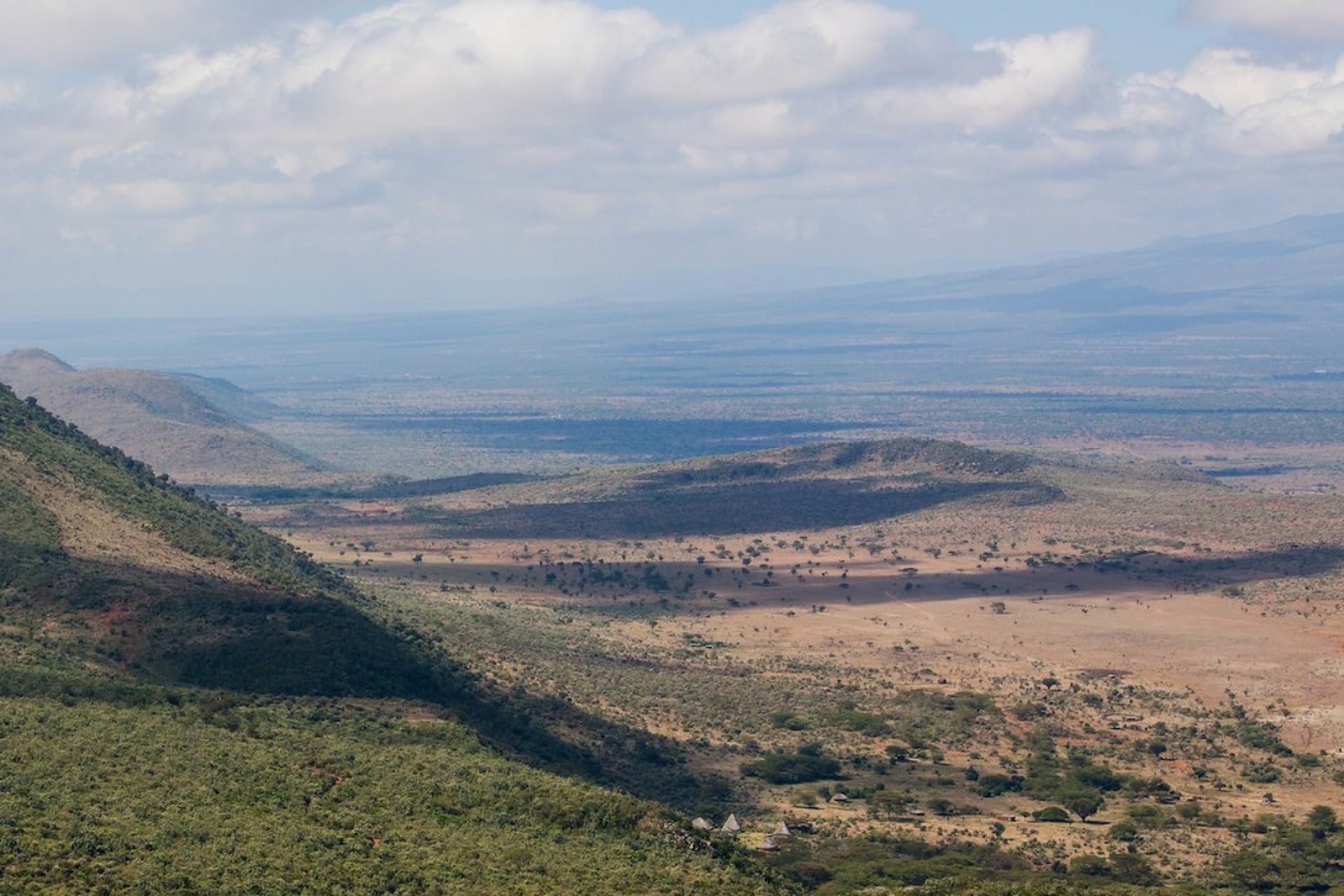
Earth’s mantle appears to be leaking a little along Central Africa. If this continues to develop, this rift could grow into a new tectonic plate boundary—splitting the African continent in half.
In a Frontiers in Earth Science study published yesterday, an international team of Earth scientists reports an unexpectedly high ratio of helium isotopes along the Kafue Rift in Central Africa. This chemical composition suggests the hot springs in Zambia are directly connected with the Earth’s mantle, acting as a pathway for substances in the mantle to reach the crust. An active rift doesn’t necessarily lead to significant changes in Earth’s outer layers, but scientists are nevertheless closely monitoring the new rift for unusual developments.
“What our data confirms is that this system is currently ‘awake’ and geologically active,” Rūta Karolytė, the study’s first author and an Earth scientist at Oxford University in the U.K., told New Scientist. “Having an active rift developing doesn’t necessarily mean that in 100 million years you’re going to have an ocean there. But it is a possibility.”
Inklings of a bigger shift
A rift refers to a large break in Earth’s crust that causes the surface to gradually sink and the associated elastic uplift, according to Mike Daly, the study’s co-author and an Earth scientist at Oxford University. In a journal statement, Daly explained that rifts may grow into plate boundaries, but their activities typically cease “before the point of lithospheric break-up and plate boundary formation.”
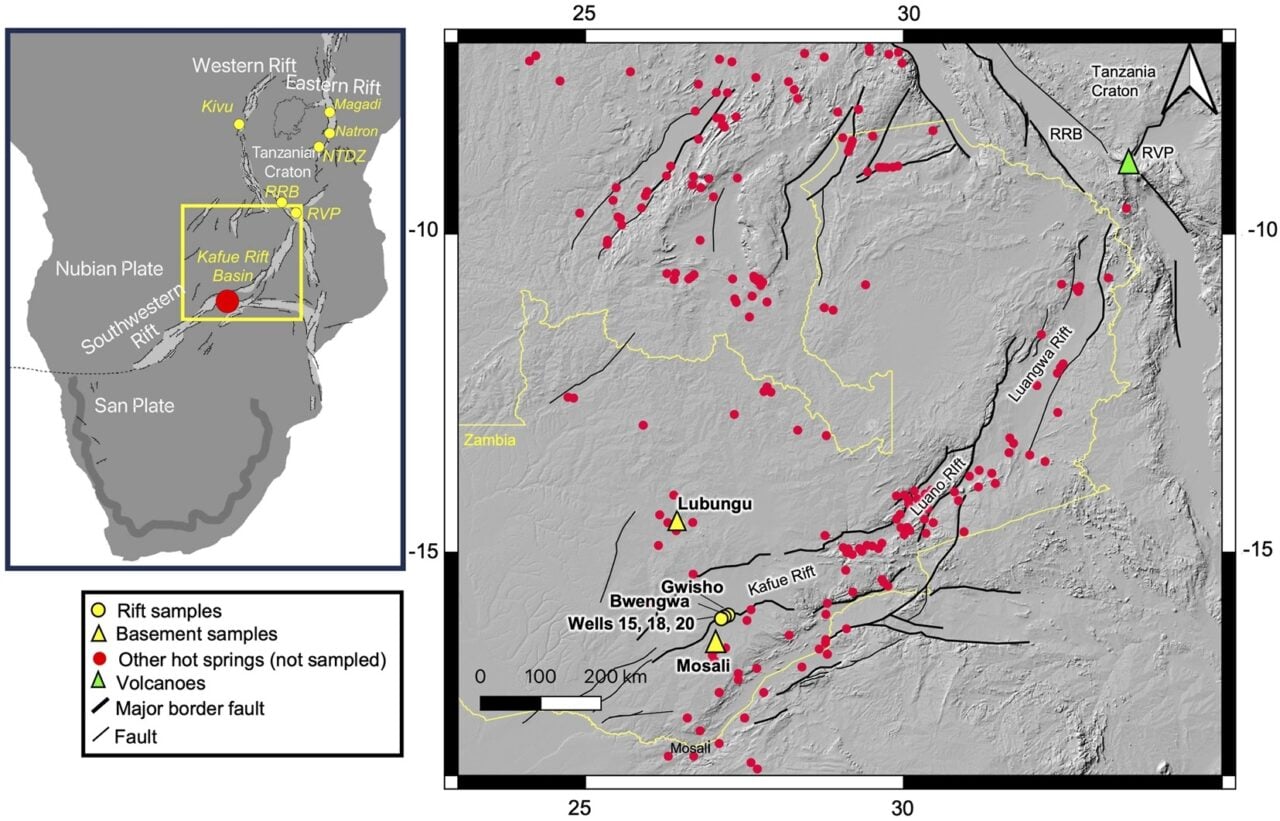
While rifts in general aren’t terribly uncommon, it’s been very difficult to identify continental rifting in its earliest stages, the researchers noted in the paper. Meanwhile, geologists long suspected something was up with the Kafue Rift, a 1,553 mile (2,500 kilometer) long rift zone in Africa, due to its unique geomorphology, topographic elements, active fault scarps, low-gravity anomalies, high heat flow, and low-level seismicity, the paper added.
Finding the ‘bubbling gun’
The latest study sought to collect direct geochemical evidence for this hunch. The team took samples of bubbling gas from eight geothermal wells and springs in Zambia. For comparison, two of the eight locations were outside the suspected rift zone. Within the six locations from the rift zone, the researchers found an unusually high ratio of helium isotopes consistent with those found in mantle fluids. The carbon dioxide profiles of one sample closely matched the mantle range, further supporting the hypothesis that mantle fluids reached the crust.
The team did consider the possibility that the helium came from either the atmosphere or Earth’s crust, but the similarities weren’t comparable. Because helium isotopes are signs of early-stage rifting, this activity “may be an early indication of the break-up of sub-Saharan Africa,” Daly said.
Meanwhile, helium
On a different note, while researchers contemplate the academic implications, policymakers may want to pay attention to economic opportunities, the paper noted. Early-stage rifts are hotspots for geothermal energy and access to helium and hydrogen, so these regions may as well serve as targets for “volatile resource exploration,” the study noted.
All that said, Daly emphasized that the findings are still preliminary. The Kafue Rift is just one section of the larger Southwest African Rift System. According to Daly, the team is currently working on follow-up studies to expand their analysis to the general region. If these investigations can find similar mantle-derived anomalies, it would provide “further compelling evidence” for a plate boundary capable of splitting a continent, the study concluded.