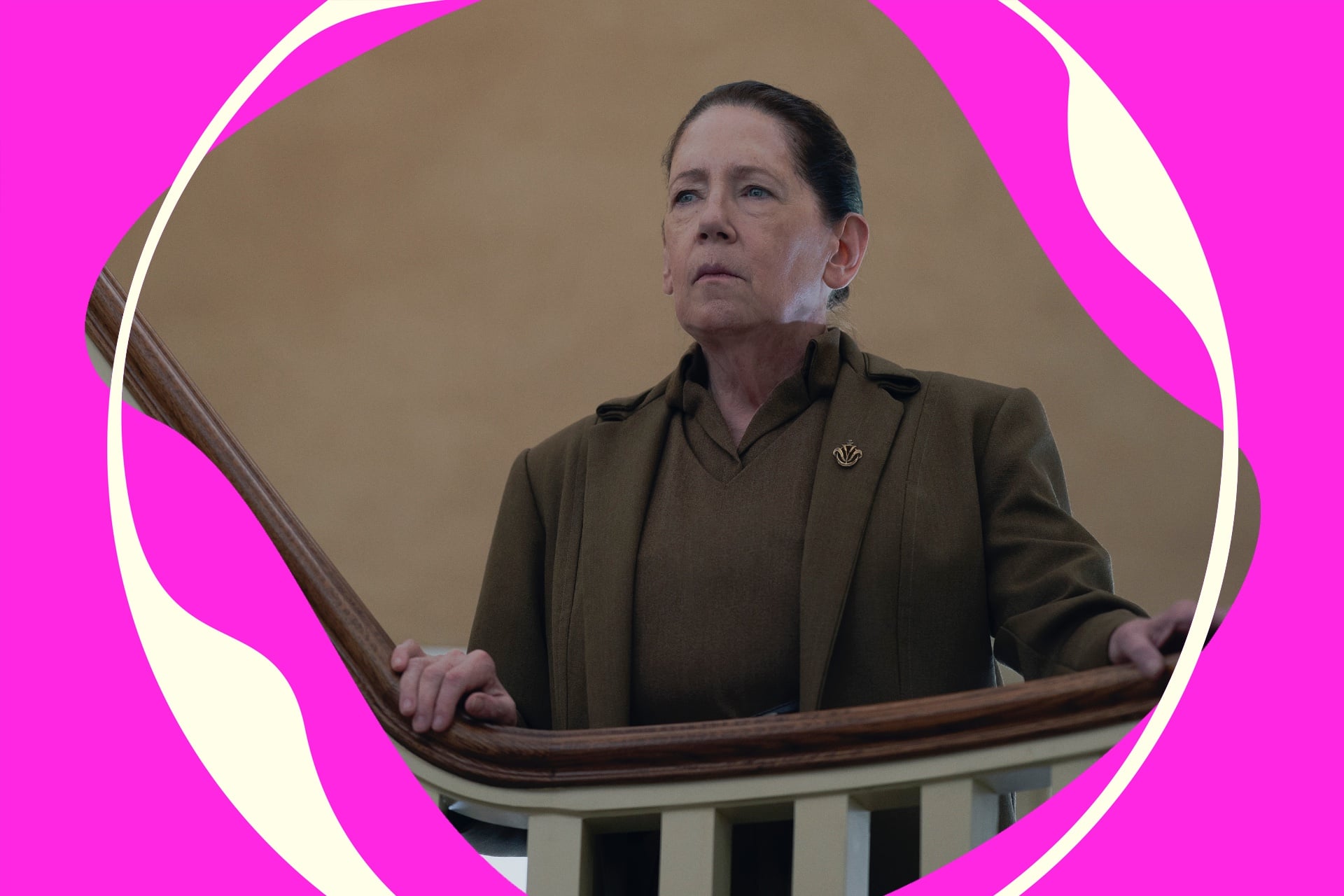
In The Handmaid’s Tale, Aunt Lydia—played to Emmy-winning perfection by Ann Dowd—was one of the show’s most complicated and infuriating characters. We first met her as the cruel director of the Red Center, where freshly detained Handmaids learned the grim details of what their lives in Gilead would entail.
But over the course of The Handmaid’s Tale, Lydia gained more complexity—a flashback episode in season three gave some insight into her particular thought process—and, as the show neared its finale, she also gained something resembling a conscience.
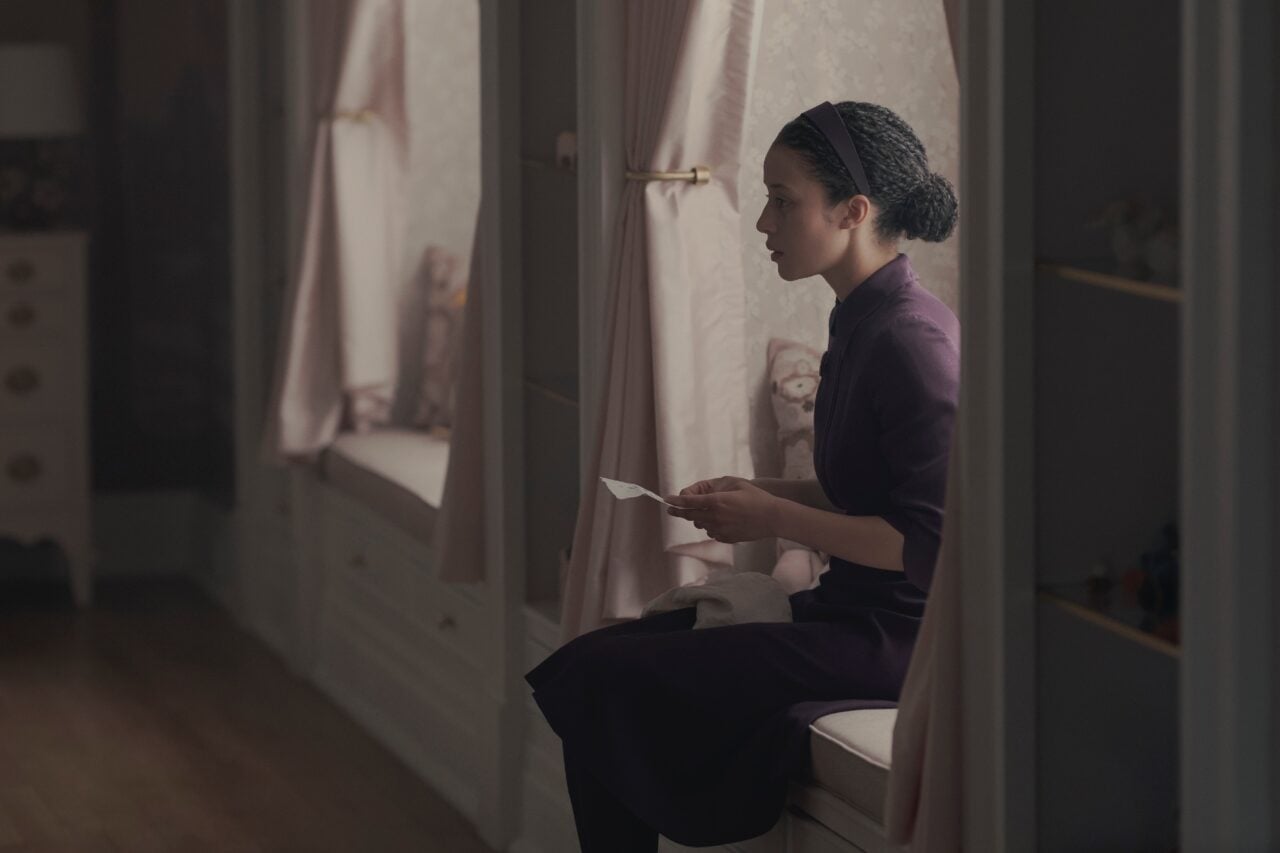
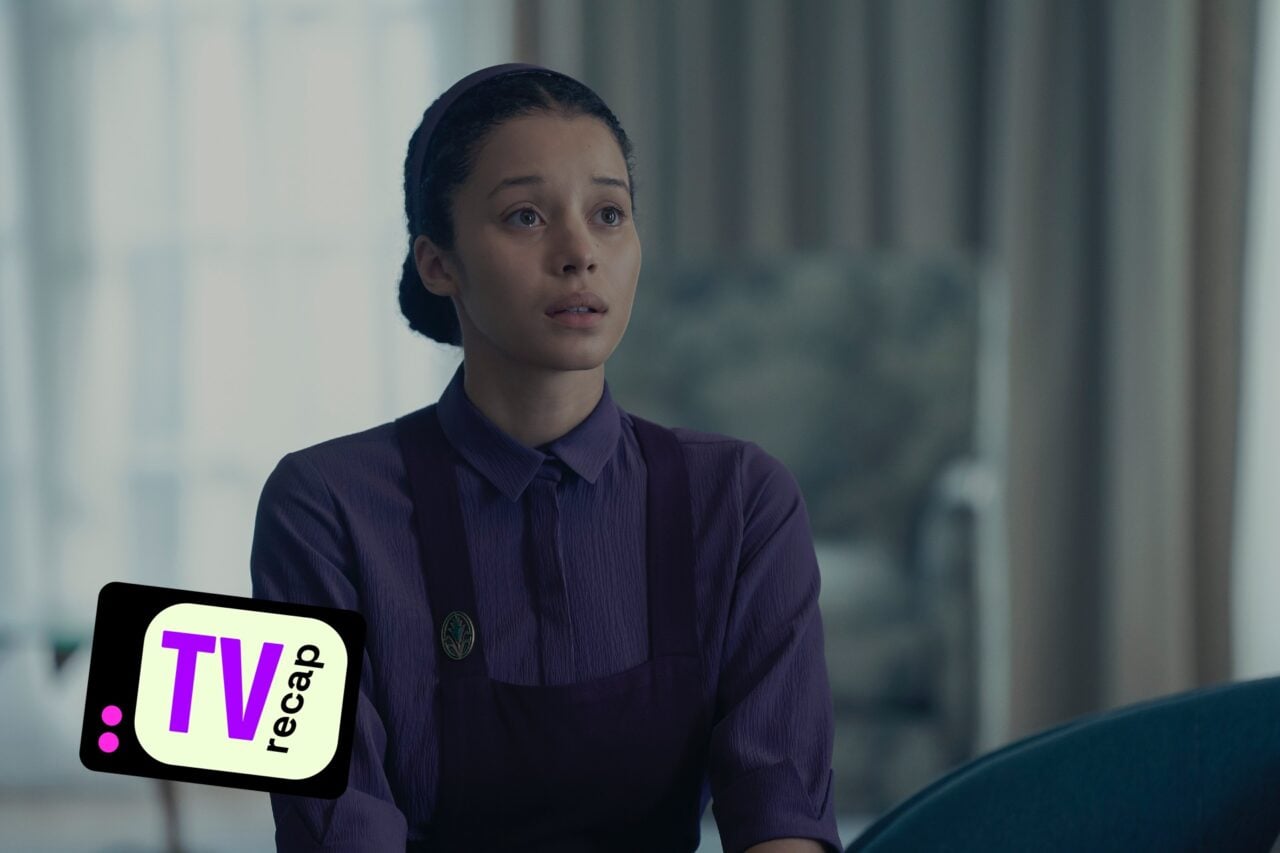
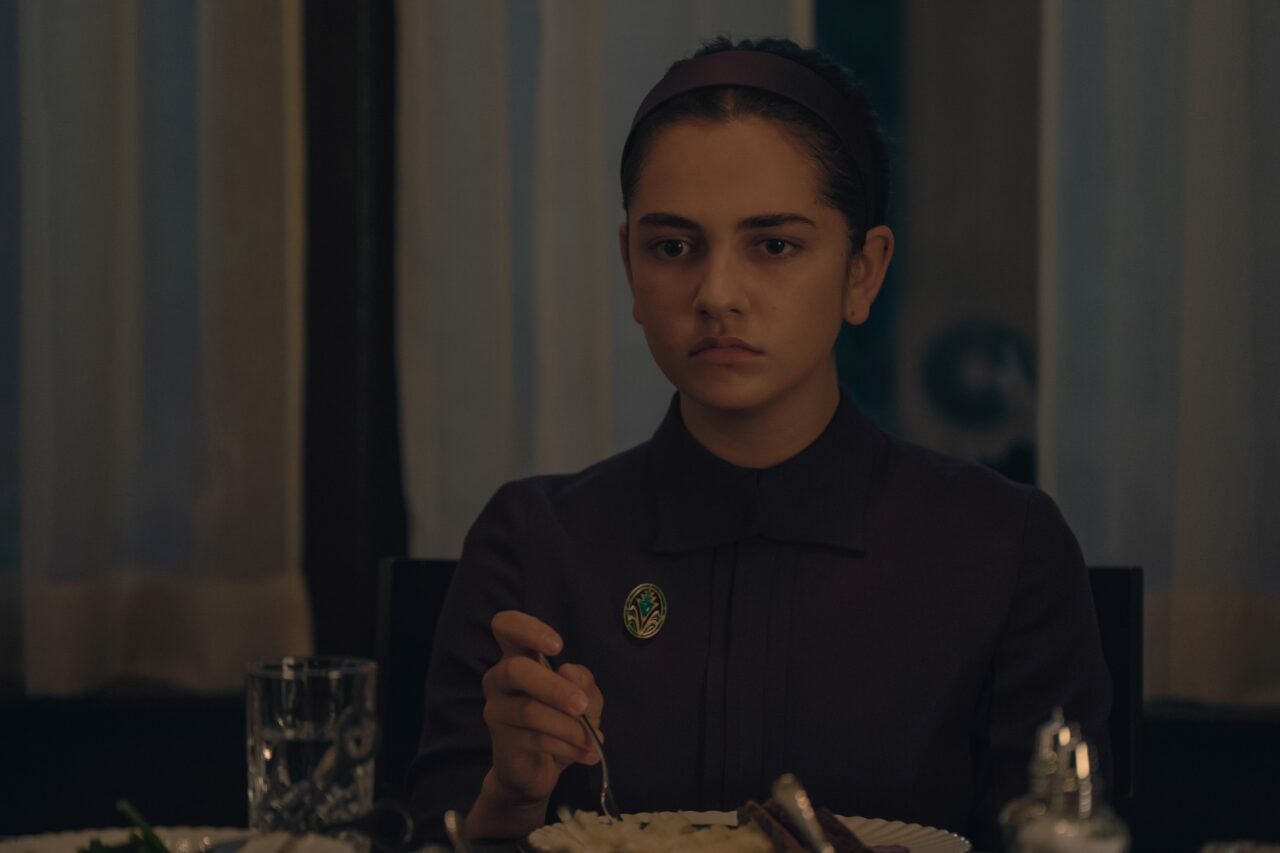
When sequel series The Testaments kicked off, we saw that Aunt Lydia had somehow moved past all the Handmaid’s Tale chaos and her own near-death encounter and is now seemingly more powerful than ever: she’s running the Aunt Lydia Premarital Preparatory Academy, where upper-class Gilead girls learn how to be pious, tractable wives.
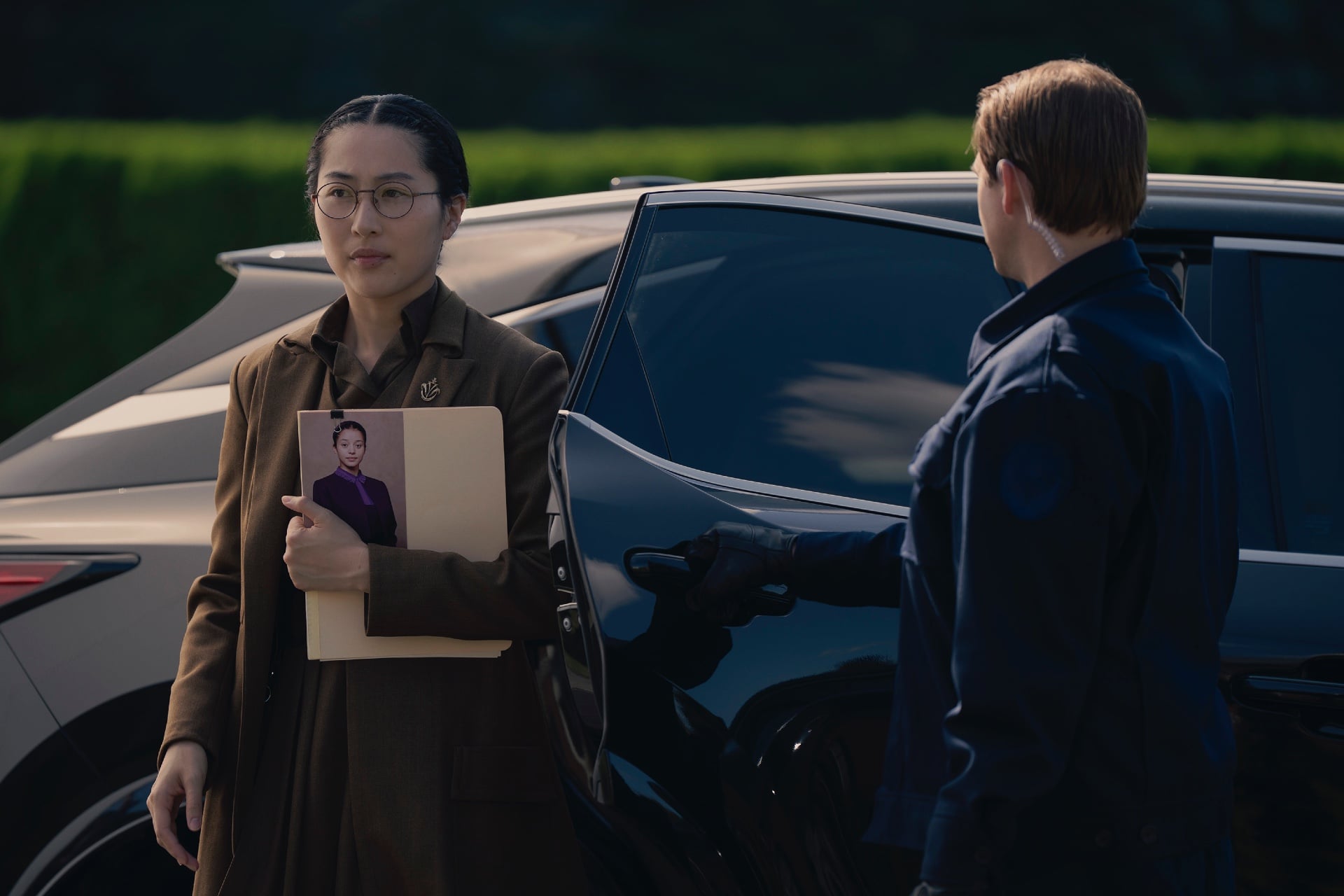
Of course, “power” has a different meaning for women in Gilead. Aunt Lydia and the other Aunts, including her second-in-command, the fierce Aunt Vidala (Mabel Li), do enjoy a certain amount of elevated privilege. They’re allowed to read and write, something even the wives of top Commanders are barred from doing. They’re allowed to teach and “correct” (punish, usually painfully) their students as they see fit.
They also arrange all the nuptials. As soon as a group of girls get their periods—still a relative novelty in fertility-starved Gilead—the Aunts step in, and the teens are married off as quickly as possible.
But for all their importance, the Aunts must ultimately bow to the men in charge. Most often, they deal with Commander Judd (Charlie Carrick), who’s married to a very young woman who recently “graduated” from Aunt Lydia’s school.
In recent weeks, we’ve seen Commander Judd begin to tire of Aunt Lydia. They clashed after last week’s matchmaking ball, when Lydia complained that several Commanders tried to get the girls drunk, and Judd acted like it was Aunt Lydia’s fault. She should have instructed them better, he said. But as she pointed out, they’ve specifically been taught to be obedient above everything else, especially when it’s a Commander giving the orders.
Last week, Judd told Aunt Vidala that he’d like to see her take over for Aunt Lydia sooner than later—though her reaction to this dangled “promotion” was sort of unclear.
This week, things came much sharper into focus. Episode six, “Stadium,” revisits Aunt Lydia’s history, taking us to a specific point in time that gives us a better understanding of Lydia’s sometimes confusing, sometimes apparently contradictory approach to life in Gilead.
It also lifts the lid on her current state of mind. And it’s a genuinely harrowing thing to experience.

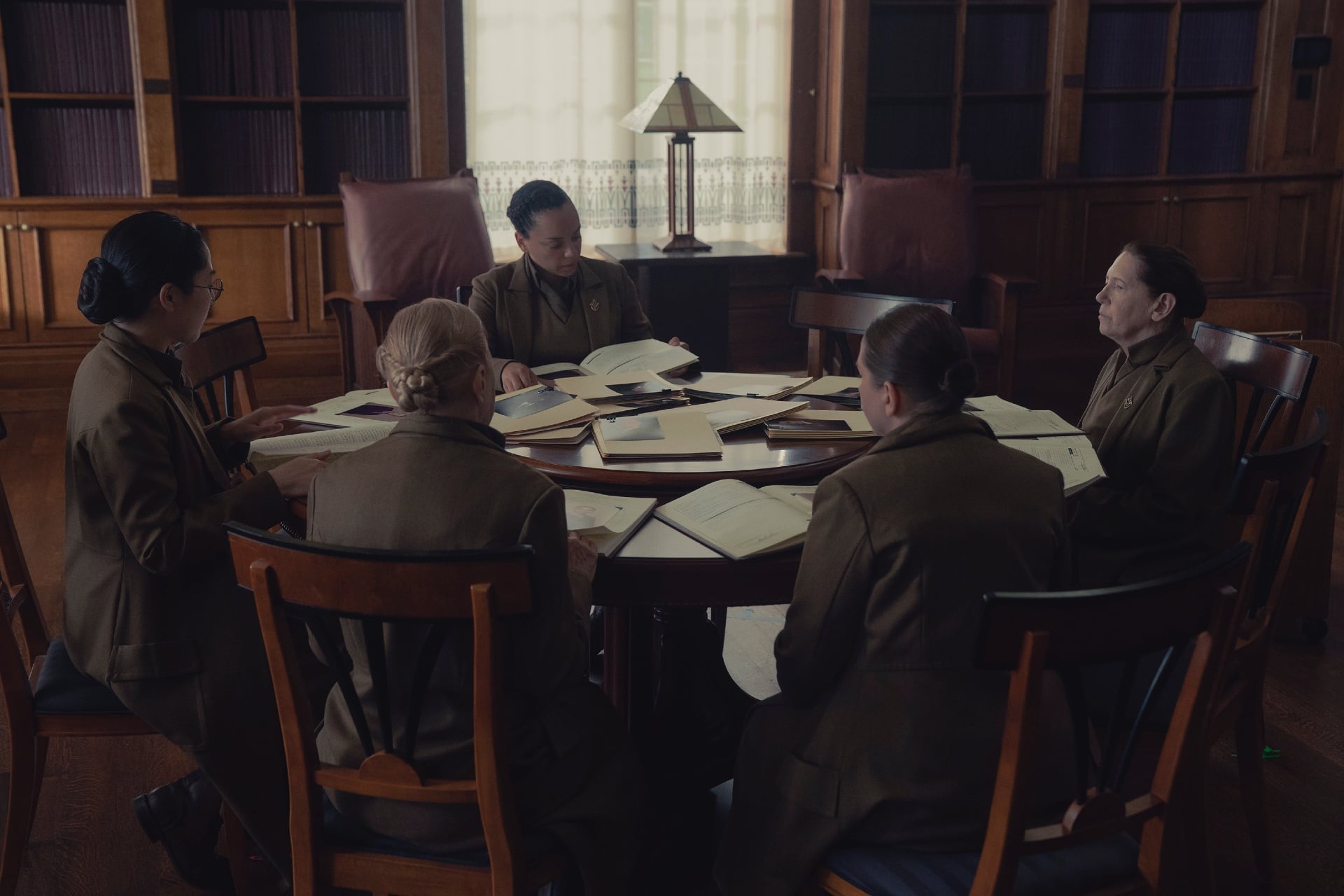
While some of “Stadium” takes place in The Testaments’ present day, as Aunt Lydia, Aunt Vidala, and the others sift through files of suitors and prospective brides, we know immediately that this episode will be different. After alternating between voice-overs for Agnes (Chase Infiniti) and Daisy (Lucy Halliday), we’re finally getting Lydia’s point of view.
“In my own present day, I am an object of curiosity,” Lydia tells us, and throughout “Stadium” we’re reminded again and again that she’s way more self-aware than we realized. She knows, for instance, how ironic it is that the Aunts, all unmarried women, are in charge of picking husbands for the girls. Part of it’s based on the girls’ performance at the tea party, as we saw in “Green Tea,” and part of it’s based on genealogical research. Gilead has such a small population that inbreeding is a potential concern.
Though Aunt Lydia is fiercely protective of “her girls,” that line of defense is subject to being shoved aside if a man in power wants his way. It’s something she’s had to acquiesce to many times.
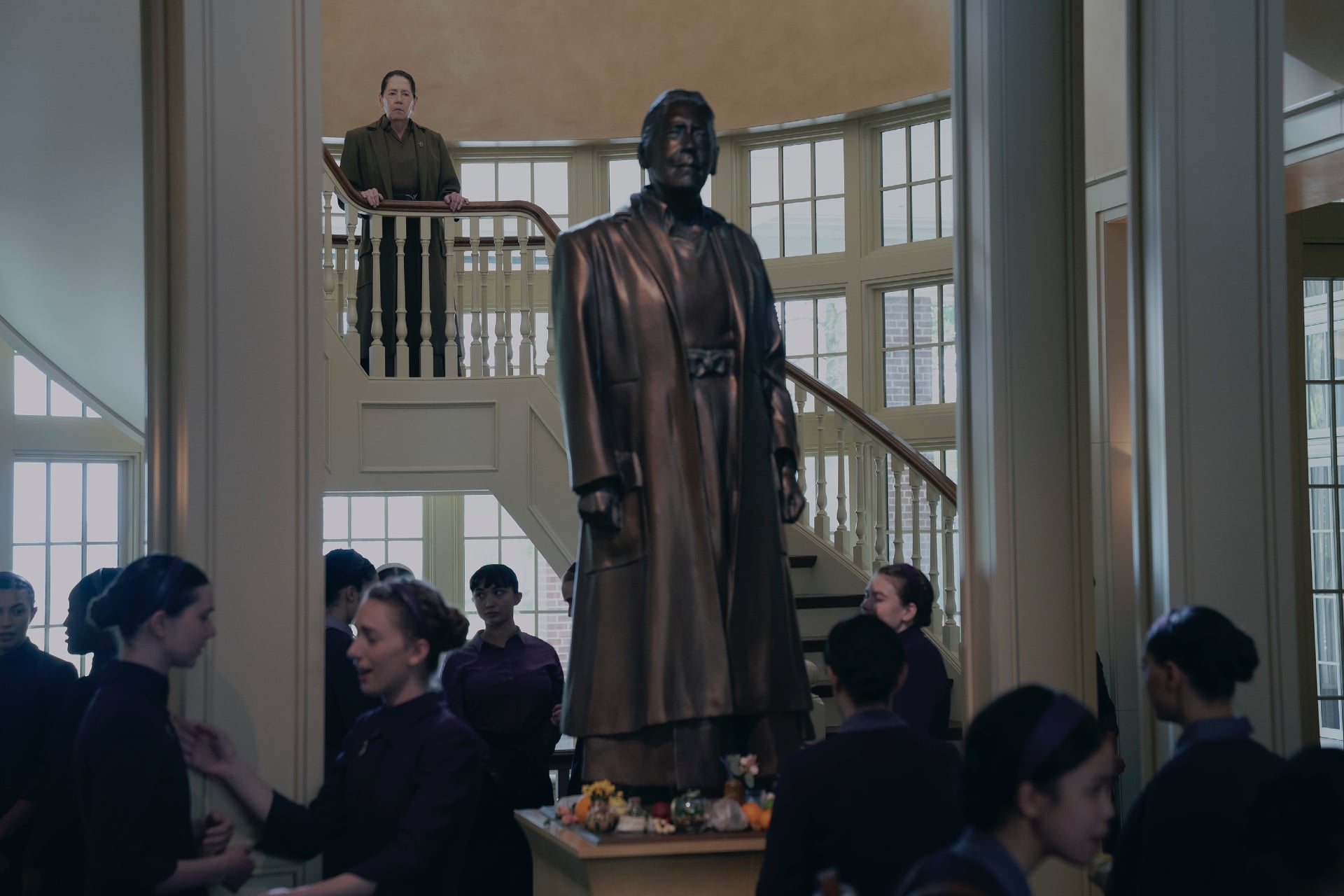
We learned during The Handmaid’s Tale that before she became Aunt Lydia, she was a lonely, middle-aged woman with a not especially remarkable life. At some point she shifted from a career in family law to teaching, and later lashed out against a woman she viewed as a neglectful parent after suffering a personal humiliation.
The Testaments takes us to Lydia’s life right as the United States government is being overthrown and Gilead is starting to take shape. She’s at her teaching job when it happens, along with (surprise!) Aunt Vidala, who went by “Vivian” in the before times. They’re colleagues who don’t especially like each other, but they’re thrown together as all the women in their community are rounded up and herded into a large stadium. There, they’re held captive at gunpoint and forced to witness repeated mass executions on the tennis court below.
It’s dreadful. Nobody really knows what’s happening except for the vicious armed men in tactical gear; Lydia correctly figures there’s been a coup of some kind. The prisoners’ numbers start to dwindle as, day by day, more and more are yanked out of their seats, either bound for execution or fates unknown. Having seen what happened to June (Elisabeth Moss) at the start of The Handmaid’s Tale, we have a pretty good idea of what happens to any woman who appears potentially fertile. When Vivian vanishes, Lydia isn’t sure what to think.
We get a running commentary thanks to her narration, though, as she looks back on some of the lessons she’s learned. One of them is that having friends in Gilead is “a liability,” though the girls of The Testaments are certainly proving that wrong in their own storylines.
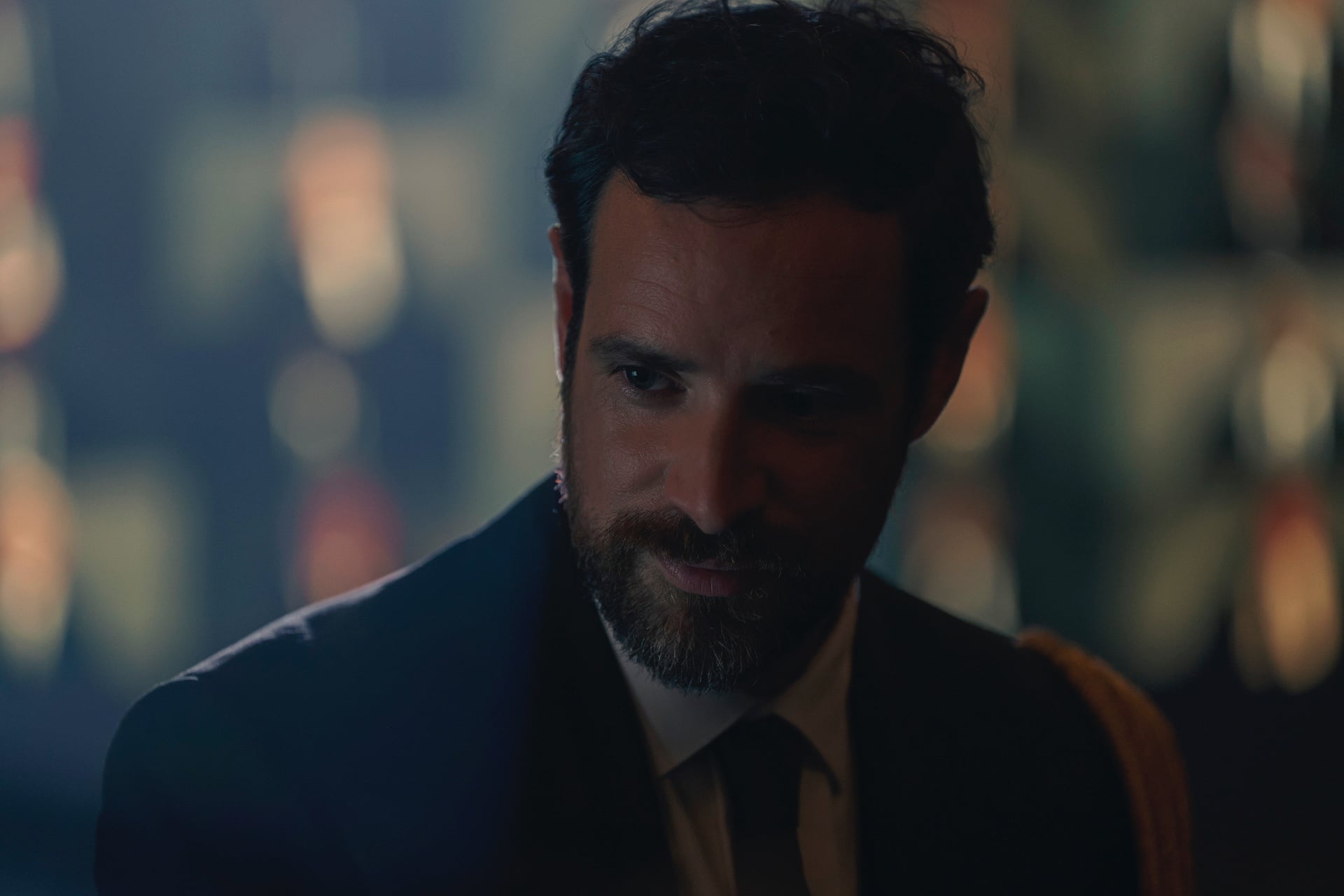
Before long, it’s Lydia’s turn to meet the man overseeing the ongoing atrocities. It turns out to be… our pal Commander Judd. “Misogynists who openly disdain women—one needn’t fear them,” Lydia tells us. “But the men who understand the power of women, who want to control it instead of deny it—there is no one more terrifying.”
Commander Judd, we learn, has been put in charge of the “women’s sphere” in Gilead. He flips through Lydia’s file: she’s 58, never married (a slight retcon; in Handmaid’s she had an ex-husband), and once had an abortion. The latter is a crime that’s now punishable by the death penalty, retroactively, thanks to one of Gilead’s more ghastly laws.
Judd is dismissive and glib as he tells her this. He knows that being in charge of Gilead’s women is not the coolest job one could score through the Sons of Jacob, but he’s power-tripping anyway. And Lydia is onto him: “Surviving these men requires patience and allies, wherever you can find them.”
She suggests that if Gilead wants truly separate spheres for men and women, a woman should be installed to “teach the girls to be women and the women to be better women, women of God.”
It’s here that the idea of Gilead’s Aunts begins to form. Amazingly, the Aunts were Lydia’s idea all along. But while he likes her suggestion, Judd isn’t as thick as we maybe think he is. He still needs Lydia to prove her loyalty, and he tests her in the most agonizing way imaginable: by handing her a gun and making her march into the stadium with the other executioners. Lydia’s target, who has her blindfold pulled off so she can see her assailant, is Vivian.
Desperate, Vivian begs for her life as Lydia takes aim—and, yes, pulls the trigger. Though we already knew that Vivian, aka Vidala, survives through the years into The Testaments, we still gasp in relief along with both women as the gun turns out to be unloaded.
It’s here, Lydia confesses, that she has “lost track of the plotline of my resolve” and is now following “the plotline of my survival.”
A little while later, she muses, “Was I a phoenix rising from the ashes? Or was I a cockroach? I wasn’t sure anymore.” But she’s alive, and we soon see her being summoned by Judd to help choose the fabric that will be used for the Aunts’ drab uniforms.
She chooses the scratchiest, most uncomfortable fabric. It fits with her biggest “gripe with the old world,” which was that people became too comfortable. They relied too much on convenience and had “all become entitled little brats.”
It’s a leap from that sort of low-level ennui to “would shoot a friend to save my own skin,” but that’s part of the enigma of Lydia. To know her does not mean you will ever truly understand her. At any rate, the experience in the stadium explains a lot about the dynamic between Lydia and Vidala. Even though they weren’t together at the Red Center, they’ve somehow reunited at the school that bears Lydia’s name. Understandably, certain resentments and uncomfortable feelings still linger.
It also explains the peculiar bond between Commander Judd and Aunt Lydia. Maybe “bond” isn’t the right word, but there’s a long history there that’s seemingly just starting to fray. She’s come to rely on his trust; what will happen if he turns to Aunt Vidala instead?
And it gives us a clearer window into Lydia’s thinking. As we learned in The Handmaid’s Tale, she’s not an evil person, despite her willingness to do evil things. She’s there to self-preserve because “enduring is the only way through,” and there’s seemingly no limit to the measures she’ll take to make sure that happens.
But there’s a bright light at the end of the episode, just when you’re starting to think Aunt Lydia might not have learned anything at all from June and the events of The Handmaid’s Tale‘s final season.
“After what happened to my girls at Jezebel’s,” she says—referencing the brothel frequented by Commanders, and staffed by ex-Handmaids, many of whom were massacred—”after Boston fell, after the sting of the noose around my neck began to wear off,” she explains, she vowed to document everything.
Aunts are allowed to read and write, she reminds us. That said, they’re certainly not allowed to pen a record of all the crimes they witness in a secret diary. Lydia doesn’t care; she knows the importance of keeping receipts.
So there’s that delightful detail to keep in mind as The Testaments continues: Aunt Lydia isn’t as complicit as she appears, at least not anymore. And it’s very clear at last where her loyalties lie, though she’s still moving with caution: “May God protect these girls,” she worries, “Because I’m not sure I can.”
New episodes of The Testaments arrive Wednesdays on Hulu and Disney+.
Want more io9 news? Check out the best movies and TV shows to stream this month and all the upcoming sci-fi, fantasy, and horror books that should be on your radar.