Few things can ruin a fun beach or park outing as quickly as a gull with a hankering for your lunch. But a recent study might have just uncovered a nifty trick that can keep these feathery thieves at bay.
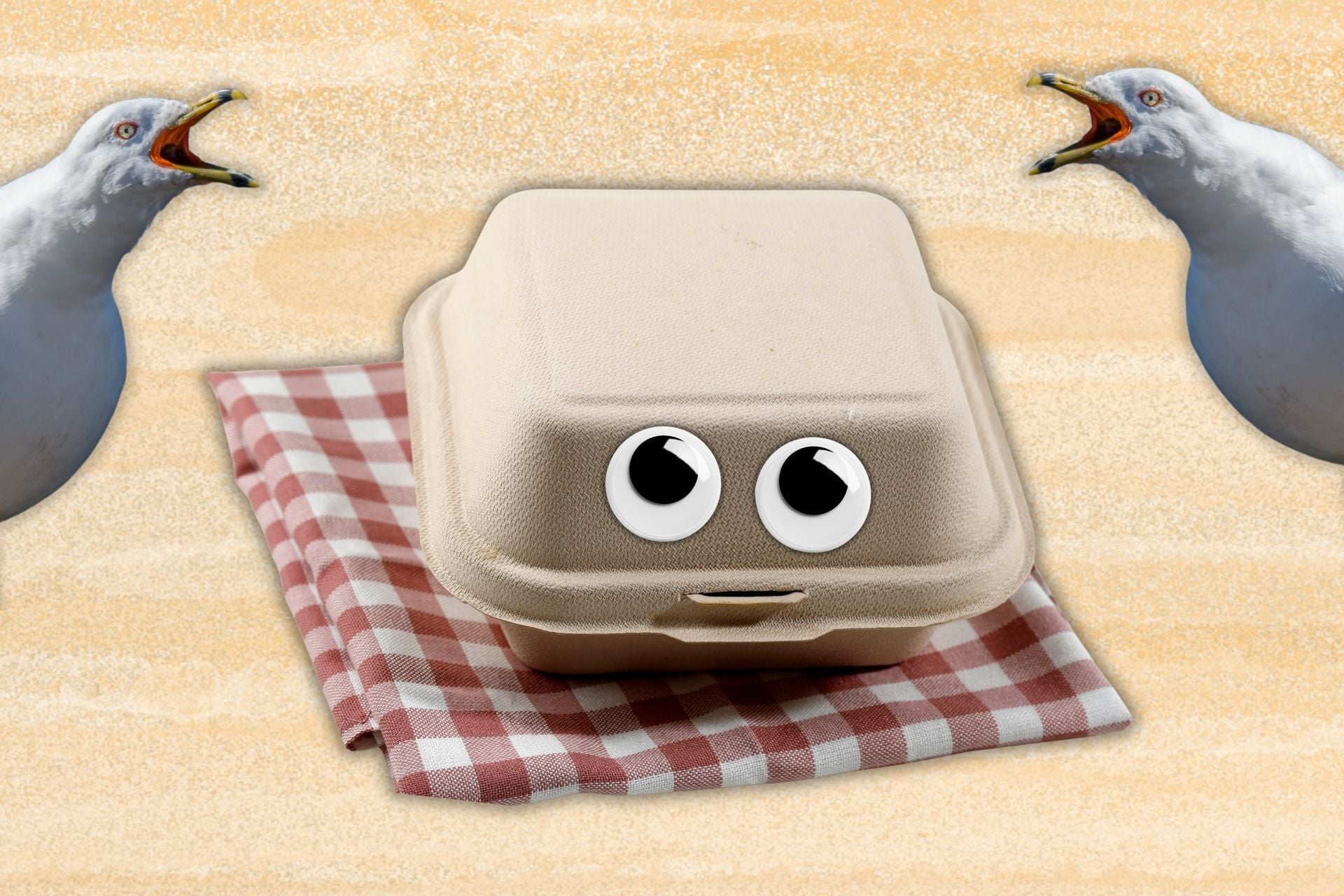
Researchers in the UK studied how European herring gulls (Larus argentatus) in the city reacted to various types of takeout boxes. The gulls were substantially less likely to approach or peck at boxes that had googly eyes attached to them, they found. Though not every bird was deterred, the simple design strategy could help ease human-gull conflict, the researchers say.
“Identifying and exploiting pre-existing sensory biases of animals remains an important area of research for animal deterrents,” they wrote in their paper, published last month in the journal Ecology and Evolution.
Scary eyes
Eyes and eye contact are known to spook away many predatory or scavenging animals, birds included. Some prey animals have even evolved to incorporate eye-like patterns in their appearance to ward off would-be snackers, such as various species of butterflies.
European herring gulls have become an increasingly unwanted presence in UK cities and elsewhere, thanks in no small part to their tendency for food stealing. So the researchers wanted to test whether artificial eye-like stimuli, also known as eyespots, could effectively scare off gulls used to grabbing a bite to eat in the city.
In several towns of Cornwall, the researchers set up multiple experiments.
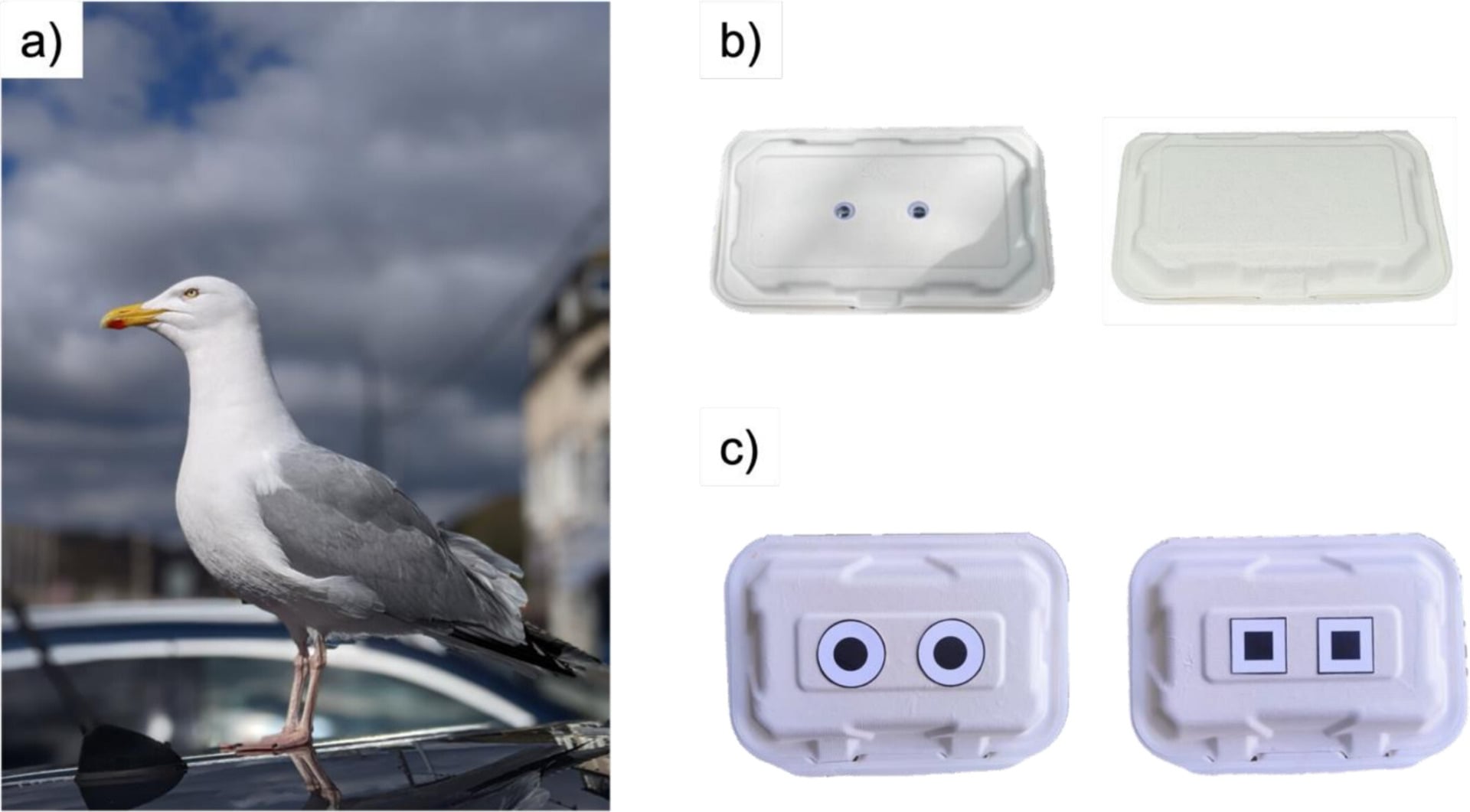
They first found that googly-eyed boxes did indeed have lower rates of approaching and pecking from the gulls in the area. And even across repeated trials, half of the gulls consistently avoided these boxes. Other experiments showed that the birds remained equally wary of boxes with square- or round-shaped eyespots that were highly contrasted against the box, suggesting contrast might be an especially important aspect of fooling these birds.
Gull-human peace?
As even these results highlight, simply painting eyes on your takeout container won’t completely eliminate the risk of bird theft. But the use of eyespots in conjunction with other deterrents could go a long way in de-escalating tensions between urban residents and these gulls, the researchers say, at least in the short term.
That said, any truly effective anti-gull plan will need humans to be more conscientious themselves.
“Sensory deterrents are also one part of a broader set of measures needed to reduce human-gull conflict, including public information discouraging feeding gulls and improved food waste management,” the authors wrote.
Personally, I’m just glad I have yet another reason to carry googly eyes everywhere I go.