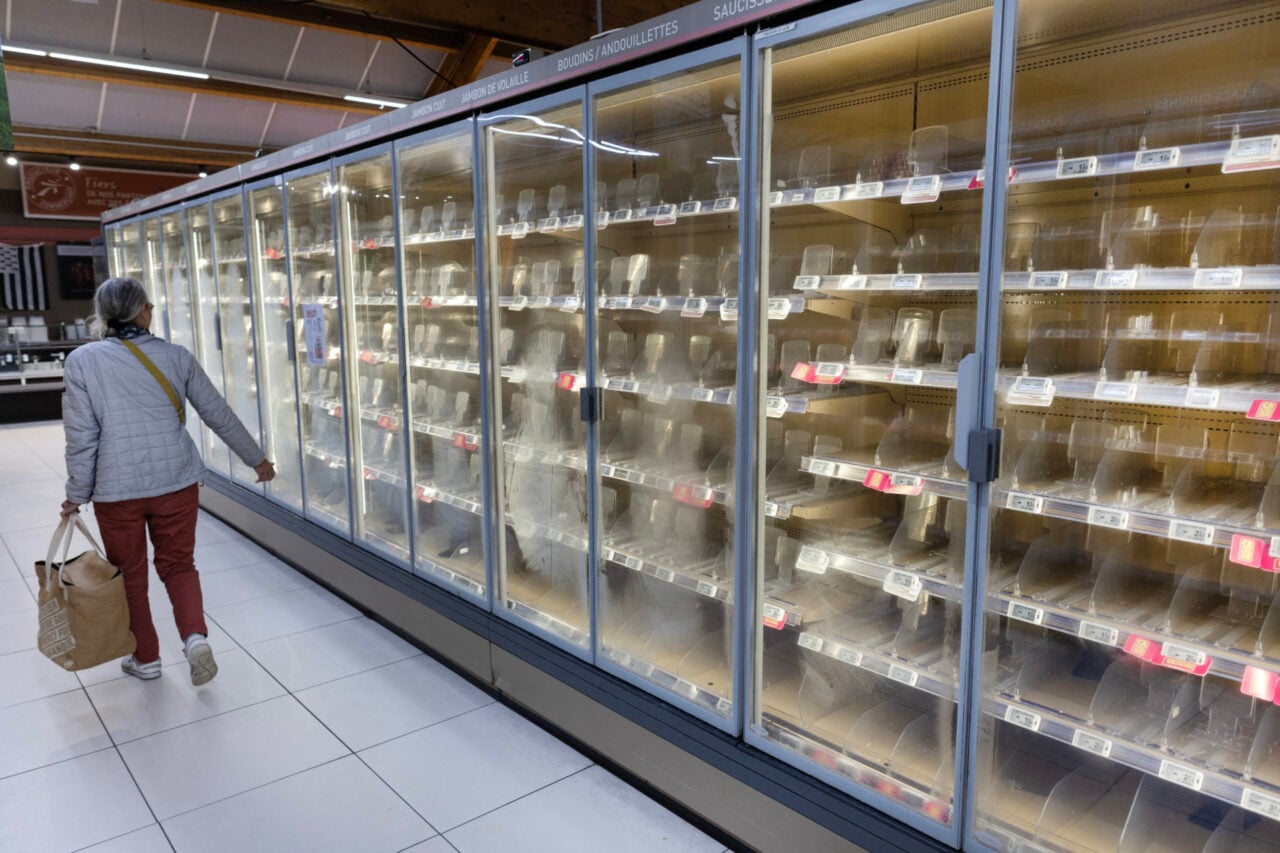
The developed world has a love affair with refrigeration that spreads way beyond the domestic chiller: It’s the backbone of the world’s food supply industry, keeping food fresher for far longer than mother nature intended. But it could be about to ruin us.
Nicola Twilley has written a wonderful feature for Modern Farmerabout the dangers of mass refrigeration, and how easily it can be affected by extreme weather events. After all, it’s easy to forget, when you go pull a frozen chicken or bag of vegetables out of the store chiller, that somewhere, these products are stored en masse inside industrial-scale refrigeration facilities—and increasingly, they’re falling foul of natural disasters.
Twilley cites, for example, how 26 million pounds of chicken rotted at New Orleans Cold Storage when Hurricane Katrina struck; and how thousands of dollars’ worth of fresh food went to waste when Hurricane Sandy hit. Note that 70 percent of America’s food supply is refrigerated at some point between origin and dinner table, and it’s easy to see that if mass refrigeration falters, we’re stuffed. Or not, as the case may be.
So, what’s to be done? As Twilley points out, experts are just now coming to grips with the issue, with the city of New York only kicking off a project to work out what the weak links are in its food supply chain this very year. Ultimately, though, less predictable extreme weather events demand less reliance on refrigeration, or more robust infrastructure. Currently, it’s just not clear how easy it is to make either happen. [Modern Farmer]
Image by Don Hankins under Creative Commons license