At nearly half the height of a giraffe, the South Island giant moa (Dinornis robustus) once ruled New Zealand as one of the tallest bird species ever recorded. The even taller female of this ostrich-like forager could grow up to over 6 feet (2 meters) in height and snack upon leaves as far up as 11 feet, 10 inches (3.6 meters). But that, sadly, was centuries ago, before this big old bird was hunted into extinction by Māori colonists around the 15th century CE.
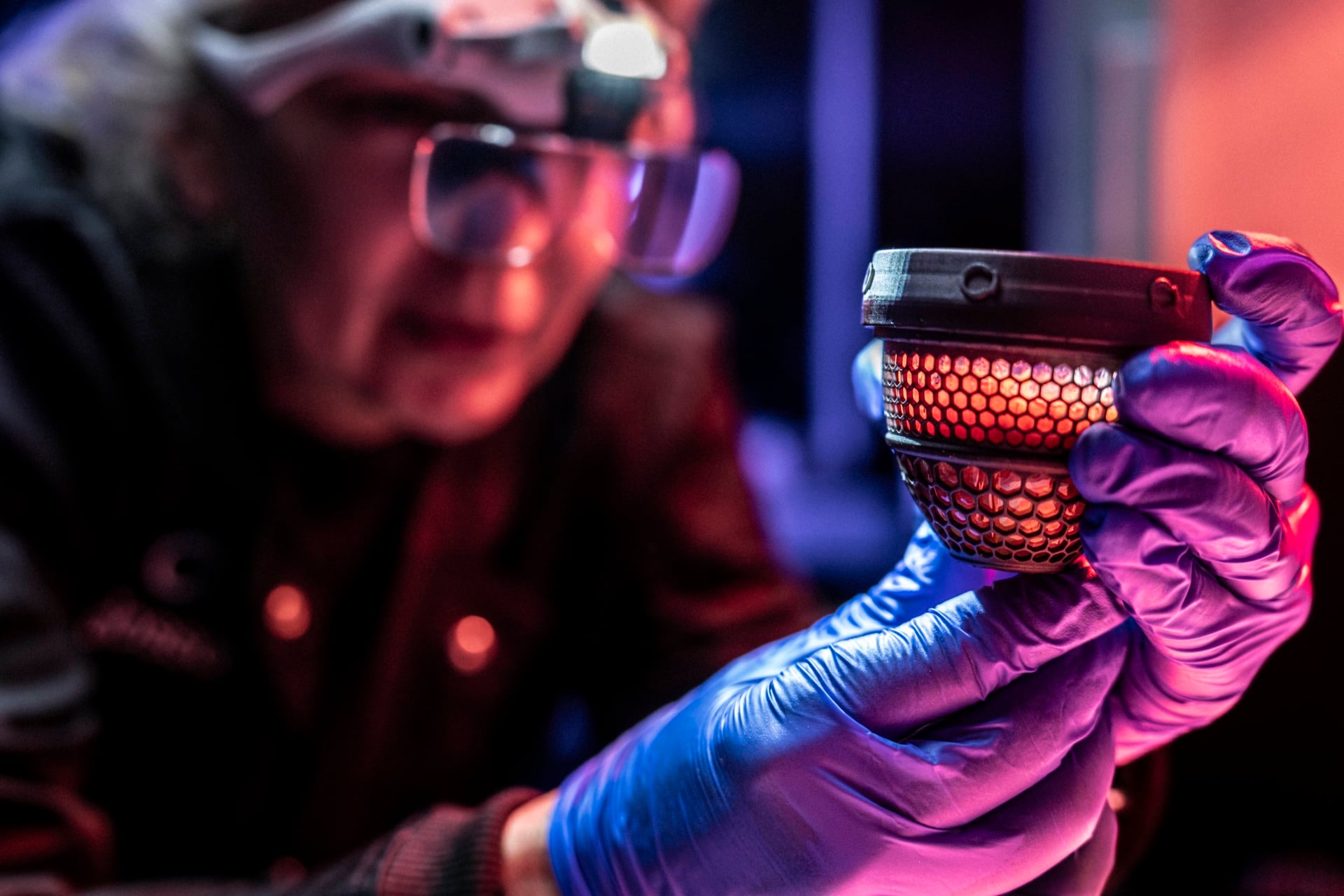
Now scientists behind the self-described “de-extinction” start-up Colossal Biosciences have unveiled what the company calls a “first-of-its-kind incubation platform”—an artificial egg critical to its plans to clone facsimiles of long-lost avian species, including the giant moa. This artificial egg—a proof of concept currently designed to hatch baby chickens—mimics the unique pores of a traditional eggshell, which allows carbon dioxide to escape and fresh air to be drawn in as a gestating embryonic bird breathes itself to life.
In fact, Colossal claims that its incubator’s bioengineered silicone-based membrane slightly outperforms the oxygen intake of an organic chicken eggshell, boasting a 21% transfer capacity for atmospheric oxygen.
But, while Colossal’s techno-egg is certainly impressive, there is one thing it can’t do: supply the natural source of calcium that all kinds of growing birds typically scavenge from the inside of their own eggshells.
“The only thing we are supplementing is calcium,” Ben Lamm, Colossal’s CEO and co-founder, told Gizmodo. “The developing embryos cannot get calcium from, you know, 3D-printed titanium, apparently.”
For the birds
In its announcement, Colossal noted that its current 3D-printed shell, a latticework of titanium and carefully engineered semipermeable membranes, has been crafted with an eye towards a seamless transition to mass production via low-cost injection-molding techniques.
The company’s Chief Biology Officer, epigeneticist Andrew Pask, emphasized that the tech also holds the potential to help endangered bird species in cases where conservationists have struggled to coax dwindling populations into reproducing.
“The genome is the blueprint, but without a place to build, it’s meaningless,” Pask said in a statement. Colossal’s “fully scalable and biologically accurate” egg, he said, was designed “with one priority: producing healthy animals that can thrive, not just hatch—mirroring the natural egg as much as possible.” (In that respect, this project is not too dissimilar from Pask’s past work with the University of Melbourne, where he focused on trying to create healthy new specimens of Australia’s extinct Tasmanian Tiger.)
Bringing back the giant moa, however, will require testing this artificial egg’s “fully scalable” promise to its known limits. The extinct bird laid eggs that were approximately 80 times the volume of a chicken egg and roughly eight times the volume of an emu’s, based on the three dozen fossilized examples unearthed at sites around South Island. No living avian species, the company acknowledges, could support the moa as a surrogate, leaving Colossal’s cybernetic-looking artificial egg as this bird’s last hope.
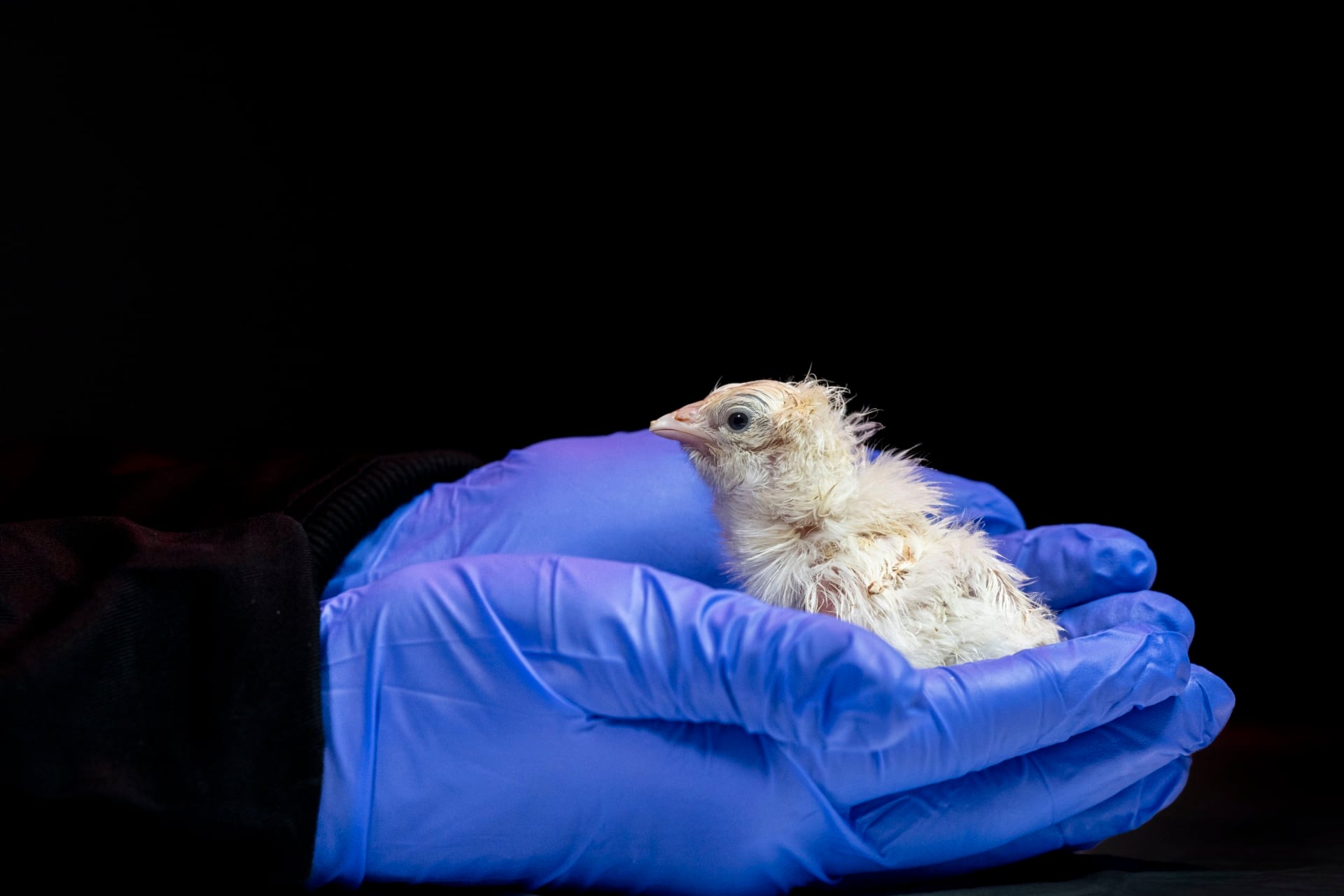
Lamm told Gizmodo that the company’s next step is testing what other still-living bird species can be born from the firm’s artificial egg concept, beyond chickens.
“The next step is twofold: scale and form factor,” Lamm explained. “So we’re going smaller and bigger. We’re going smaller with pigeon and then we’re going bigger with, I think we decided on, emu.”
A game of chicken
Bruce Dunn—an emeritus professor with the Medical College of Wisconsin, who has investigated other shell-less methods for growing chickens from embryos—told Gizmodo that he gave Colossal’s team “credit” for their reported achievement.
“If they have developed a membrane that allows them to grow the egg contents outside of the shell—in room air—that’s a big deal,” according to Dunn, whose own work in Wisconsin is unaffiliated with Colossal’s endeavors.
Dunn noted that geneticists have long been aware that avian cloning projects have proven harder than just about any other known class of creature. It’s a problem that has vexed the poultry industry, which offers a potential avenue for Colossal to monetize its research and potentially fund its ongoing conservation and de-extinction plans.
“They are right in their paper that it’s actually been more challenging to modify a chicken than, believe it or not, a human, theoretically,” Dunn said. “Poultry [as an industry] has been interested in genetic modification of chickens … If you can get a bird to lay 10% more eggs per year, that’s a big deal. You’re making a lot more money.”
While a couple of Colossal’s investors and board members have expressed an interest in leveraging the company’s artificial egg technology toward possible vaccine development, its CEO told Gizmodo that the company had no plans to get into the “exo dev chicken business” by pivoting to high-tech poultry farming anytime soon. The company’s researchers, according to Lamm, are much more eager to move on to their pigeon and emu experiments, via new iterations of these artificial eggs.
“You know, we already have 26 chickens,” Lamm said. “We don’t need more. We’re gonna let them live out their natural lives.”