Abalone shell-you can see some of the ochre rich deposit. Image: Science/AAAS
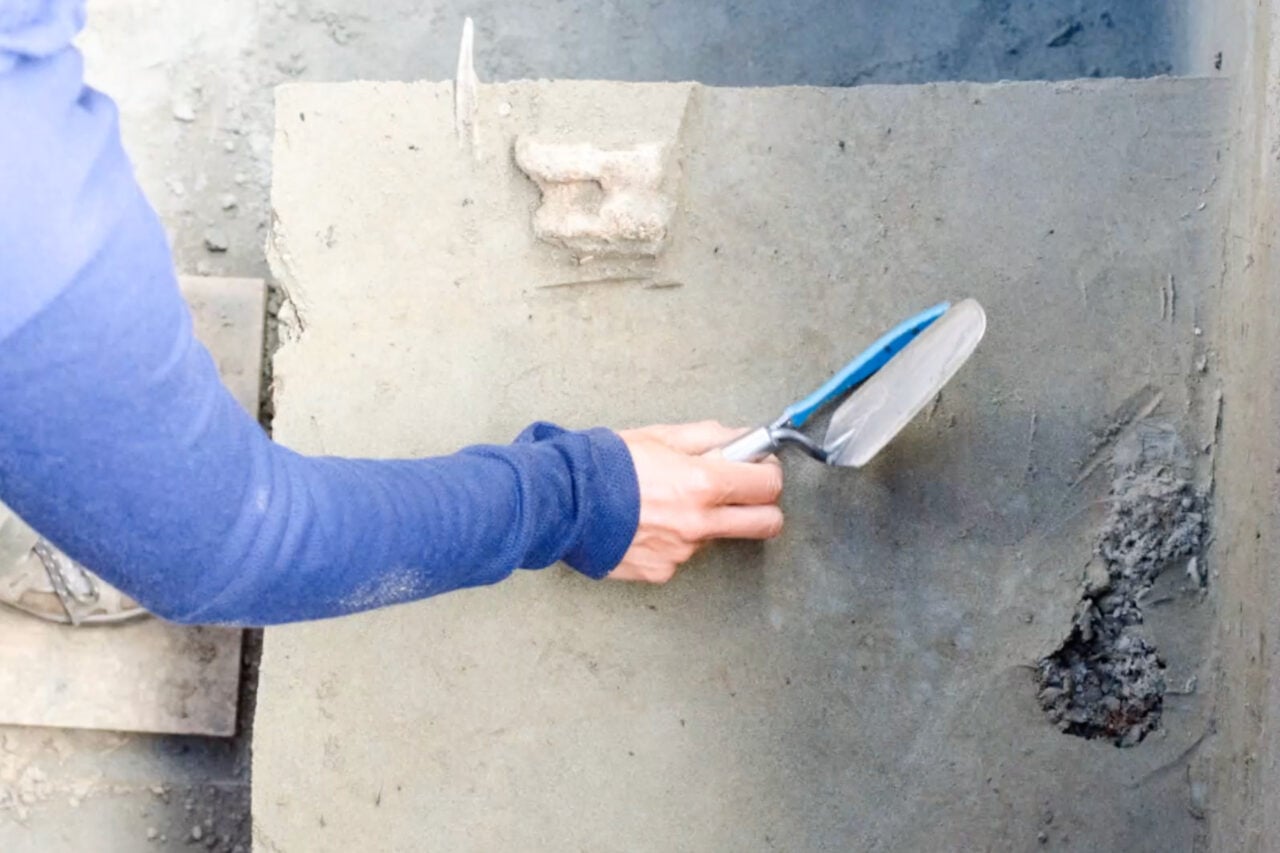
Karen van Niekerk removes the abalone containing the ochre grinder and ochre from the 100,000 year-old layers at Blombos Cave in South Africa. Image courtesy of Grethe Moell Pedersen
Blombos Cave entrance from Indian ocean coast. Image courtesy of Magnus Haaland
Blombos Cave interior panorama view. Image courtesy of Magnus Haaland
Archaeologists work inside the Blombos Cave in South Africa in 2008 when they discovered the100,000 year old toolkits. Christopher Henshilwood on right, Grethe Pedersen in foreground. Image: Science/AAAS
Entrance to Blombos Cave. Image courtesy of Magnus Haaland
Lead author Christopher Henshilwood excavates the 100,000 year-old levels at Blombos Cave. Image: Science/AAAS
Karen van Niekerk excavates the toolkit with abalone shell in the 100,000 year-old levels at Blombos Cave in 2008. Image: Science/AAAS
The nacre and inside of the abalone shell after removal of the grindstone. The red deposit is the ochre rich mixture that was in the shell and preserved under a cobble grinder. Image courtesy of Grethe Moell Pedersen
The toolkit with abalone shell before excavation from the 100,000 year-old Middle Stone Age levels at Blombos Cave in South Africa. Image: Science/AAAS
Abalone shell-you can see some of the ochre rich deposit. Image: Science/AAAS
Karen van Niekerk and Grethe Moell Pedersen point to the 100,000-year-old abalone shell with ochre before recovery in 2008. Image courtesy of Christopher Henshilwood