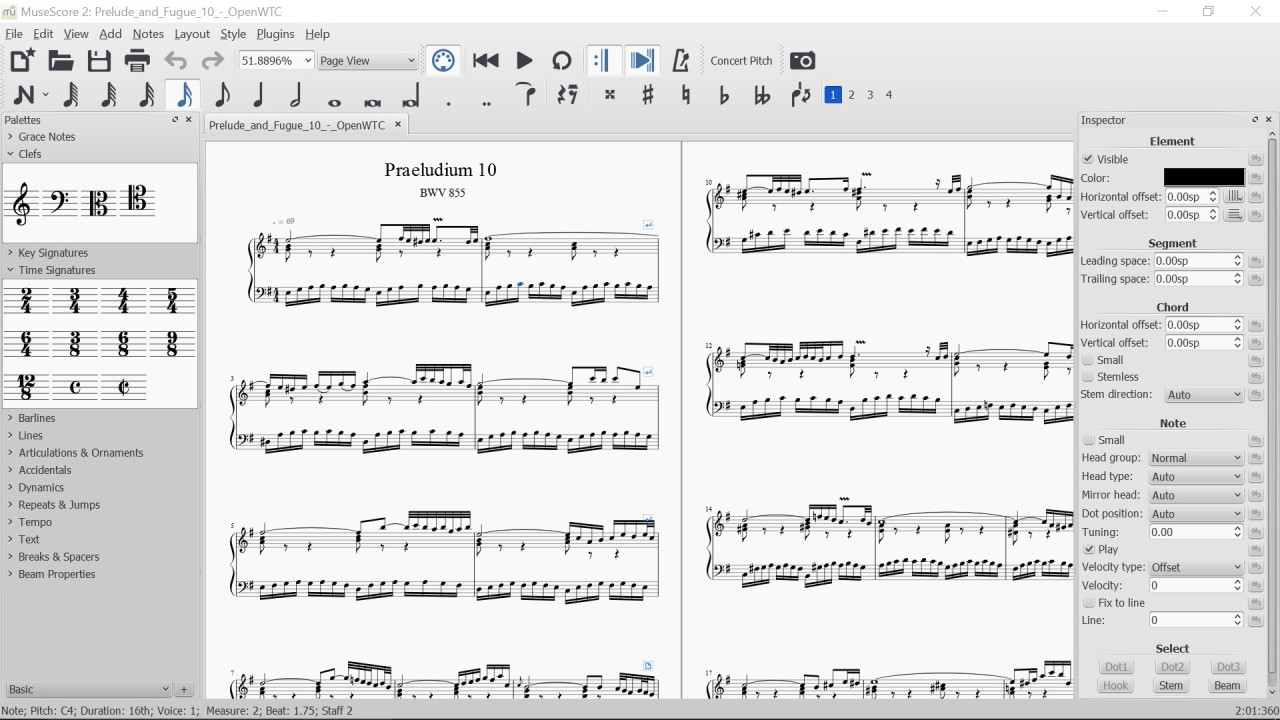
MuseScore is a piece of software that doesn’t seek attention to prove its worth. You stumble on it, perhaps because you are seeking a method of writing music, perhaps because you have tried some other things that did not quite fit. At first sight, it seems very, very basic, maybe too basic, but as you use it more and more, the more you find out what it can do for you.
At its core, MuseScore is a straightforward music notation program. You are the writer, arranger, and listener of music. It allows you not only to place notes on a page, but also to shape your ideas as you hear them. It has some sense of precision in the quietness. You flip between staves, ditching dynamics, switching key signatures, and so on, all with the facility that only comes with a tool that has been refined by many hands to understand what musicians need.
The greatest thing is that it does not raise barriers. It does not require you to purchase ten various add-ons or demonstrate that you are a professional to get to use it. It caters to the new generation, supports the middle generation, and yet at the same time provides something more mature writers can take seriously. It’s not designed to impress; it's built to help. There are some ways in the process, when you start to arrange just something easy or you lay out a complete score, you’ll notice MuseScore fades quietly into the background. Software has normally done its work by then.
Why Should I Download MuseScore?
Downloading a music notation tool is often done out of necessity. Perhaps it is a shakeup before a recital, or to copy by ear a piece, or to sort out some incomplete melody which has been buzzing around in your mind. Where MuseScore does not merely intervene to assist you in the said matter, it makes the entire process smooth. Introduce a clef, rearrange the tempo, transpose a phrase, etc., all without having to rifle through multi-level menuing. In case you have even general knowledge of how music is created, MuseScore will make sense, at least right after you enter it.
However, the actual power manifests itself through its listening habits to the user. Not actually, of course, but in design. It has little design details all over it, such as the way in which playback is triggered, the way that the current measure is highlighted, and switching instruments is remarkably easy, all of which let you know that this tool did not just appear out of thin air. It has developed alongside those who claimed it.
Then there is the aspect that is frequently ignored: exporting and sharing. MuseScore does not put you through the hoop. You are able to save as PDF and export as MIDI, MusicXML, and MP3, among others. If you want to perform it or share it with a teacher, everything’s available seamlessly.
And should you be into collaboration, the MuseScore community online is another solid reason to grab it. Individuals are exchanging the rating, buying and selling of comments, and placing their arrangements, which you may go under and even adopt. It is not merely a tool, but it can be the hub, in case you need it.
MuseScore is good for the lone tinkerer or the classroom. It works just as well for hobbyists arranging a song for a string trio as it does for students completing harmonic assignments. It is not fancy, and it is not restricted to a single type of user. This is the beauty of it. It just silently operates, and it continues to operate.
Is MuseScore Free?
Yes, MuseScore is free! The main notation program is freely downloadable without a required payment. Whereas the site MuseScore.com has a paid version that lets one share a score to play back after it is posted, the composition and arrangement capabilities of the desktop version of MuseScore are still fully accessible without charge.
What Operating Systems Are Compatible with MuseScore?
MuseScore is available in all prominent operating systems: Windows, macOS, and Linux. Most modern machines have no complex requirements and can be installed easily on most systems. It has been created to be functional even on milder systems, and, hence, you do not need a powerful computer. MuseScore adapts naturally to your setup, whether it’s a school laptop or a home desktop.
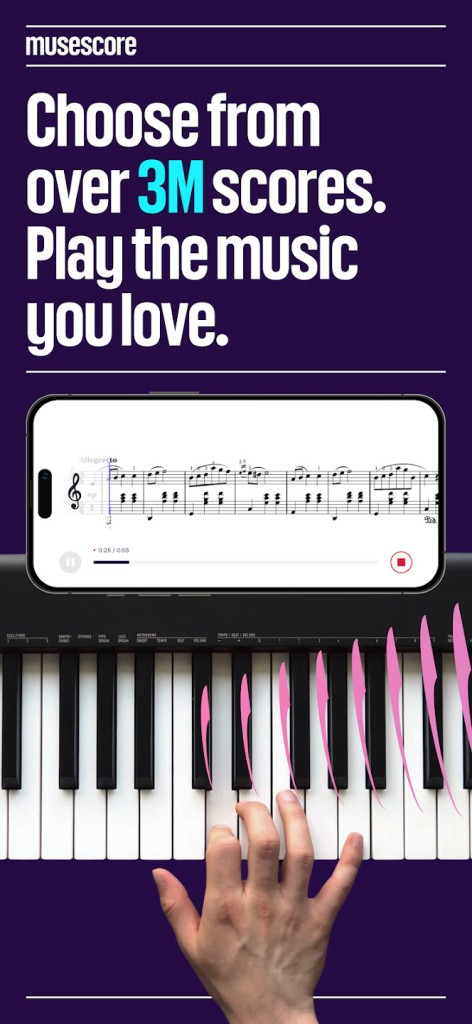
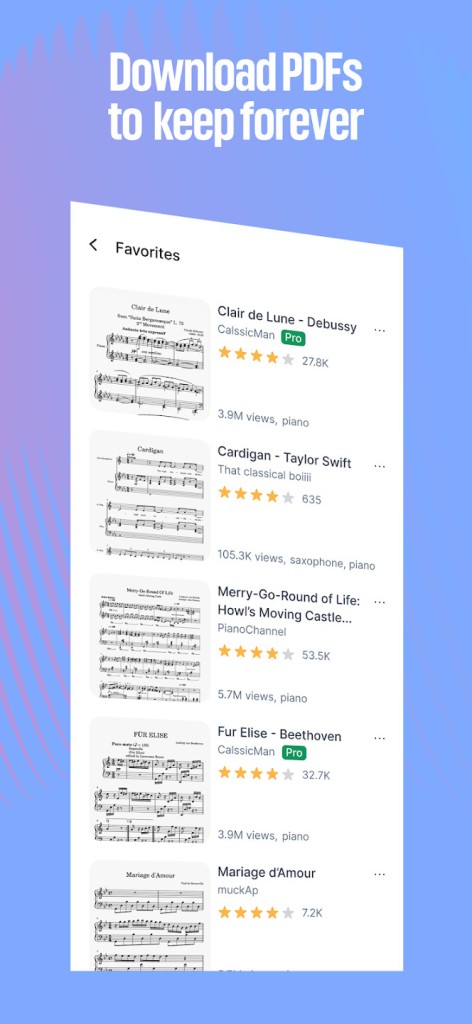
The MuseScore.com platform is also accessible via Android or iOS. The app is called MuseScore: sheet music, and allows you to synchronise your subscription, download music sheets as PDF, and even follow music lessons.
What Are the Alternatives to MuseScore?
Although MuseScore does a great deal, it is natural to imagine that there should be more. Not all composers, not all arrangers, not all students are alike. Even the best fit can be found only after having tried one or several strategies. MuseScore may check more boxes than any other solution, but some other names of the space are worth trying out regarding certain workflows or needs.
Harmony Assistant has been around for years and includes an all-in-one solution consisting of composition, harmony tools, and sound synthesis. The interface is smaller and at some point, it may even appear packed up, although this is also its charm. It is perfect for individuals who enjoy a hands-on approach to the way things sound, rather than just visual layout. It even supports real-time audio editing with Virtual Singer, giving lyrics to the music output in a rather surprisingly realistic manner, something possible as well with the Harmony Assistant.
Then there is Dorico, which is more towards professional composers. It pays a lot of attention to clear engraving, smart space, and dynamic disposition of parts. It is less flexible than MuseScore in its approach to compositions structurally, but that can be useful when doing large ensemble work or projects that are going to be printed. Dorico also ushers in the contemporary methods of working so that it, and it alone, is suited for firms that would like to operate in MIDI keyboards, audio software, and printed music at the same time.
There is another long-time staple, Sibelius. It is more commercial and smoother, and has an academic and professional reputation. It's designed to handle complex setups and intricate markings effortlessly, especially when inputting notes via a MIDI controller. Flexible layouts are also provided in Sibelius, and it has been the choice of many conservatories and institutions.