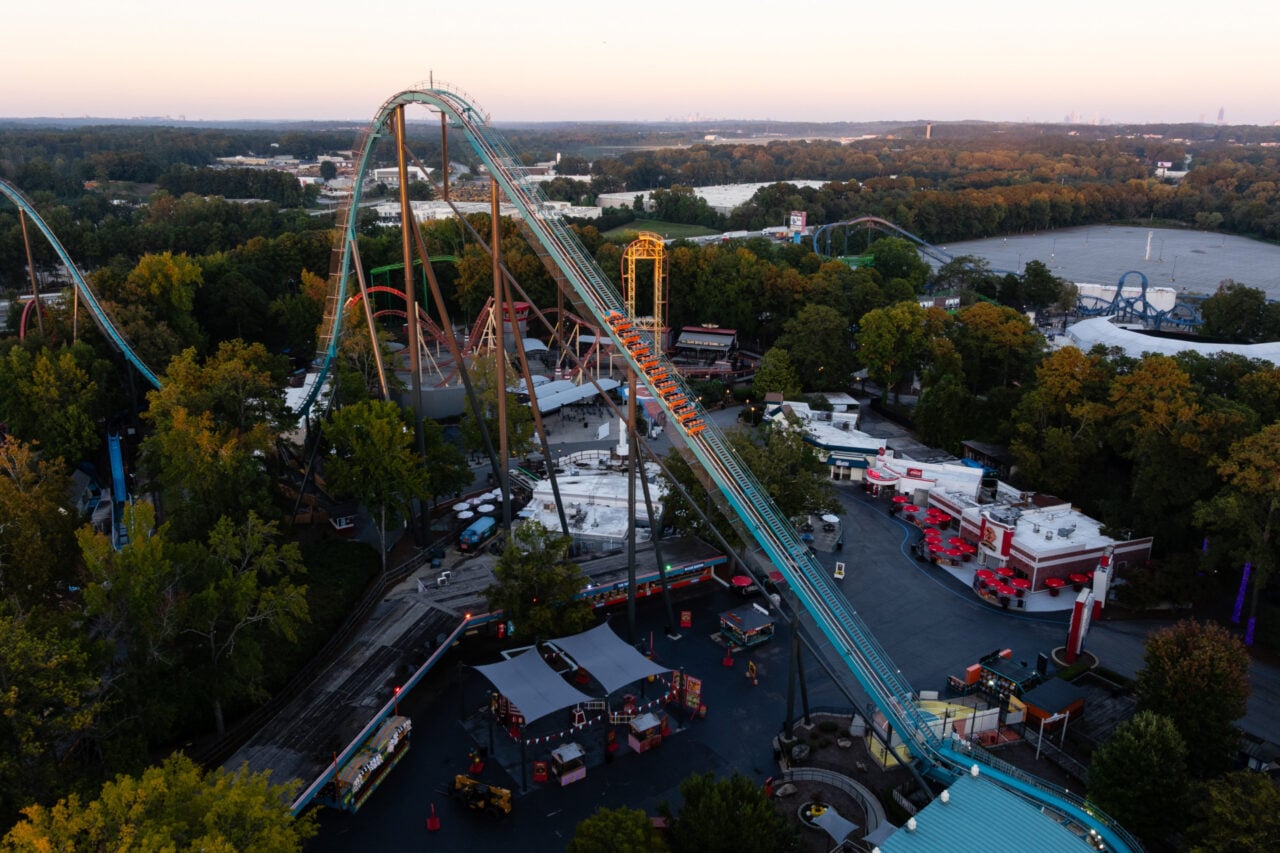
If you’re taking advantage of the long holiday weekend to visit your favorite theme park, take a moment to learn a little about the underlying physics of roller coasters, via the latest video from the folks at SciShow.
All roller coasters basically involve Newtonian physics 101: inertia, gravity, acceleration, and friction. The higher the train rises, the greater the distance gravity must pull it back down, and the greater the resulting speeds. A roller coaster is constantly shifting between potential and kinetic energy, and the constant variation in forces is part of what makes riding a roller coaster so exhilarating.
This is pretty familiar ground. But SciShow host Michael Aranda also goes into some cool details about the hydraulic launch systems used in today’s coasters, as well as the permanent magnets used in cutting-edge braking systems (as opposed to the standard friction braking).
Just something to ponder when you’re momentarily hanging in free fall at the top of your favorite coaster.