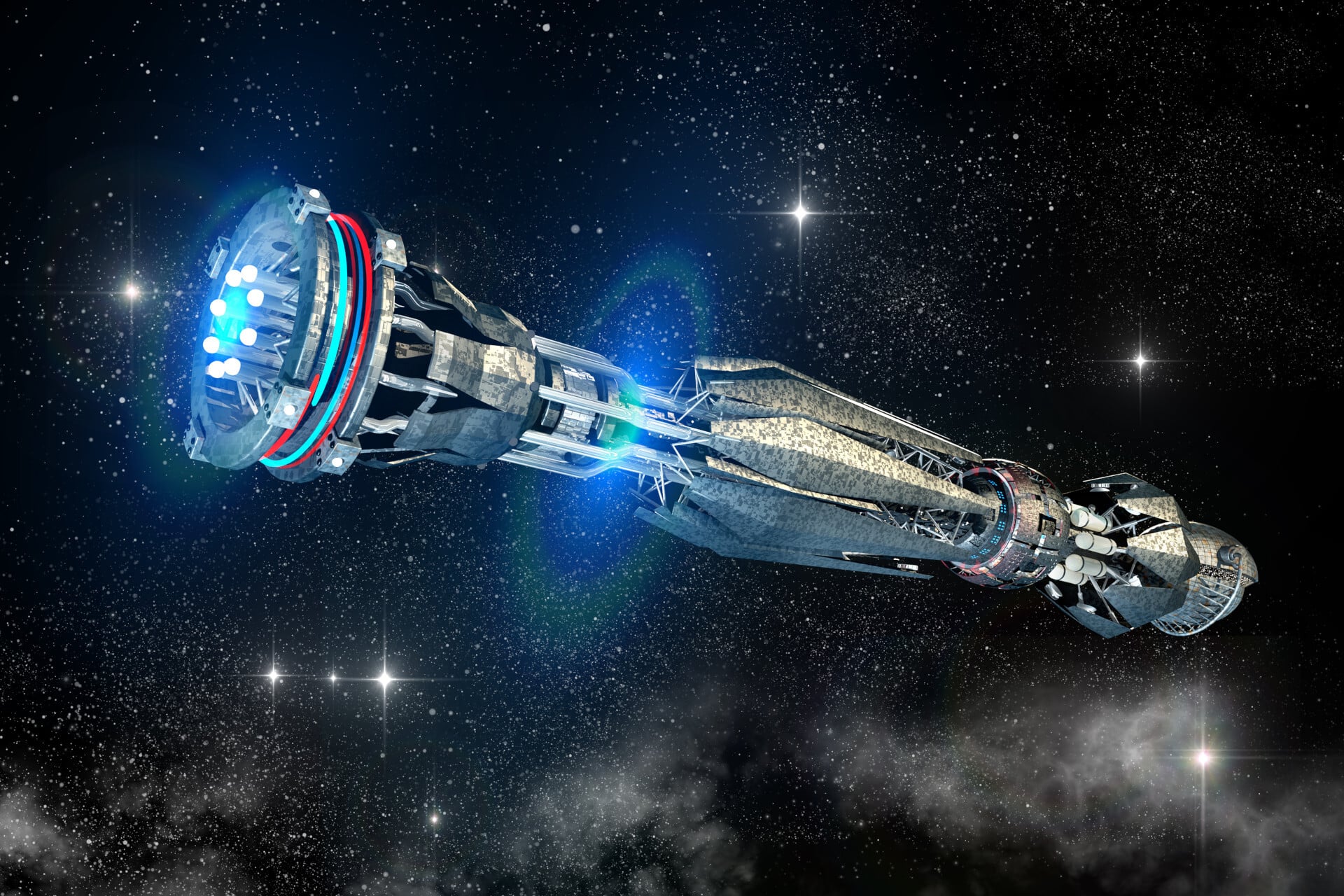
Humanity’s desire to explore deep space continues to inspire new ways to reach places far from home. Using conventional rocket propulsion, traveling to our nearest stellar neighbor, Alpha Centauri, would take thousands of years. Instead, researchers are looking to light as a faster, cheaper, and more sustainable form of propulsion that could enable deep space travel.
A team of researchers from Texas A&M University has demonstrated the use of laser beams to lift and steer tiny engineered devices without physical contact. The findings from the recent experiment are published in Newton and have the potential to apply light propulsion as a scalable method that could one day power a mission to Alpha Centauri.
Follow the light
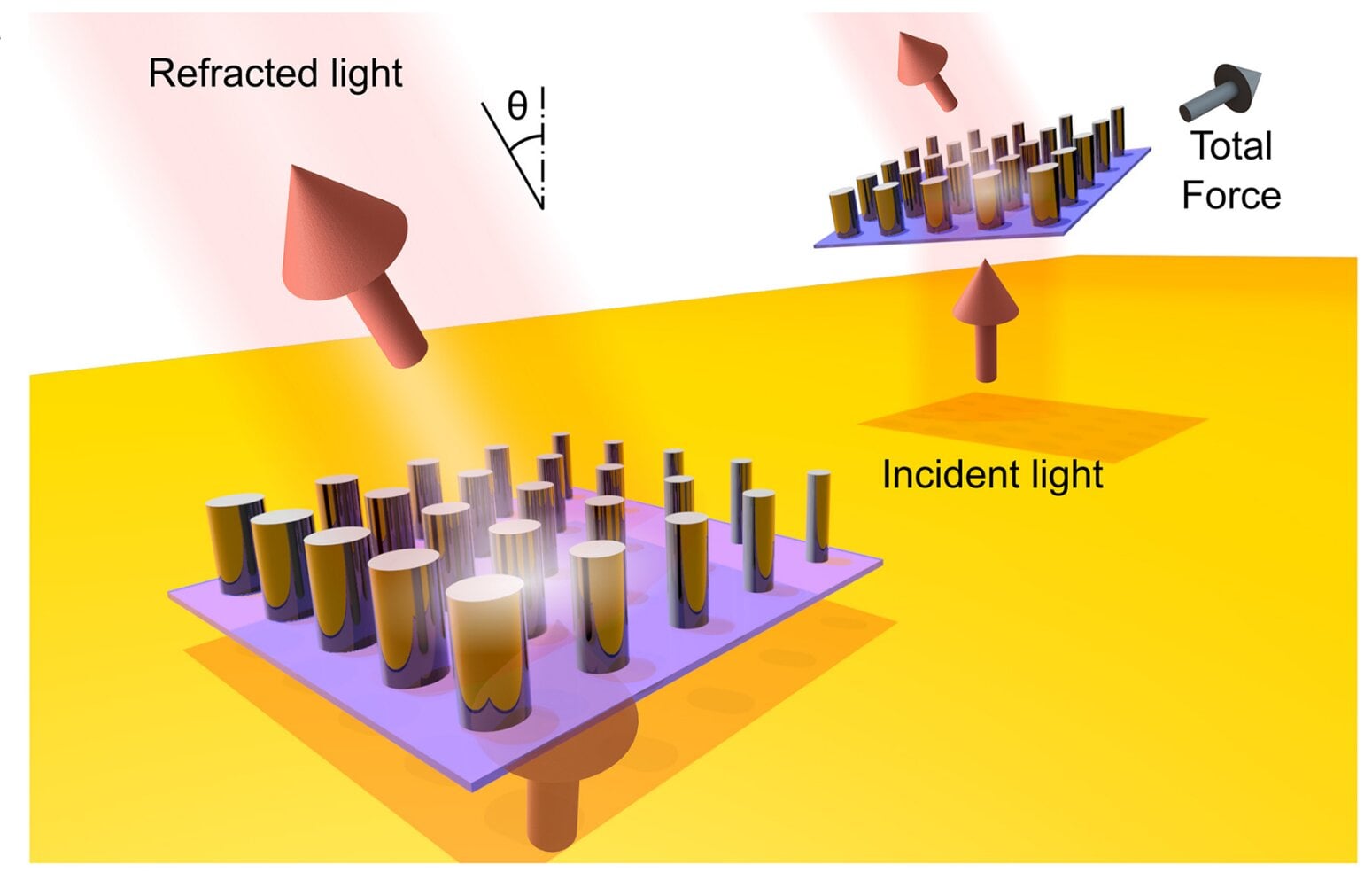
The idea of using light to propel objects in space isn’t new. Light particles, or photons, carry momentum, which is transferred to the surface of an object to create tiny amounts of thrust. The technology has already been demonstrated on solar sails, which use sunlight to propel small vehicles through space, similar to how wind pushes sailboats along the water.
The new research builds on that concept, aiming to use lasers to push an entire spacecraft to deep space destinations. The scientists behind the study developed micron-scale devices called metajets—ultrathin materials smaller than the width of a human hair. The devices are etched with tiny patterns that act like a lens, helping scientists control how light behaves as it bounces off them.
Through this intricate design, the scientists were able to control the transfer of momentum exerted by the laser beam, steering the metajets in all three dimensions. This full 3D maneuverability sets the experiment apart from previous research on light propulsion systems and, according to the researchers, has not been achieved before.
To the stars
The effect is similar to a pingpong ball bouncing off a surface, Shoufeng Lan, assistant professor and director of the Lab for Advanced Nanophotonics at Texas A&M, said in a statement. As light reflects onto an object, it transfers momentum to push an object through a small but measurable force.
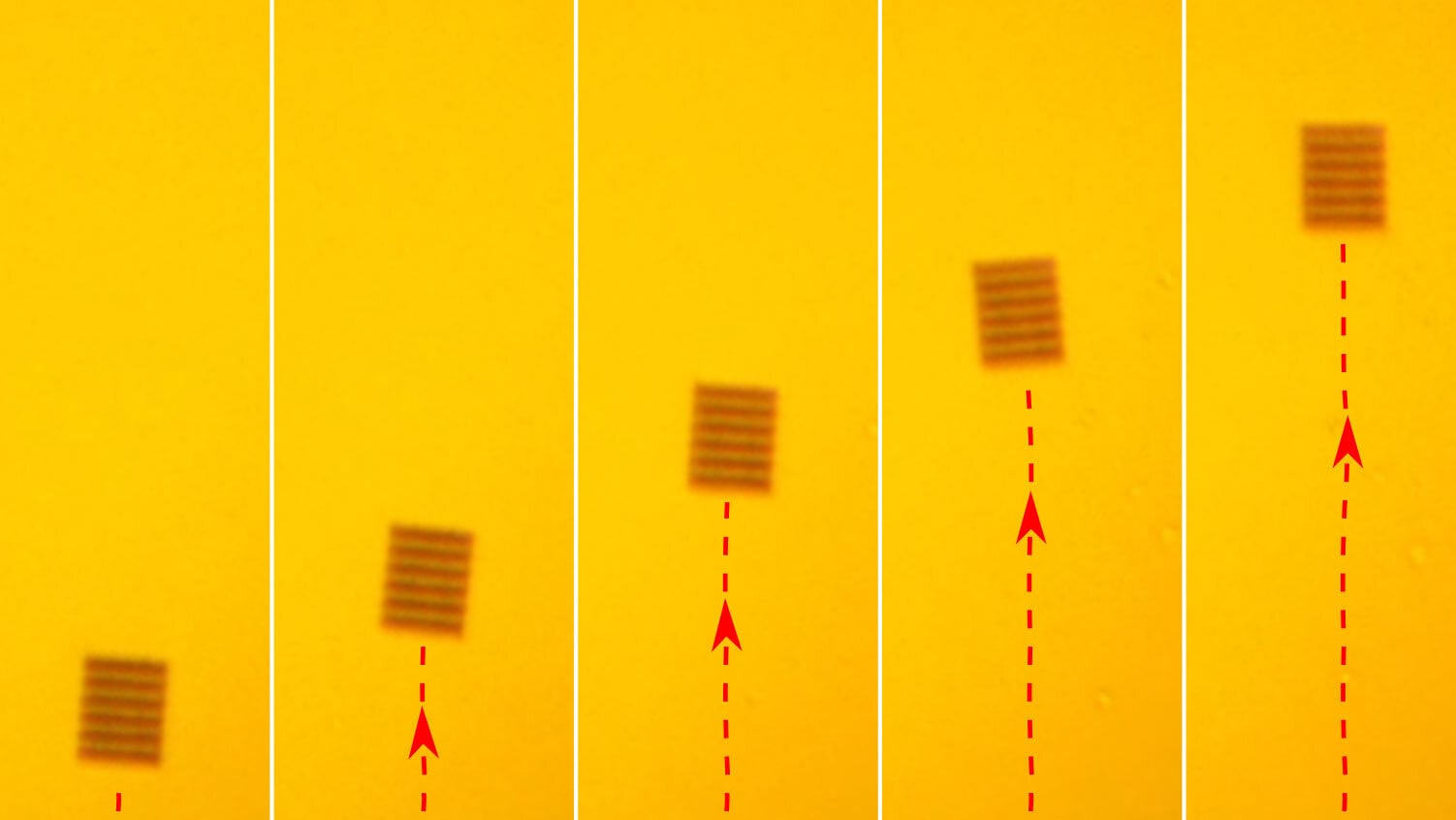
The experiment was carried out in a fluid environment to help offset gravity and better observe the motion of the metajets. While the devices used in the experiment are incredibly small, the team believes that the concept can be scaled to accommodate larger objects if there’s a sufficient amount of optical power.
Unlike other methods that control the object by shaping the light itself, this new approach builds control directly into the material through the tiny patterns to allow for a more flexible generation of force. In doing so, the force relies on the power of the light itself rather than the size of the object.
The researchers behind the study believe their device could one day be scaled for use on a mission to Alpha Centauri, possibly reaching the star system in a relatively quick 20-year journey. The team hopes to test the devices in a microgravity environment to study how the metajets would fare in space.
Similarly, the European Space Agency recently fired a laser beam at graphene aerogels, propelling the material forward using light alone. The experiment is also aiming to develop a propellant-free future for space travel.