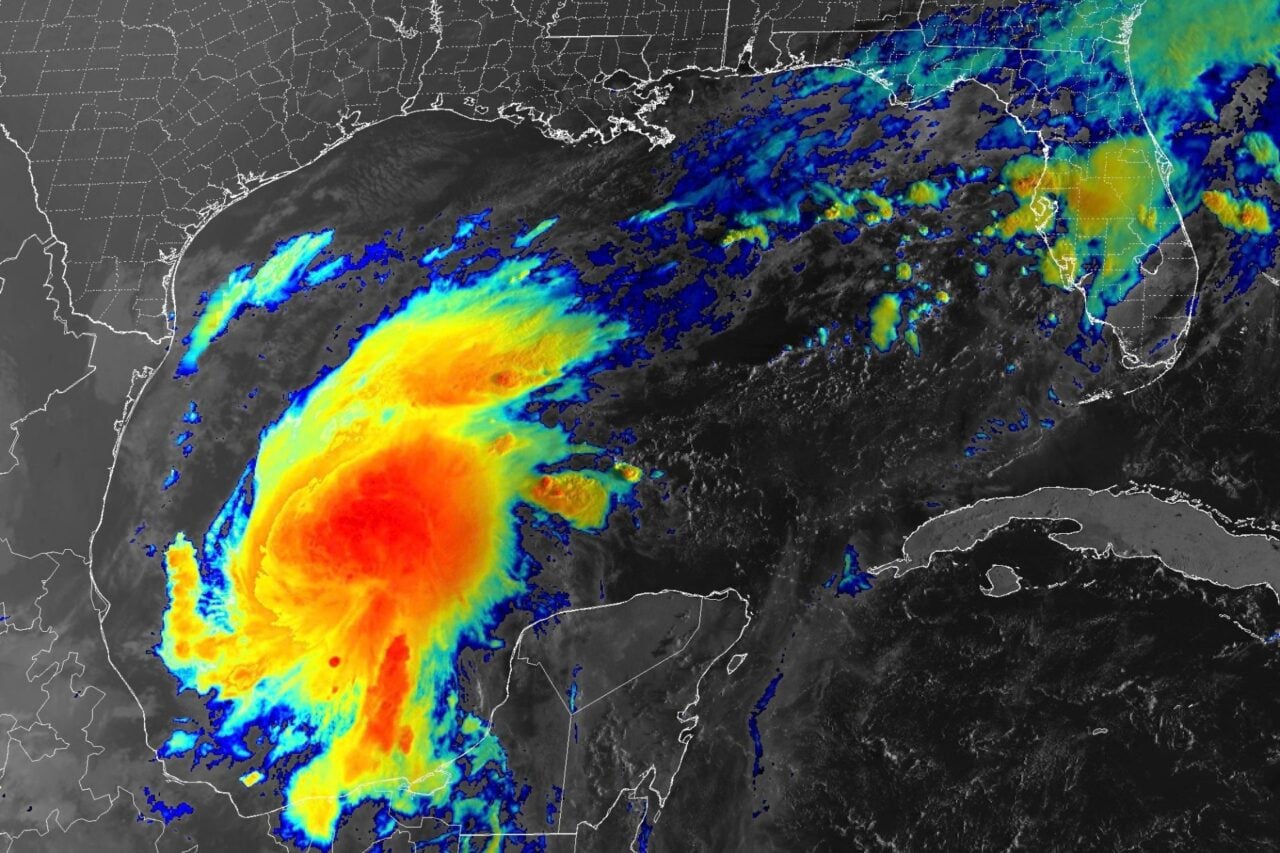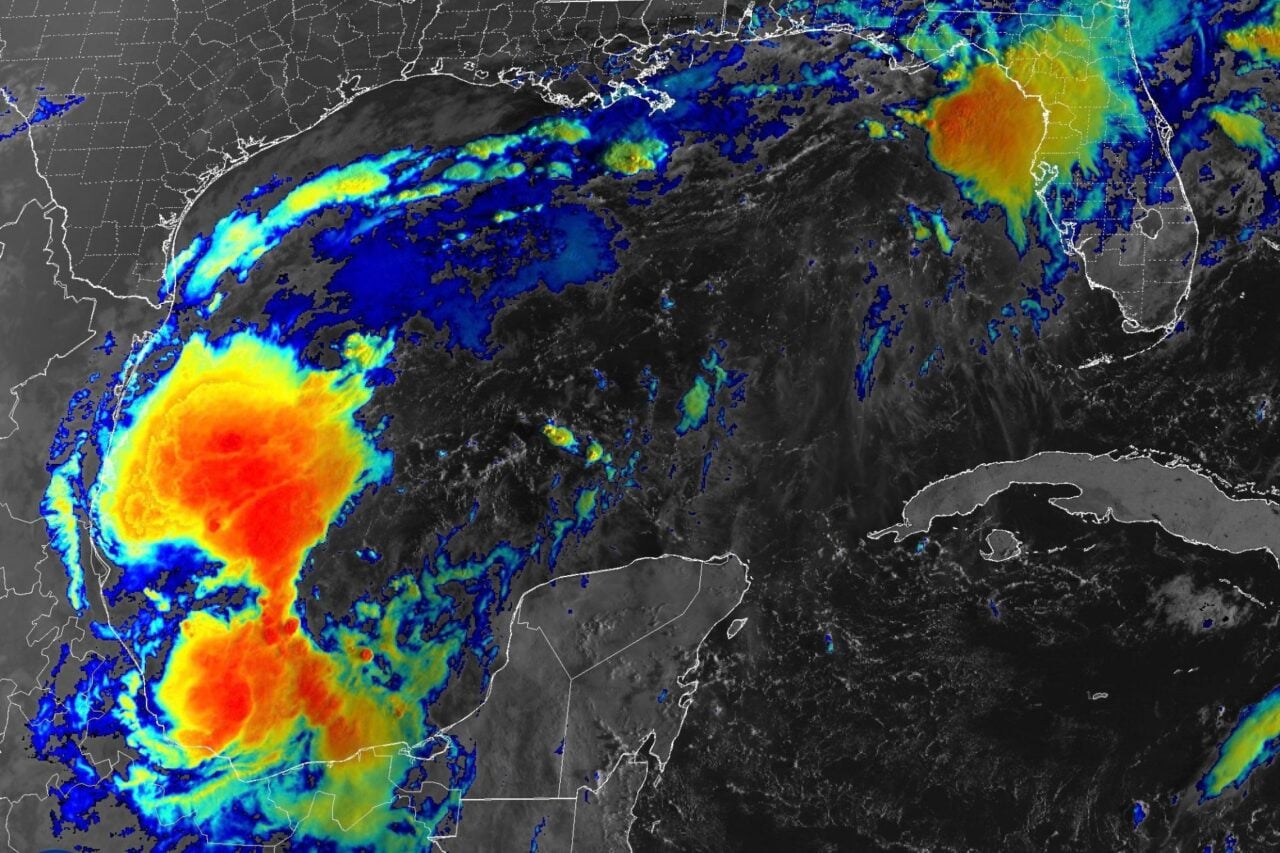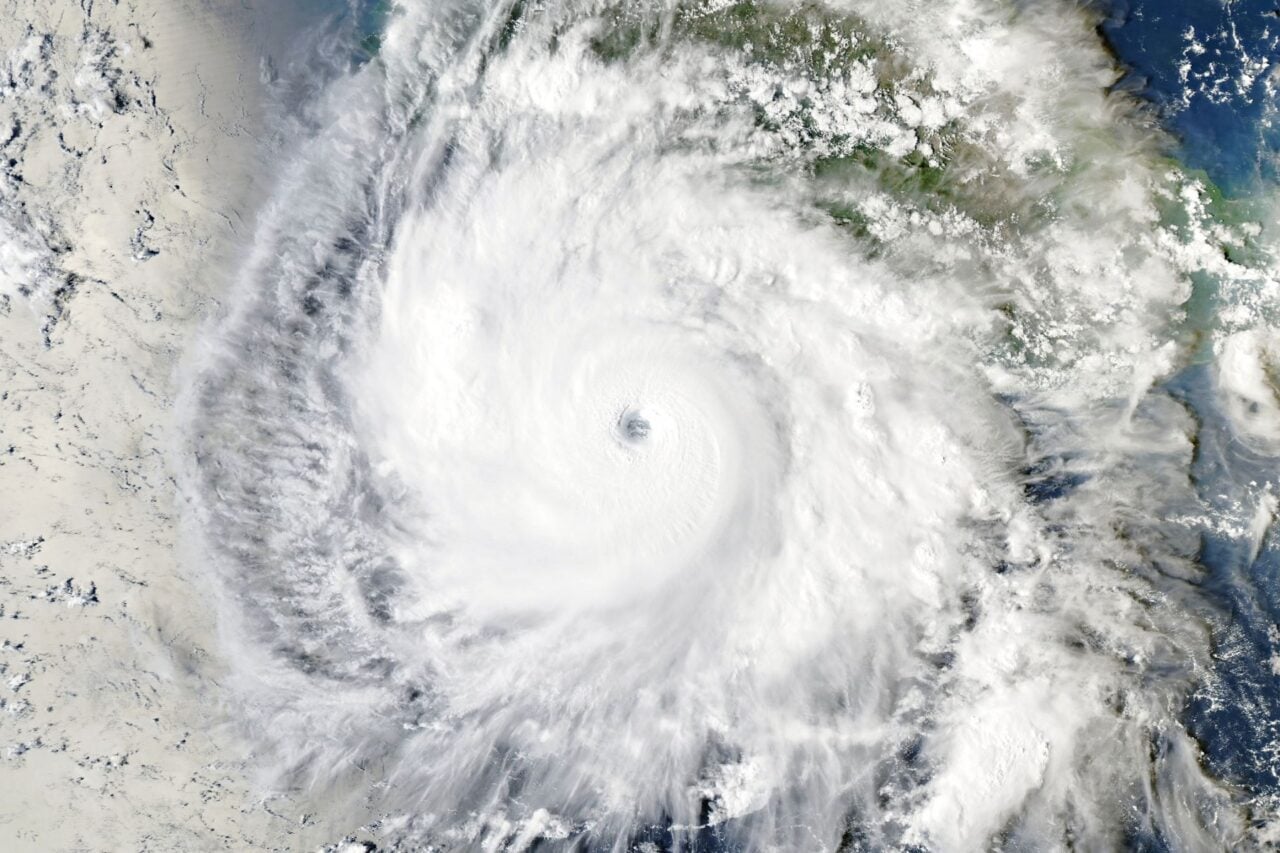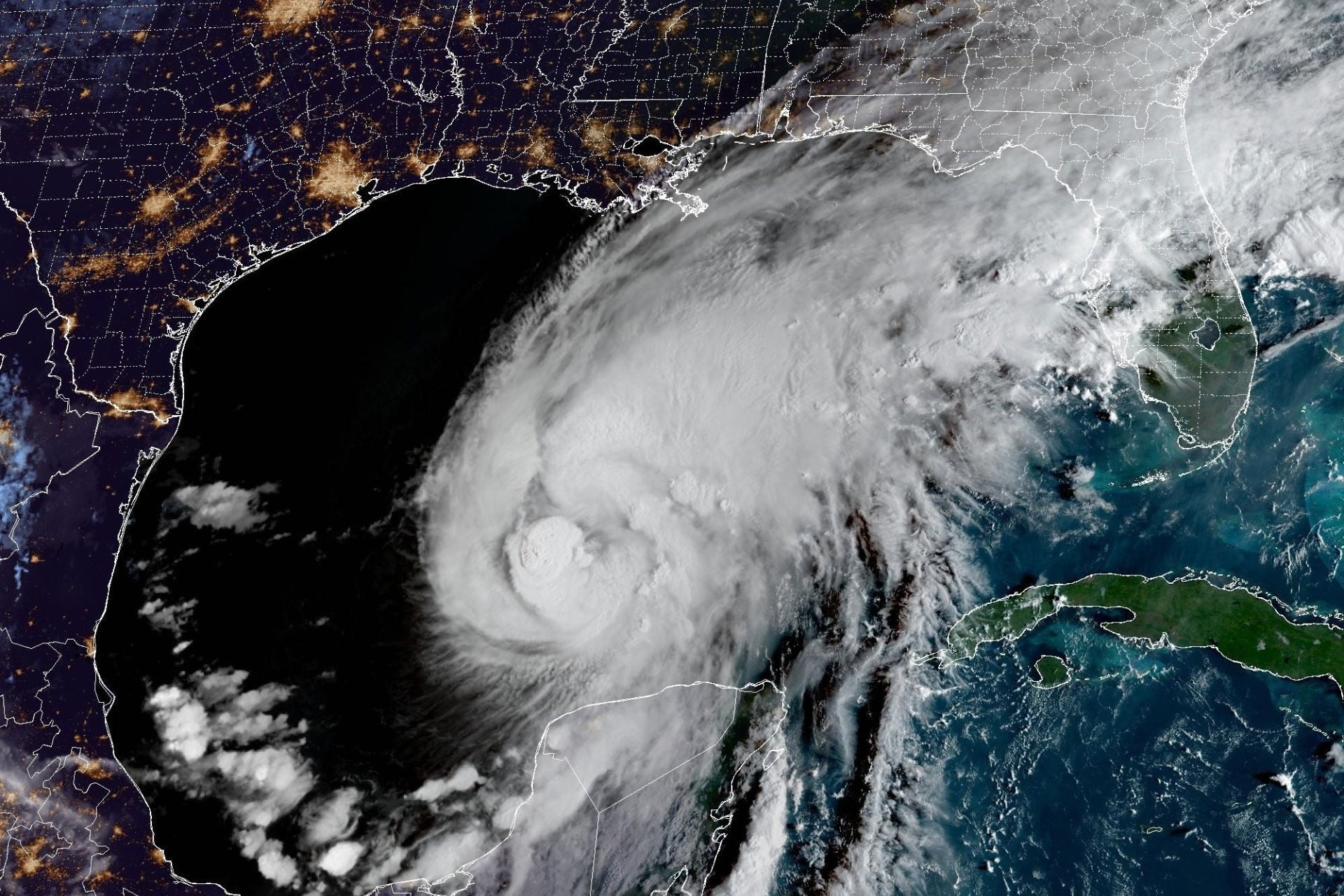
The first Atlantic hurricane of the season has finally arrived. Tropical Storm Isaias strengthened into a Category 1 hurricane late Wednesday and is now spinning toward the U.S. Gulf Coast as millions prepare for life-threatening storm surge, damaging winds, and flash flooding.
As of 8 a.m. ET Thursday morning, Isaias was located in the central Gulf and tracking east-northeast at 9 miles per hour (14 kilometers per hour), according to the National Hurricane Center. Forecasters expect the storm to make a northeastward turn and gather strength as it heads toward the U.S., though it could weaken just before reaching the Gulf Coast. Still, Isaias is likely to remain a “dangerous hurricane” when it makes landfall somewhere between the coast of Alabama and the Florida Panhandle.
The National Weather Service has issued hurricane warnings from Ocean Springs, Mississippi, across Alabama and the Bay/Gulf County line in Florida. According to the NHC, residents in these areas should prepare for the possibility of long-lasting power outages. A storm surge warning is also in effect from the mouth of the Mississippi River to Steinhatchee, Florida, and flash and urban flooding—along with isolated river flooding—will be possible across much of the Southeast.
Where will storm surge hit hardest?
As Isaias pushes toward land, the NHC expects 5 to 7 feet (1.5 to 2 meters) of storm surge to hammer the coastline between Ocean Springs, Mississippi, and Indian Pass, Florida. Sea levels could also rise 1 to 5 feet (0.3 to 1.5 meters) in coastal communities as far west as Morgan City, Louisiana, and as far east as Egmont Key, Florida.
“The combination of storm surge and tide will cause normally dry areas near the coast to be flooded by rising waters moving inland from the shoreline,” the NHC states.
Large, powerful waves could also cause severe beach erosion. The agency has advised residents in areas where storm surge warnings have been issued to follow advice given by local officials and evacuate if told to do so.
How much rain could Isaias bring?
From Friday through the weekend, forecasters expect Isaias to dump 3 to 7 inches (7.6 to 17.8 centimeters) of rain across the central U.S. Gulf Coast, extending from far southeastern Louisiana to the Florida Panhandle. Locally higher totals of up to 10 inches (25.4 cm) could fall in some areas.
As the storm pushes farther inland, rainfall amounts of 1 to 3 inches (2.5 to 7.6 cm) with localized totals up to 5 inches (12.7 cm) are expected across much of the Southeast as far north as the Tennessee Valley and the Carolinas.
“Flash and urban flooding, along with isolated river flooding, will be possible,” the NHC states. The greatest risk of flash flooding stretches from Mobile, Alabama, across the southern part of the state to the western portion of the Florida Panhandle.
Isaias could whip up tornadoes, too
According to Washington Post meteorologist Ben Noll, as dry air is entrained into the back side of Isaias, it will clash with a moisture-rich tropical air mass to the east and produce at least one arcing band of thunderstorms. Isaias’s spinning wind field could allow thunderstorm cells to acquire torsion themselves, spawning some isolated tornadoes.
Isolated but potentially powerful tornadoes could spin up across coastal Alabama, the Florida Panhandle, and far southwestern Georgia Friday night into Saturday, the NHC reports. This would compound the damage from Isaias’s hurricane-force winds, expected to be 80 miles per hour (129 km/hour) near the storm’s center.
The exact timing, location, and strength of this hurricane’s landfall remain to be seen, but it’s already clear that Isaias will have a wide-reaching impact on the Southeast. Meteorologists will be watching the storm closely as it advances on the U.S. Gulf Coast, so be sure to monitor your local forecast for updates.