The experimental spacecraft secretly launched to space last summer, but very little has been shared about its mission, which appears to have ended.
A joint mission from the federal space agency and Rocket Lab aims to loft four cube satellites across two launches and acquire hourly data on extreme storms.
NUVIEW's satellite constellation will use LiDAR to create its 3D maps, which could prove beneficial to farmers and urban planners.
A total of 4,023 Starlink satellites are now in low Earth orbit, as SpaceX continues to build its record-setting constellation at a rapid pace.
A small rocket carrying ashes for a suborbital memorial service blew up seconds after launch, but the company claims the precious payload managed to survive.
The Luna-H Map cubesat launched on board the Artemis 1 mission in November 2022, but failed to fire its engines shortly after its delayed liftoff.
The dramatic footage shows a Falcon Heavy fairing blazing through the atmosphere at speeds reaching Mach 15.
NASA's live broadcast is scheduled to begin at 3:30 p.m. ET, with the spacewalk scheduled for six and a half hours.
The UP Aerospace rocket, which carried student projects and cremated remains, suffered an anomaly about three seconds after liftoff.
Chunks of debris, falling dust, and fire spread from SpaceX's Starship launch in April. Conservation groups say the launch never should have been allowed.
The bill could extend liability protections for companies like SpaceX and Blue Origin should a crew member suffer an injury or die.
Company CEO Elon Musk said the 394-foot-tall rocket took 40 seconds to respond to the self-destruct command—an interminable amount of time for a safety feature.
NASA’s Artemis program to return humans to the lunar surface is moving at a snail’s pace. Here’s why.
We’ll also be watching the launch of NASA’s hurricane-sniffing TROPICS satellites.
JUICE is having some difficulties deploying one of its most crucial science instruments—a tool for scanning the subsurfaces of Jupiter's icy moons.
Starship's explosion last week is "not a big downer," according to NASA Administrator Bill Nelson, who expects SpaceX to fly its megarocket again in two months.
The triple-core rocket blasted off on Sunday evening to deliver three satellites to a high Earth orbit.
Russia had previously threatened to leave the ISS by 2024, but is now the last of NASA's partners to agree to stay aboard the station for a few more years.
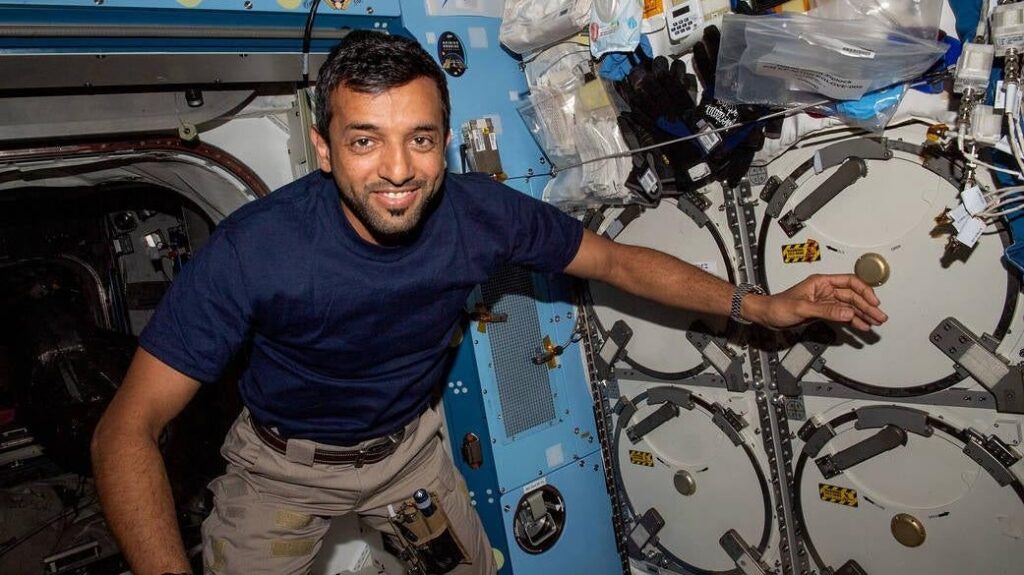
On Friday morning, Al Neyadi and his NASA crewmate Stephen Bowen will attempt to retrieve an antenna outside the ISS that will be returned back to Earth.
The company won't be able to salvage any of the three boosters, as the giant rocket is on a mission to send its payloads directly to a high Earth orbit.