I’m still reeling from the launch of NASA’s Artemis 2 mission yesterday. As someone who wasn’t around for the Apollo era, seeing astronauts embark on this long-awaited journey to the Moon was nothing short of spectacular.
The Space Launch System (SLS) rocket and Orion spacecraft launched from NASA’s Kennedy Space Center in Cape Canaveral, Florida, at 6:35 p.m. ET. Now, Orion is independently orbiting Earth, and mission control plans to set course toward the Moon this evening.
I watched NASA’s launch-day coverage from start to finish, so I picked up on a few things others may have missed. If you’re like me and you can’t get enough of Artemis 2, here are some juicy details to add to your fun facts repertoire. (And by the way, you can follow the latest updates on the 10-day mission via Gizmodo’s live blog).
The traditional pre-launch card game
I’ve been covering spaceflight for a few years now, and I had somehow never heard of this fun NASA tradition. Between donning their spacesuits and departing for the launch pad, astronauts play cards until their mission commander—in this case NASA’s Reid Wiseman—loses.
The thinking behind this long-held spaceflight tradition is that the commander’s loss burns off all his or her bad luck, clearing the mission for only good luck.
So, before leaving the suit-up room at the Neil A. Armstrong Operations and Checkout Building, the Artemis 2 astronauts faced off against each other in a game of High Card Wins. You can watch a clip of the game above.
The release of the emergency egress baskets
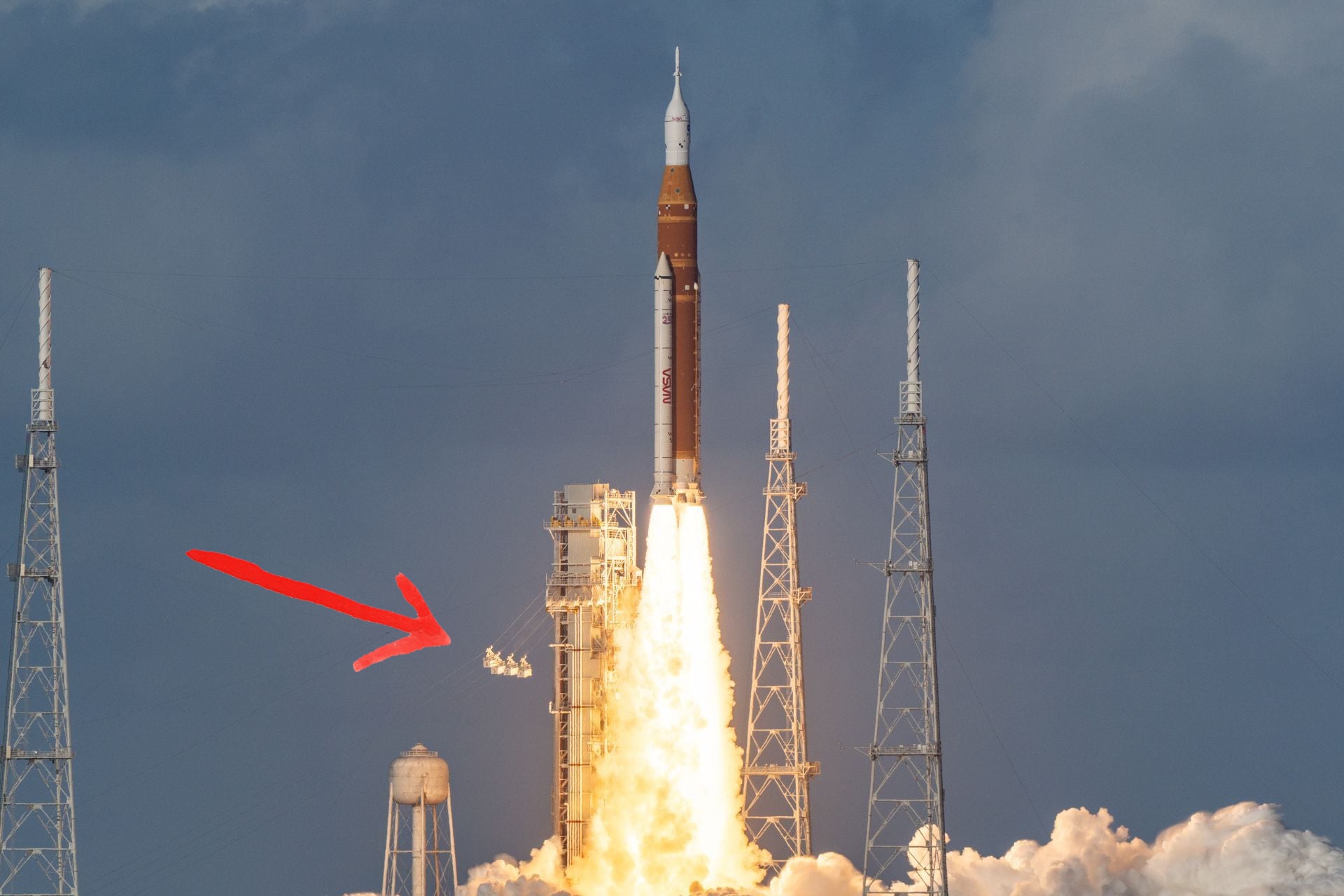
Just after T-0, as the SLS cleared the launch tower, keen-eyed spectators may have noticed what looked like a blazing fireball hurtling down and away from the rocket.
That was actually the emergency egress baskets being released to avoid the rocket’s explosive blast-off—and no, they weren’t on fire. That was just an illusion created by the blaze reflecting off the baskets.
Hi res.pic.twitter.com/QAAn1sDhZk
— Riccardo Rossi – IU4APB – @AstronautiCAST co-host (@RikyUnreal) April 2, 2026
These baskets are suspended on a slidewire system at Launch Pad 39B. They provide crew and technicians with a rapid escape route in the event of an emergency. Under normal circumstances, they release immediately upon booster ignition and slide away to avoid the heat and force of the launch.
Gob-smacking views of SLS separation
In all seriousness this may have been my favorite shot from Artemis II so far pic.twitter.com/JBo01C5gdn
— Chris Combs (iterative design enjoyer) (@DrChrisCombs) April 1, 2026
One typically assumes the most eye-catching parts of a rocket launch will be the initial blast-off or the first views of Earth from the spacecraft. I don’t think any Artemis 2 spectators expected the SLS core stage separation to steal the show—I know I sure didn’t.
About 8 minutes after liftoff, the core stage separated from Orion and the upper stage—also known as the interim cryogenic propulsion stage (ICPS). NASA’s live feed gave us a crystal-clear shot of the core stage pulling away from the ICPS—captured by a camera planted within the upper stage itself.
Spectators who hung in long enough to see Orion separate from the ICPS were also in for a treat. While this shot wasn’t quite as dramatic, NASA’s livestream still gave us an up-close view of the ICPS pulling away from Orion, showing off the spacecraft’s stage adapter hardware.
The Orion spacecraft successfully separated from the upper stage of the rocket, and the "proximity operations" test is underway. The Artemis II astronauts are manually piloting Orion similarly to how they would if they were docking with another spacecraft. pic.twitter.com/RWW4RSyaoq
— NASA (@NASA) April 2, 2026
A brief but alarming communications lapse
At one point during the flight, mission control lost contact with the Orion spacecraft for several minutes, rendering it unable to communicate with the Artemis 2 crew. This was a harrowing moment. Fortunately, ground teams quickly managed to reestablish contact with the spacecraft.
“About 51 minutes into the flight, during a planned handover between satellites, the Orion spacecraft underwent a communications issue, leading to a temporary partial loss of comms,” NASA Administrator Jared Isaacman explained during a post-launch press briefing.
“The uplink of [the capsule communicator] to the crew was being heard by the crew, but we could not hear their responses for a brief period of time,” Isaacman said. He also clarified that the issue did not stem from a problem with the Orion spacecraft.
As of Thursday morning, NASA had not publicly disclosed the technical cause of the lapse.
Trouble with Artemis 2’s historic toilet
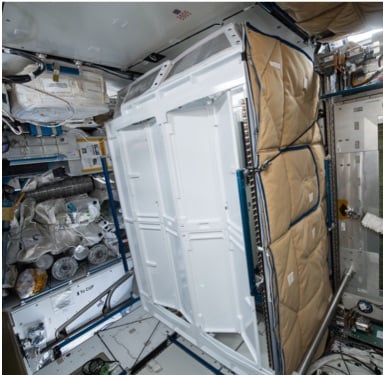
Artemis 2 is historic for several reasons, but my favorite one happens to be this: This is the first mission to ever send a toilet beyond low-Earth orbit.
Yep, that’s right. The Apollo spacecraft did not have bathrooms. Crews on those missions instead relied on rudimentary waste collection technology. Basically, they peed into roll-on cuffs and pooped in bags. Being an astronaut isn’t always as glamorous as it looks.
Orion, however, is equipped with a state-of-the-art space commode. Called the Universal Waste Management System, it was designed to provide a more comfortable, easy-to-use, and far less messy means of dealing with urine and excrement during spaceflight.
Within hours of launch, the Artemis 2 crew reported an issue starting up part of the UWMS. “We had a controller issue with the toilet when they spun it up, so we gotta work through that,” Associate NASA Administrator Amit Kshatriya said during the post-launch briefing. “That’s going to take maybe a few hours to troubleshoot.”
At 12:06 a.m. ET Thursday, NASA confirmed that the crew and mission control were able to fix the problem. In the interim, the Artemis 2 astronauts were able to use their Collapsible Contingency Urinals—the backup urine disposal system—and they could still use the UWMS to poop. Now that normal toilet operations are restored, they will be able to “boldly go” as planned.