Today is the final day of NASA’s Artemis 2 mission, and it’s going to be a nail-biter.
The Orion spacecraft is currently picking up speed as it approaches Earth. At 9 a.m. ET, it was cruising along at 4,820 miles per hour (7,757 kilometers per hour) and was still about 73,400 miles (118,125 km) from home. Later today, Orion will slam into the atmosphere at a velocity 30 times faster than the speed of sound, then slow to just 17 mph (27 kph) for a soft splashdown off the coast of San Diego, California, at approximately 8:07 p.m.
The spacecraft’s heat shield will protect the crew—NASA’s Reid Wiseman, Victor Glover, Christina Koch, and the Canadian Space Agency’s Jeremy Hansen—from the extreme temperatures of reentry. This will be the most dangerous part of the mission by far, but NASA has worked out a procedure designed to keep the crew safe.
Here are the four phases to watch for during Artemis 2’s epic return.
Phase 1: Service module jettison
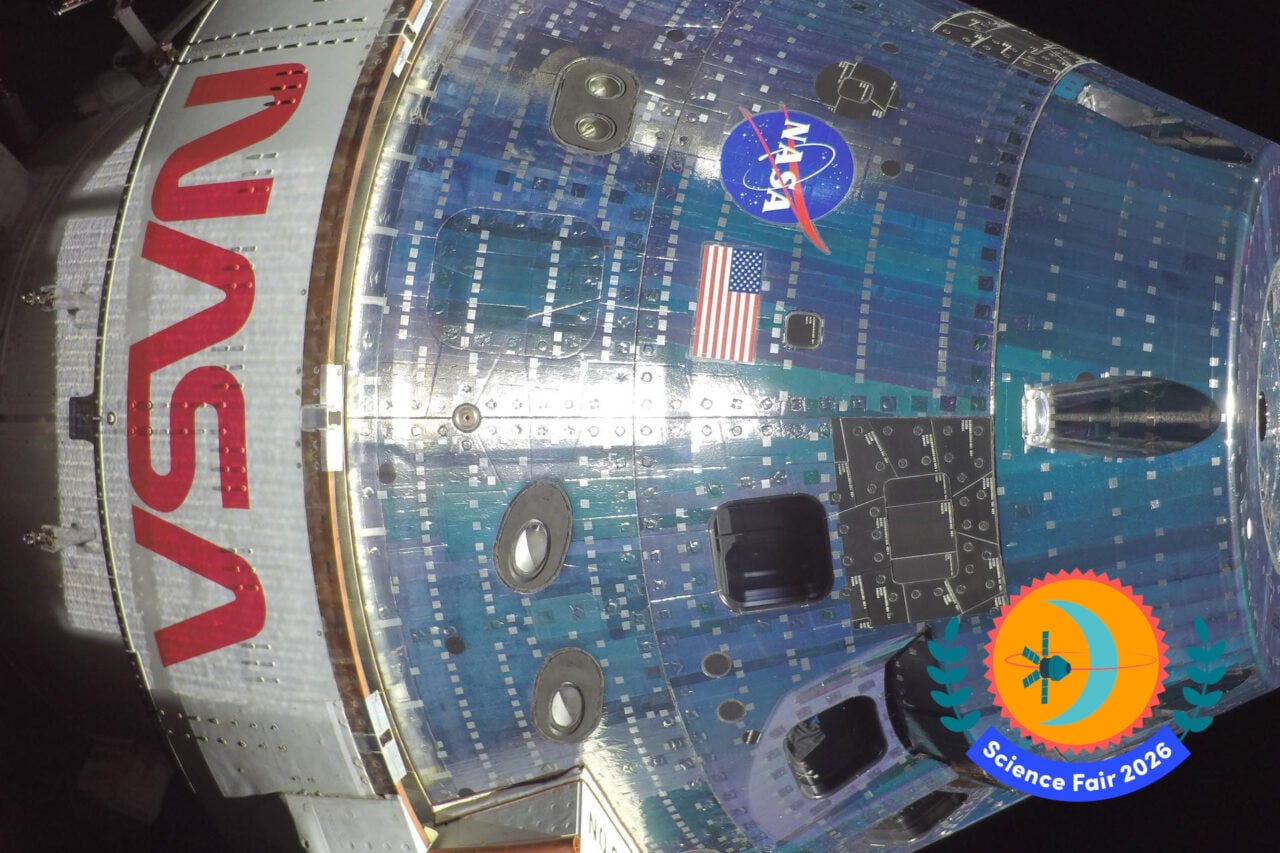
About 20 minutes before Orion reaches the upper atmosphere—around 7:33 p.m.—the crew capsule will separate from the service module, exposing the capsule’s heat shield. The service module, built by the European Space Agency, has supplied Orion with power and propulsion over the course of the mission.
This will put the service module on a path to reenter the atmosphere and burn up during descent. Roughly four minutes after separation, the crew capsule will fire its small reaction control thrusters to move away from the service module.
This sequence will be critical, as any error in separation or the subsequent maneuvering could affect the crew capsule’s ability to safely manage the intense heat and forces of atmospheric reentry. Service module jettison will set the stage for a safe return to Earth.
Phase 2: Atmospheric entry
When the crew capsule hits Earth’s atmosphere at about 23,864 mph (38,405 kph), it will have to do so at the perfect angle. Too shallow, and the capsule could skip off the atmosphere and bounce back into space. Too steep, and the heat shield could be overwhelmed, causing the spacecraft to burn up during descent.
The capsule will fine-tune its angle of atmospheric reentry as it distances itself from the service module. During Thursday’s mission briefing, Artemis 2 Lead Flight Director Jeff Radigan said the spacecraft has less than a one-degree window for the reentry angle, and it will need to hit the center of that range as precisely as possible. While that allows for a tiny amount of wiggle room, NASA doesn’t plan to use it, he added.
“Let’s not beat around the bush, we have to hit that angle correctly. Otherwise, we’re not going to have a successful reentry,” Radigan said.
Phase 3: plasma phase
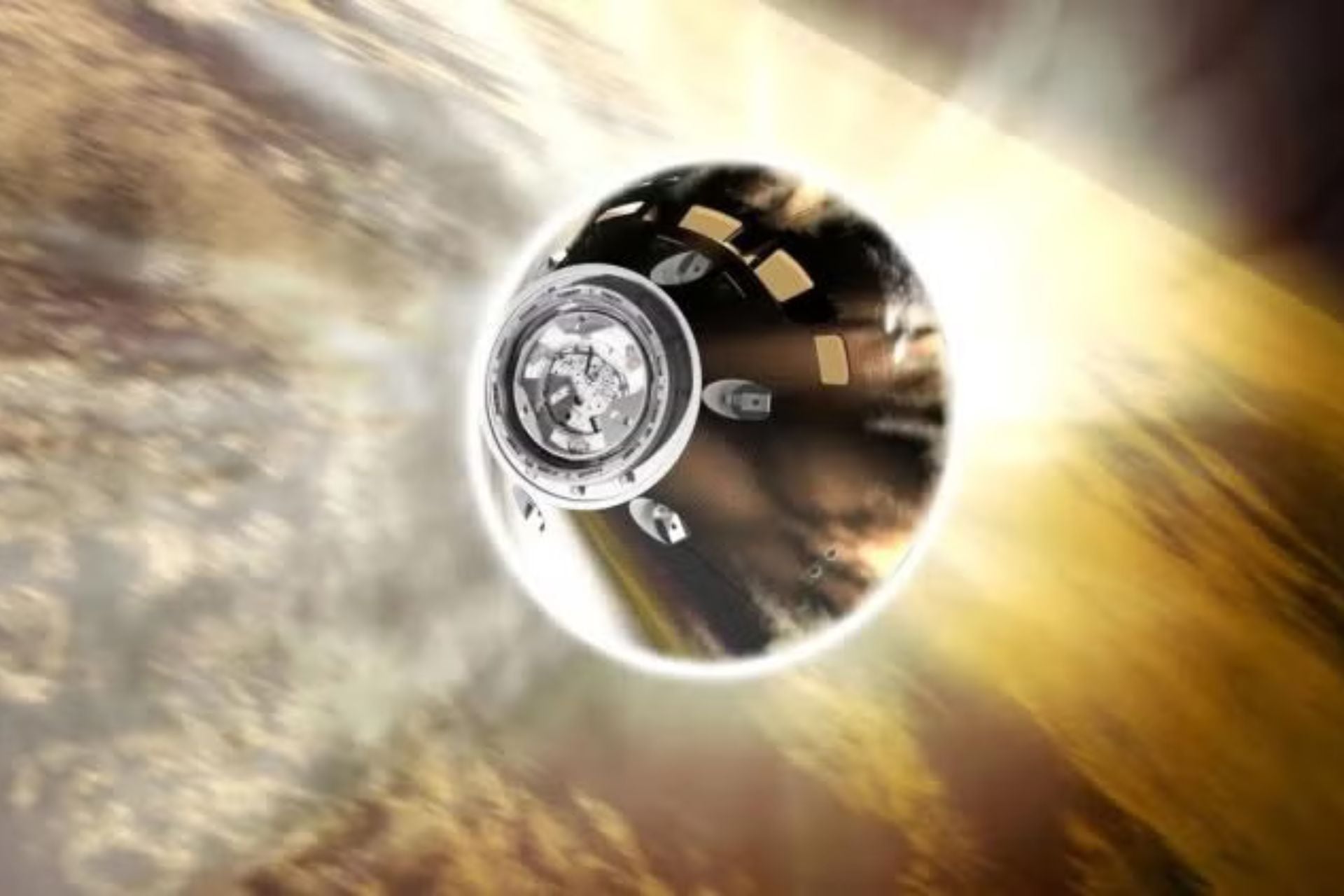
Reentering the atmosphere at such high speed will violently compress the air in front of the crew capsule. This will cause temperatures outside the spacecraft to increase drastically, reaching 3,000 degrees Fahrenheit (1,650 degrees Celsius). At roughly 7:53 p.m., the capsule will become engulfed in plasma, causing a harrowing six-minute communications blackout.
Orion’s heat shield performance will mean the difference between life and death for the Artemis 2 crew. After the uncrewed Artemis 1 mission, engineers noticed that large chunks of the shield sheared away unevenly. If that were to happen this time, it could expose the astronauts to dangerously high temperatures.
NASA and Lockheed Martin—the prime contractor for Orion—spent the past four years fixing the heat shield issue. The agency is confident that it will perform nominally today, but I will certainly be holding my breath as the crew capsule blazes back to Earth.
Phase 4: parachute deployment
After emerging from the six-minute communications blackout, the capsule will jettison its forward bay cover and deploy the drogue parachutes. That will happen about 22,000 feet (6,705 meters) above Earth’s surface at approximately 8:03 p.m. A minute later, it will unfurl its three main parachutes to slow for splashdown.
Orion’s parachute system has redundancies built in just in case a chute fails, and the capsule can land safely using just two of its three main chutes. However, if two or more fail, this would result in a dangerously fast splashdown.
Assuming everything goes according to plan, the recovery team will retrieve the crew from the capsule via helicopter within two hours of splashdown. The astronauts will fly to the USS John P. Murtha, where they will undergo post-mission medical evaluations before returning to shore and boarding a flight to NASA’s Johnson Space Center in Houston, Texas.
You won’t want to miss the dramatic conclusion of this historic 10-day Moon mission. To watch Artemis 2 return to Earth live, head to Gizmodo’s watch page.