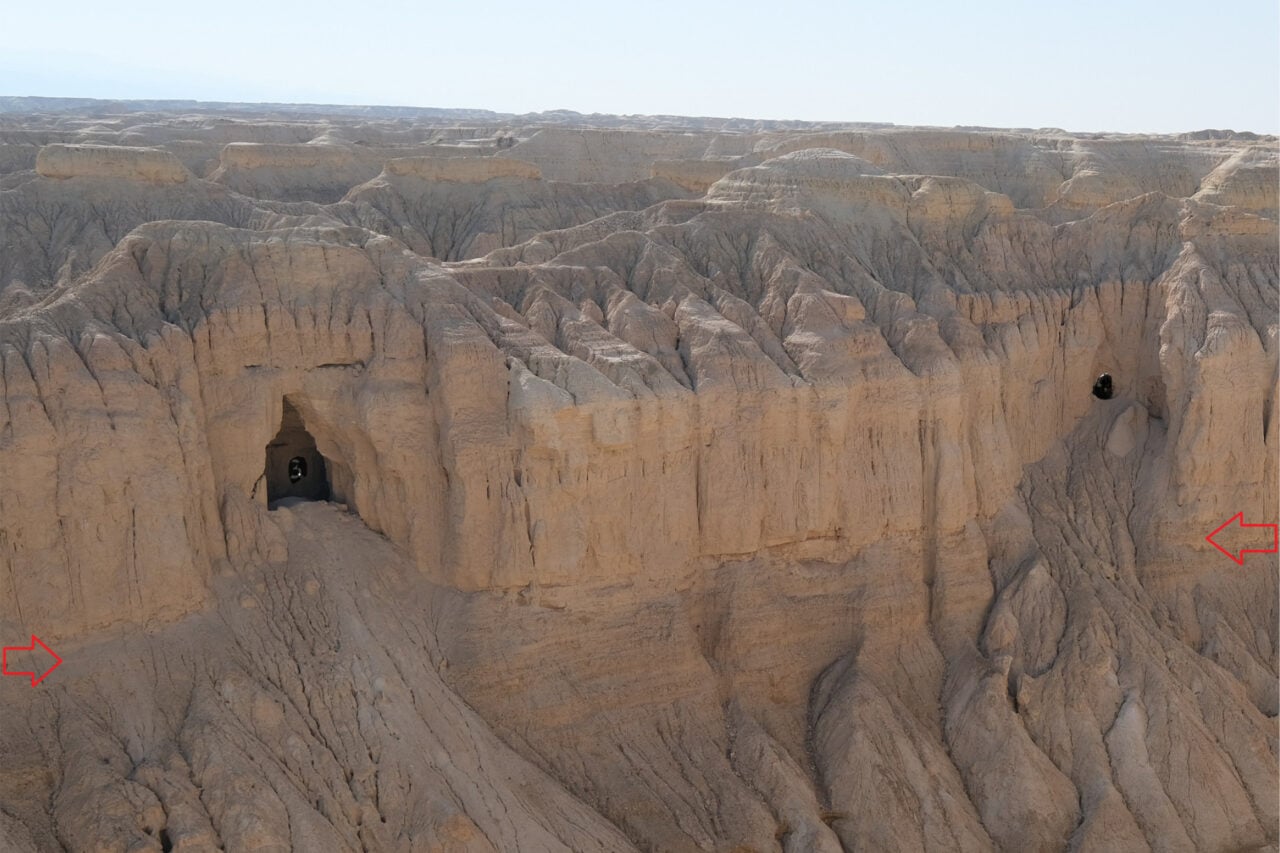
The Sahara’s 3.6 million square miles (9.2 million square kilometers) of scorching sand actually comprise several deserts intersecting across the whole expanse of North Africa—including the rocky and still under-explored Atbai Desert between the Nile and the Red Sea.
Archaeologists have now turned to remote-sensing techniques via satellite to scout this inhospitable arid expanse, discovering hundreds of slightly macabre sites, believed to be created in the millennia before the rise of ancient Egypt.
“We kept finding large, circular mass graves filled with the bones of people and animals,” archaeologist Julien Cooper and his coauthors explained in The Conversation, “often carefully arranged around a key person at the centre.”
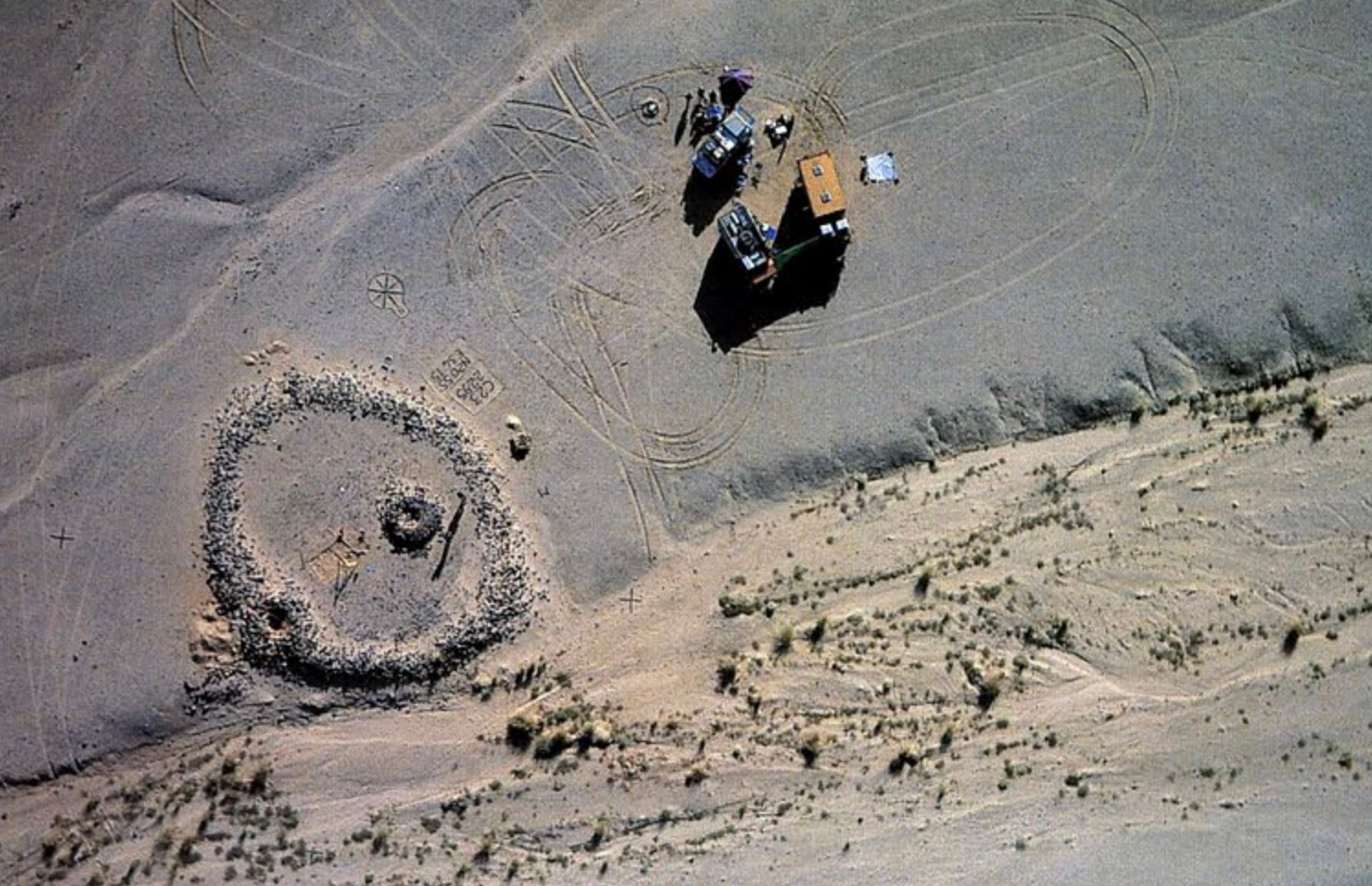
To date, Cooper and his collaborators have uncovered a total of 260 previously unknown ancient burial sites, “typified by a circular stone enclosure wall with internal burials,” as they described these finds in their latest study in the journal African Archaeological Review. The mass graves, dotted across nearly 621 miles (1,000 km) of northeastern Sudan, were likely built sometime between 4000 and 3000 BCE, by their estimates. Some of these Neolithic crypts are truly monumental, stretching out up to 262 feet (80 meters) in diameter and housing the sprawling human remains of nomadic herders and their livestock within their large stone enclosures.
“These burial enclosures tell us even scattered nomads were extremely well-organised people, and expert adapters,” Cooper and his colleagues wrote. “They provide a prologue for the monumentalism of the kingdoms of Egypt and Nubia, and an image of this region as more than pharaohs, pyramids and temples.”
‘Nomad elite’
Archaeologists have struggled to pin down when exactly nomadic societies began to stratify into class hierarchies across the Sahara during this Middle to Late Holocene period, but Cooper and his coauthors believe that further investigation of their finds could finally clear that timeline up.
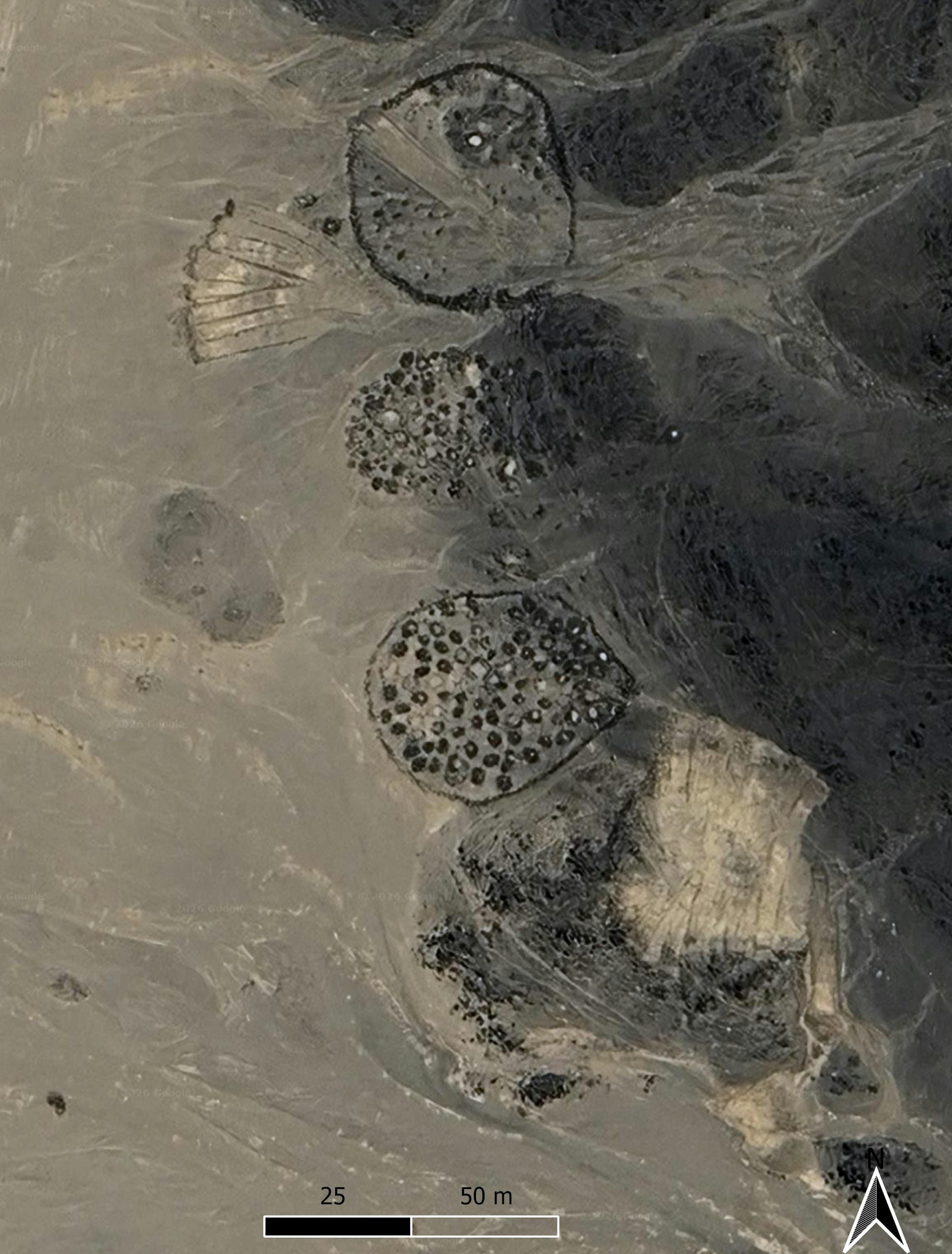
Prior to their satellite survey, 20 similar sites had been documented across the Atbai, with one large burial complex at Wadi Khashab, east of the ancient Egyptian agricultural town of Kom Ombo, being “the best excavated example,” they noted. A past expedition by Polish researchers had radiocarbon dated pottery from the Wadi Khashab graves, revealing a complex multigenerational sequence of burials fanning out in concentric circles like the rings of a tree, dated between 5000 and 3000 BCE. According to Cooper’s team, ceramics associated with further additions to this site around 2000 BCE strongly resemble Middle Nubian pottery from the C-Group, suggesting a strong cultural independence from this community’s emerging Egyptian neighbors.
“These ‘enclosure burial’ nomads had little to do with urbane and farming Egyptians,” Cooper’s team emphasized. “These were Saharan desert nomads through and through.”
While the team strongly suspects that the construction of these Stone Age gravesites around one set of human remains was likely meant to honor “an important social figure,” they recognize satellite images can only get you so far. “As only a small number of these structures have been excavated,” they wrote, “this development must remain a hypothesis.”
War-torn excavation sites
Cooper, who teaches at Australia’s Macquarie University in Sydney, and his collaborators at the Université Lumière Lyon in France devoted six months to scouring satellite imagery from Google Earth and other open-source providers for their new study, in part out of safety concerns. The current conflict in Sudan, they said, has made ground surveying “impossible.”
Expeditions to carbon date the remains of these ancient nomads will require navigating a civil war in Sudan that is also putting this archaeological evidence itself at risk. Warring factions in Sudan have turned to illegal and toxic gold mining across this rocky desert, in defiance of a government ban on the groups’ mercury and cyanide in gold mining methods since 2019.
Brian Adeba, a senior policy advisor on Sudan for the Washington DC-based think tank The Sentry, told Yale Environment 360 last year that much of the detail on this damage is still poorly understood. “The political and security situation has prevented researchers from investigating these issues,” Adeba said.
“Sadly,” Cooper and his team noted, “many of these enclosure monuments are currently being destroyed or vandalised as a result of unregulated mining in the region. These unique burials have survived for millennia, but can disappear in less than a week.”