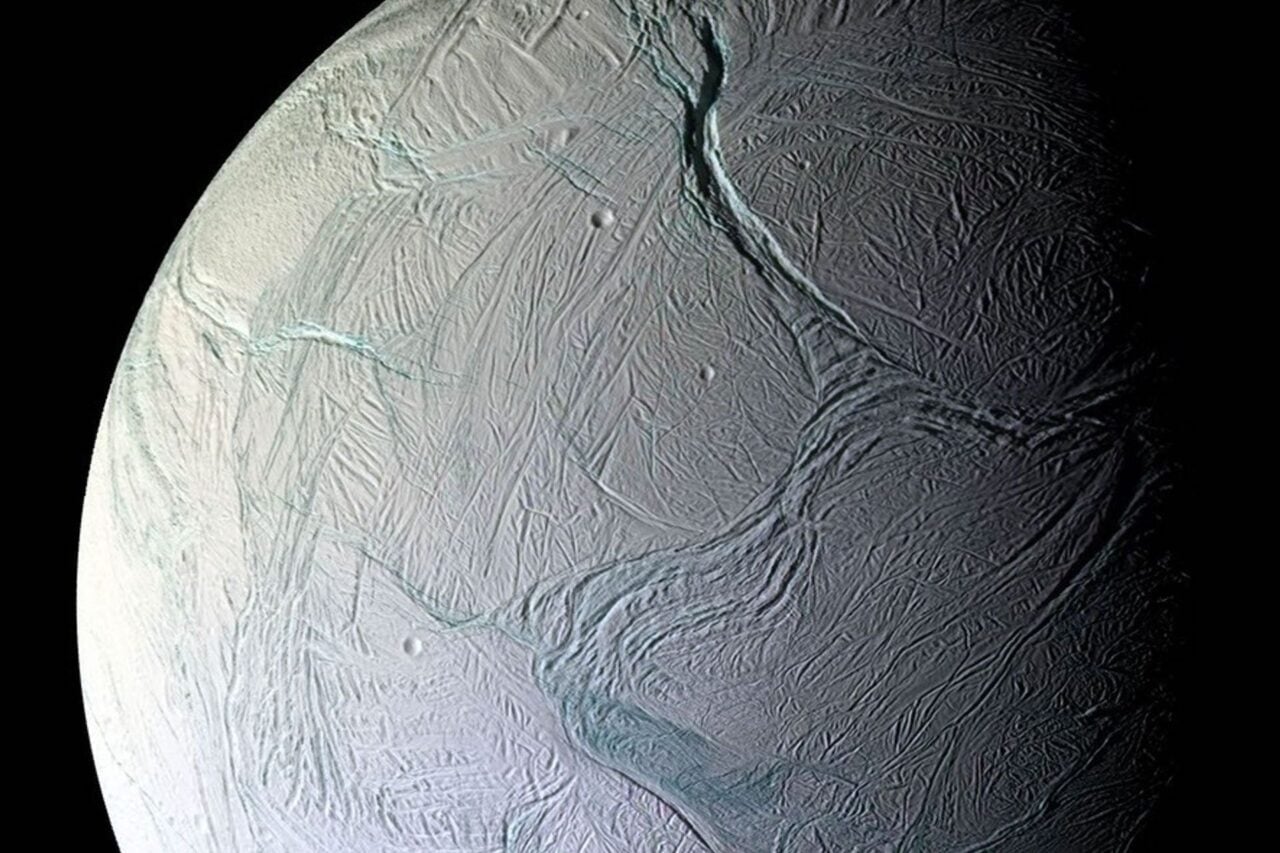
When it comes to space, perspective is everything. We’ve talked about the importance of scale in the past – about how, when separated by millions of miles of space, many objects in our solar system can seem unrelatably gigantic. It’s what makes images like this one so eye-opening.
https://gizmodo.com/and-now-for-a-sense-of-scale-a-map-of-the-u-s-overlai-5984252
Enceladus, the captivating cryovolcanic moon of Saturn, is the sixth-largest of the ringed planet’s 61-known satellites. And yet, when placed beside Earth, its 505-kilometer (314-mile) diameter is placed into meaningful cosmic context. While certainly large, Enceladus is actually small enough to fit comfortably within the length of the UK, or the state of Arizona.
https://gizmodo.com/10-moons-every-person-should-know-5892559
But little moons can harbor big scientific surprises. Take Jupiter’s moon Europa, for instance. At 3,122 kilometers (1,940 miles) across, it’s just a little smaller than our own planet’s moon – and yet there’s more water there than here on Earth. Likewise, Enceladus is home to some of the most impressive geysers in the solar system, spewing water so violently that some actually makes it all the way to Saturn itself. That makes Enceladus the only known moon that affects its planet’s climate directly.
https://gizmodo.com/theres-more-water-on-jupiters-moon-europa-than-there-5913104
https://gizmodo.com/the-moon-enceladus-rains-down-water-on-saturn-5824879
Water vapor, of course, could also indicate the presence of a water ocean – making Enceladus (like Europa) yet another attractive destination in the search for alien life. Remember: Big things come in little cosmic packages. It’s all about perspective.