Lately, it seems like every story has to be massive, or nobody cares. Every Doctor Who story is about saving the entire universe. The latest Hobbit movie seemed to be trying to be a Lord of the Rings-style saga. Every action movie needs global stakes. Can we talk about our epic epidemic?
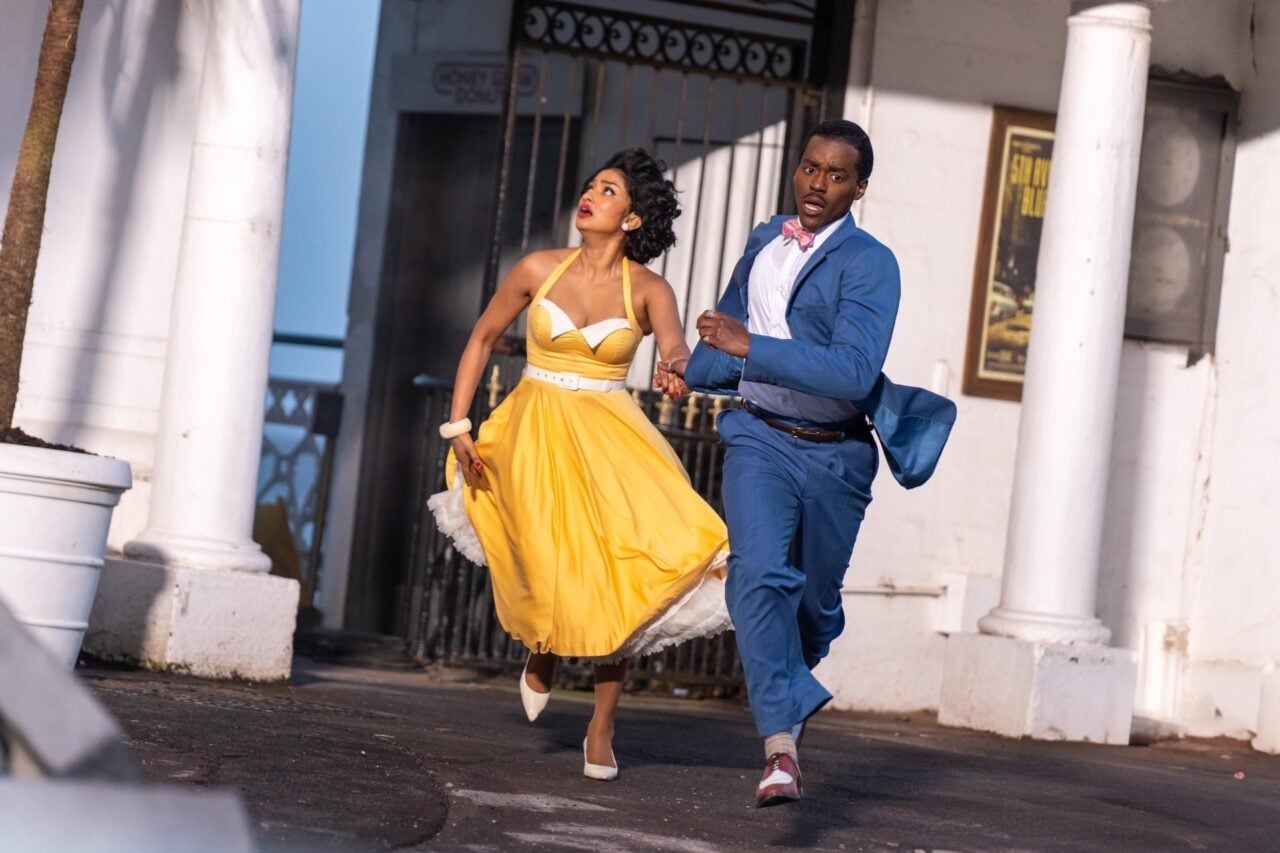
We couldn’t help notice that the official plot synopsis for tomorrow’s Doctor Who Christmas special proclaims that the fate of the universe is in the balance. This comes on the heels of last month’s anniversary special, in which the synopsis proclaimed that “all of reality is at stake.” The universe has very nearly been destroyed several times during the Tenth and Eleventh Doctors’ reigns, to the point where this threat starts to feel empty and a matter of telling rather than showing.
https://observationdeck.kinja.com/the-day-of-the-doctor-1458365014
This comes close on the heels of The
Hobbit: The Desolation of Smaug, the second of three
installments of Tolkien’s childrens’ story of the clever burglar
under the hill. But critics have noted that Mr. Baggins hardly
appears in the movie, shunted to the sidelines in favor of wizard
fights, love triangles, and endless CGI orc battles – much of those
elements wearily borrowed from the Lord of the Rings films.
But mapping The Hobbit to the Lord of the Rings drained
the story of some essential qualities – a sense of discovery, a
focus on how the fantastic sights are changing Bilbo, and some arch
commentary on those who race into ill-advised conflict on a moment’s
notice – and instead presented us with an epic so generic as to be
tedious. It’s another ready example of the dangers of making Epic the
primary rubric on which fantasy media is graded, and it’s a trend
that should probably stop.
Some stories are better smaller
The truth is that some stories are folk
tales, not sagas; a tighter focus doesn’t make them inherently less
worthy, and their stakes are no less crucial to the story for being
closer to home. (There’s only one wolf in Red Riding Hood, but that
hasn’t kept the story from being any less chilling or long-lasting,
or any harder to adapt – Hanna
recently provided a great twist on the archetype.)
Unfortunately, it seems that Epic Fever has hit many smaller-scale
stories, mistaking worldbuilding for Epic and making “more than
before” the default stakes for most fantasy adaptations. The
Hobbit aside, Alice in
Wonderland dredged up prophecies
and plunked armies together for CGI carnage, and even Hansel
and Gretel, Witch Hunters were fighting witches who seemed unsure
why they even wanted to take over the world to begin with.
Some of this can be laid firmly at
Hollywood’s door: the increasing pressure to deliver blockbusters (3D
friendly, at least one CGI monster, and a half-hour melee, please)
means that bigger is assumed to be not just a better approach, but
the only profitable one.
In a much-quoted interview last August, screenwriter Damon Lindelof said:
It’s almost impossible to, for example, not have a final set piece where the fate of the free world is at stake. You basically work your way backward and say, ‘Well, the Avengers aren’t going to save Guam, they’ve got to save the world.’
And the influence of superhero movies spreads to other, similar genres: if Superman lays waste to a
third of Metropolis in the process of saving the world, then even a pulpy B-movie like Underworld
is going to have to spin out some serious backstory in its sequels to try and create a sense of massive scale — creating an increasingly intricate and eventually impenetrable
mythology, that swallows up any sense of fun left over from the first
movie. (Let’s not even talk about what happened when the sleek, scary
Pitch Black turned
into the bloated Chronicles of Riddick.)
That’s not to say the leap is
impossible, either. When done right, epic often works particularly
well on TV, where mythology can develop amid an uptick in stakes and
audiences can form longer attachments to all those characters who are
totally doomed.
Doctor Who was a great playground for
high-stakes cosmic stories before it started leaning on them half a
dozen times a season. Babylon 5’s
deliberate structure allowed the Shadow War to build steadily, an
ever-creepier threat. And then there’s Xena.
Then
again, how many post-Xena
epic fantasy TV series have come and gone, unable to drum up enough
interest in their quests to keep people watching? Sinbad,
Moonlight, Legend of the Seeker, where
are you now? (Bucking expectations as it has since its
premiere, and standing as a handy example both for and against the
Epic, Sleepy Hollow ups Ichabod’s concerns from a town bully
to the Biblical apocalypse, which gives the story plenty of
otherworldly dread and cheeseball portents to rely on, but has
actually made its worst stumbles when trying to reduce the scope from
the epic to get the stakes closer to Ichabod’s personal life.)
What stories are not getting told?
But with Epic as the order of the day,
particularly in film, there’s a self-selection that makes
you wonder about the things we might be missing out on. If
everything’s an epic, what happens to other stories?
Would
Labyrinth, with its focus on a single young woman’s agency
(and bonus puppets), get made today — or would she need to be caught up in a
prophecy with both worlds under fire from power-hungry
goblin kings? What about Ladyhawke,
in which the quest involved a single
relationship? (You could argue about these movies’ quality, but many generic epics of recent years are pretty questionable, too, so that’s a
non-starter. More variation in scope would only help .)
A fantastic recent small-stakes SF flick was 2012’s Dredd,
which managed to present complex protagonists in an incisively grim and gripping future without having to hold the fates of millions in the balance, but such movies are the
exception rather than the rule right now – and Dredd underperformed at the box
office, thanks to an ad campaign that, ironically, tried to make it
seem more generically epic.
Perhaps
it was a hard sell because of the tendency to equate
smaller stakes with lighter fare — if it Matters, then it’s probably
Epic. (It also suggests the question of gendering in the cultural
appraisal of these movies, where inherently-masculine battle stories
are thought to matter more than the cozy fantasies apparently left over for the
ladies, who aren’t considered a prime audience for the heavy stuff – an assumption that’s patently untrue, as survey after survey
of fandom has proved, and will hopefully someday die.)
Of course,
smaller-as-lighter certainly wasn’t the case with Dredd, or
even The Secret of NIMH, which
anyone who’s ever watched Mrs. Brisby try to get her house to the lee
of the stone before Moving Day can tell you. In fact, in some ways,
animated movies have picked up the mantle of the non-epic, managing
to create vast worlds but keeping the stakes tightly personal — offhand, Finding Nemo, Toy
Story, and Monsters University have all told powerful stories with largely personal stakes. It would
be nice if we were able to seek out the same in live-action.
In the
meantime, you can always watch the 1977 Hobbit, which keeps more of the wit of the original, sprinkles in half a dozen songs while
still running under 90 minutes, and and is a movie that knows you
don’t have to be epic to be good: as Gandalf assures Bilbo (and us),
“[Y]ou are only quite a little fellow in a wide world, after
all.”