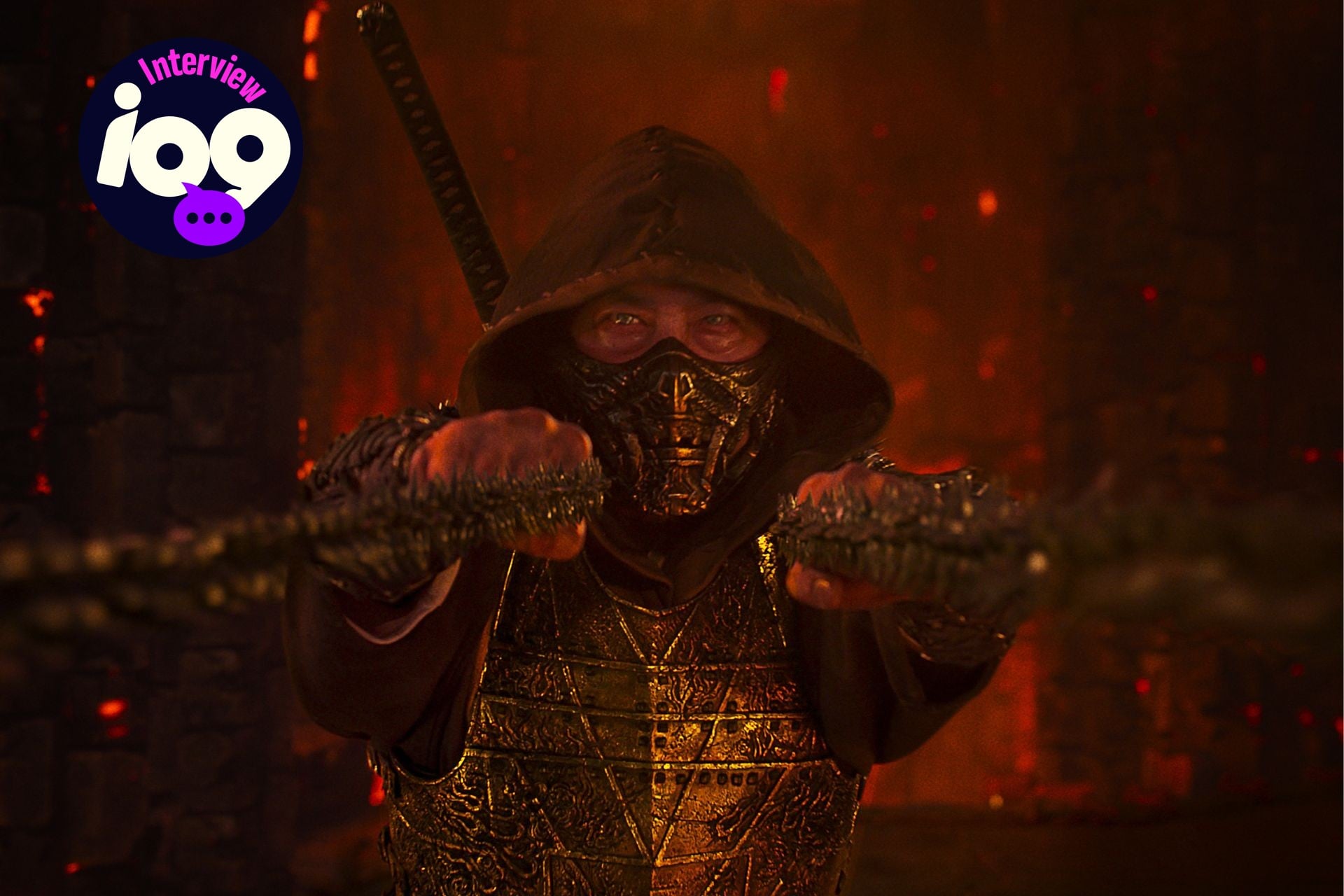
People who see Mortal Kombat II are probably going to enjoy it. It’s just that type of fun, irreverent film that summer audiences crave. But you know who is really going to enjoy it? People who didn’t like the 2021 film it’s following. This sequel picks up several key pieces from that film, but in some very pointed ways ignores many others. And that was a decision made early on.
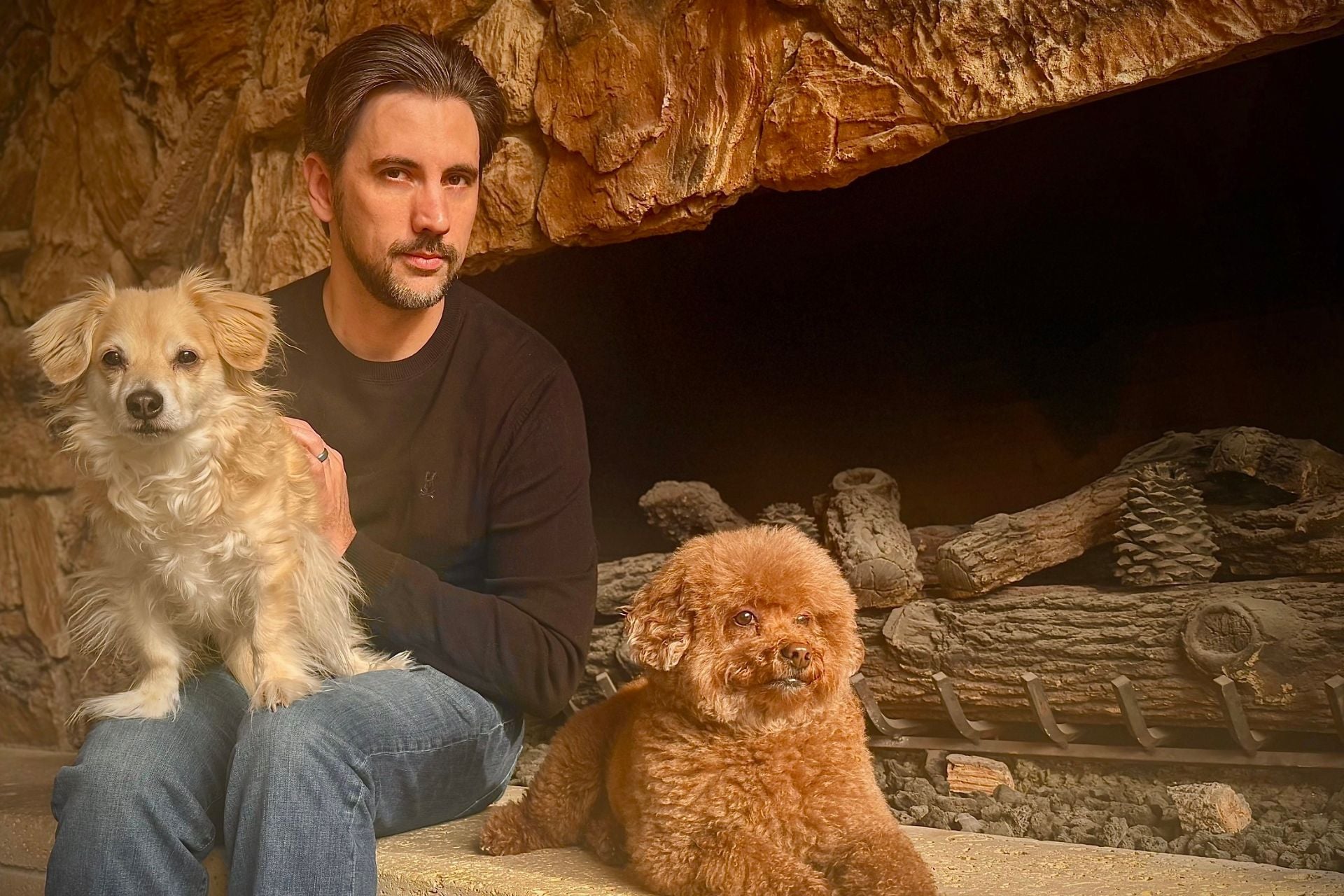
Jeremy Slater, the writer of the film, talked to us about this very thing. Slater is best known for creating the underrated Exorcist TV show from a few years back, as well as his work on Marvel Studios’ Moon Knight, and came to Mortal Kombat II having no involvement with the first film. That fresh perspective allowed him and the team to craft a film that he hopes everyone, from hardcore fans of the franchise to people completely unaware of what “Finish Him” or “Get Over Here” mean, will love. And, he’s now returning for a third film.
Below is io9’s interview with Slater in which we discuss how he came on board the sequel, researching before writing, the choices of what and what not to use from the 2021 film, bringing Johnny Cage into the franchise, and more.
This interview was edited for length and clarity.
Germain Lussier, io9: How did you end up writing Mortal Kombat II considering you were not involved with the first film?
Jeremy Slater: They had a roundtable to plan ideas. Basically, the studio brings in like five or six screenwriters or directors they like and say, “Hey, here’s a movie we shot. We’re about to do reshoots. What should we do?” Or “Here’s a script we like.” Or sometimes it’s just like a conceptual blue sky. In this case, they’re like, “We’ve started talking about a Mortal Kombat II, and we want your ideas for what this should be.” And anytime I approach a roundtable, I try to do my homework in advance. I try to walk in there with a point of view and a pitch. Even if you don’t like it, that’s fine. I just want to have something to contribute. And so in this case, I walked in and pitched my vision for what an ideal sequel would be for me. And at the end of the roundtable, they call me up like half an hour later, and they’re like, “Hey, would you want to write this?” So it was very low pressure because I was just pitching everything I wanted to see, but I wouldn’t be the guy who had to bring it to life. And the second they said that, I’m like, “Okay, great, but now I have to find a way to like put my money where my mouth was.”
io9: What kind of research are we talking about at that point? Obviously, you watched the first movie. You know what threads have been left behind. And I assume you’d played the games growing up and stuff. So what else did you do to get read?
Slater: The first movie ended with two promises. It said, “Hey, this tournament we’ve been talking about is on the way, hopefully, coming in the next movie,” and that Johnny Cage is going to be one of the participants. Beyond that, it was kind of a blank slate. I was a teenager in the ’90s, so I grew up in the perfect Mortal Kombat era. I love the characters. I’m not someone who’s kept up with the games over the last few years, just because I got old and my reflexes went to shit. So I can’t play fighting games against 10-year-olds.
io9: Hard to play a lot of games when you’re making movies and TV shows, too.
Slater: Yeah, I get like an hour a night to play video games. From like midnight to 1:00 a.m. is usually when I hop on and play Overwatch with the same five guys I’ve been playing with for 15 years. So I love the characters, and I love the world, but I didn’t necessarily have that deep bench of knowledge. So part of it was trying to do an immediate crash course and watch everything I can, play what I can, and read what I can. But the other half of it was knowing that we had [Mortal Kombat creator] Ed Boon and NetherRealm as a resource. That wasn’t really utilized the way it could have been in that first movie. And they wanted to be a part of the creative process. They wanted to have a movie that they were proud of. So right from the beginning, we were like, “Let’s bring Ed in. Let’s make sure he’s on board with every step of the way, and let’s use them as a resource.”
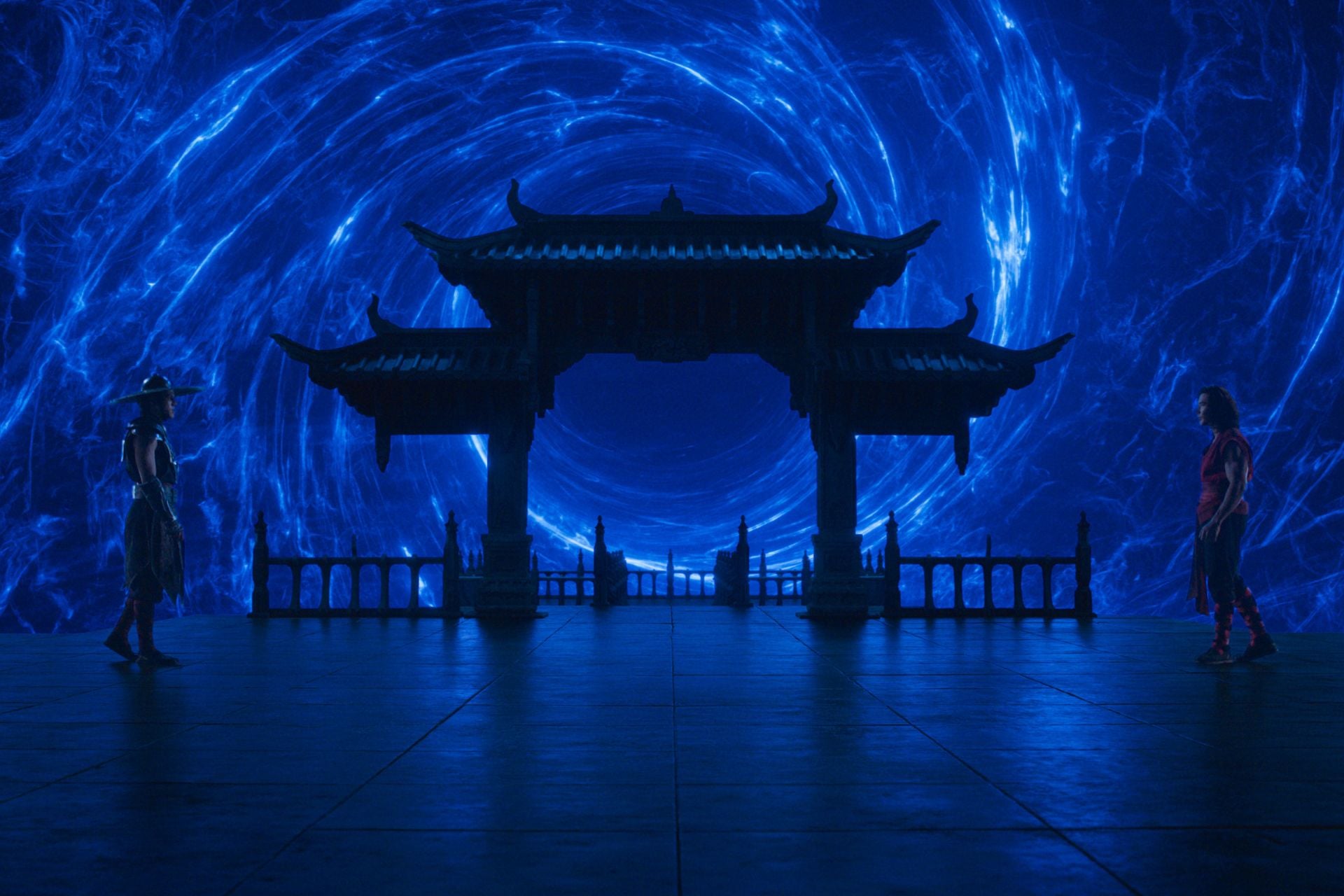
So that when I had a question about, like, what are the most iconic stages? What are the fatalities that the fans are always asking for? Or what are this character’s two signature moves that we could weave into a fight? I don’t have to go to YouTube or Chat GPT and hope it’s the right answer. I can go right to the horse’s mouth of the guy who actually created these characters in this world. And he can say, “Yeah, they’ve been begging for this for 30 years.” Or “I always have fans saying, ‘Oh, why haven’t you done the Dead Pool? Why haven’t you done the pit or the blue portal?'” So we’re like, “Great.” We kind of had like that Key and Peele Gremlins 2 skit. “It’s in the movie. It’s in the movie.”
And we were able to just kind of take everything that he said the fans wanted in and go, “Okay, now how do we blend that all into a satisfying concoction that we know the fans are going to love, but it also has to work for the casual audience?” It has to work for the people who have never picked up a controller in their lives. So, finding that balance of how much mythology to include, but at what point do you pull back and just let the audience enjoy the ride? Because you can drown people in exposition. You can bore them right out of the fun by trying to include too much stuff and too many details. It’s very much a balancing act in the script, in the editing room, all the way through to make sure we were hitting that sweet spot where it worked perfectly for sort of both ends of the spectrum.
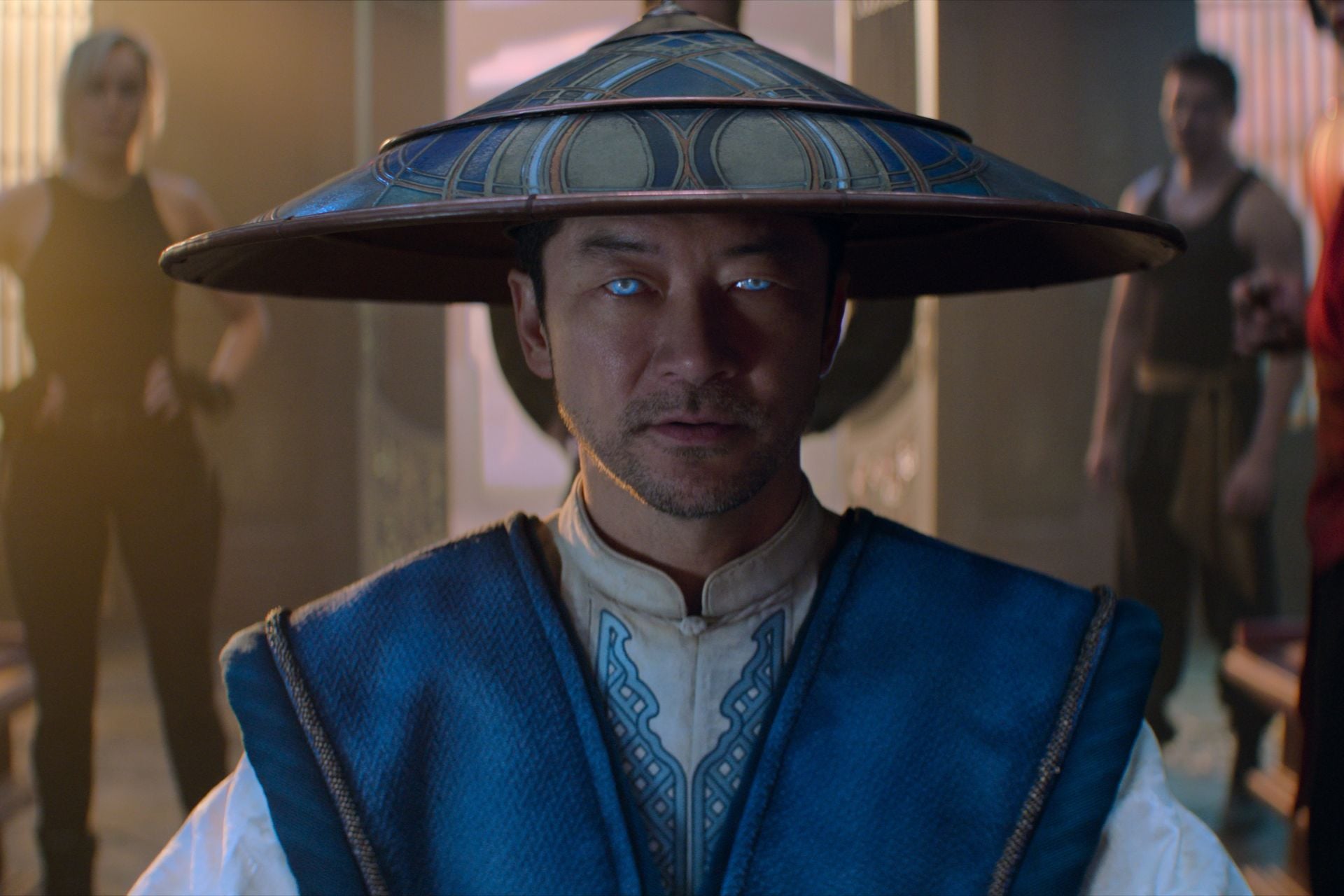
io9: I was a fan of the first movie and didn’t really follow any of the discourse after it, but from what I’ve read since, lots of fans really didn’t like it. So, in this film, you kind of ignore or put aside many of the biggest pieces of that film. There are no symbols on people. There’s no arcana. There’s way less Cole Young. Was going against the grain of that movie built into your pitch? Was that kind of a studio mandate? Tell me a little bit about how you arrived there.
Slater: It was a little bit of everything. I mean, the studio definitely did their research after the first movie came out. And the first movie had a much more challenging path than we did because it had to prove its existence. It had to prove that there is a fan base that will show up and will support an R-rated martial arts fantasy movie, which is not a genre that you see a lot of. And they had to do it on a much, much smaller budget than we had with more cooks in the kitchen. So they had a lot of creative challenges that we didn’t.
So after the fact, I think they took a very honest reckoning in saying, here are the things that we did well in the first movie. We cast the right people. We got actual martial artists who can really fight, so the movie is not a bunch of digi-doubles. We took a lot of care with the fatalities, with the world building, with the costumes, the gore, things like that are what the fans really responded to. The tweaks to the mythology of things like arcana, things like adding a POV character who’s not from the games, were not well received by the fan base, and the fans were very vocal about that.
We knew going in that we had to take one of two paths. We either double down on all of that stuff and say, “Sorry, this is just what it is.” Or we try to give them what they wanted the first time around. So we’re very careful in the movie to never contradict the idea of arcana. But that word is also never mentioned in the movie very deliberately because we’re just sort of like, “Forget about it.” You’re here to have fun. I don’t necessarily need midichlorians in Star Wars. I don’t need to know how the sausage is made. I just want to enjoy that delicious sausage. And so the goal was very much “Let’s take everything that was working and double down on it and let’s look at the areas where they didn’t necessarily respond in the way they wanted them to and say, ‘How do we fix that?'”
And, for me, adding more humor and making it more fun was my primary goal going in. Because, and I mean this as the highest compliment, Mortal Kombat is ridiculous in the best possible way. It’s a martial arts tournament for the fate of the world with a bunch of ninjas, robots, sorcerers, movie stars, and cyborgs. And there’s something inherently, gloriously, wonderfully silly about all of that. And so you can either acknowledge it and tell the audience, “We know this is crazy. It’s okay. Have fun with it.” Or you can act like you’re sort of ashamed of it and try really hard to ground it in the real world and try to sand off those fantastical edges that really give Mortal Kombat its own identity and its own tone. And the games are funny. The games have a sense of humor about themselves. And so I saw the potential for what this series could be. And I saw how we could transform it into something that the fans still recognized and the fans still loved and feel like we were listened to and we were given what we wanted. But also make it a movie that works for casual audiences weaned on a diet of Marvel movies and things like that and give them something they can recognize too.

io9: And it’s not like the idea behind arcana isn’t in there. It’s there to make it make sense for a regular character like Johnny Cage being able to fight these other characters, but it’s just not the focus.
Slater: Yeah. And then the nice thing is Johnny Cage really worked for our POV character because he is canonically the guy in the games who doesn’t have a lot of crazy powers. Like, he’s very strictly a martial arts guy, and sometimes he has sort of a green glow around his body. But he’s one guy who’s not throwing fireballs or teleporting or ripping his face off or doing extreme things. And so it was very easy to be true to the character and not shine a constant lantern on “This character doesn’t have the powers yet. So he can’t be fun yet.” And then the audience spends the entire movie waiting for him to become the recognizable character from the game. With Johnny, that’s not really a problem. And that just wound up being dumb luck that his power base is more conventional, more traditional, than the extreme characters.
io9: And I assume it was also just fun to write this quippy, pop culture-obsessed, movie star character like Johnny?
Slater: Yeah, I mean, having a POV character to comment on how insane the situation is gives the audience permission to just go with the ride. Because they say, “I would react the same way if I saw all of this craziness unfolding before me.” And Johnny is traditionally a really funny character. So the challenge for him was we have to keep him funny, but he can’t be the comic relief. And that’s sometimes how Johnny has been used in past Mortal Kombat adaptations. He’s the guy sitting in the background with his arms crossed, saying, “This is all stupid.” Which is fine. And I love that version of Johnny, too. But we knew, look, if we’re going to center him as the heart of this movie, if we’re going to get an actual movie star to sign on to the role, he can’t just be the snarky guy tossing off a few one-liners. We have to give this guy an actual arc. So that became the challenge for me.
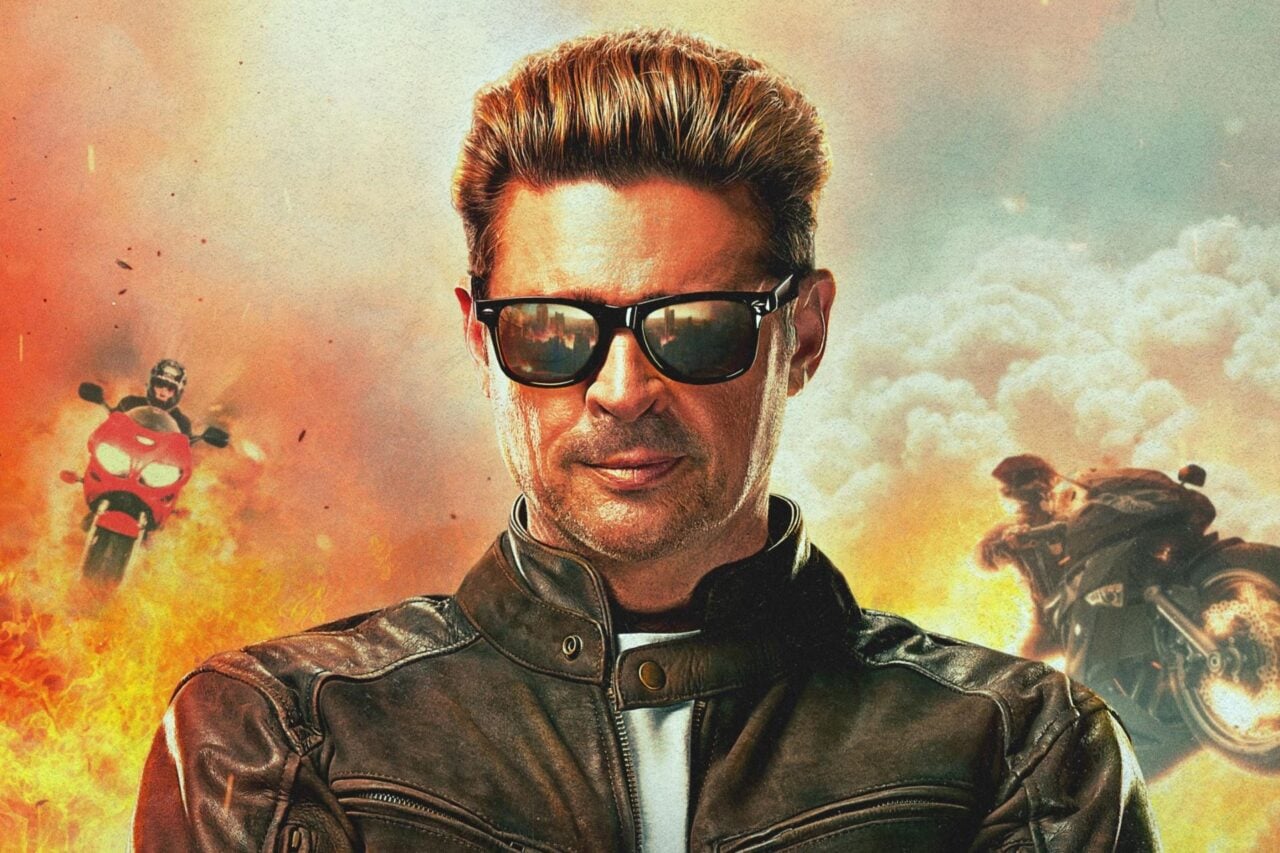
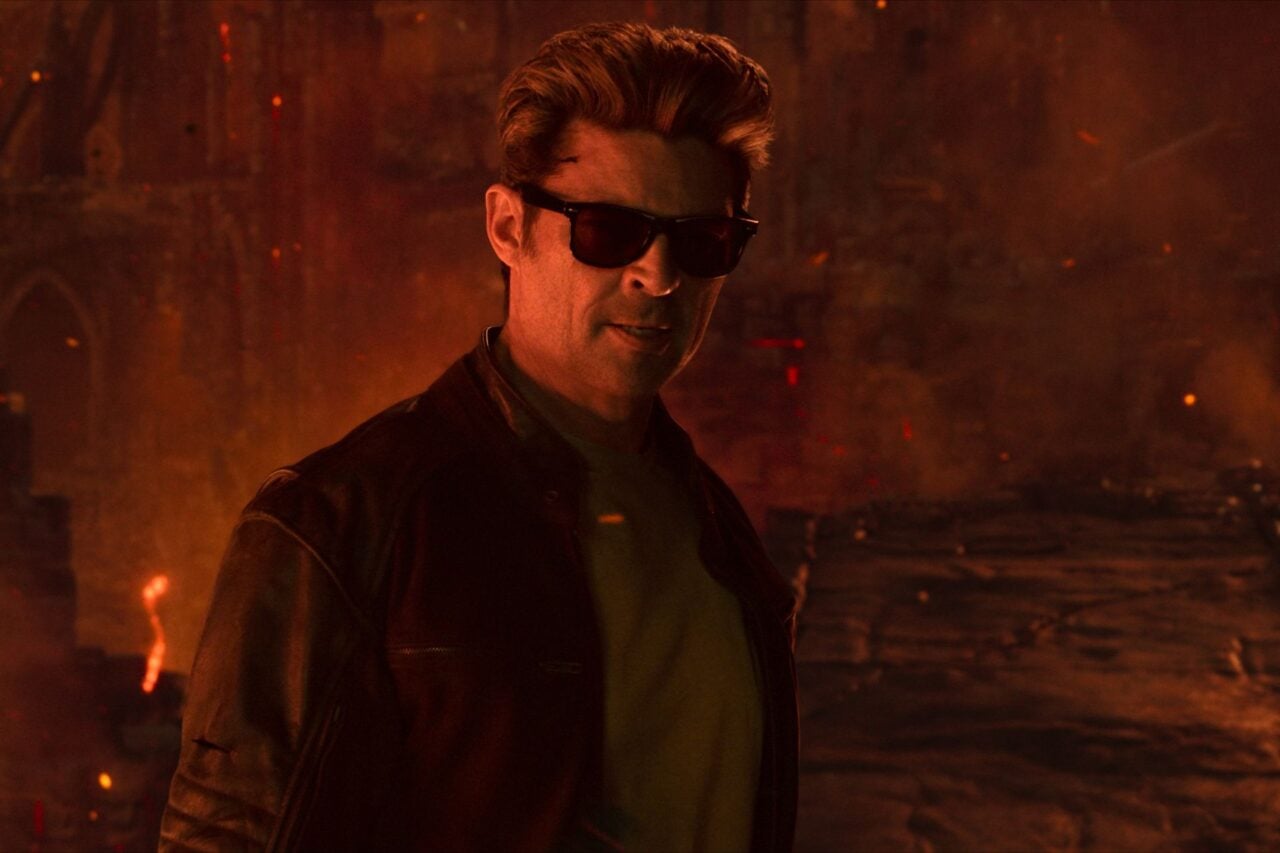
And it was something that I think some of the fan base were initially a little resistant when they saw that we had cast Karl Urban versus a younger version of Johnny … This is a broken-down version of Johnny, who had his dreams of stardom slip through his fingers, versus a guy who is the biggest movie star on the planet. But I always just went back to the fact that, like, if he’s the biggest movie star on the planet, that doesn’t give you anywhere to go. That doesn’t give you a character you can take on a journey and have him evolve in some interesting way.
You’re not rooting for Timothée Chalamet or whoever the biggest star on the planet is right now to sort of become even better at being Timothée Chalamet, versus the guy who had a chance to be one of the greats and missed it by this much and now is sort of haunted by those questions of what if? What if my life had been slightly different? That’s a guy you can really get behind, and you can really sort of be rooting for him to have a big win at the end of it. So it was a controversial change when we when it was announced. But I think now that fans are seeing how we did it, and seeing how goddamn good Karl Urban is in the role, I think a lot of people are like, “Oh, of course, it was obvious from all along that this was the right approach.” But yeah, we knew that we thought it was good, but we were sweating that the fans would accept this version of Johnny. And thankfully, they really, really have in a big way.
io9: The movie was delayed from October of last year until this summer. Was the movie already done by then, and how did that impact anything, if at all?
Slater: The movie was done last year. I don’t know exactly at what point, but we had been hoping that we would get a summer spot last summer, and ultimately, because IMAX screens are booked so far in advance, the only opening that they had was October 24 of last year. So we were tentatively slotted there. And I know I was personally disappointed because I was like, “This is a summer movie.” This is a big, fun, “go to movies with all of your friends” movie. It’s not necessarily a Halloween movie. You kind of want to see horror, and Mortal Kombat is not scary. We’re not trying to be.
So I was always a little tentative about that release date, and then they started testing the movie, and the response from the audience kind of made them see, “Oh, we actually have something on our hands here. This actually really works for people. Even people who are not fans of Mortal Kombat are walking out of this with a big smile on their face. We may be leaving some money on the table, dumping this in the middle of October.” So I think they made a really smart call in pushing it. And what that allowed them to do is really get behind the movie in a big way.
I think they’ve done a great job marketing it. The excitement level among fans is through the roof. The visual effects, which might have been a little rushed if this had come out last year, are flawless now. You look at those Netherrealm sequences, and they look so much cooler than they did a year ago. So I think I know it was hard for the fans waiting that extra time. It was hard for me. I finally have something that I really love with my name on it. I want the whole world to see it. So I was disappointed, but at the same time, I really think this move was the smart move, and it’s going to wind up being really good for our chances to potentially do this again and again and again.
Mortal Kombat II opens May 8 and we’ll have more from Slater soon.
Want more io9 news? Check out the best movies and TV shows to stream this month and all the upcoming sci-fi, fantasy, and horror books that should be on your radar.