A strange, mound-shaped object was found at the bottom of the ocean in 2023, and scientists had no idea what it was. After years of running tests and working with hundreds of samples, a team of researchers has finally solved the puzzle. And no, it’s not weird alien stuff.
The National Oceanic and Atmospheric Administration (NOAA) revealed the results of its years-long search for the identity of the golden orb, which turned out to have once been part of the base of a giant sea anemone. While it’s common for scientists to run into objects they can’t immediately identify, these types of mysteries are often resolved quickly. The case of the golden orb, however, turned out to be a real doozy that required focused effort from a large team of experts for nearly three years.
Meet the golden orb
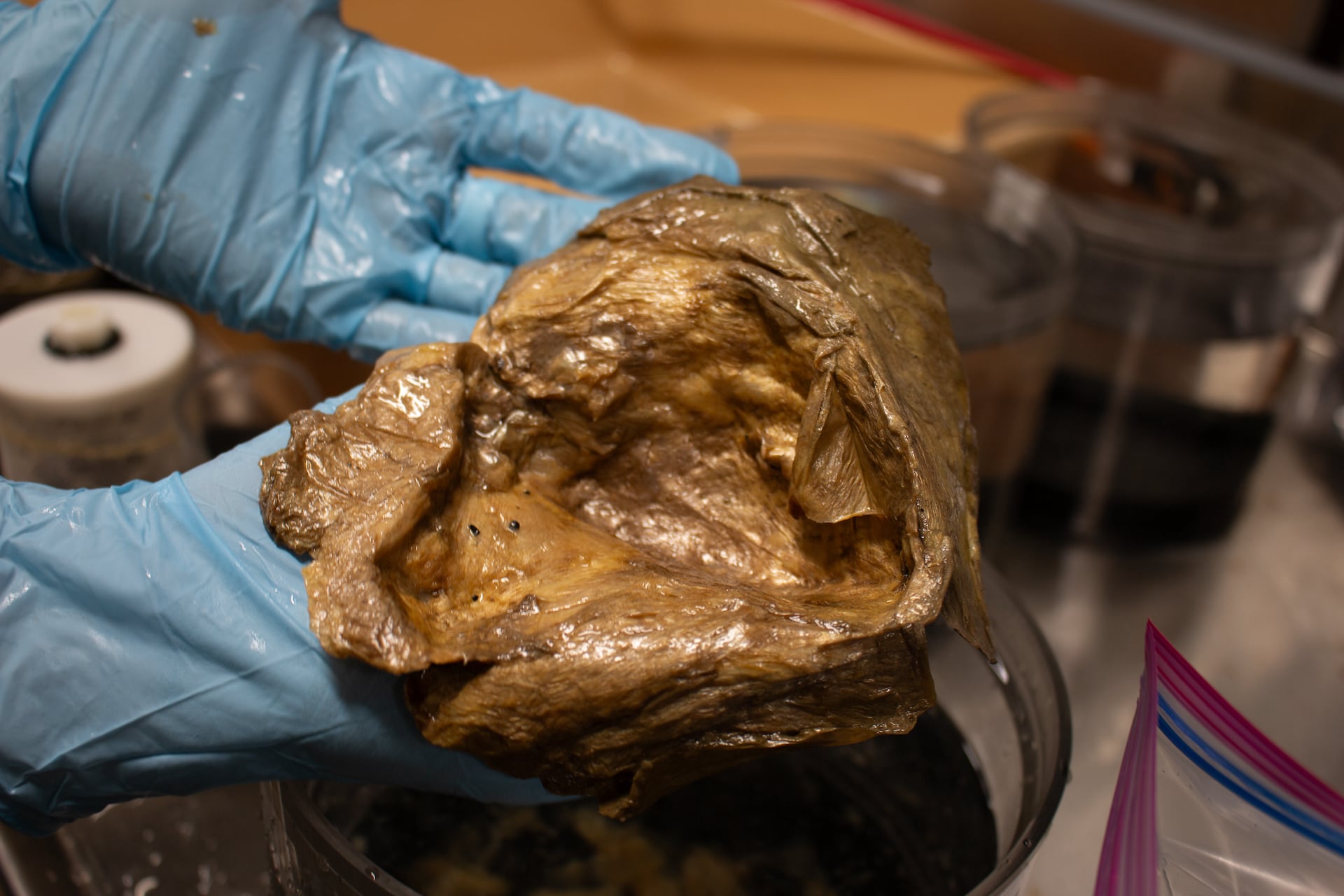
The roughly 4-inch-wide (10-centimeter-wide) object was discovered during an expedition in the Gulf of Alaska on August 30, 2023. A team of researchers was exploring the seafloor at a depth of 10,827 feet (3,300 meters) when they encountered a weird, brass-colored object.
When it was found, the object had a small hole near its base, where it was attached to a rock. Scientists initially assumed that it was an egg casing, a dead sea sponge, or an unidentified type of coral. Still, they knew nothing about it beyond that it was biological in origin. Curious, the team collected the orb and sent it to the Smithsonian National Museum of Natural History for examination.
Even in the lab, the golden orb still proved tricky to identify. “We work on hundreds of different samples and I suspected that our routine processes would clarify the mystery,” Allen Collins, zoologist and director of NOAA Fisheries’ National Systematics Laboratory, said in a statement. “But this turned into a special case that required focused efforts and expertise of several different individuals. This was a complex mystery that required morphological, genetic, deep-sea and bioinformatics expertise to solve.”
Science takes time
Scientists with NOAA and the Smithsonian studied its physical structure and ran genetic analysis to help identify the orb. Initial testing found that the object didn’t have typical animal anatomy but was made of a fibrous material with a layered surface filled with cnidocytes, explosive stinging cells found in jellyfish, corals, and sea anemones.
The team realized the cells looked similar to those of another specimen found in 2021. At first, the results from DNA testing were inconclusive, likely due to mixing with the DNA of other microscopic life. Whole-genome sequencing later revealed that the two specimens were genetically almost identical to a kind of cnidarian called Relicanthus daphneae.
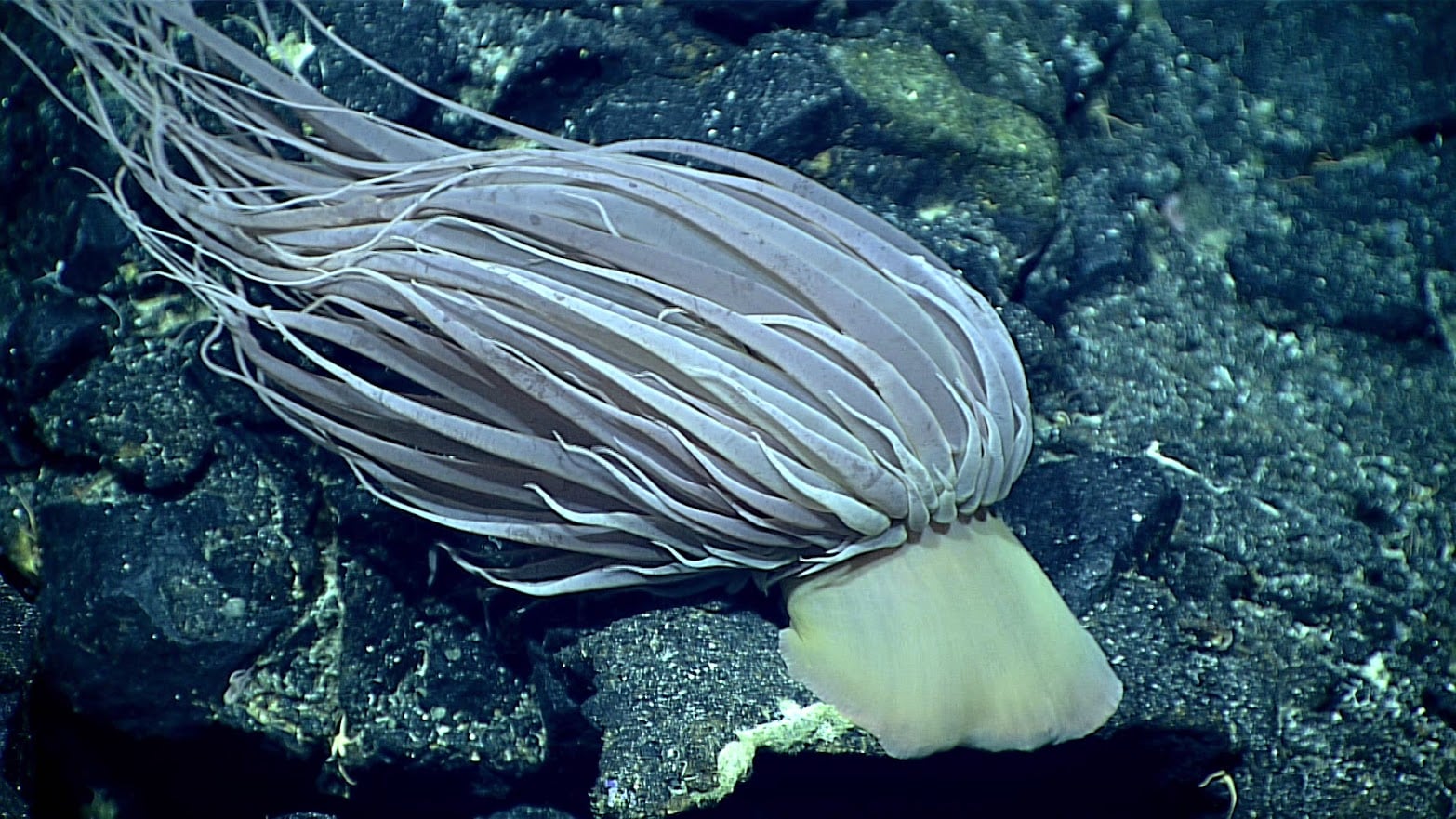
The orb itself is a remnant of the dead cells that formed at the base of a giant deep-sea anemone. The golden piece that sparked the 2.5-year mystery is usually hidden underneath the animal in the part that attaches to a rock, but this one may have been left behind by Relicanthus daphneae.
“So often in deep ocean exploration, we find these captivating mysteries, like the ‘golden orb.’ With advanced techniques like DNA sequencing, we are able to solve more and more of them,” William Mowitt, acting director of NOAA Ocean Exploration, said in a statement. “This is why we keep exploring—to unlock the secrets of the deep and better understand how the ocean and its resources can drive economic growth, strengthen our national security, and sustain our planet.”