Aura’s Individual plan costs $12 a month, billed annually, with $1 million in identity theft insurance. Coveron’s Identity Theft Protection plan comes with $2 million for about $7 a month, and ExpressVPN includes up to $3 million with its Advanced plan. Aura’s March 2026 breach exposed marketing contact records and left Social Security numbers and credit files untouched, so the case for switching rests on price and coverage.
Top Aura Alternatives in 2026
- Coveron: Best for insurance per dollar, with $2 million from about $7 a month.
- ExpressVPN Identity Defender: Best for the highest insurance limit, up to $5 million on the Pro plan.
- Surfshark One+: Best budget bundle, pairing identity insurance with a VPN and antivirus.
- LifeLock: Best for investment account alerts, included on its upper plans.
- Cloaked: Best for email and phone aliases that keep your real details private.
Aura Alternatives Compared
Prices come from each company’s US pricing page, checked in October. The identity features on these services are US-only, so we couldn’t test alerts or claims from Europe. Surfshark’s breach monitoring works worldwide, which made it the one feature we could test.
| Service and plan | Price, longest term | ID theft insurance | Credit bureaus | Family plan |
|---|---|---|---|---|
| Coveron Identity Theft Protection | About $7/mo | $2M | 1 (3 on Full Protection) | Yes, up to 5 adults |
| ExpressVPN Advanced | About $4.50/mo | $3M ($5M on Pro) | 1 (Experian) | No |
| Surfshark One+ | About $4.50/mo | $1M | None | No |
| LifeLock Total | About $29/mo | $3M | 3 | Yes, 2 adults and kids |
| Cloaked | About $10/mo | $1M | None | Yes, up to 4 people |
| Aura Individual | About $12/mo | $1M | 3 | Yes, up to 5 adults |
What the Aura Breach Exposed
In March 2026, an attacker got into an Aura employee’s account through a voice phishing call and breached Aura, copying about 900,000 records. Most came from a marketing database tied to a company Aura acquired in 2021. The ShinyHunters group claimed the attack and published the data when its extortion demand went unpaid.
- Exposed: names, email addresses, home addresses, and phone numbers.
- Not exposed: Social Security numbers, passwords, credit file data, and payment details.
- Customers affected: fewer than 20,000 active and fewer than 15,000 former customers, by Aura’s count.
The practical risk is targeted phishing: a call or email that quotes a real home address. Check your email on Have I Been Pwned, and place a free credit freeze with Experian, Equifax, and TransUnion. A freeze stays with the bureaus whichever identity service you use.
Best Aura Alternatives and Competitors
1. Coveron: Best for Insurance per Dollar
Pros
- Cyber extortion coverage
- Home title insurance
- Couple and family plans
- Criminal records monitoring
- Short-term loan monitoring
Cons
- One bureau on mid tier
- Unavailable in New York
- VPN only on top tier
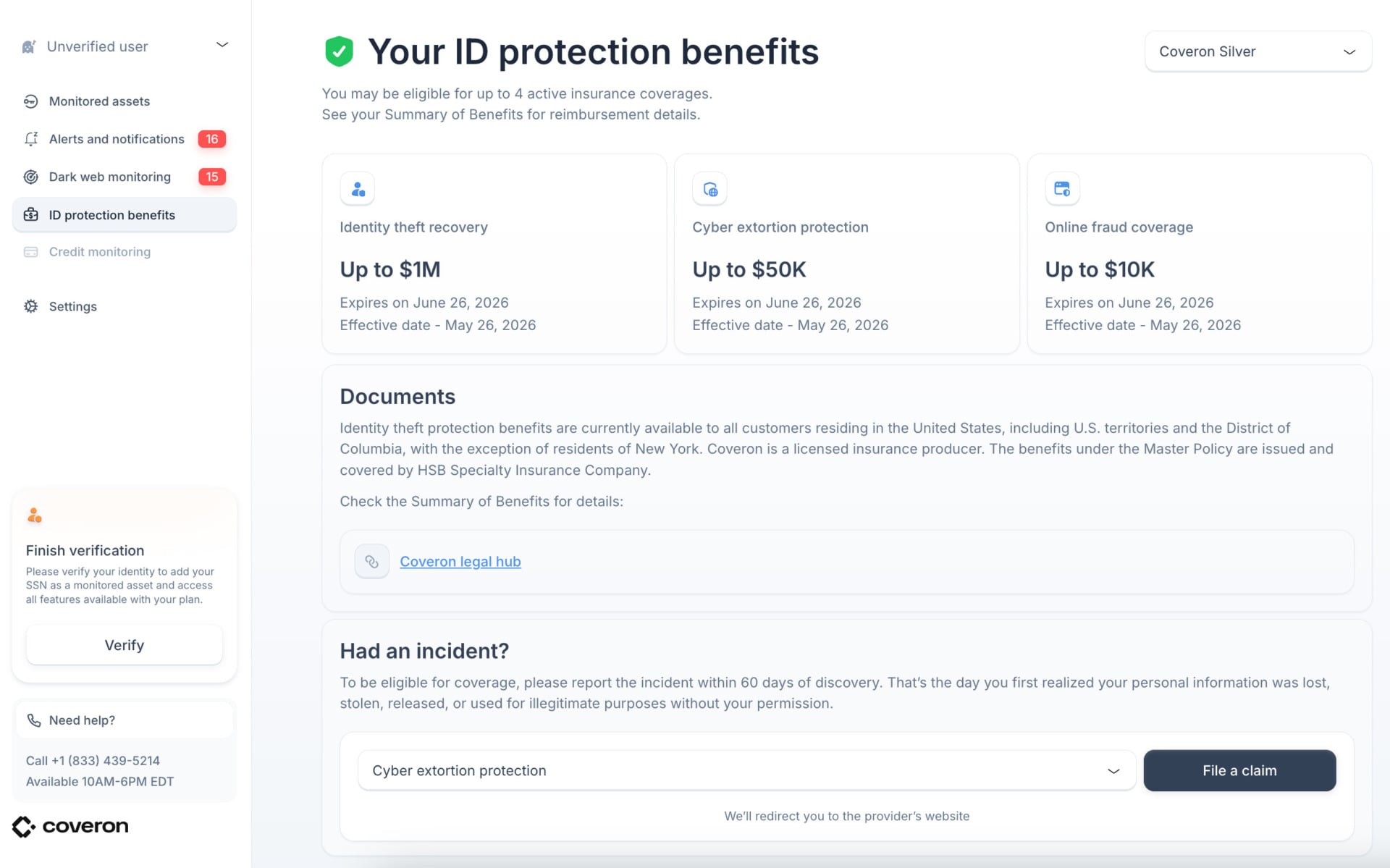
Coveron is the identity protection service from Nord Security, the company behind NordVPN, and it was sold as NordProtect until its 2026 rebrand. The Identity Theft Protection plan costs about $7 a month on a two-year subscription and includes $2 million in identity theft insurance, plus $100,000 each for cyber extortion, home title fraud, and online fraud. It monitors one credit bureau, financial accounts, short-term loans, and criminal records.
Three-bureau monitoring requires the Full Protection plan, about $11 a month, which adds a VPN, antivirus, and data removal. The Couple and Family plans, about $18 and $28 a month, cover two or five adults and all children on Full Protection terms. The Scam Protection plan, about $5, has no identity theft insurance or credit monitoring, so it doesn’t replace Aura. Coverage excludes New York residents, and our Coveron review covers the plans in detail.
2. ExpressVPN Identity Defender: Best for the Highest Insurance Limit
Pros
- Cash Recovery for stolen funds
- Standalone Identity Defender app
- Title and court monitoring
- Data broker removal
- VPN in the same plan
Cons
- Experian-only credit data
- Not sold separately
- High renewal price
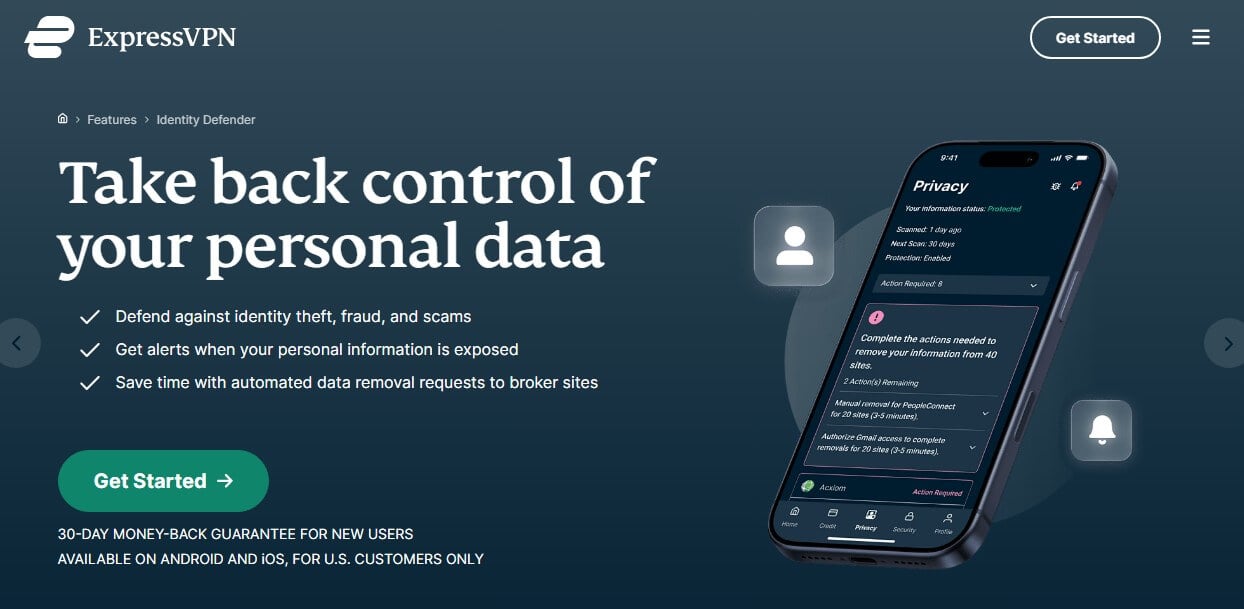
ExpressVPN includes Identity Defender with its Advanced and Pro plans for US subscribers, in the same subscription as its VPN. The Advanced plan costs about $4.50 a month over its 28-month first term and includes $3 million in insurance. The Pro plan, about $7.50, goes to $5 million. Cash Recovery covers up to $1 million taken directly from bank and retirement accounts.
Credit data comes from Experian alone, through a Credit Scanner with a monthly report. Home and auto title monitoring, court records, and high-risk transaction alerts require the Pro plan. Identity Defender isn’t sold on its own, and the plans renew at about $120 and $200 a year. Our ExpressVPN review covers the VPN side.
3. Surfshark One+: Best Budget Bundle
Pros
- Unlimited devices
- Alternative ID aliases
- Incogni data removal
- Breach alerts worldwide
- Antivirus included
Cons
- No credit monitoring
- No family plan
- Higher renewal price
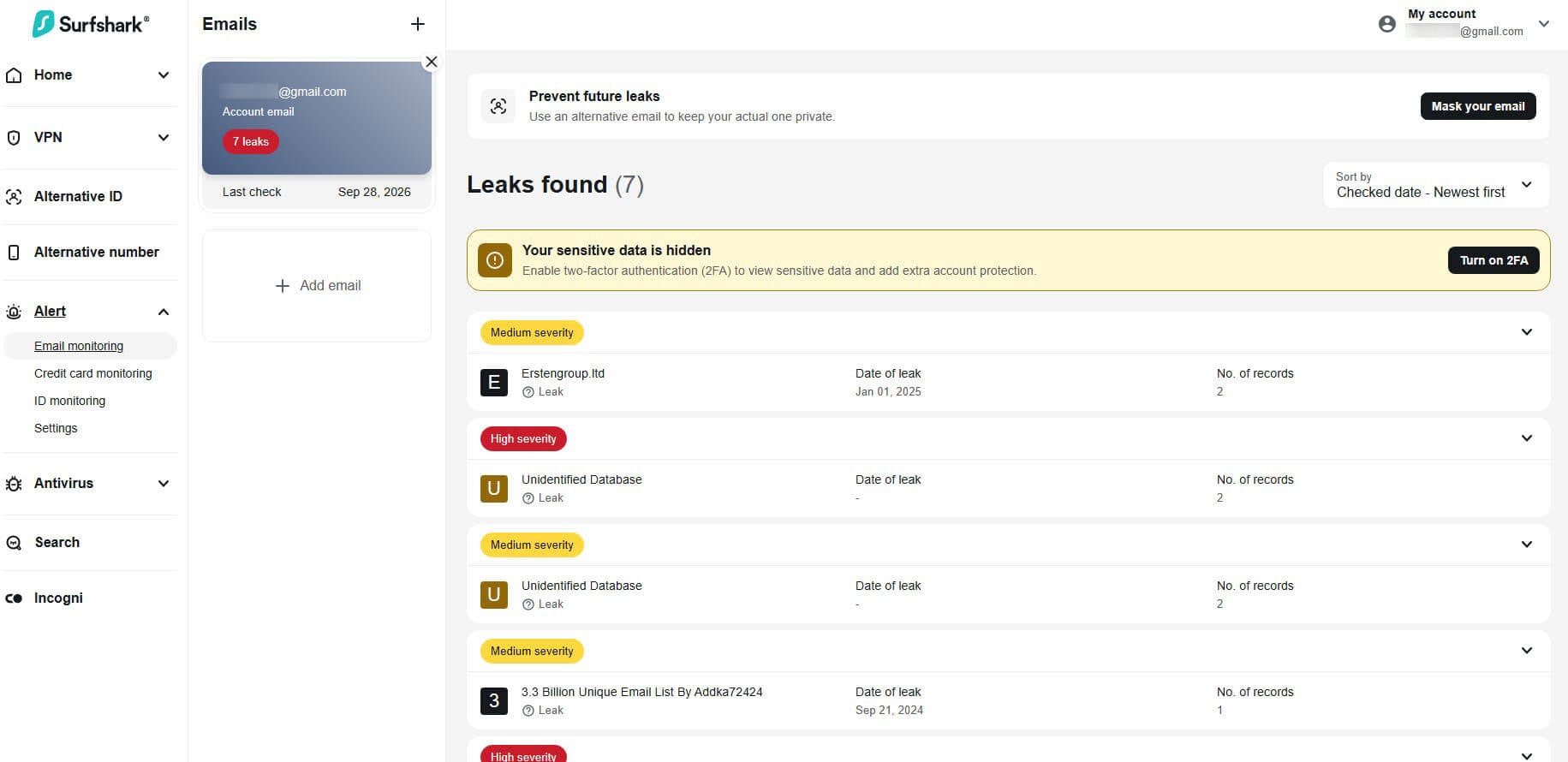
Surfshark One+ is about $4.50 a month for its 27-month first term and bundles the Surfshark VPN, antivirus, Incogni data removal, Alternative ID, and a $1 million identity theft policy. Its Alert tool watches email addresses, credit cards, and ID numbers for breaches. Alert works outside the US, so we ran it on one of our email addresses.
It found 7 leaks, some dating back to 2019, and flagged high-severity exposures among them. Alert hides the exposed details until two-factor authentication is enabled on the account. One+ has no credit monitoring from any bureau, so it covers breach alerts and insurance and leaves credit checks to another service.
4. LifeLock: Best for Investment Account Alerts

Pros
- Investment account alerts
- Three-bureau monitoring
- Monthly billing on every tier
- Long money-back window
Cons
- No antivirus or VPN
- Costly household plans
- Top coverage on top tier only
LifeLock belongs to Gen Digital, Norton’s parent company, and has sold identity protection since 2005. Its Advanced plan adds three-bureau credit monitoring and savings and investment account alerts for about $200 a year, and the Total plan adds up to $3 million in insurance for about $350. Annual plans come with a 60-day money-back guarantee, and every tier is also sold month to month.
Household pricing climbs quickly: Total for two adults and their children costs about $750 a year. The new plans also dropped Norton’s antivirus and VPN, which now come only with Norton 360 bundles. For one person, the price difference is large: LifeLock Total costs about $29 a month, and Coveron’s Full Protection costs about $11 with three bureaus and $2 million in insurance.
5. Cloaked: Best for Email and Phone Aliases
Pros
- Email and phone aliases
- Spam call blocking
- Data broker removal
- Password manager included
Cons
- No credit monitoring
- Phone aliases fail on some sites
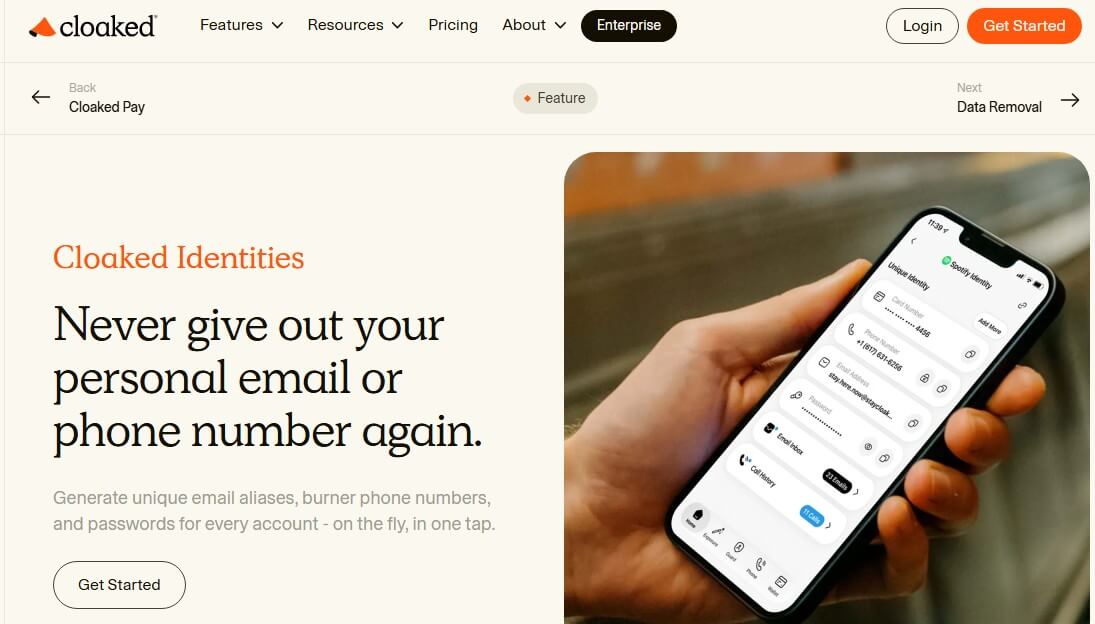
Cloaked is a legitimate US privacy company with venture backing, in business since 2020. It assigns every account its own email address and phone number, so a breach at one company exposes an alias in place of your real details.
Paid yearly, the Individual plan costs about $10 a month and adds data broker removal, spam call blocking, dark web monitoring, a password manager, a mobile VPN, and a $1 million insurance policy. Plans for two and four people cost about $175 and $300 a year. Cloaked has no credit monitoring, and some payment and banking sites don’t accept virtual phone numbers, so your real number stays in use there.
Identity Guard Belongs to Aura’s Parent Company
Identity Guard is sold by Aura’s parent company and uses the same identity monitoring. Moving from Aura to Identity Guard keeps you with the same company, minus Aura’s VPN, antivirus, and password manager, so it isn’t a true alternative.
Switching From Aura Without Losing Coverage
Sign up for the new service first, confirm its alerts arrive, then cancel Aura. Aura refunds annual plans within 60 days of purchase. Outside that window, the subscription continues until the end of the billing period. Credit freezes and fraud alerts are placed with the bureaus themselves, so they stay in place after you cancel.
You’ll manage them directly with each credit bureau. Coveron, ExpressVPN, and Surfshark offer 30-day money-back guarantees, so keeping two services active for a few weeks costs nothing if you cancel one in time.
Verdict
Aura’s Individual plan is still a complete package at $12 a month, with three bureaus, a VPN, antivirus, and a password manager. The alternatives win on specific points. Coveron doubles Aura’s insurance on a cheaper plan and adds cyber extortion and home title coverage. ExpressVPN goes to $3 million on a plan that includes its VPN, and Surfshark One+ costs the least if credit monitoring can come from elsewhere.
Families are the exception: Aura’s Family plan includes $5 million for $32 a month, next to $2 million on Coveron’s Family plan for about $28. Cloaked fits those who want to stop handing out their real email and phone number in the first place. Our identity theft protection rankings cover more services.
Frequently Asked Questions
Is Cloaked legit?
Yes, Cloaked is a real company, founded in Boston in 2020 and funded by venture investors. Its plans include masked emails and phone numbers, broker removal, call screening, and theft insurance.
What companies are like Aura?
Coveron, ExpressVPN Identity Defender, Surfshark One+, and LifeLock offer identity monitoring and theft insurance like Aura. Coveron and LifeLock also sell family plans, and Surfshark One+ skips credit monitoring.
Is Aura still safe to use after the data breach?
Yes, largely. The breach exposed contact details from a marketing database, and Aura says Social Security numbers, passwords, and credit data were untouched. Targeted phishing calls are the remaining risk.
What is the cheapest Aura alternative?
Surfshark One+ is the cheapest Aura alternative, at about $4.50 a month with a $1 million policy. Coveron's mid-tier plan costs about $7 and adds one-bureau credit monitoring.
Which identity protection service has the highest insurance?
ExpressVPN has the highest insurance, with $5 million on its Pro plan. Aura's Family plan also goes to $5 million, while LifeLock Total offers $3 million and Coveron $2 million.
Is Identity Guard owned by Aura?
Yes. Identity Guard is a brand of Aura's parent company, so switching to it keeps the same owner. Its plans leave out the security apps that come with an Aura subscription.