
The CIA’s .onion site loaded in 8 seconds through Tor Browser with Proton VPN or PrivadoVPN connected, in 10 seconds with ExpressVPN, 12 with NordVPN, and 13 with Windscribe. Every .onion site we opened loaded on all five, and every kill switch, free plans included, blocked traffic when we cut the connection. NordVPN comes first for its audited no-logs policy and a 30-day full refund that makes the paid service free to try.
Best Free VPNs for the Dark Web
- NordVPN: Best overall, free to try for 30 days with a full refund.
- Proton VPN: Best paid and free mix, with Tor servers on VPN Plus and a free plan with no data cap.
- ExpressVPN: Best for disguising Tor use, with obfuscation on every connection.
- PrivadoVPN: Best free plan for speed, with 8-second .onion loads.
- Windscribe: Best free plan for several devices, with no device limit.
Free Dark Web VPNs Compared
Load times are for the CIA’s .onion site in Tor Browser, measured in October on a Windows 11 PC with each VPN connected through its fastest protocol.
| VPN | How it’s free | Data | Devices | .onion load time | Jurisdiction |
|---|---|---|---|---|---|
| NordVPN | 30-day full refund, 3-day Android trial | Unlimited | 10 | 12 seconds | Panama |
| Proton VPN | Free plan, no time limit | Unlimited | 1 free, 10 paid | 8 seconds | Switzerland |
| ExpressVPN | 30-day refund, 3-day mobile trial | Unlimited | 10-14 | 10 seconds | British Virgin Islands |
| PrivadoVPN | Free plan, no time limit | 10 GB a month | 1 | 8 seconds | Iceland |
| Windscribe | Free plan, no time limit | 2 GB, or 10 GB with email | Unlimited | 13 seconds | Canada |
Dark Web VPNs Tested With Tor Browser
1. NordVPN: Best Overall VPN for the Dark Web, Free for 30 Days
Pros
- App kill switch
- Audited no-logs policy
- Obfuscated servers
- Double VPN servers
- Android free trial
Cons
- No .onion in Chrome
- No free plan
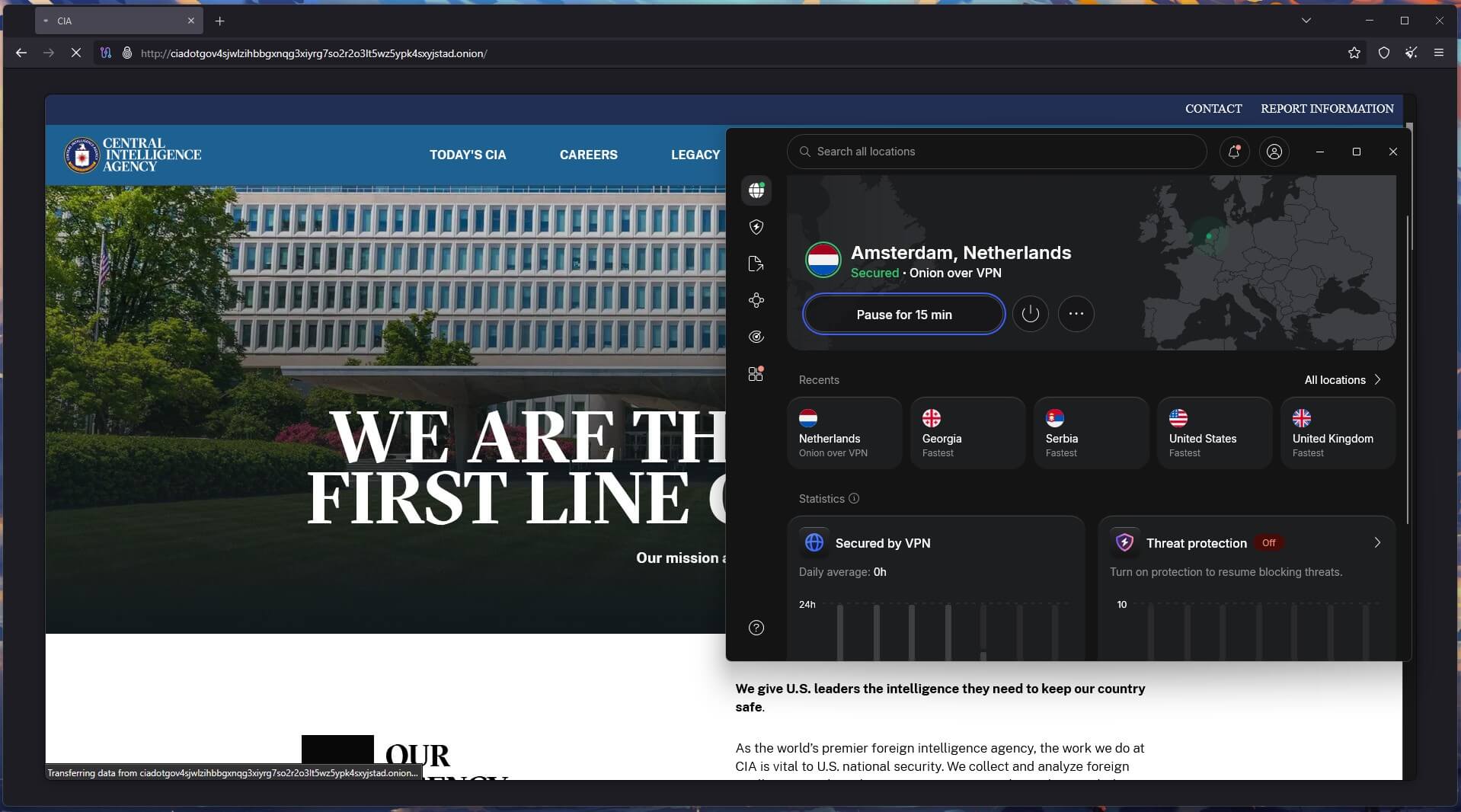
NordVPN has no free plan, but its 30-day money-back guarantee returns the full payment, and Android users can start a 3-day trial through Google Play that requires a card. With NordVPN on its Amsterdam Onion Over VPN server, the CIA’s .onion site took 12 seconds to open in Tor Browser. NordVPN sells Onion Over VPN servers for opening .onion sites without Tor Browser, but Chrome, Firefox, and Edge failed to open them in our tests.
Use Tor Browser on a standard NordVPN server, and add it to the app kill switch, which closes chosen programs if the VPN disconnects. The system kill switch blocked all traffic in our cable-pull, force-close, and restart tests. At $3.49 a month, the Basic plan totals $94.23 for its first 27 months, and renewal is $139.08 a year.
2. Proton VPN: Best Paid and Free Plans for Tor Browser

Pros
- Uncapped free plan
- Stealth on every plan
- Swiss jurisdiction
- Secure Core servers
- Open-source apps
Cons
- Free plan picks servers
- No post-quantum cipher
The VPN Plus plan adds Tor servers and Secure Core, which passes traffic through Switzerland, Iceland, or Sweden first. Proton VPN’s Paris Tor server delivered the CIA’s .onion site in 8 seconds in Tor Browser. Chrome, Firefox, and Edge didn’t open .onion sites on that server either. VPN Plus costs $2.99 a month for 24 months ($71.76) and renews at $83.88 a year, and a 30-day refund returns only the unused months.
The free plan has no data cap and includes Stealth, which disguises VPN traffic on networks that block it. It assigns one of ten countries automatically and covers one device, and its kill switch passed our tests as the paid one did. Download speed on the free plan fell 19.3% across our Netherlands and US servers, and our list of free VPNs with unlimited data covers similar plans.
3. ExpressVPN: Best for Disguising Tor Use on Any Network
Pros
- RAM-only servers
- KPMG-audited no-logs policy
- Post-quantum Lightway
- Split tunneling
Cons
- No Tor-specific servers
- No Double VPN option
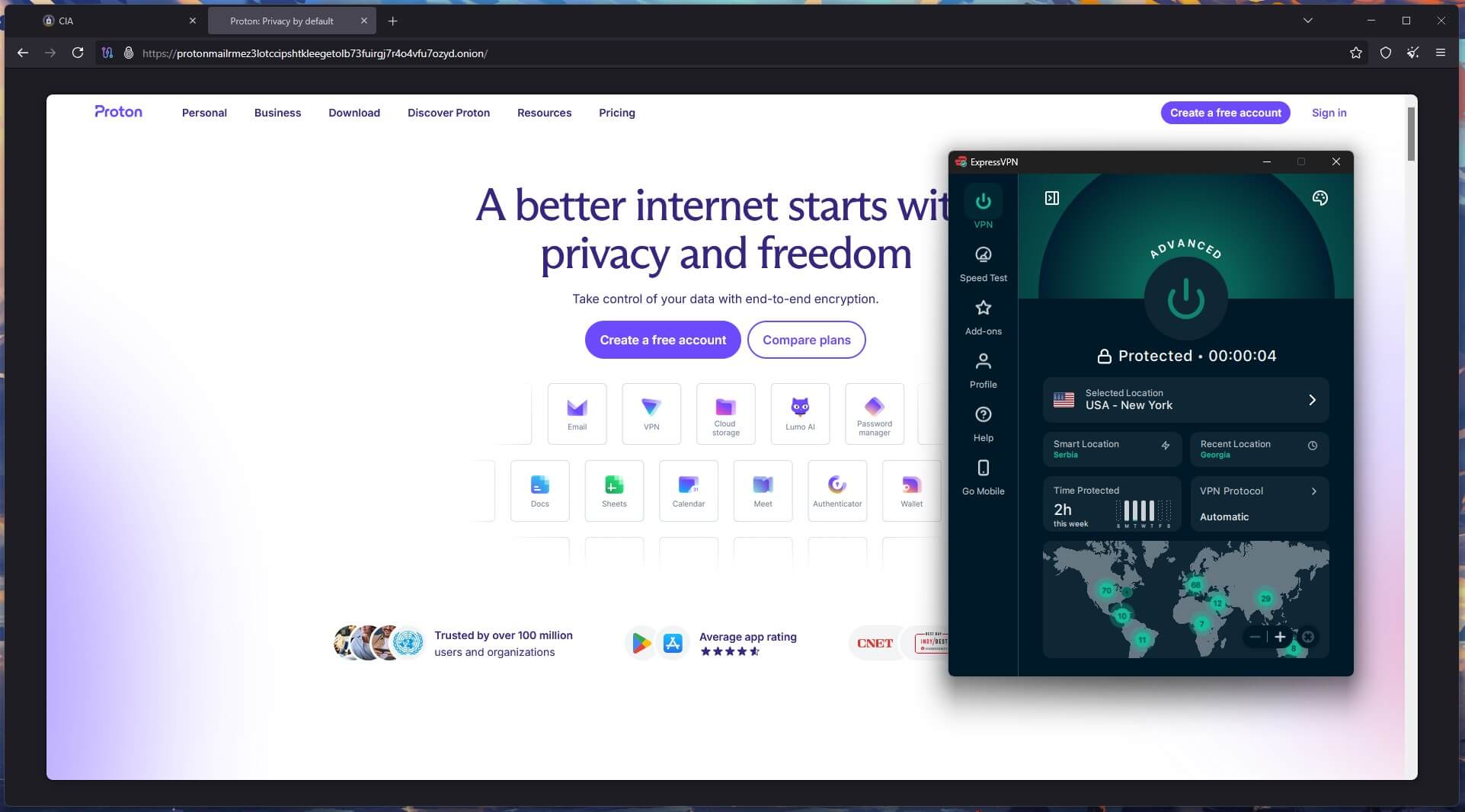
ExpressVPN has no free plan, but it offers a 30-day money-back guarantee and a 3-day mobile trial that requires a card. ExpressVPN brought the CIA’s .onion page up in 10 seconds. The app obfuscates every connection automatically, so networks that flag VPN or Tor traffic see ordinary encrypted data.
In our kill switch checks, ExpressVPN kept traffic blocked after the cable came out and after the app was force-closed. ExpressVPN charges $2.99 a month on the Basic plan’s 28-month term, $83.72 in total, before a $99.95 yearly renewal.
4. PrivadoVPN: Best Free Plan for Fast Tor Browsing
Pros
- Scramble obfuscation
- Iceland jurisdiction
- No card at signup
- Choice of free countries
Cons
- Monthly data cap
- One device on free
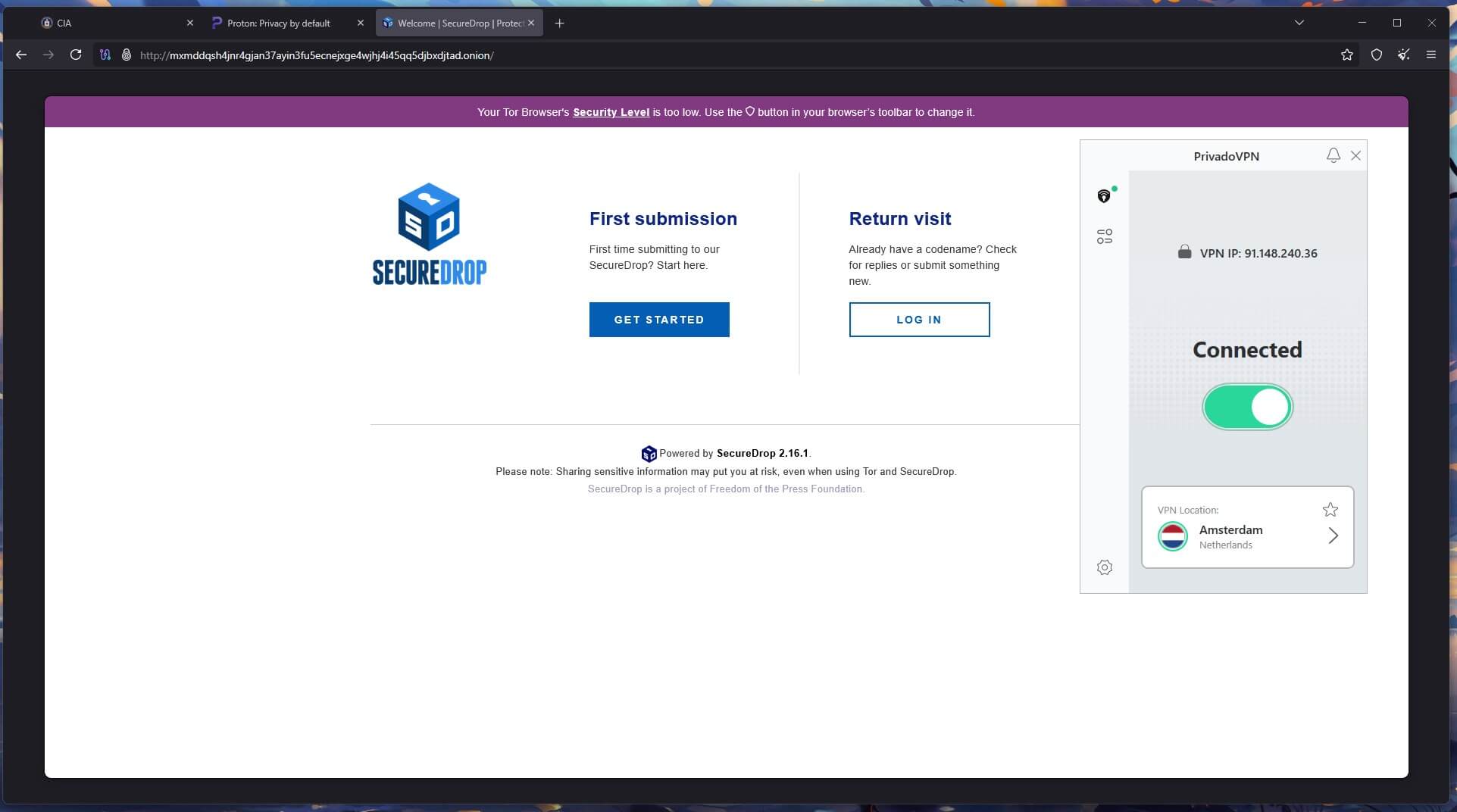
PrivadoVPN’s free plan loaded the CIA’s .onion site in 8 seconds, as fast as Proton VPN’s paid Tor server, and it opened SecureDrop’s .onion page too. Download speed fell 9.5% across our UK and US servers, the smallest loss of any free plan we’ve measured. The free plan covers 10 countries and one device, with 10 GB of data a month. At the cap, it slows to 1 Mbps and keeps working. Free accounts can turn on Scramble obfuscation, and the kill switch passed our tests.
5. Windscribe: Best Free Plan for Several Devices
Pros
- Unlimited free devices
- Firewall kill switch
- Stealth and WStunnel
- Anti-censorship settings
Cons
- Small allowance without email
- Disconnects at the cap
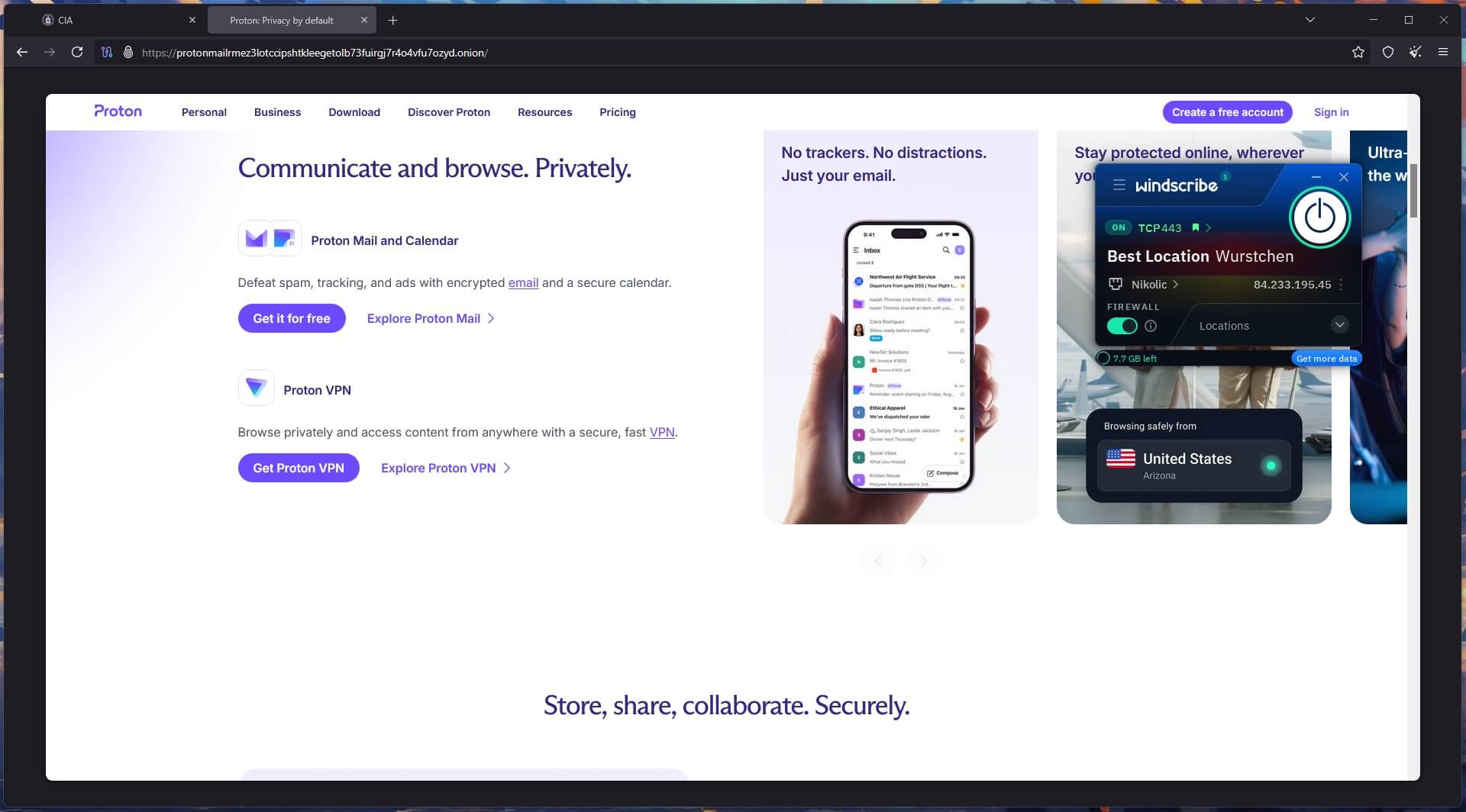
Windscribe’s free plan allows unlimited devices, which we confirmed with five connected at once. Tor Browser took 13 seconds to load the CIA’s .onion site, the slowest load we recorded, and download speed fell 10.0% across UK and US servers.
Free accounts include 2 GB a month, or 10 GB after confirming an email address, and the connection ends at the cap. The Firewall, Windscribe’s kill switch, blocked traffic in our tests, and the Stealth and WStunnel protocols disguise VPN traffic on networks that block it.
Tor Over VPN or VPN Over Tor?
Connect the VPN first, then open Tor Browser. This order, called Tor over VPN, hides Tor use from the ISP and shows Tor’s first server the VPN’s IP address. The reverse, VPN over Tor, exposes the user’s IP address to that first server and lets the VPN company see the traffic, as our Tor vs VPN comparison explains. Tor Browser doesn’t require a VPN, and adding one means trusting another company with the user’s IP address.
Choose a VPN with an audited no-logs policy if the goal is to stay anonymous online. Onion Over VPN and Tor servers already send traffic into Tor, so a standard server is the simpler choice for Tor Browser sessions.
Free Dark Web Browsers and Tor Apps
- Tor Browser: the Tor Project’s free browser for Windows, macOS, Linux, and Android, and the one we used for every test.
- Onion Browser: the iPhone app the Tor Project recommends. iOS has no official Tor Browser.
- Tor VPN Beta: the Tor Project’s free Android app, which sends each app’s traffic through Tor. It’s still a beta and isn’t meant for sensitive activity.
- Brave: its desktop Private Window with Tor opens .onion sites, with fewer protections than Tor Browser.
How to Use a Free VPN With Tor Browser
- Install the VPN and enable its kill switch. Our roundup of free VPNs for Windows includes more desktop apps.
- Connect to a standard server close to your location.
- Download Tor Browser from torproject.org, or Onion Browser on an iPhone.
- Open Tor Browser and set its Security Level to Safer or Safest from the shield icon.
- Enter the .onion address, such as a news organization’s SecureDrop page.
Our guide to accessing the dark web safely covers more precautions.
Free VPNs to Avoid for the Dark Web
- Hola VPN: free users become peers in Bright Data’s residential proxy network, so other people’s traffic can pass through their connection. Our Hola VPN review has the details.
- Hotspot Shield’s free plan: it offers only a US server, shows ads, and logs some connection data, as our Hotspot Shield review covers.
- Unofficial Tor apps: some App Store apps with Tor in the name don’t come from the Tor Project and charge weekly subscriptions, such as $3.99 a week. Check the developer before installing.
Which Free VPN to Use for the Dark Web
For a month of full protection at no cost, start with NordVPN and its 30-day refund. On a paid plan, it’s also our best VPN for accessing the dark web. Proton VPN sets no time limit on its free plan, which has no data cap, and VPN Plus adds Tor servers when the free plan isn’t enough. Our Proton VPN vs NordVPN comparison sets the two side by side.
PrivadoVPN gave the quickest free .onion loads within a 10 GB allowance, Windscribe covers every device in a household, and ExpressVPN disguises Tor use without setup. Our full VPN rankings and free VPN recommendations cover the rest.
Try NordVPN Risk-Free for 30 Days
FAQs About Free VPNs for the Dark Web
Is there a free VPN for the dark web?
Yes. Proton VPN, PrivadoVPN, and Windscribe offer free plans that work with Tor Browser. Proton VPN's free plan has no data cap, while PrivadoVPN and Windscribe limit monthly data.
What is the best free VPN for Tor Browser?
The best free VPN for Tor Browser is Proton VPN, with unlimited data and an audited no-logs policy. PrivadoVPN is the faster free option but caps data at 10 GB a month.
What is the best free dark web browser?
Tor Browser is the best free dark web browser. It comes from the nonprofit Tor Project and is available for Windows, macOS, Linux, and Android, while iPhone owners can use Onion Browser.
Is there a free Tor VPN?
Yes. The Tor Project's Tor VPN Beta costs nothing and connects Android apps to the Tor network. It remains a beta, and the Tor Project warns against using it for sensitive activity.
What's the difference between the deep web and the dark web?
The deep web is every page search engines don't index, such as inboxes and bank accounts. The dark web is a small part of it that only Tor or similar software opens.
Can I open .onion sites without Tor Browser?
No, not without other Tor software. A .onion address resolves on the Tor network, so Tor Browser, Onion Browser on iPhone, or Brave's Tor window is the dependable way to open one.
Is it illegal to access the dark web?
No, accessing the dark web is legal in most countries. Buying illegal goods, viewing illegal material, or using criminal services there is a crime, with or without a VPN connected.