A VPN company pays for its servers every month they stay online, and a lifetime plan stops bringing in money the day you check out. You pay once. The company gets that payment once, and the bills for servers, staff, and security fixes keep arriving for as long as you keep connecting.
That’s why the word “lifetime” needs a closer look. A VPN sends your traffic through its own servers, so a lifetime plan is only as good as the company’s ability to keep those servers fast, private, and unblocked years after your money has been spent. A few lifetime offers come from real companies.
Others end with cancelled accounts, quiet device limits, or a privacy policy that changes when cash runs short. There’s a safer way to pay once and stop thinking about it for years, and it costs less per month than most people expect. So what should you buy instead?
5 Long-Term VPN Plans That Beat a Lifetime Deal
- NordVPN: Best for most people. Repeated independent audits and constant upgrades.
- Proton VPN: Best free alternative. A free plan that never expires, with no data cap.
- ExpressVPN: Best for streaming. Simple apps that unblocked every service we tested.
- Private Internet Access: Best on a budget. The lowest monthly price of the five.
- Surfshark: Best for large households. One subscription covers unlimited devices.
What Is a Lifetime VPN?
A lifetime VPN is a plan you pay for once, with no renewal date. The real question is whose lifetime it means. In practice, it’s the product’s, and the terms usually let the company decide when that ends. Most lifetime VPN offers today are sold through deal sites like StackSocial, often as a license key you redeem on the VPN’s own website.
That adds a middleman: once you redeem the key, the sale is usually final, and support questions bounce between the deal site and the VPN. Some VPNs that once sold lifetime plans on their own sites have since removed them and sell them only through those resellers.
Lifetime pricing works for some software. You’ll find solid lifetime plans among the best cloud storage services, but those cost hundreds of dollars upfront, priced to cover years of storage. A VPN sold once for less than a year of a good subscription has to find that money somewhere else.
The 5 Best Lifetime VPN Alternatives in 2026
None of the VPNs in our ranking sells a one-time plan, so we ranked them on what makes a long-term plan worth buying instead: a track record of improvement, audited privacy, speed, streaming, and a low price per month.
| Longest Plan | Monthly Price on Longest Plan | Devices | Average Speed Loss | |
| NordVPN | 2 years + 3 months | About $3.50 | 10 | 7.8% (NordLynx) |
| Proton VPN | 2 years (free plan available) | About $3.50 | 10 (1 on the free plan) | 10.2% (WireGuard) |
| ExpressVPN | 28 months | About $3 | 10 to 14, by tier | 7.8% (Lightway) |
| PIA | 2 years + 2 months | About $2 | Unlimited | 12.7% (WireGuard) |
| Surfshark | 2 years + 3 months | About $2.50 | Unlimited | 9.6% (WireGuard) |
1. NordVPN: Best Lifetime VPN Alternative Overall
Pros
- Low monthly cost on long plans
- No-logs policy verified by independent auditors
- Unblocked Netflix, BBC iPlayer, and ITVX
- Connects even on networks that block VPNs
- Next-gen antivirus on the Complete plan
Cons
- Renewal costs more than the first term
- Ad blocking only on higher plans
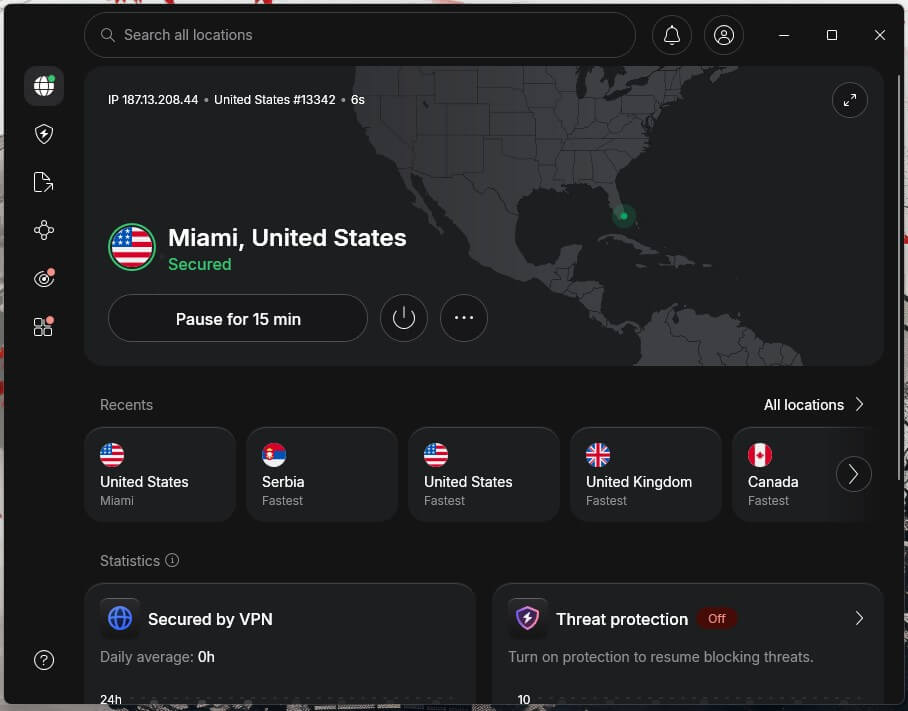
NordVPN comes closest to a lifetime VPN because it keeps getting better. Deloitte has audited its no-logs policy several times, its server network keeps growing, and our NordVPN review tracks those upgrades. The two-year plan costs about $3.50 a month, less than most streaming subscriptions.
It tied ExpressVPN as the fastest VPN in our tests, so streams and downloads feel the same with it on, and it came out ahead on extras side by side with ExpressVPN. NordWhisper, a protocol built for networks that block VPNs, keeps the connection alive at hotels and schools.
Meshnet lets you reach your home computer from a trip, so you can use services that work only from home. Its Onion over VPN servers also make it a strong VPN for the dark web.
2. Proton VPN: Best Free Lifetime VPN
Pros
- Free plan with no time or data limit
- Swiss privacy laws protect your data
- Extra-secure routing for sensitive browsing
- Works on school and office networks that block VPNs
Cons
- Couldn’t unblock Hulu or ITVX
- The free plan covers a single device
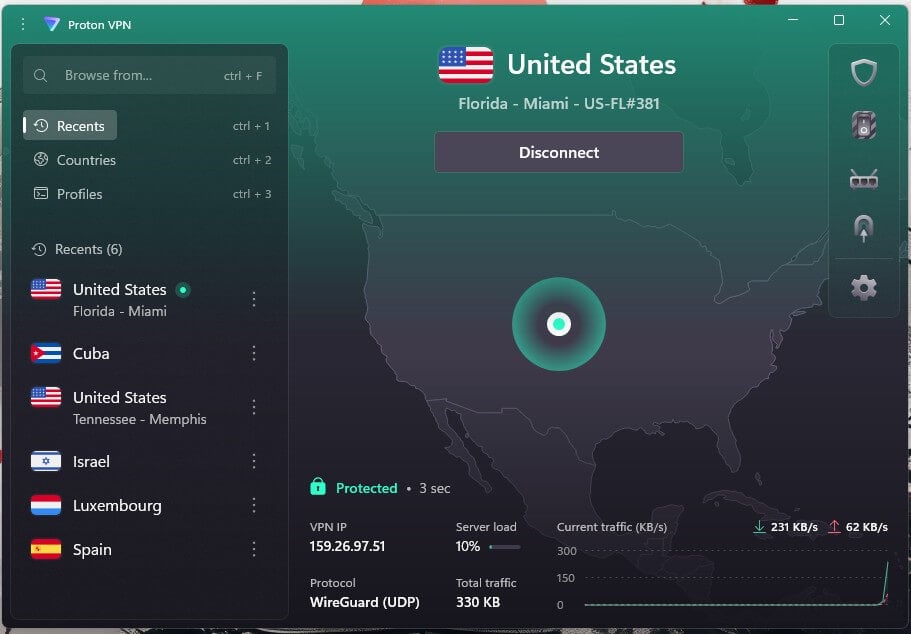
Proton VPN is the only VPN in our ranking with a real lifetime option, and it costs nothing: the free plan comes with no expiry date, no data cap, and no ads. It’s limited to a single device and a handful of countries, so treat it as a lifetime backup and upgrade when you need streaming or more devices.
VPN Plus, the paid plan, costs about $3.50 a month on a two-year commitment and unlocks the full network. BBC iPlayer and Netflix US were the services it unblocked in our tests, but it failed to unblock Hulu, Pluto TV, and ITVX.
So choose NordVPN or ExpressVPN if you watch those. An annual Securitum audit backs its no-logs policy. Secure Core routes each connection through a second, extra-protected server first, and Stealth disguises VPN traffic as ordinary web traffic, which makes it a good VPN for school networks that block VPNs.
3. ExpressVPN: Best Long-Term Plan for Streaming
Pros
- Unblocked every service we tested
- Quick reconnects when your network changes
- Ad and tracker blocking on every plan
- Simple apps on every device
Cons
- Fewer devices than PIA or Surfshark
- ID theft cover is US-only
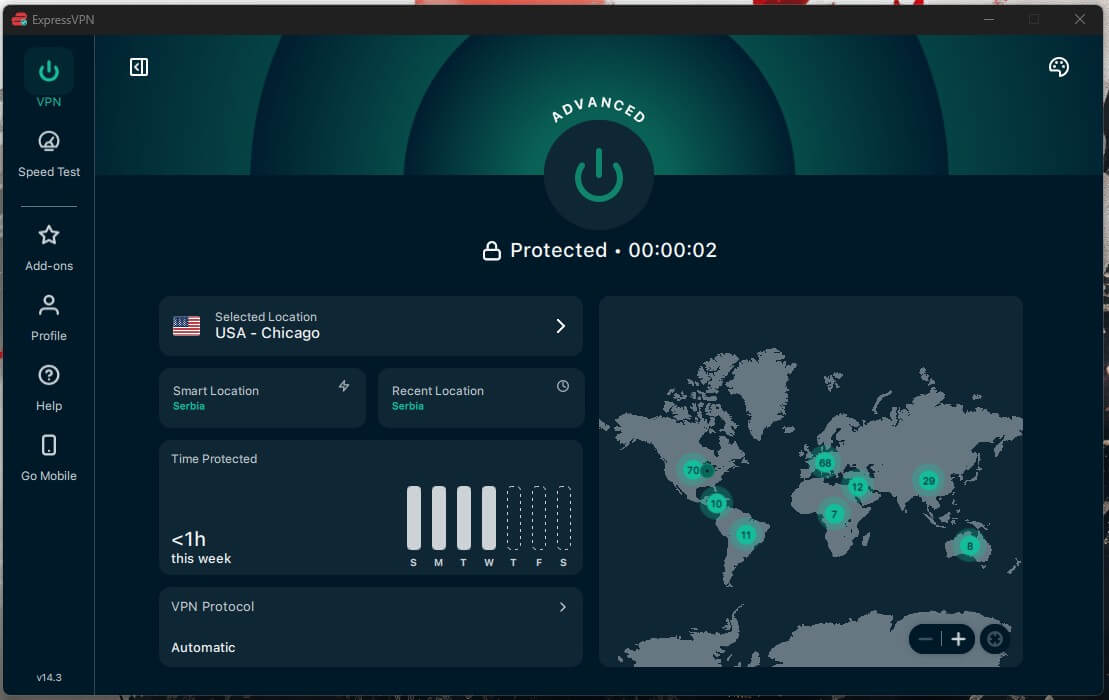
ExpressVPN has been around longer than most VPNs, and its apps take the least effort of the five to set up and forget. KPMG has audited its no-logs policy, and the company is based in the British Virgin Islands. Its longest plan costs about $3 a month, and even the Basic tier covers a full household of devices.
It tied NordVPN as the fastest VPN in our tests, and it unblocked every streaming service we tested. ExpressVPN unblocks Netflix libraries in many countries, and Lightway, its own protocol, reconnects quickly when your phone switches from Wi-Fi to mobile data.
Every tier includes Advanced Protection, which filters out ads, trackers, and harmful websites. The ID theft insurance on the higher tiers is available only in the US, so outside the US, the Basic plan is the better buy. It’s also a favorite VPN for Fire TV Stick users, and it works on routers, Apple TV, and smart TVs.
4. Private Internet Access: Best Budget Lifetime VPN Alternative
Pros
- Lowest monthly price of the five
- Plenty of short and long plan options
- Unlimited devices
- Built-in ad and tracker blocker
Cons
- Couldn’t unblock Prime Video
- Based in the US
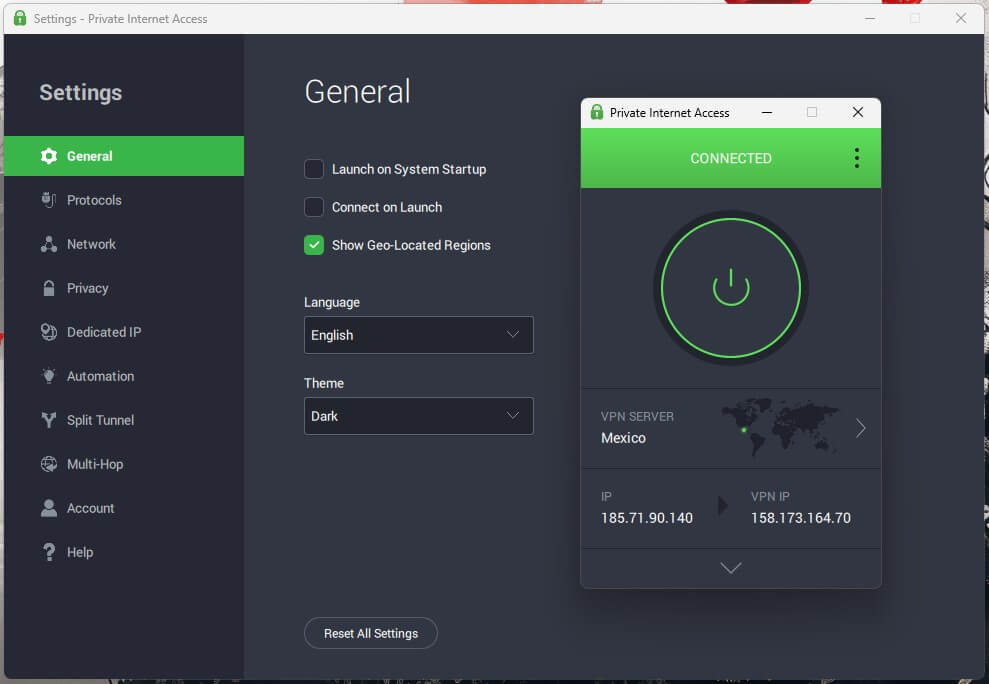
Private Internet Access keeps the cost of a long-term plan lower than any other VPN in our ranking. You can pay monthly, every six months, or for two years with two extra months on top, and the long plan costs about $2 a month. Its money-back period also works like a free PIA trial, long enough to test it on every device you own.
PIA came last of the five on speed in our tests, yet remained quick enough for HD streaming and video calls. It also couldn’t unblock a handful of services, with Prime Video and HBO Max on that list, so choose ExpressVPN for either.
MACE, its ad blocker, removes ads and trackers, and one subscription covers unlimited devices. PIA also sells dedicated IP addresses, so your bank recognizes one fixed IP address at each login. The company is based in the US, which puts off some privacy-minded users.
But Deloitte, one of the most reputable auditors, has audited its no-logs policy, and when US courts asked for user data, PIA had none to give.
5. Surfshark: Best for Unlimited Devices
Pros
- Unlimited devices
- Cheap two-year plan
- Unblocked Netflix and BBC iPlayer
- Changes your IP address automatically while connected
Cons
- Couldn’t unblock ITVX
- Monthly plans are expensive
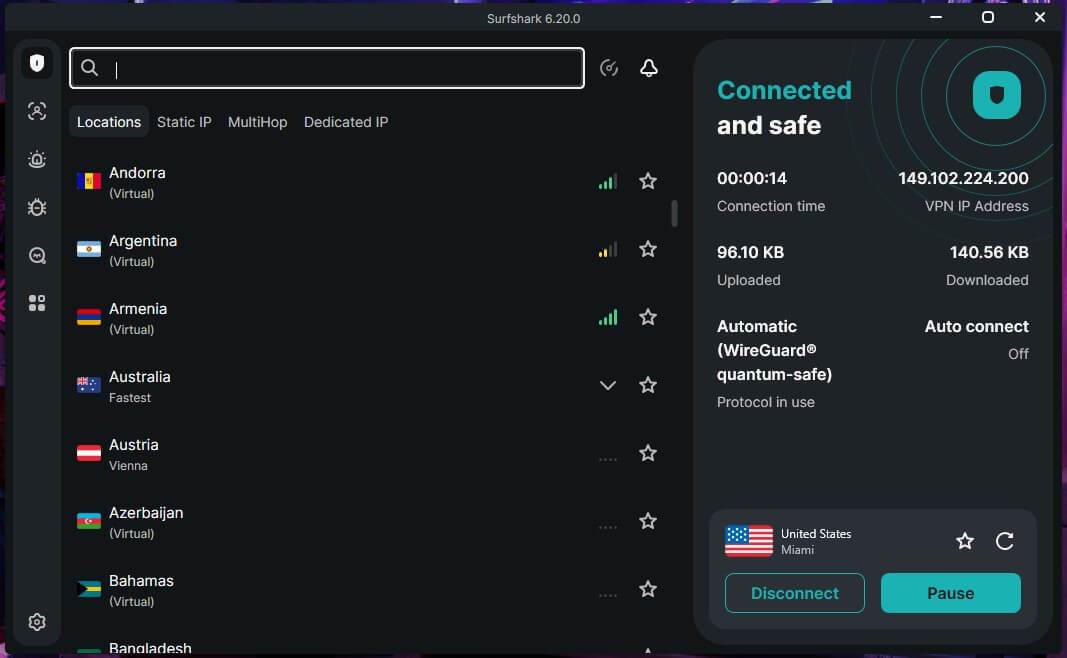
Surfshark suits a household that wants one plan for everything. On the two-year plan, the price falls to about $2.50 a month, a fraction of the monthly plan’s, and every device in the house can connect at once. Surfshark One adds antivirus, which makes it a good VPN with antivirus if you’d like one bill for both.
It kept its speed loss low in our tests, enough for 4K streaming on a decent connection. It unblocked Netflix and BBC iPlayer, and ITVX was the only service it couldn’t unblock, so choose NordVPN or ExpressVPN for ITVX. That record puts it among the best VPNs for streaming, and Deloitte has verified its no-logs policy.
IP Rotator changes your IP address regularly without disconnecting you, which makes tracking harder. Surfshark also installs on routers, so you can protect a PlayStation or an Xbox that can’t run a VPN app.
Lifetime VPNs You Can Still Buy
A few VPNs still sell lifetime plans, so it’s fair to say what’s out there. KeepSolid VPN Unlimited no longer lists a lifetime plan on its official pricing page, but a lifetime license appears on StackSocial for about $70.
Ivacy’s lifetime license sells there for about $30 and has to be redeemed within a short window after purchase. Those prices look tempting next to a subscription.
However, none of these companies has to keep its servers running for any set length of time, and the cheapest offers come with the fewest guarantees. Most also skip independent audits, which leaves you trusting a privacy policy and nothing else.
FastestVPN: The Most Credible Lifetime Plan
Pros
- One payment, no renewals
- Covers plenty of devices at once
- Built-in ad blocker and kill switch
- Based in a country without data retention laws
Cons
- No independent no-logs audit
- IP and DNS leaks in our tests
- Weak streaming results
- Slow on distant servers
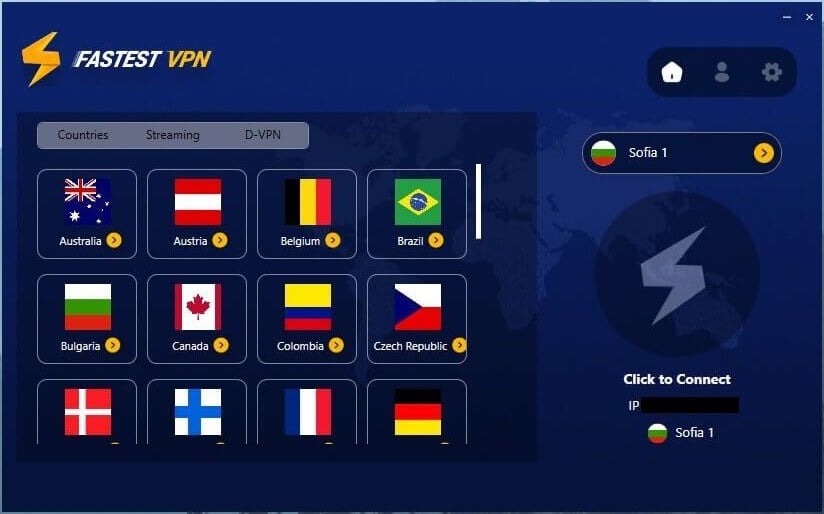
If you still want to pay once, FastestVPN is the most credible lifetime option, and the only one we’ve tested. Its lifetime plan costs about $40 on FastestVPN’s own site, so you’re not relying on a reseller, and it comes with a month-long refund window.
The company is based in the Cayman Islands, which has no mandatory data retention laws, and the apps include WireGuard, a kill switch, and an ad blocker. Our tests showed where the low price comes from. On desktop, it leaked our IPv6 address and DNS requests, which defeats the point of hiding your IP address.
Its streaming servers couldn’t unblock UK, US, or Japanese streaming services, and its speed fell sharply on servers outside Europe, enough to make distant connections sluggish for video and gaming. There’s no independent audit behind its no-logs policy and no obfuscation, so it won’t connect in China.
It did handle torrent downloads well on a nearby server. If you buy it, keep it for everyday browsing on a server close to home, and use a VPN from our ranking for banking, privacy, and streaming.
How to Spot a Risky Lifetime Deal
Most bad lifetime offers share the same warning signs, and you can usually spot them before you pay:
- A price that seems too low: A one-time fee below a year of a reputable subscription can’t fund servers for long.
- No independent audit: If the VPN can’t point to a recent no-logs audit by a named firm, assume it keeps data.
- Vague terms: Look for what “lifetime” means in the terms of service. Many reserve the right to end the plan or cut devices.
- A small server list: A handful of countries usually means the VPN can’t afford to grow.
- Reseller-only sales: When a plan exists only on deal sites, refunds and support get harder once the key is redeemed.
- Slow or no support: Send a question before you buy. A company that ignores a potential customer won’t answer a lifetime one.
Why Lifetime VPN Deals Go Wrong
Every one of those warning signs comes back to money, and following it explains nearly every problem lifetime VPN buyers run into.
The Money Runs Out
A lifetime VPN earns well while new buyers keep arriving. Sales slow over time, while every past buyer still uses the servers. A few years in, the company is paying to support thousands of users who will never pay again, funded by a trickle of new sign-ups.
All top-rated VPNs rely on recurring subscriptions for exactly this reason. Renewals pay for new servers, app updates, and the constant work of staying unblocked on streaming sites. A lifetime VPN gets one large payment and then crumbs, and the quality usually follows the money.
Updates Slow Down
With little left after paying staff and server bills, lifetime VPNs rarely invest in improvements. The result is outdated apps, a small server list, and slower connections.
Streaming suffers first: platforms block VPN IP addresses all the time, and a VPN without the budget to replace them soon can’t unblock Netflix and other services. Security updates are the bigger worry. Encryption standards move on, and the most secure VPNs keep updating their apps and protocols to stay ahead.
A VPN that stops releasing fixes leaves you protected by last year’s code.
Your Data Becomes the Product
When subscription money runs dry, user data is the easiest thing left to sell. Data brokers and ad networks pay for browsing histories, which defeats the reason you bought a VPN in the first place. The lifetime VPNs we’ve tested ourselves showed the warning signs.
Their privacy policies used vague wording about what they keep, and none had a recent third-party audit to back up their no-logs claims. Without an audit, “no logs” is just a promise from a company that needs money.
Connections Get Worse, or Disappear
Servers need daily maintenance, and a VPN that cuts corners there ends up with unstable connections and slower internet speeds. One problem feeds the next, and users who leave take no new revenue with them.
Sometimes the end is sudden. In 2025, VPNSecure’s new owner cancelled every lifetime account after saying the previous owner hadn’t disclosed thousands of lifetime deals, and those users got no refund.
ZenMate shut down and moved its users to another service. Lifetime buyers have no say in a sale, a merger, or a shutdown, and no way to get their money back once it happens.
A Better Definition of a Lifetime VPN
For us, the best lifetime VPN is one that will still be good in ten years, and upkeep decides that. Think of a car. You can drive the same car for decades, but only if it gets serviced. Skip the maintenance, and it won’t matter that you paid cash.
The VPNs in our ranking don’t sell one-time plans, but most have been around for over a decade, and they keep adding servers, updating apps, and passing independent audits. Recurring payments fund all of that. Long-term plans keep the payments rare.
You pay about once every two years, and the monthly cost works out lower than most streaming subscriptions. The trade-off is the renewal price, which is higher than the first term on most VPNs.
Check the renewal price at checkout, and set a calendar reminder a few weeks before the term ends, so you can renew, switch, or wait for a seasonal sale.
How We Chose the Best Lifetime VPN Alternatives
True lifetime VPNs didn’t make our ranking because none of them could match established VPNs on privacy, speed, or staying power. Here’s what we tested and compared instead:
- Track record: Each VPN in our ranking has kept improving year after year, with new servers, updated apps, and new protocols.
- Long-term value: We compared the monthly cost on the longest plan and how long a single payment lasts.
- Privacy: Every VPN we chose has a no-logs policy verified by an independent auditor.
- Streaming: We tested each VPN with major platforms, from Netflix with a VPN to Hulu and BBC iPlayer, and noted which ones it couldn’t unblock.
- Speed: We tested each VPN’s speed loss on servers near and far, each on its fastest protocol. A fast VPN also lets you watch Paramount+ USA from the UK without buffering.
- Ease of use: All five connect in one click, which is also why they rank well among the best VPNs for iPhone, Android, and Windows.
Long-term plans get their deepest discounts around Black Friday and Cyber Monday, so compare the current VPN deals before you buy.
Verdict
A single payment can’t fund servers, audits, and updates for years, and that’s why no true lifetime VPN made our ranking. People whose lifetime accounts were cancelled after a sale found that out with no refund. If you already own one that still works, keep it for casual use, but don’t trust it with anything sensitive.
A long-term plan from an established VPN gets you most of what “lifetime” promises: one payment, years without thinking about it, and a company with every reason to keep improving. Proton VPN’s free plan is the only real lifetime VPN worth having, as long as its limits suit you.
If you insist on paying once, FastestVPN is the most credible lifetime plan, provided you keep it away from sensitive tasks. For the lowest monthly price, choose PIA’s two-year plan. For the VPN we’d keep renewing, NordVPN is our top choice.
FAQ
Will a lifetime VPN save you money?
No, not reliably. The upfront price looks low, but nothing guarantees how long the service lasts, and a lifetime plan that gets cancelled or neglected can cost more per year of use.
Should you buy a lifetime VPN subscription?
No. Lifetime VPNs earn money once while their running costs never stop, so quality tends to decline. Many end with slower servers, weaker privacy, or cancelled accounts, and refunds are rare.
Can you get a lifetime subscription from NordVPN?
No. NordVPN sells only subscriptions, and its longest plan is a multi-year one. Anyone unsure can test it under its money-back guarantee before committing to a long plan.
Can you use a VPN for free for life?
Yes. Proton VPN has a free plan with no expiry date, no data cap, and no ads. It works on a single device with limited countries, and streaming requires a paid plan.
What happens to your lifetime VPN if the company is sold?
The new owner decides. Some keep lifetime accounts running, while others cancel them or move users to another service. Lifetime buyers usually have no say and rarely get a refund.
Can you trust FastestVPN's lifetime plan?
Yes, so far. FastestVPN still honors its lifetime plan, but it has no independent audit and no obfuscation, so it suits everyday browsing better than sensitive tasks.
Can you trust any lifetime plan, VPN or otherwise?
Yes, some. Certain cloud storage companies sell reliable lifetime plans priced to cover years of storage. Lifetime VPNs are riskier because cheap one-time payments rarely cover the cost of running servers for long.