Roskomnadzor had blocked 469 VPN services by February 2026, and since December 2025, it has been filtering the protocols those services depend on. Around 100 VPN apps have been pulled from the Russian App Store. A handful still connect, and each one disguises the shape of its traffic. Obfuscation is the deciding feature in Russia, and the rest follows from it.
4 Best VPNs That Work in Russia in 2026
- Proton VPN – Stealth protocol, Alternative Routing, and Moscow servers
- ExpressVPN – Obfuscation applies without configuring it
- Private Internet Access – Shadowsocks and adjustable ports
- Surfshark – Cheapest, with no cap on devices
Are VPNs Legal in Russia?
Using one is not a criminal offense. No Russian law prosecutes an individual for connecting to a VPN, and authorities have said a blanket ban isn’t the plan. The restrictions target everything around the user:
- ISPs must censor. A 2017 law requires VPN services to connect to Roskomnadzor’s blocklist system. Those that refuse get blocked, which is how the count hit 469
- Advertising is illegal. Promoting a VPN draws fines up to 500,000 rubles for companies, in force since September 2025
- Searching can be fined. Also from September 2025, deliberately looking for material on the “extremist” list draws a fine of 3,000 to 5,000 rubles, and using a VPN to do it makes no difference
- Apps get delisted. Apple has removed roughly 100 VPN apps from its Russian store, so installing before arrival is the practical step
What a VPN Does for You in Russia
More platforms join the blocked list every year. YouTube has been throttled since 2024, WhatsApp was blocked in February 2026, and Instagram, Facebook, X, Signal, Discord, and Viber are restricted. Beyond access, there’s surveillance. Deep packet inspection happens on TSPU equipment installed at every ISP, and encryption keeps browsing away from it.
It does the same job on Russian public Wi-Fi, where interception is a risk. For those outside the country, a Russian IP address works in the other direction, opening domestic banking, Gosuslugi, and Kinopoisk.
Compare the Best VPN for Russia in 2026
Most of these VPNs pulled their Russian servers years ago, after seizures and the 2017 compliance law. The connection usually comes from Finland, Poland, or Turkey. Proton VPN is the exception, and its Moscow endpoints are still live.
| Best For | Obfuscation | Servers in Russia | Starting Price | Devices | |
|---|---|---|---|---|---|
| Proton VPN | Overall use in Russia | Stealth plus Alternative Routing | 53 in Moscow | $2.99/mo | 10 |
| ExpressVPN | Simplicity | Automatic on every protocol | None | $2.99/mo | 10 |
| Private Internet Access | Manual control | Shadowsocks proxy | None | $2.19/mo | Unlimited |
| Surfshark | Lowest price | Camouflage Mode and NoBorders | None | $2.49/mo | Unlimited |
1. Proton VPN: Best Overall for Russia
Pros
- TLS-wrapped Stealth
- Alternative Routing
- 53 Moscow locations
- Secure Core entry servers
- Open-source apps
Cons
- Free plan drops Stealth
- Support replies slowly
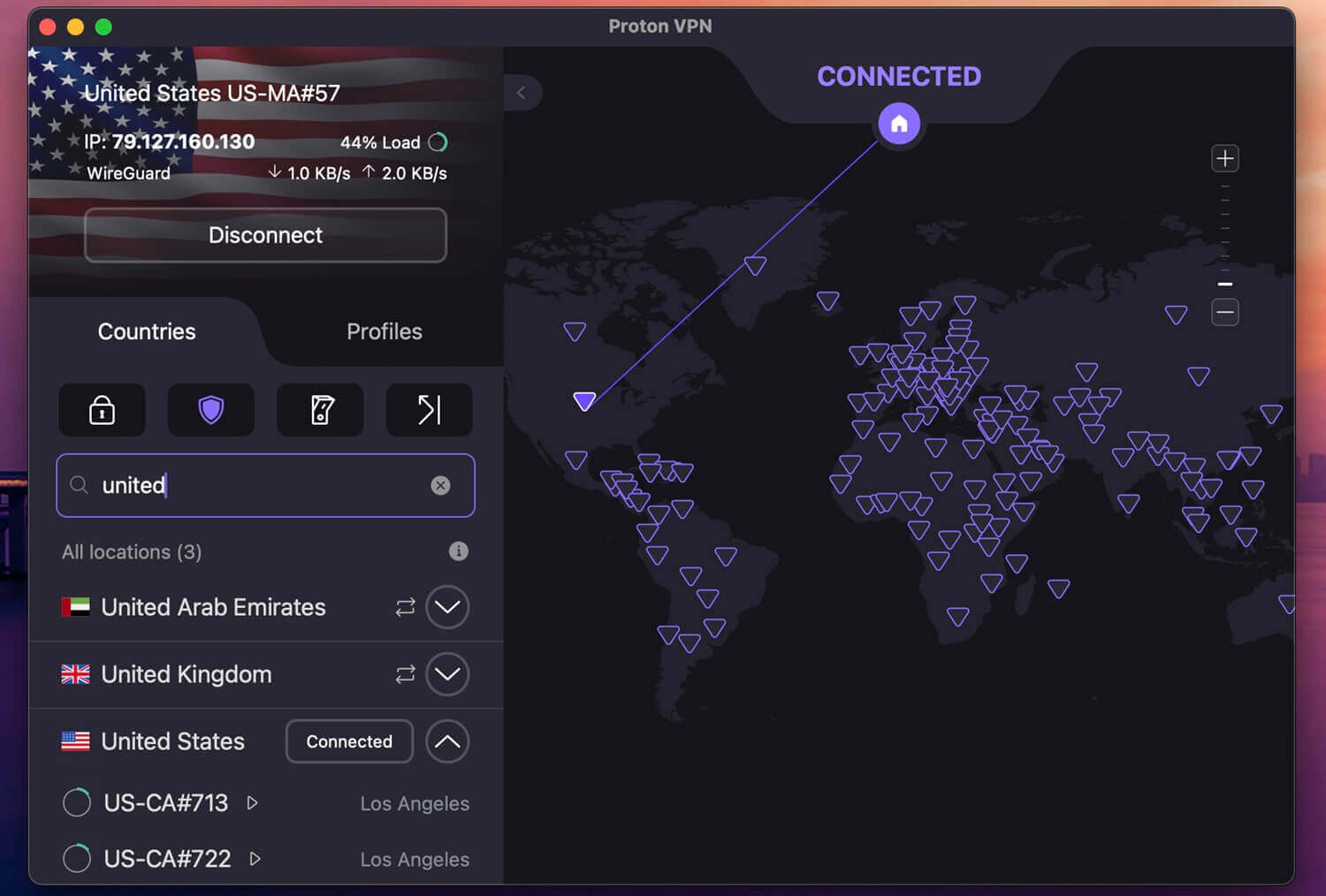
Proton VPN was built with censorship in mind, and 2 of its features are the ones Russia makes relevant. Stealth hides the tunnel inside a standard TLS session, which is the shape TSPU hardware is trained to let past. Alternative Routing finds a path when Proton VPN’s own servers are unreachable, keeping the app usable in the hours after a fresh block arrives. Researchers who test circumvention tools under Russian conditions rate Stealth among the few that keep working.
It also takes the Russian IP address argument. Proton VPN keeps 53 virtual Moscow locations, and about half of those handle streaming, so Kinopoisk, ivi.ru, and a domestic bank account can be opened outside the country. The hardware is physically elsewhere, so a seizure in Russia yields nothing. Secure Core sends traffic through a hardened server in Switzerland, Iceland, or Sweden before the exit point.
The exit node never sees a Russian IP. The network covers 148 countries. The client code is open to inspection, and Securitum re-checks the logging policy each year. A 2-year plan is $2.99/mo, $71.76 for the term. Our Proton VPN review goes deeper.
2. ExpressVPN: Best for Simplicity
Pros
- Automatic obfuscation
- Connects in seconds
- Identical app everywhere
- Romania and Finland nearby
- Onion site over Tor
Cons
- Second-year price is higher
- Single-hop only
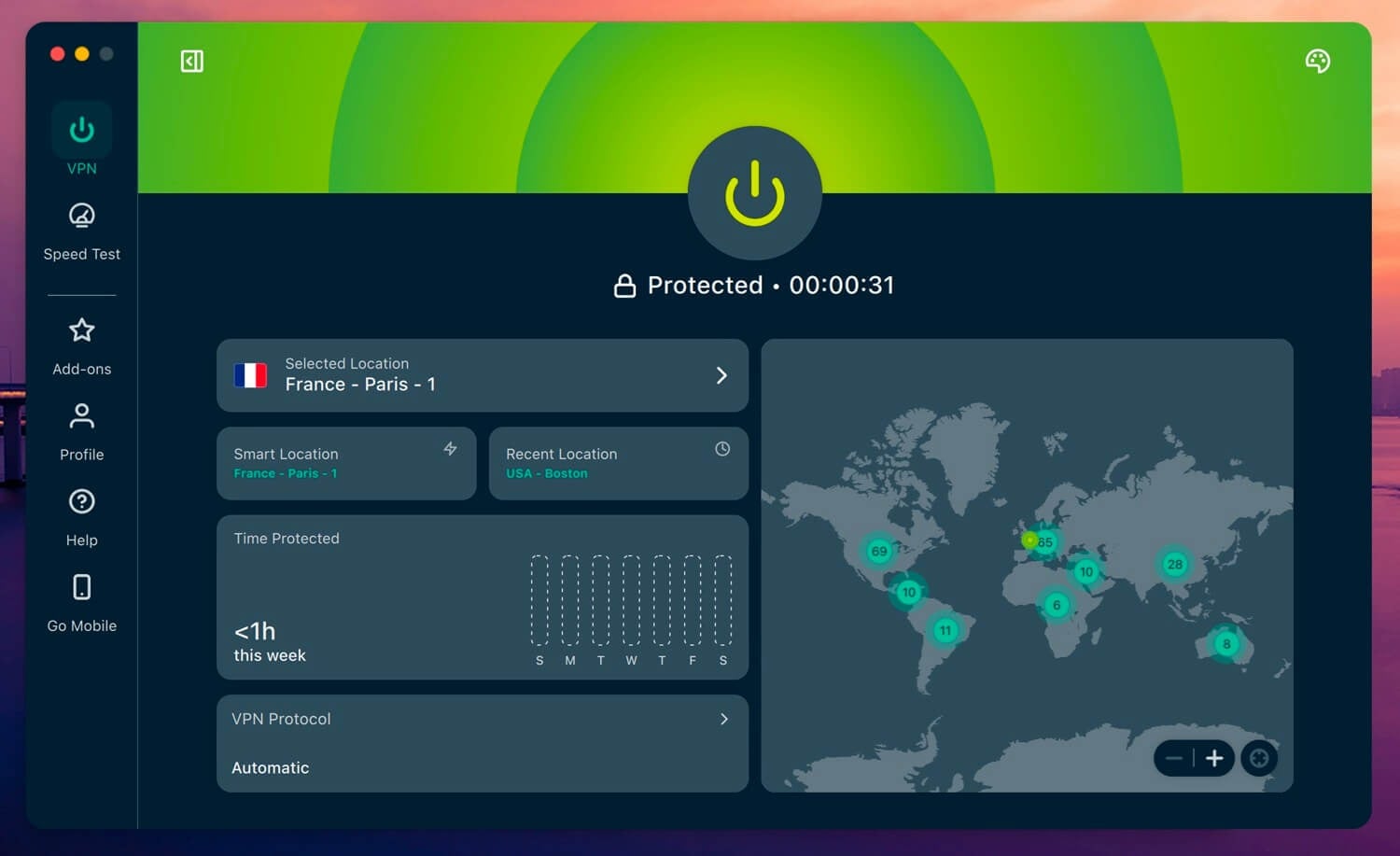
ExpressVPN scrambles traffic automatically on every protocol, with no toggle to find and no mode to select. That removes the most common way people break their own setup while troubleshooting. The apps are the second argument. They look identical across Windows, macOS, Android, and iOS; they open fast, and connecting is one tap. Lightway completes a connection in a few seconds.
It also includes post-quantum protection by default. Its 113 countries include Romania and Finland for short hops into Russia. The company also publishes a .onion version of its store, so a new subscription can be paid for from inside the country after the ordinary domain fails. Basic covers 10 devices at $2.99 a month, $83.72 across 28 months, before rising to $99.95 yearly.
The second-year price is the drawback. A 30-day guarantee at least makes the first term risk-free. Our ExpressVPN review goes further.
3. Private Internet Access: Best for Manual Control
Pros
- Shadowsocks layer available
- Port and protocol adjustable
- MultiHop chaining
- Court-tested no-logs claim
- Configuration files published
Cons
- Steep learning curve
- Aging desktop design
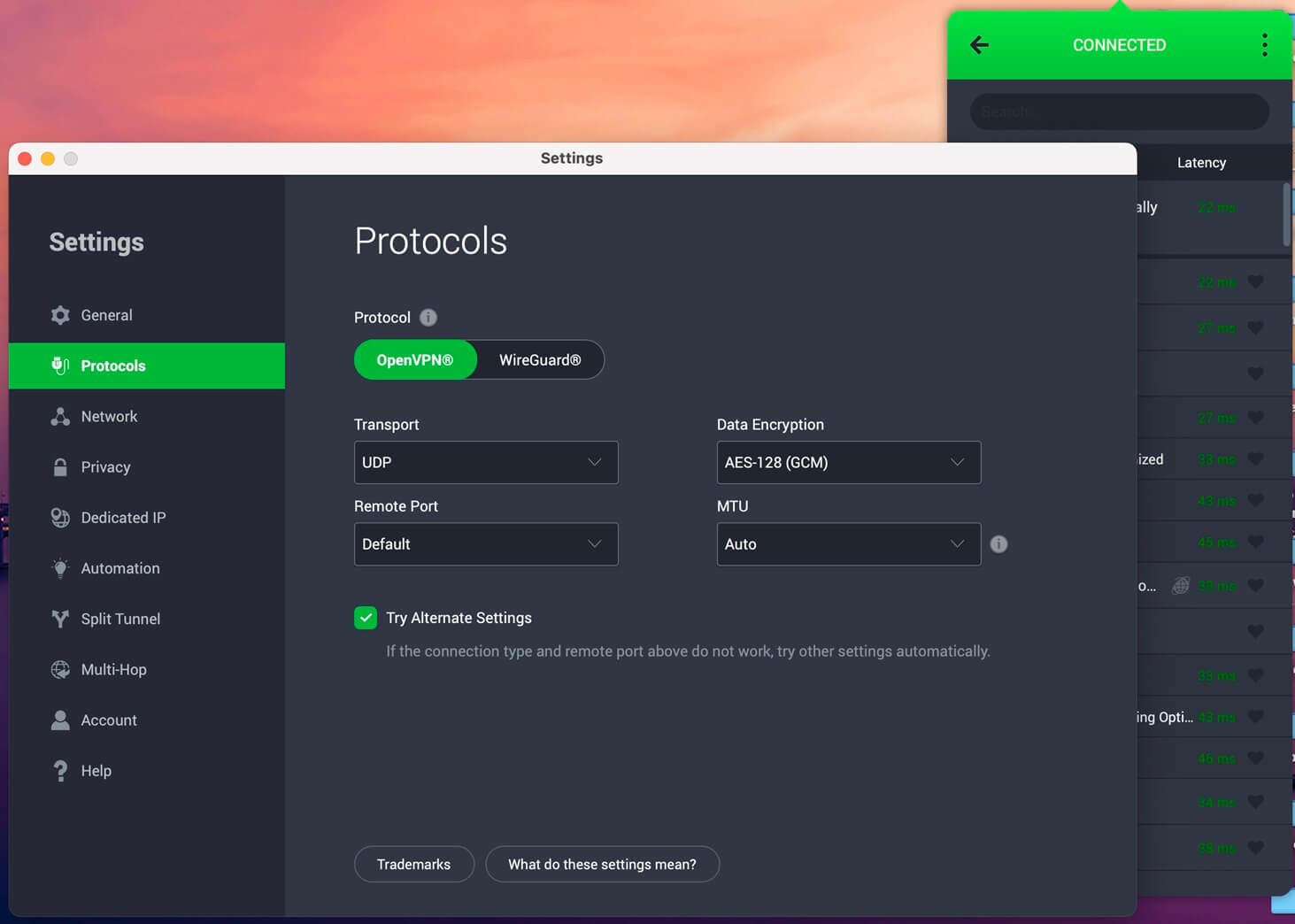
PIA hands you the controls, which becomes useful once blocking gets granular. You can change the port, switch between OpenVPN and WireGuard, adjust encryption strength, and layer Shadowsocks on top for obfuscation. When Roskomnadzor filters a protocol, moving to another one takes a few taps instead of a support ticket. That flexibility extends to installation.
PIA publishes OpenVPN configuration files, so a delisted app stops being fatal. Store removal is the failure most people hit first. MultiHop passes traffic through a second country before it exits, and court orders aimed at PIA have come back empty because the records didn’t exist. Its 26,000+ servers cover 91 countries, including Romania and Latvia, and the device count has no ceiling.
Pricing starts at $2.19 monthly, $56.94 across the term. Our PIA review covers the apps and everything else you should know.
4. Surfshark: Lowest Price for Russia
Pros
- Camouflage Mode obfuscation
- NoBorders detects restricted networks
- Unlimited devices
- Rotating exit IP address
- Obfuscation works on mobile
Cons
- Dutch 9 Eyes base
- Slower at peak hours
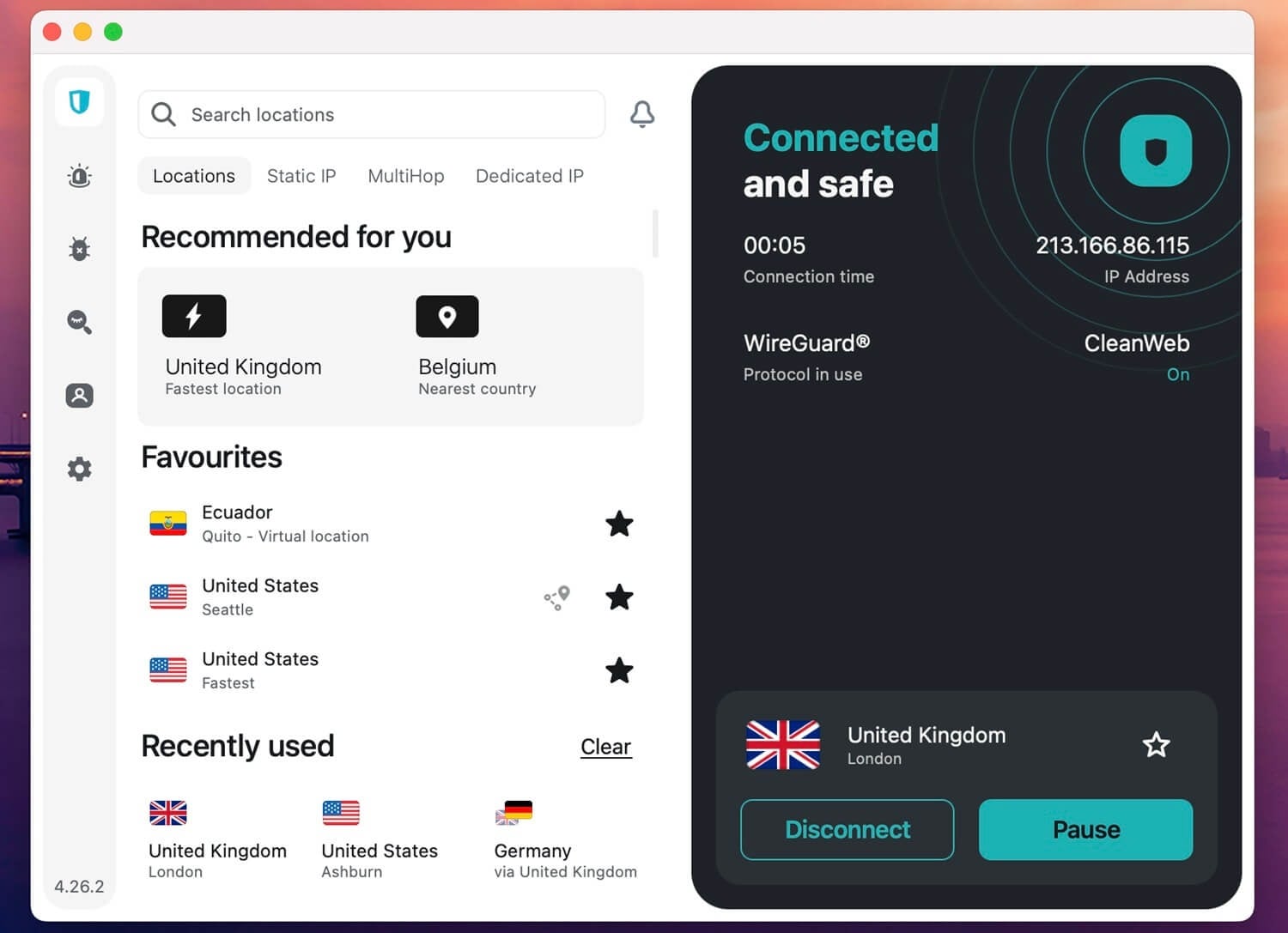
Surfshark costs the least of the 4 and handles Russian conditions with 2 settings. Camouflage Mode disguises the tunnel automatically, and NoBorders spots a filtered network and picks out the servers still answering. Neither feature is desktop-only. Rotating IP is an unusual fit for Russia, changing your exit IP address periodically without dropping the session.
CleanWeb handles ads and trackers, and the servers keep nothing on disk. Surfshark closed its Russian servers in March 2022, so it covers getting out of the country. Unlimited connections cover a household on one plan, and the network spans 4,500+ servers in 100 countries, with Finland and Estonia the nearest exits.
Starter is $2.49 monthly over 27 months, $67.23 altogether, with a 30-day guarantee. Our Surfshark review breaks down the tiers.
How to Pay for a VPN From Russia
Visa and Mastercard suspended Russian operations in 2022, so a domestic card won’t complete a subscription. The workable methods:
- Cryptocurrency. Proton VPN, PIA, and Surfshark accept it, and it requires no bank account
- A foreign card issued outside Russia, which expats and travelers usually have
- Prepaid gift cards from third-party resellers, redeemed against the subscription
- Proton VPN’s free plan, which requires no payment method
Buying before you travel avoids the problem completely, and it also gets the app installed while the store still offers it. If you’re already in the country, the free VPN options for Russia are a fallback while you sort payment out.
What to Look for in a VPN for Russia
- Obfuscation. Stealth, Camouflage Mode, and Shadowsocks all disguise the tunnel. Without one, TSPU equipment identifies the connection and drops it
- More than one protocol. Roskomnadzor has been filtering protocols individually since December 2025, so a service with alternatives keeps working longer
- Nearby servers. Finland, Poland, Romania, Latvia, and Turkey keep delays reasonable
- Configuration files. When the app won’t install, manual OpenVPN configs are the fallback
- An audited no-logs policy, ideally tested in court and not just claimed
- A kill switch, so a dropped tunnel doesn’t expose the connection to the equipment watching it
- Payment without a Russian card, which in practice means cryptocurrency
The same combination keeps a service usable in China, where the filtering approach is similar, though often stricter.
Summary
Russia’s blocking moved from services to protocols, which changed what a working VPN looks like. Proton VPN is our first pick: Stealth for the filtering, Alternative Routing for the hours after a new block, and 53 Moscow locations for those who need a Russian IP address from outside. ExpressVPN obfuscates every connection without being asked, which fits if you’d rather install a VPN once and forget about it.
PIA gives you the deepest controls and published config files, for the person who expects to troubleshoot. Surfshark costs the least and covers every device in a household. Keep a second service installed alongside the first. Blocking moves week to week, and the fallback costs nothing until the day it’s needed.
FAQs About Using a VPN in Russia
🛠️ Which VPN services still work in Russia?
Services with obfuscation have the best record. Proton VPN, ExpressVPN, Private Internet Access, and Surfshark all disguise their traffic as ordinary HTTPS, the only pattern still passing Russian filters. Roskomnadzor had blocked 469 services by February 2026.
📝 Is it illegal to use a VPN in Russia?
No. Individual use brings no criminal or administrative penalty. Advertising a VPN is illegal, and since September 2025, deliberately searching for material on the extremist list is finable, whether or not a VPN is involved.
🏦 Can a VPN be paid for with a Russian bank card?
No. Visa and Mastercard stopped processing Russian transactions in 2022. Cryptocurrency works with most major providers, and Proton VPN's free plan requires no payment method.
🪆 Do any VPNs have servers in Russia?
Yes, though few. Surfshark keeps 53 servers in Moscow, while NordVPN, ExpressVPN, and most others withdrew after the 2017 compliance law and a 2019 seizure. A Russian IP address is the reason to pick one that stayed.
🛑 Why did my VPN stop working in Russia?
Protocol blocking is the usual cause. Roskomnadzor began filtering individual protocols in December 2025, so switching to another one in the app settings, or turning on obfuscation, restores the connection.
🎁 Does a free VPN work in Russia?
Rarely. Free plans drop obfuscation ahead of every other feature, and TSPU equipment then fingerprints the tunnel and cuts it. Proton VPN's no-cost plan still connects for browsing and retains its Stealth protocol.