
US Disclaimer: Gambling law differs by country, and in the United States it differs by state. This guide is for people in places where online gambling and sports betting are legal and licensed, and it covers protecting a legitimate account. It doesn’t explain how to register, deposit, or place a bet from a location where the operator or the law prohibits it. Most US states don’t offer legal online casino play, and offshore sites that accept US customers aren’t licensed in any US state.
Using a VPN to misrepresent your location breaks the terms of every licensed operator, and it can end in a closed account and a confiscated balance. It can also break state or national law. We’re not lawyers, and this isn’t legal advice. Check the rules that apply where you are. If gambling has stopped being fun, US residents can call 1-800-MY-RESET or 1-800-GAMBLER.
A UK betting account is licensed for Great Britain, so on a holiday in Spain, most big bookmakers won’t take a bet from it, even with your own money in the balance. Australians on Sportsbet hit the same block overseas. A betting license covers one territory, and the bookmaker has to serve customers within it.
Which leaves a fair question before you travel: what can you still do with your account, and is there a legal way to bet while you’re away? Some bookmakers let you sign in abroad but not place bets, others suspend the account, and a few markets license their own local sites.
Here’s how to bet abroad without putting your balance at risk.
Can You Bet Online Abroad? 5 Steps for Your Trip
- Check your bookmaker’s travel rules in its help center before you leave, since most block betting outside the country where you registered.
- Check the local law where you’re staying, because some countries ban online betting for the person placing the bet.
- Settle or withdraw before you fly if your bookmaker doesn’t serve your destination.
- Use a locally licensed bookmaker on longer stays where betting is legal, with an account in your own name.
- Subscribe to NordVPN and connect to a server in the country you’re actually in before you sign in on hotel or airport Wi-Fi.
Why Betting Sites Block You Abroad
Online betting is licensed country by country. A bookmaker licensed by the UK Gambling Commission serves customers in Great Britain, and taking bets from a country where it has no license puts that license at risk. So when you sign in from abroad, the site checks where you are and limits what you can do.

Your IP address is the first check, and it’s the one that triggers the region message. It isn’t the only one. Bookmakers verify your ID and home address when you register, and they accept deposits and pay out only to payment methods in your name from the licensed country.

A withdrawal request usually brings a document check, which is where a mismatch between your account and your location shows up. The other half is the law where you’re standing, which can rule out a bet even when your bookmaker would accept it.
Which Betting Sites Work Abroad?
Most of the big names don’t let you bet while you travel. Their own help pages are clear on it:
| Bookmaker | Where the account works | When you travel |
|---|---|---|
| bet365 | The country where you registered | You can sign in, but bets are blocked outside your registered country |
| Sky Bet | UK, Ireland, Isle of Man, Gibraltar | The account can’t be used abroad and may be suspended |
| Betfair | Not in its prohibited territories, which include Spain, France, Italy, Germany, the US, Canada, and Australia | Signing in from a prohibited territory can suspend the account |
| Unibet UK | UK, Gibraltar, Isle of Man, Channel Islands | Access from other territories breaks its terms |
| Sportsbet | Australia only (New Zealand access ended in July 2025) | No account access outside Australia |
Paddy Power’s app also requires location access, because the bookmaker doesn’t operate in every country. Rules change, so check your bookmaker’s help center a few days before you fly, and settle open bets or withdraw your balance if your destination isn’t covered.
On a longer stay, a bookmaker licensed in the country you’re living in is the reliable option. You’ll register with your own ID, deposit with a local card or bank, and get paid out without the verification problems a foreign account faces.
Can You Use a VPN to Bet Abroad?
Not to hide where you are. A VPN can assign you an IP address from your home country, but licensed bookmakers prohibit exactly that. bet365’s terms list using a VPN to disguise your location as a prohibited activity, Unibet’s terms say the same, and Sportsbet blocks access over a VPN.
The penalty is written into those terms: voided bets, withheld winnings, and a suspended or closed account. Other details matter too. Your payment method, your phone’s location settings, and the ID check at your first withdrawal can show that you were abroad. A bet placed through a home-country server can cost you the balance weeks later.
A VPN still has a job on a trip. Hotel, airport, and café networks are shared with strangers, and a VPN encrypts your sign-ins and deposits, so others on that network can’t read them. Pick a server in the country you’re visiting, and the bookmaker sees your true location while your connection remains private.
VPNs are legal in most countries, and using one this way breaks no operator’s terms.
How to Protect Your Betting Account on a Trip
Start by setting up the VPN at home, where its website and app store work without restrictions. Subscribe, install the app, and sign in. If it’s your first VPN, our guide on how to use a VPN service covers every device.

Before you sign in to your bookmaker on public Wi-Fi, connect the VPN to a server in the country you’re staying in. If your VPN has none there, choose the nearest one. Enable the kill switch, which cuts your internet if the VPN connection drops, so your login never travels unencrypted.
A few account habits add protection on top:
- Turn on two-factor authentication in your bookmaker account
- Never sign in on hotel lobby computers or shared devices
- Use your own mobile data for deposits if the Wi-Fi looks suspicious
- Keep your bookmaker app updated before you travel
Is It Legal to Bet Online Abroad?
It depends on two things: the law in the country you’re in, and the terms of the bookmaker you use. Your nationality doesn’t change the answer. If online betting is legal where you are and your bookmaker serves that country, you’re fine.
If either answer is no, you shouldn’t place the bet, with or without a VPN. Some bans apply to the bettor as well as the operator. Qatar’s penal code sets prison time and fines for gambling, and in the UAE, only operators licensed by the General Commercial Gaming Regulatory Authority are legal.
Elsewhere, the rules are narrower than many travelers expect: Japan and Singapore allow betting only through state-approved operators. The best VPNs for betting on a legal, licensed account share two traits: an audited no-logs policy and a dependable kill switch.
If gambling has stopped being fun, help is free and confidential. In the UK, call the National Gambling Helpline on 0808 8020 133. In Australia, call Gambling Help Online on 1800 858 858. The lines are open 24/7.
Best VPNs for Betting Accounts Abroad
These three keep your sign-ins and deposits private on travel networks, with independently audited no-logs policies and apps for phones and computers.
- NordVPN: Best for Fast, Protected Connections. Its app-level kill switch can close your betting app if the VPN drops.
- Proton VPN: Best for Privacy on Hotel Networks. Its Stealth protocol connects on Wi-Fi that blocks VPNs.
- ExpressVPN: Best for One-Tap Simplicity. It connects in a second or two on any device.
1. NordVPN: Best for Fast, Protected Connections
Pros
- App-level kill switch
- Fast NordLynx protocol
- Next-gen antivirus on Complete and Prime
- Independently audited no-logs policy
- Apps for every major device
Con
- Higher renewal price
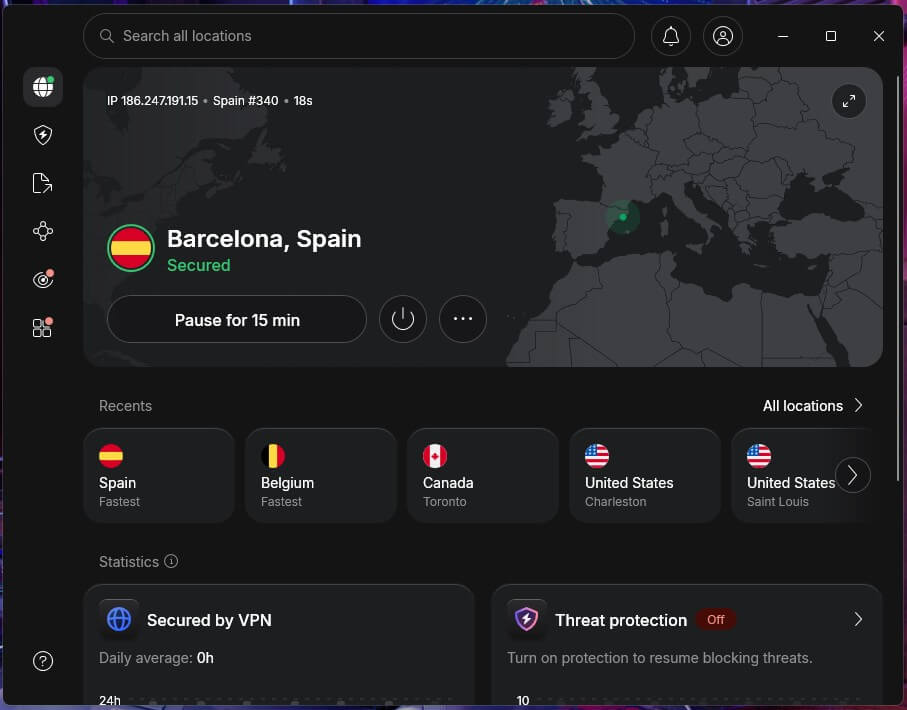
NordVPN is the one we’d install first for a trip. It lost 7.8% of our speed on average on NordLynx, its own protocol, which makes it one of the fastest VPNs we’ve tested. With servers in 152 countries, it usually has one in or near your destination.
The app-level kill switch closes the apps you choose, such as your bookmaker’s app, if the VPN disconnects, so nothing goes out unprotected. On the Complete plan, next-gen antivirus scans downloads and warns you about malicious sites, such as fake login pages.
On the two-year Basic plan, NordVPN comes in under $3.50 a month for 10 devices, backed by a 30-day money-back guarantee.
2. Proton VPN: Best for Privacy on Hotel Networks
Pros
- Swiss privacy protections
- Stealth protocol for VPN-blocking Wi-Fi
- NetShield malware and ad blocker
- Open-source, audited apps
- Full refund within 30 days
Con
- No post-quantum encryption yet
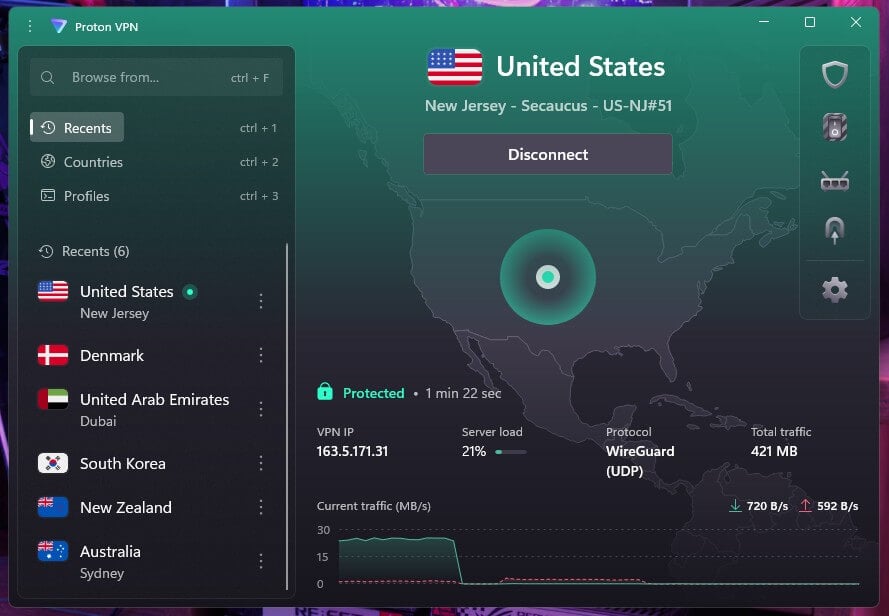
Proton VPN is based in Switzerland, keeps no activity logs, and has its apps checked by outside auditors every year. Some hotel and office networks block VPN connections. Its Stealth protocol disguises the VPN as regular web traffic, so you can still connect on those networks, and NetShield blocks known malware domains.
Its kill switch passed our tests when we pulled the network cable and when we force-closed the app, with no traffic getting out. Two years of the VPN Plus plan cost less than $3 a month for 10 devices, and Proton refunds the full amount within 30 days.
3. ExpressVPN: Best for One-Tap Simplicity
Pros
- Connects in one to two seconds
- Lightway protocol for mobile networks
- RAM-only servers
- Automatic obfuscation
Con
- Few advanced settings
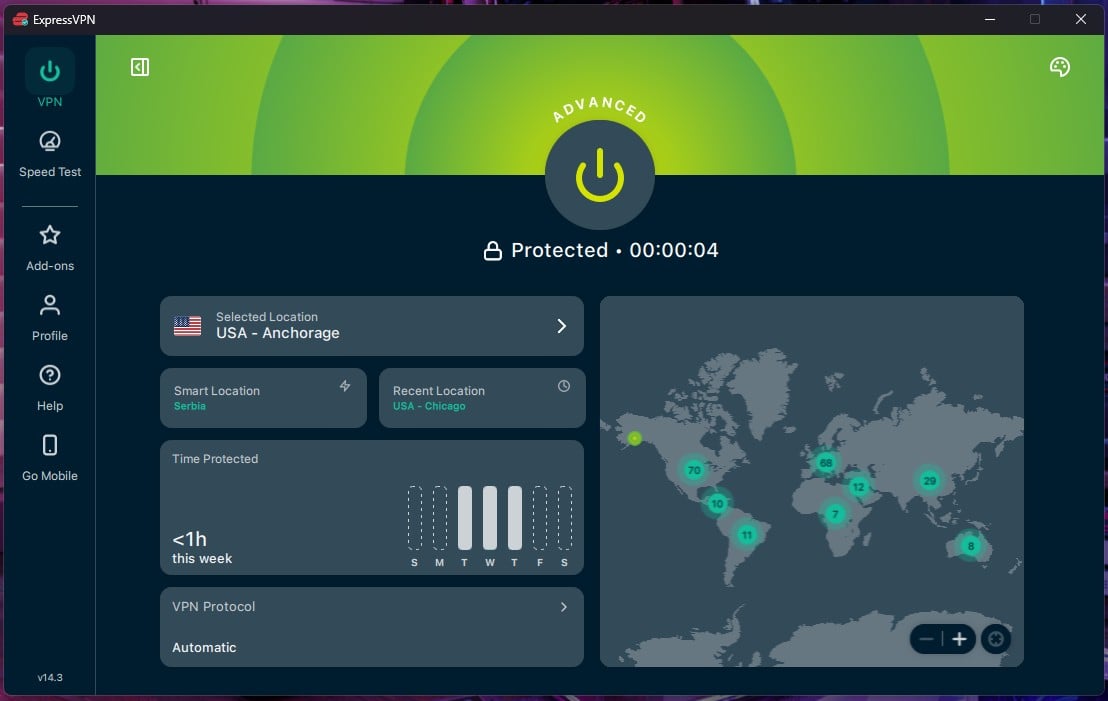
ExpressVPN is built for travelers who want to tap once and forget about it. In our tests, it connected within one to two seconds effortlessly, and Lightway, its own protocol, reconnects quickly when your phone switches from hotel Wi-Fi to mobile data.
It also disguises its traffic on restrictive networks without any setting to change. Its servers wipe themselves on every reboot because they use RAM only, and an outside audit has checked its no-logs claim. The same app also works with Netflix on the trip.
ExpressVPN’s Basic plan comes in under $3 a month when you pay for two years, and it covers 10 devices. However, you can extend to 14 devices if you get the highest-priced plan. Even though it’s excellent, most people will settle for Basic and likely be satisfied.
Summary
The simplest way to bet abroad is to check two things before you fly: your bookmaker’s rules on travel and the gambling law where you’re going. If your bookmaker and the local law allow it, sign in as usual. If either doesn’t, settle your bets or withdraw before the trip, or open an account with a bookmaker licensed where you’re staying.
A VPN that makes you appear at home doesn’t solve the problem. It breaks the bookmaker’s terms, and the document check that comes with a withdrawal can still show where you were, which puts the balance at risk.
Use the VPN for what it does well on a trip: encrypting your sign-ins and deposits on hotel and airport Wi-Fi, with a server in the country you’re in. Based on our experience, NordVPN handles that job with the least setup.
Frequently Asked Questions
Can I use bet365 abroad?
No, not for betting outside the country where the account is registered. bet365 allows sign-ins while traveling, but bet placement remains blocked until the customer returns home.
Can Sky Bet be used on holiday?
No. Sky Bet serves the UK, Ireland, the Isle of Man, and Gibraltar only, and using the account in other countries can lead to a suspension until the customer returns.
Is Betfair available in Spain?
No. Spain is on Betfair's list of prohibited territories, alongside France, Italy, Germany, the US, Canada, and Australia, so a UK account can't be used for betting there.
What happens if a bookmaker detects a VPN?
Licensed bookmakers treat a VPN used to disguise location as a breach of their terms. Penalties include voided bets, withheld winnings, and a suspended or closed account.
Where is online betting illegal?
Qatar bans gambling and penalizes the person placing the bet. Japan and Singapore allow only state-approved betting, and the UAE permits only operators licensed by its federal gaming regulator.