These two providers built different things. Surfshark went wide: unlimited devices, an antivirus, a password-free identity generator, and a network in 100 countries. Windscribe went deep on a smaller footprint: every server physically where it says it is, a customizable DNS blocker, and an obfuscation toolkit most premium VPNs can’t match. Surfshark takes 6 rounds, Windscribe takes 1, and 1 finishes even.
Surfshark wins on apps, price, features, speed, streaming, and server coverage. Windscribe wins censorship bypass outright, and privacy ends in a draw. We tested Windscribe’s premium plan against Surfshark One so neither side had a tier advantage. Here’s how the eight rounds went.
Surfshark VPN vs Windscribe: Quick Comparison
| 🏆 Surfshark | Windscribe | |
| Our Current Ranking 📋 | #5 | TBD |
| Prices 🤑 | Starting at $2.49/mo | $5.75/mo, billed $69/year |
| Money-Back Guarantee 🪙 | 30 days | 7 days, under 10 GB used |
| Free Version/Free Trial 🆓 | No/7-day trial, $0 at checkout | Yes/No trial |
| Logging/Jurisdiction 🕵️ | Session data deleted in 15 minutes/Netherlands | Bandwidth counter and last-activity date/Canada |
| Independent Audits 📝 | Cure53 and Deloitte | App and infrastructure audits, open-source code |
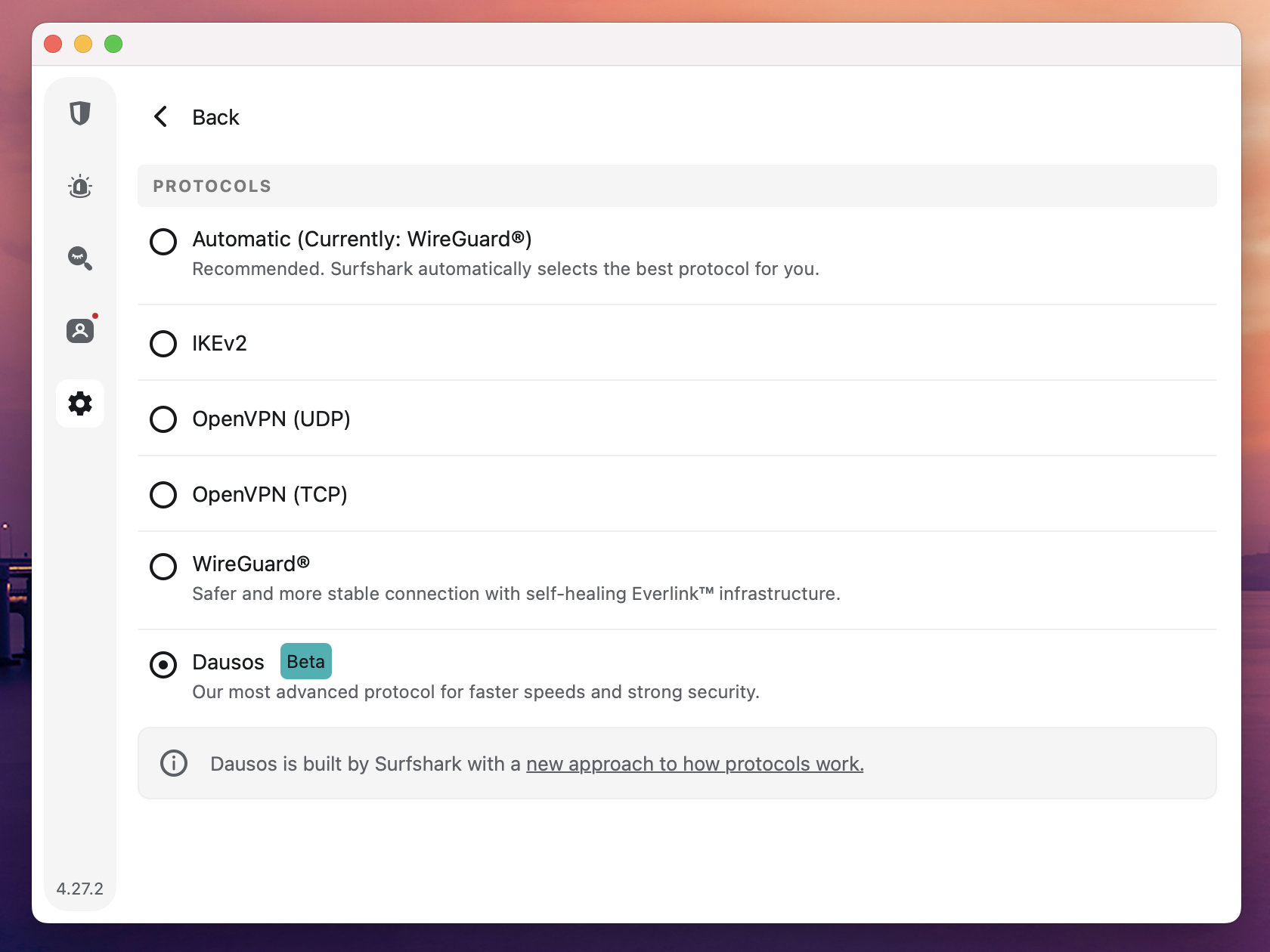
| Protocols 🌐 | WireGuard, OpenVPN, IKEv2, Dausos (macOS) | WireGuard, OpenVPN, IKEv2, AmneziaWG, Stealth, WStunnel |
| Post-Quantum Encryption 🧬 | Yes, via Dausos | Yes |
| Servers 🏠 | 4,500+ in 100 countries | 500+ in 69 countries, all physical |
| Specialty Servers ✅ | Dedicated IP, Static IP, MultiHop | Static IP, datacenter or residential |
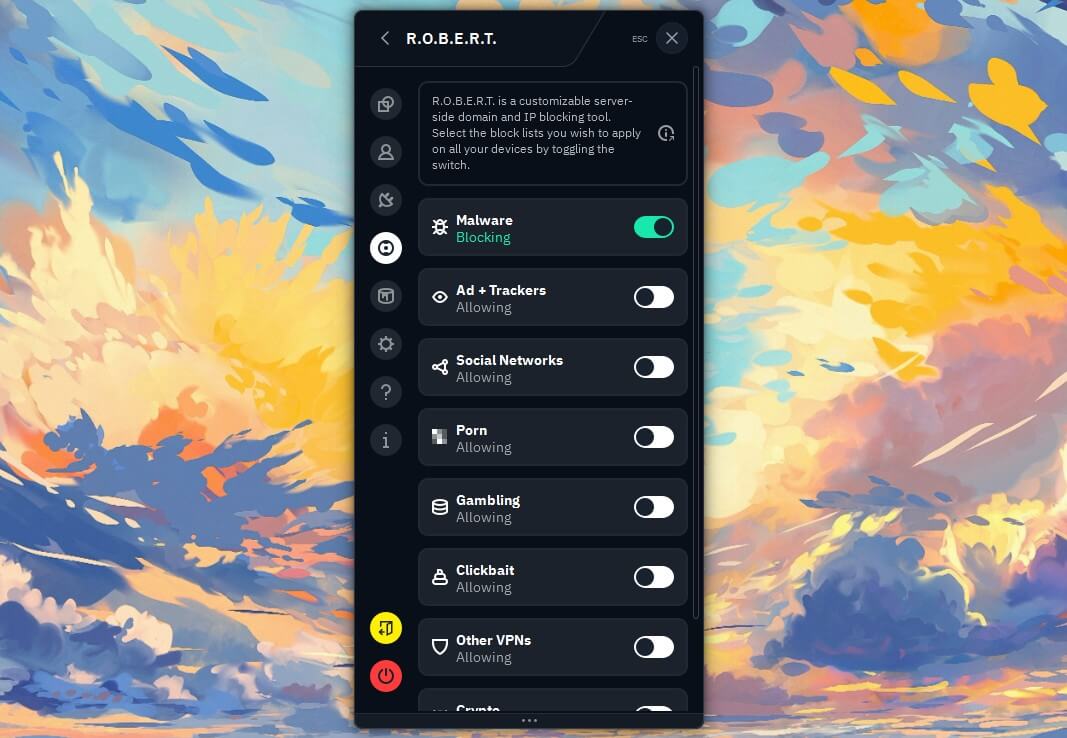
| Ad Blocking ⛔ | Yes, CleanWeb plus Web Content Blocker | Yes, R.O.B.E.R.T. with custom rules |
| RAM-Only Servers 🛡️ | Yes | Yes |
| Working With Netflix 📺 | Yes, most major libraries | Yes, the major libraries |
| P2P Allowance ↔️ | Yes | Yes, with port forwarding |
| Concurrent Connections 📟 | Unlimited | Unlimited |
Compatibility and Apps
Surfshark’s client is the more finished piece of software. The desktop app is large, clearly laid out, and the mobile version mirrors it closely; there’s no second learning curve. Connection times occasionally stretch longer than we’d like, and the settings menu takes a few sessions to learn, but nothing here gets in your way.
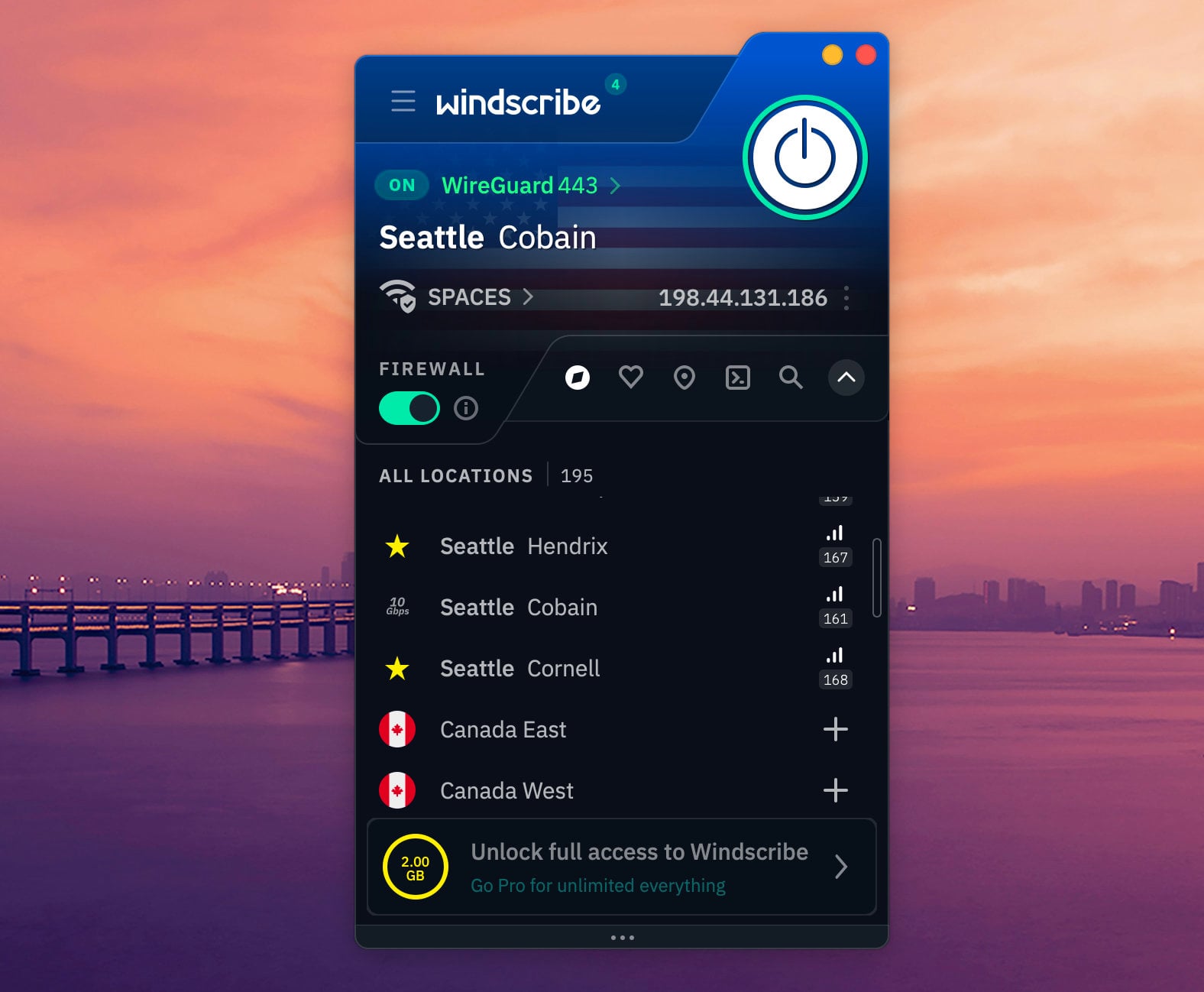
Windscribe’s window looks good and behaves less well. Opening the server list unfolds the app downward, an odd choice on a desktop, and the settings menu packs a lot into a small space. The complaint that stuck with us: you can’t resize the window on either the Windows client or the Mac app. On a 4K panel, that’s annoying. Windscribe’s mobile apps are better than its desktop ones.
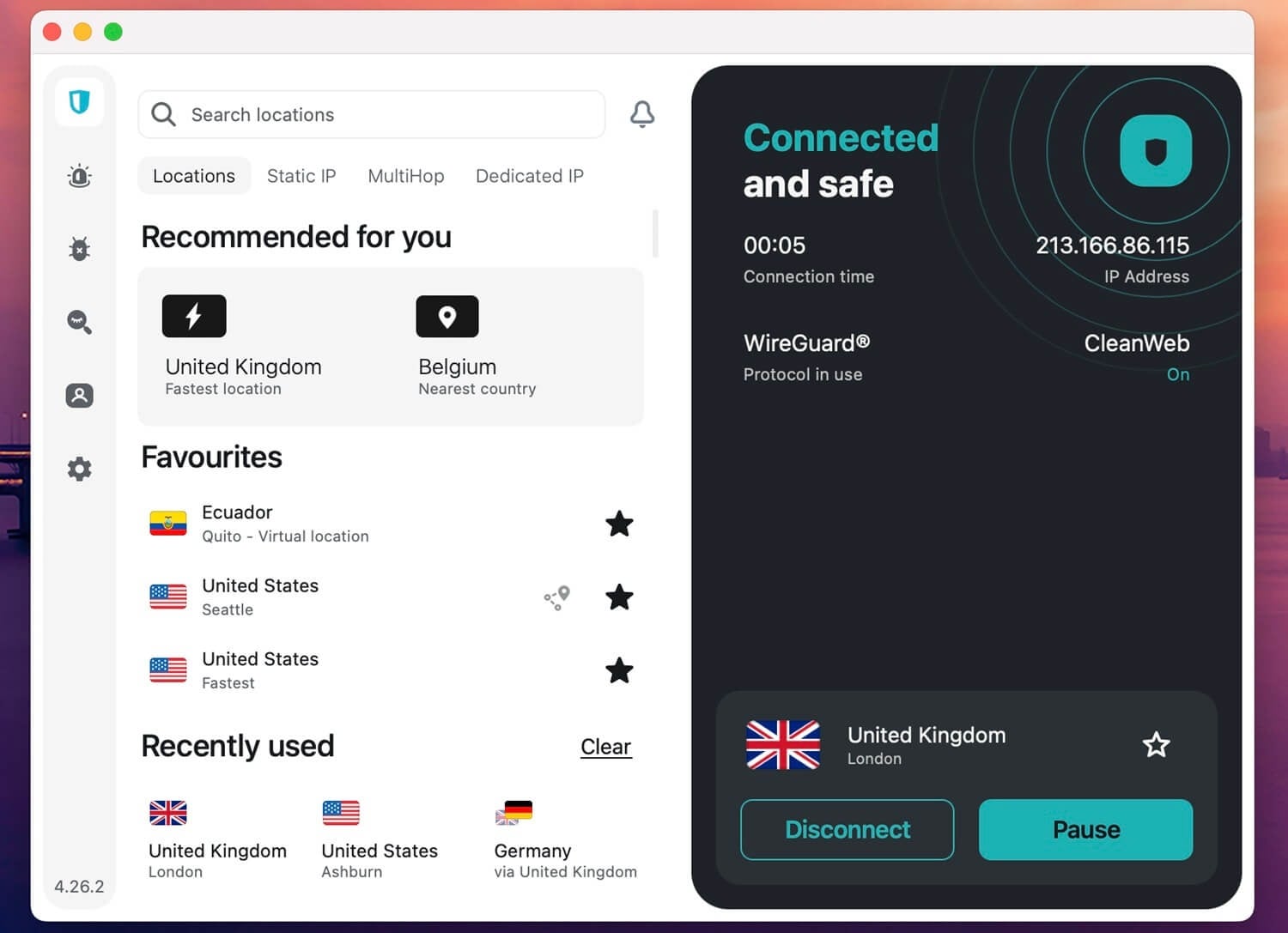
Device support is a draw. Both offer unlimited simultaneous connections and cover desktop, mobile, routers, Smart TVs, and consoles. Neither offers Smart DNS, so a WebOS set needs the VPN configured at the router level, which is how both work on an LG TV or even on a Samsung TV.
Winner: Surfshark ✅
Closer than it looks, and Windscribe’s mobile apps are fine. The fixed desktop window and a cluttered interface are the deciding factors.
Surfshark is Cheaper Than Windscribe: Cost Compared
Surfshark splits its pricing three ways across 27 months. Starter costs $2.49/mo, billed $67.23. One, which we used for this test, is $2.79/mo, billed $75.33, and adds antivirus, breach alerts, and a private search engine. One+ at $4.49/mo adds Incogni data removal and identity theft cover. Every tier opens with a 7-day free trial at $0.00, then a 30-day money-back guarantee once you’re paying.
| 2-Year Price | 1-Year Price | Monthly Price | Renewal Price | |
| Surfshark | $67.23 (first 27 months) | $50.85 | $16.45 | $79/year |
| Windscribe | N/A | $69 | $9 | $69 |
There’s no free plan. More on the trial terms in our Surfshark free trial guide. Windscribe offers two plans. The yearly one costs $5.75/mo, or $69 up front, and here’s what’s worth knowing: the renewal price is identical. No introductory rate, no jump in year two. It doesn’t close the difference. Surfshark One over 27 months totals $75.33. Windscribe over the same window costs $155.
As our Windscribe review put it, the value proposition is thin next to what else is available at that price. Windscribe’s counter is its free plan, which is among the better ones and part of why it turns up in guides to the best free VPNs for Mac. The refund terms are the weak spot. Seven days, and only if you’ve used under 10 GB. That’s a narrow window to evaluate a VPN service properly.
Winner: Surfshark ✅
Less than half the price over any term that matters, with a real trial and a full month to change your mind. Windscribe’s flat renewal is the honest way to price a VPN, and it starts too high to matter.
Both VPNs Are Safe: Surfshark Takes a Small Lead
The overlap in their features is substantial:
- 256-bit AES encryption
- WireGuard and OpenVPN protocols
- Split tunneling
- Automatic kill switches
- Ad and tracker blocking
- Obfuscation technology
- MultiHop, called Double Hop by Windscribe
- Post-quantum protection
Several of those work differently enough to matter.
Ad-Blocking and Tracker Protection
Surfshark splits the job in two. CleanWeb handles ads, trackers, and malicious domains with no configuration needed, and Web Content Blocker adds category filtering, so adult or porn content, gambling, or social media can be switched off across the whole connection. R.O.B.E.R.T. does the same job with finer control.
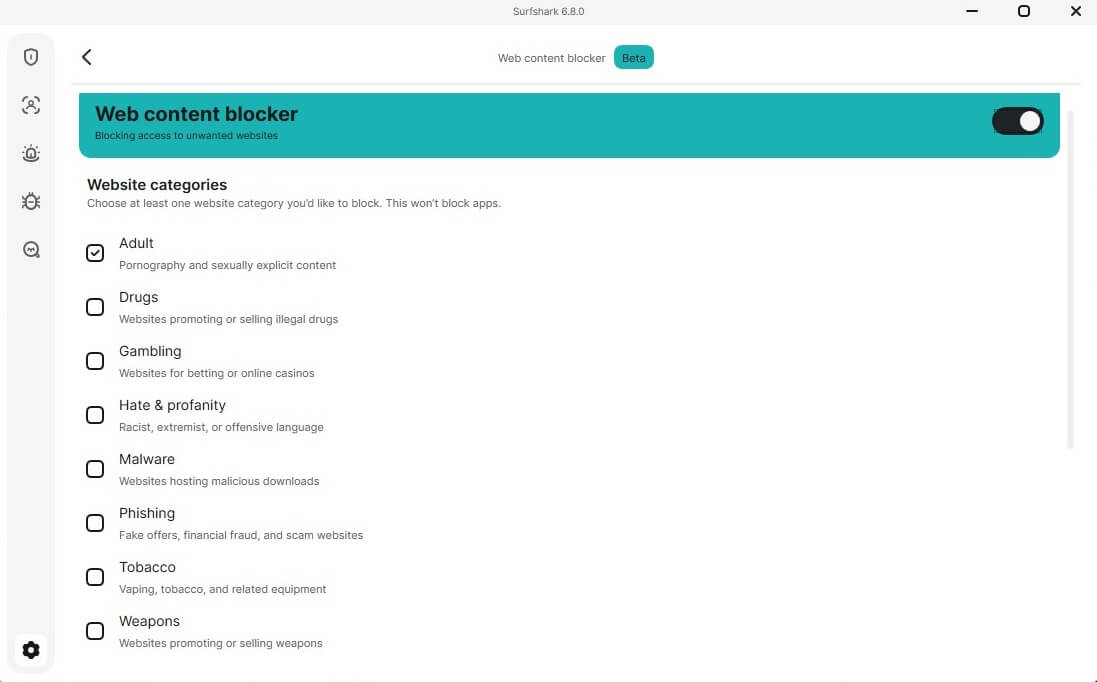
Windscribe’s DNS-level blocker takes rules at both levels, categories and individual domains, so we could block adult content while leaving gambling sites reachable. Malware domains get filtered too. Surfshark covers the categories most people want; Windscribe lets you write the exceptions.
MultiHop Connections
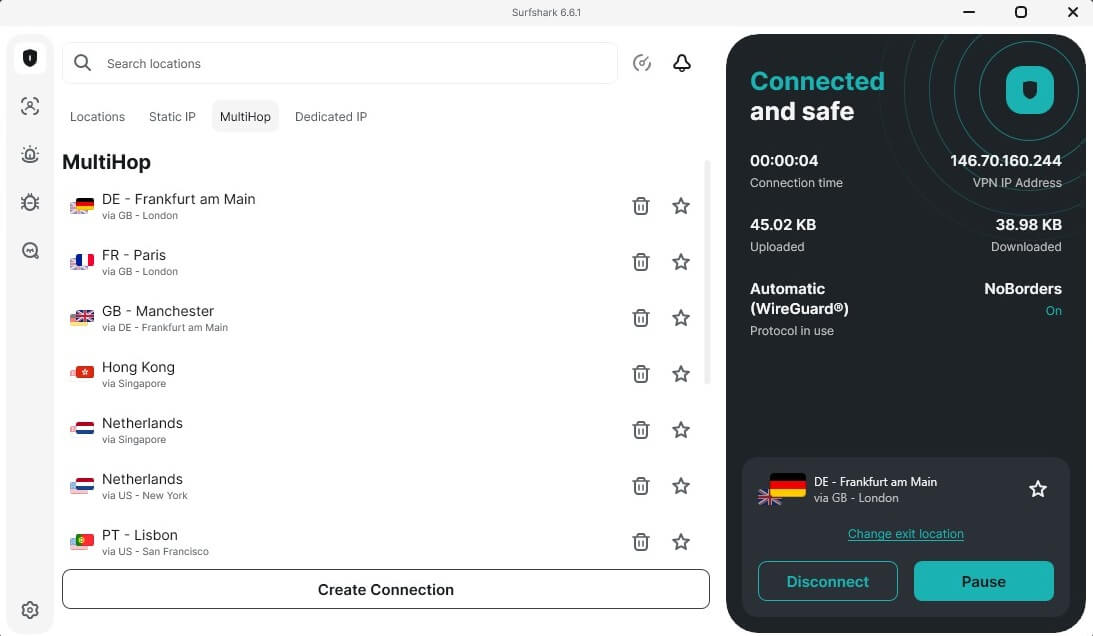
Both route traffic through two servers so neither one holds both ends. The implementations aren’t comparable. Surfshark’s MultiHop is a menu inside the app on desktop and mobile, and you pick both ends yourself.
Windscribe’s Double Hop needs the desktop app and a browser extension together: connect in one, then again in the other. It also can’t work on iPhone, since mobile browsers don’t support VPN extensions.
Protocols and Advanced Protection
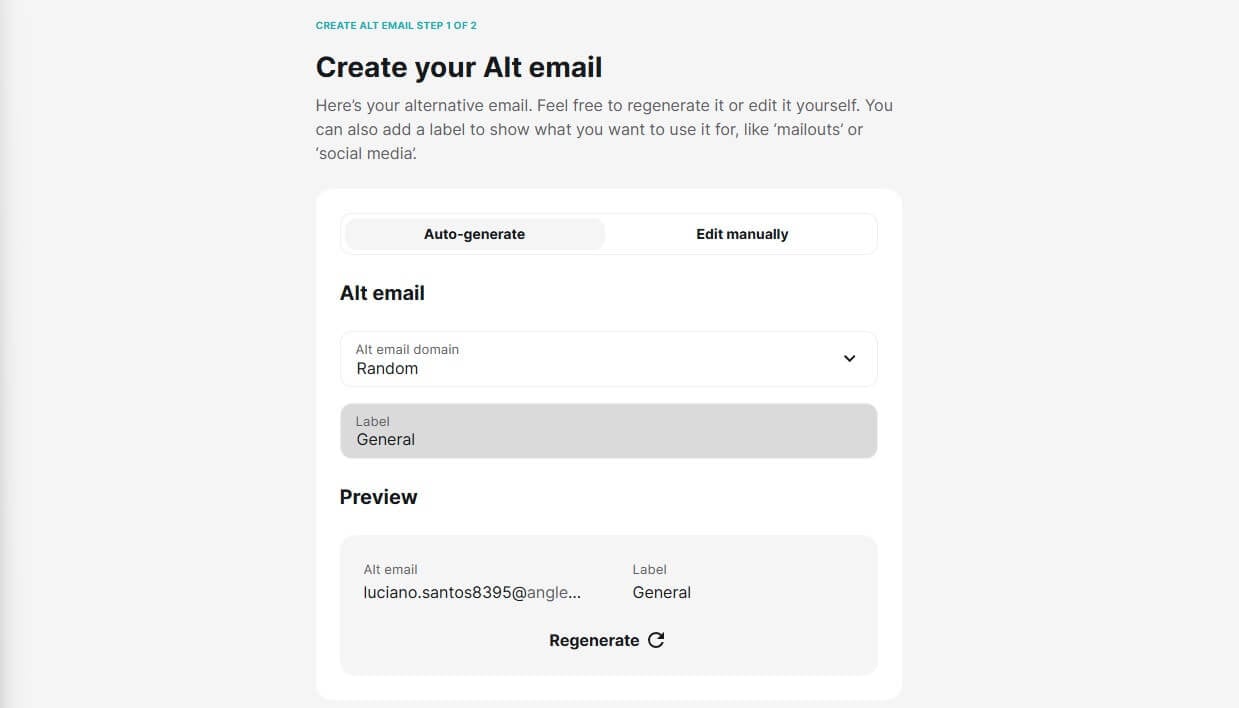
Dausos is Surfshark’s own protocol, currently macOS only. Every user gets a separate tunnel instead of a shared one; encryption is AEGIS-256X2, and it’s post-quantum resilient. Cure53 audited it independently. The One plan adds an antivirus covering every device, plus Alert for breach notifications and Search for tracking-free queries. Alternative ID generates a substitute name and email.
The IP Rotator cycles your address on a timer without dropping the tunnel. A newer addition, scam text protection, flags or quarantines smishing attempts on iOS and Android. Our full Surfshark review covers the rest of the toolkit. Windscribe answers with depth in one area instead of breadth across several.
AmneziaWG with QUIC obfuscation, Stealth, and WStunnel give it three separate ways to disguise VPN traffic; Secure Hotspot turns a laptop into a protected access point. Post-quantum protection is available on both providers.
Winner: Surfshark ✅
Content blocking finishes even now that Web Content Blocker covers categories. Surfshark takes the round on everything around it: antivirus, Alternative ID, IP Rotator, a MultiHop that works on any device, and a protocol nobody else offers.
Surfshark and Windscribe Don’t Keep Logs
Neither keeps a record of what you do online. Both spell out what they hold instead of hiding behind a slogan, which makes this round easy to assess. Surfshark’s servers temporarily hold your user ID, your IP address, and a connection timestamp, and delete all of it within 15 minutes of the session closing. Nothing about visited sites, browsing history, bandwidth, or network traffic gets stored at any point.
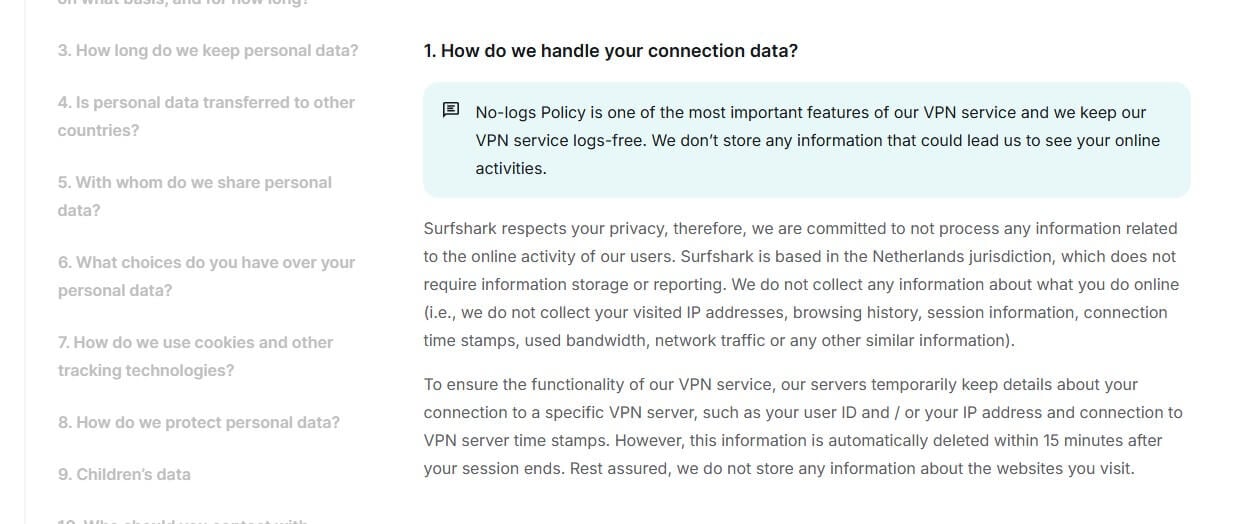
Dutch law imposes no retention duty. Windscribe keeps two things against your account: total bytes transferred in 30 days, and the date of your last activity on the network. Both exist to enforce free-tier limits and clear out dead accounts. It explicitly doesn’t store session history, source IP addresses, or sites visited.
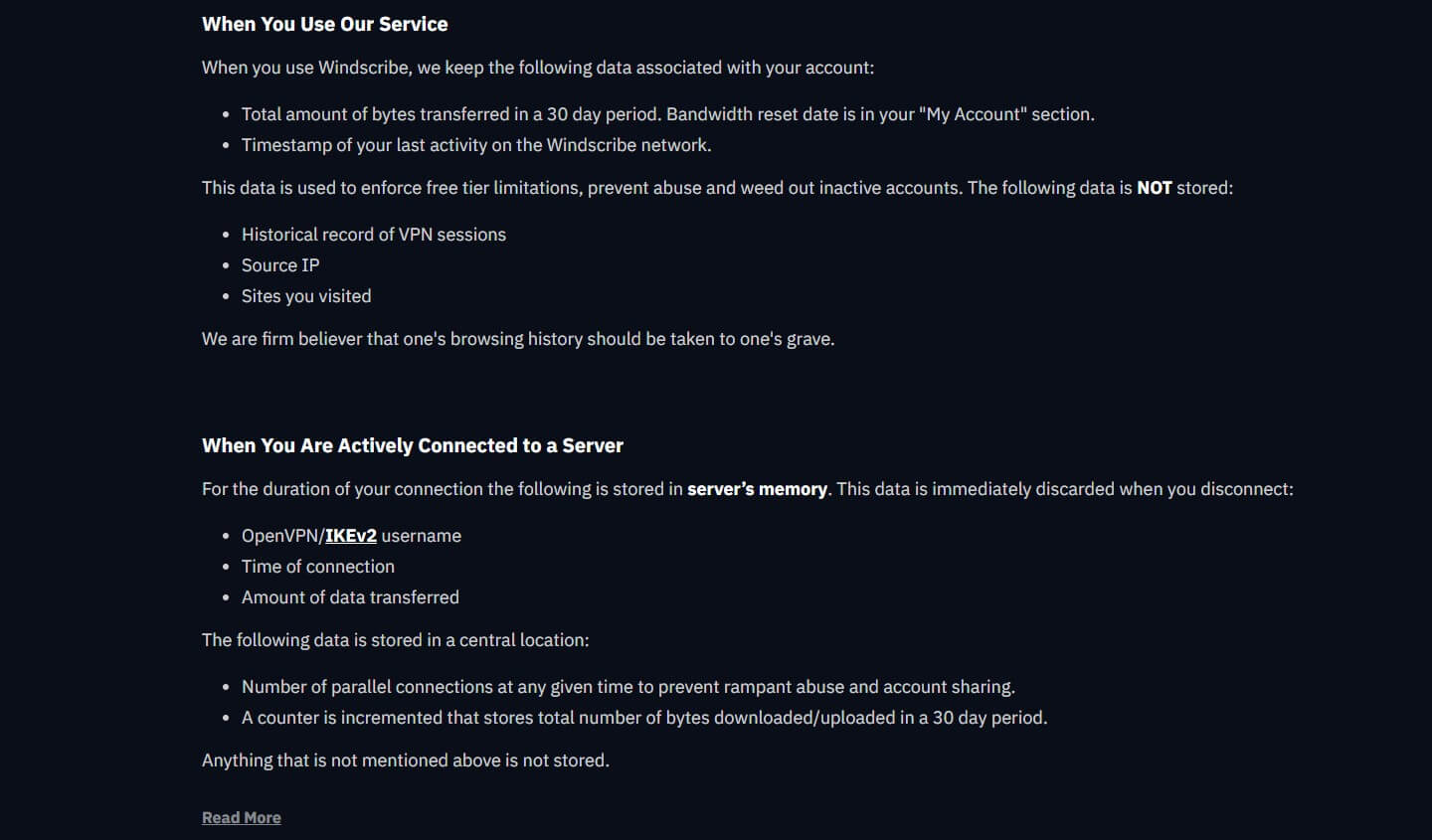
While you’re connected, Windscribe holds your username, connection time, and data transferred in server memory only, discarded the moment you disconnect. Both providers use RAM-only servers. Jurisdiction favors neither. The Netherlands is a 9 Eyes member, and Canada is in 5 Eyes. Verification is where they take different routes. Surfshark has been audited by Cure53 and Deloitte.
Windscribe’s audits cover its apps and infrastructure, and it counters with something no audit provides: its client code is open source on GitHub, and it publishes ongoing transparency reports, as CyberGhost also does.
Winner: Draw 🤝
Surfshark deletes faster and has the stronger audit history. Windscribe holds less against your identity and lets anyone read its code.
Surfshark is Faster Than Windscribe
Neither provider is at the front of the field. Both were usable throughout, with Surfshark ahead on every measurement. We tested from Serbia across 3 consecutive days, 3 times a day, on UK, US, and Japanese servers. Both were set to WireGuard.
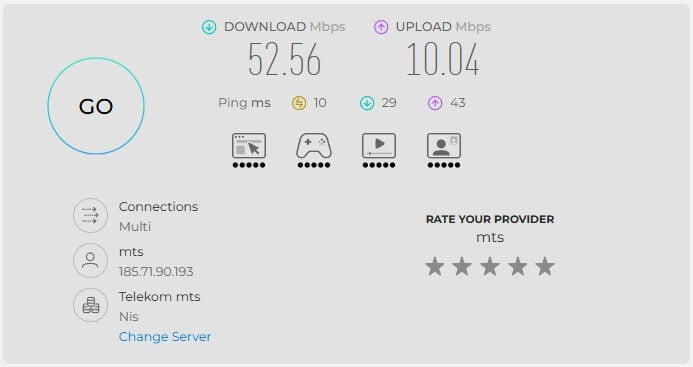
Here are the results:
| Download Speed Loss | Upload Speed Loss | |
| Windscribe | 45% | 61% |
| Surfshark | 33% | 24% |
Here are the figures those percentages come from.
| Windscribe | Surfshark | |
| UK (Download/Upload) | 35.74/5.82 Mbps | 40.99/8.33 Mbps |
| US (Download/Upload) | 27.85/3.91 Mbps | 35.74/9.53 Mbps |
| Japan (Download/Upload) | 22.60/2.08 Mbps | 27.85/4.82 Mbps |
Download was 15% to 28% better on Surfshark depending on the location. Upload is the wider difference: Windscribe managed 2.08 Mbps to Japan against Surfshark’s 4.82, less than half, which affects video calls and seeding more than browsing. Windscribe posted slightly lower latency, the one thing it takes here.
Winner: Surfshark ✅
Faster on all six measurements, with the upload figures doing most of the damage.
Streaming and Torrenting Comparison
Both opened Netflix, and both handled Hulu from abroad, BBC iPlayer, ABC, and Pluto TV without any issue. 4K playback held up on either.
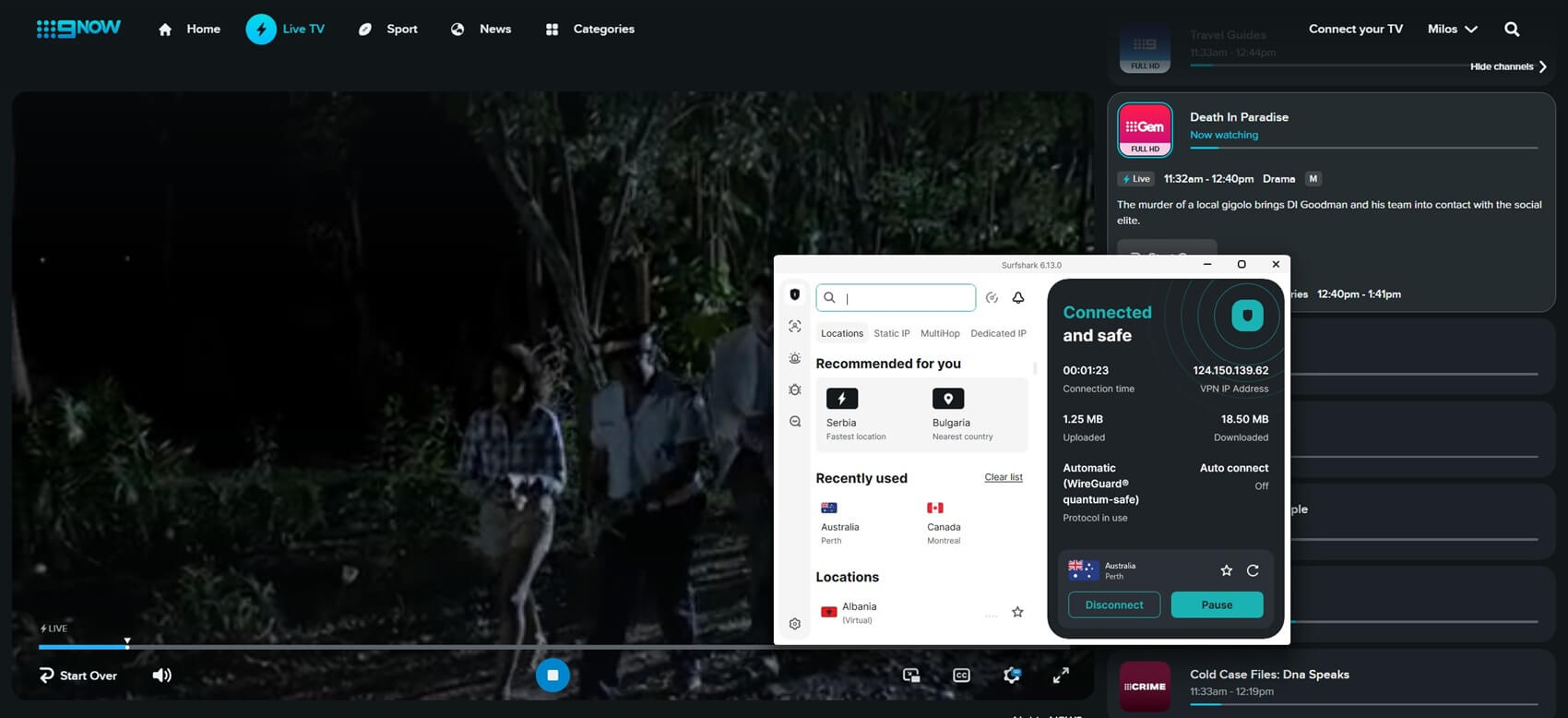
Surfshark reached more Netflix regions, and its browser extension spoofs location independently of the tunnel, which is what got us into ESPN Select outside the US. Windscribe couldn’t manage that one.
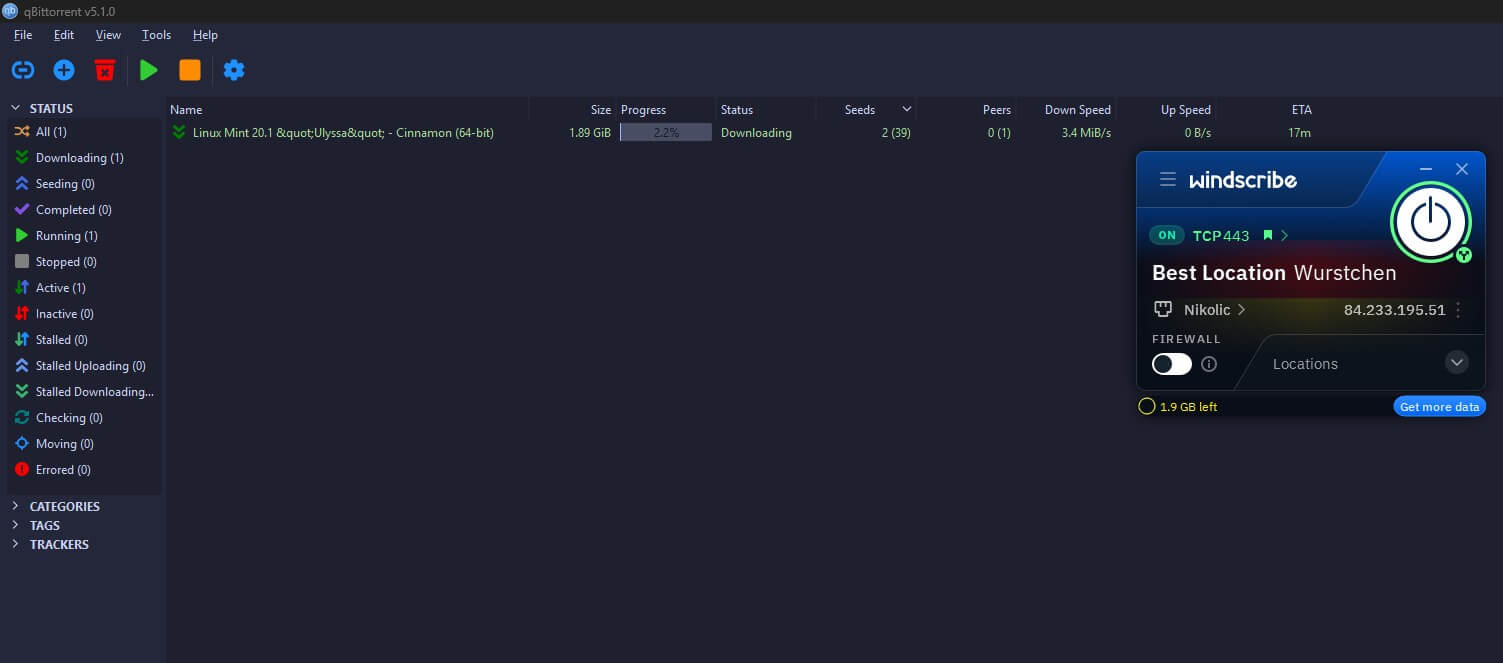
Torrenting goes the other way. P2P works on both networks with no bandwidth caps, and nearby servers gave us plenty of speed. Windscribe offers port forwarding, and Surfshark doesn’t, which lets peers connect back to you and lifts seeding ratios. Anyone who cares about ratio on a private tracker will feel that difference. Both are safe options for downloading torrents privately.
Winner: Surfshark ✅
More streaming regions and a browser extension that opens what the tunnel can’t. Windscribe takes P2P on port forwarding, which isn’t enough to decide the round.
Server Locations
| Surfshark | Windscribe | |
| Countries | 100 | 69 |
| Servers | 4,500+ | 500+ |
| Servers Based on RAM | Yes | Yes |
| Bandwidth | 10 Gbps | 10 Gbps on selected servers |
| Physical or Virtual | Mix of both | All physical |
Nine times the servers and 31 more countries. Windscribe’s answer is that every one of its servers is physically where the app says it is. No virtual locations, so a Japanese address means hardware in Japan. Surfshark’s 100-country reach includes virtual locations, which is how any provider gets into places where hosting a machine isn’t practical. Both approaches are legitimate.
Bandwidth differs in how it’s distributed. Surfshark advertises 10 Gbps across its network, while Windscribe badges the specific servers that offer it, so you have to look for them. Surfshark offers dedicated IPs, static IPs, and MultiHop. Windscribe skips dedicated IPs and offers static IPs in more countries, in datacenter form at $2/mo or residential at $8/mo (checked in October).
Winner: Surfshark ✅
Scale decides it. Windscribe’s all-physical network is the better guarantee if you need an address that genuinely originates where it claims.
Windscribe Beats Surfshark in China
This is Windscribe’s round. It now offers three separate obfuscation methods. Stealth wraps OpenVPN in a TLS tunnel through Stunnel. WStunnel encapsulates it in a WebSocket. AmneziaWG with QUIC obfuscation is the newest, disguising WireGuard traffic as ordinary QUIC, which a large share of the modern web already looks like.
Stealth was the most dependable of the three in our testing and connected us from mainland China more often than not. Speed and stability wobbled, which is normal there. Surfshark’s Camouflage Node is a single approach, and it’s less consistent. It got through some of the time and failed to connect at others.
We had no alternative to fall back on when it stalled. Outside China, the two are even. Both work in Qatar, Saudi Arabia, the UAE, Russia, and other filtered regions, and Windscribe is a common pick as a VPN for school networks.
Winner: Windscribe ✅
Three obfuscation methods against one, including a QUIC-based option nobody else offers at this price. If a national firewall is your problem, take Windscribe.
Summary: Surfshark Beats Windscribe in 2026
6 rounds to 1, with 1 draw. Surfshark is cheaper, quicker, easier to use, broader in coverage, and includes more tools for the money. Windscribe isn’t beaten badly. Its network is entirely physical, its code is public, R.O.B.E.R.T. allows finer blocking rules, and its obfuscation stack is deeper than anything Surfshark has.
Unlimited connections make it a fair pick for a house full of devices, and the flat renewal price deserves credit. What decides it is value. $75.33 buys 27 months of Surfshark One with an antivirus. $69 buys 12 months of Windscribe.
Frequently Asked Questions
🆚 Is Surfshark better than Windscribe?
Yes, for most people. Surfshark takes 6 of the 8 rounds here, and the deciding factors are cost, measured speed, and the size of the network. Windscribe remains the better choice for two specific needs: getting online behind a national firewall, and filtering web content with granular rules.
🎯 Does Windscribe keep logs?
No browsing logs. Two items are stored: total bytes transferred over a rolling 30-day period, and the date of last activity. Both serve free-tier enforcement and account cleanup. Session history, source IP, and visited sites are never recorded, and connection details held during a session exist in server memory only.
🧲 Which VPN is better for torrenting?
Windscribe, with port forwarding. It allows incoming peer connections, which raises seeding ratios and speeds up swarms that Surfshark users have to wait out. Surfshark permits P2P across its network and offers faster raw transfer rates, so casual downloading works well on either.
🆓 Is Windscribe's free plan worth using?
For light use, yes. It's among the strongest free tiers available and covers occasional protection on public networks. The paid plan is a separate question, since $69 a year buys less than half of what competitors offer at that price.
🛡️ Can Surfshark and Windscribe be used in China?
Yes, but Windscribe is more reliable. Its Stealth, WStunnel, and AmneziaWG protocols provide different ways to disguise VPN traffic, so a blocked method has several alternatives. Surfshark's Camouflage mode works intermittently and offers no fallback.