
This NordVPN vs AirVPN comparison started closer than the final score suggests. On paper, the two have plenty in common: both are security-first providers with audited credentials and loyal followings, and AirVPN’s transparency-obsessed, tinkerer-friendly approach has real appeal if you know your way around OpenVPN configs. Put them through actual testing, though, and the gap opens fast.
We ran both through eight rounds covering speed, streaming, security, apps, pricing, and more, declaring a winner after each. NordVPN took the majority, and by the end, the overall result wasn’t in doubt. Below, we’ll break down every round and show where AirVPN still puts up a real fight.
AirVPN vs NordVPN: Quick Comparison
| AirVPN | NordVPN | |
| Our Current Ranking 📋 | TBD | #1 |
| Start Prices 🤑 | ~$2.2 for three days | $3.49/mo for 2 years |
| Money-Back Guarantee 🪙 | 30 Days | 30 Days |
| Free Version/Free Trial 🆓 | No | No/3 Days via Android |
| Logging/Jurisdiction 🕵️ | No/Italy | No/Panama |
| Protocols 🌐 | OpenVPN, WireGuard | OpenVPN, NordLynx, IKEv2 |
| Servers 🏠 | 250+ in 20+ countries | 9,500+ in 137 countries |
| Specialty Servers ✅ | No | Dedicated IP, Double VPN, Onion Over VPN, Obfuscated |
| RAM-Only Servers 🛡️ | Yes | Yes |
| Working With Netflix 📺 | No | Yes (~20 catalogs) |
| P2P Allowance ↔️ | Yes | Yes |
| Concurrent Connections 📟 | 5 | 10 |
Applications, Compatibility, and Ease of Use
AirVPN and NordVPN are vastly different from the get-go. One offers sleek, functional, and beginner-friendly apps, and the other one is AirVPN. Its client, Eddie, looks and feels like an engineering tool from 2012: menus full of raw OpenVPN directives, logs front and center, and not a single concession to newcomers. Power users may even like that. Everyone else will be reaching for NordVPN’s one-click UI.
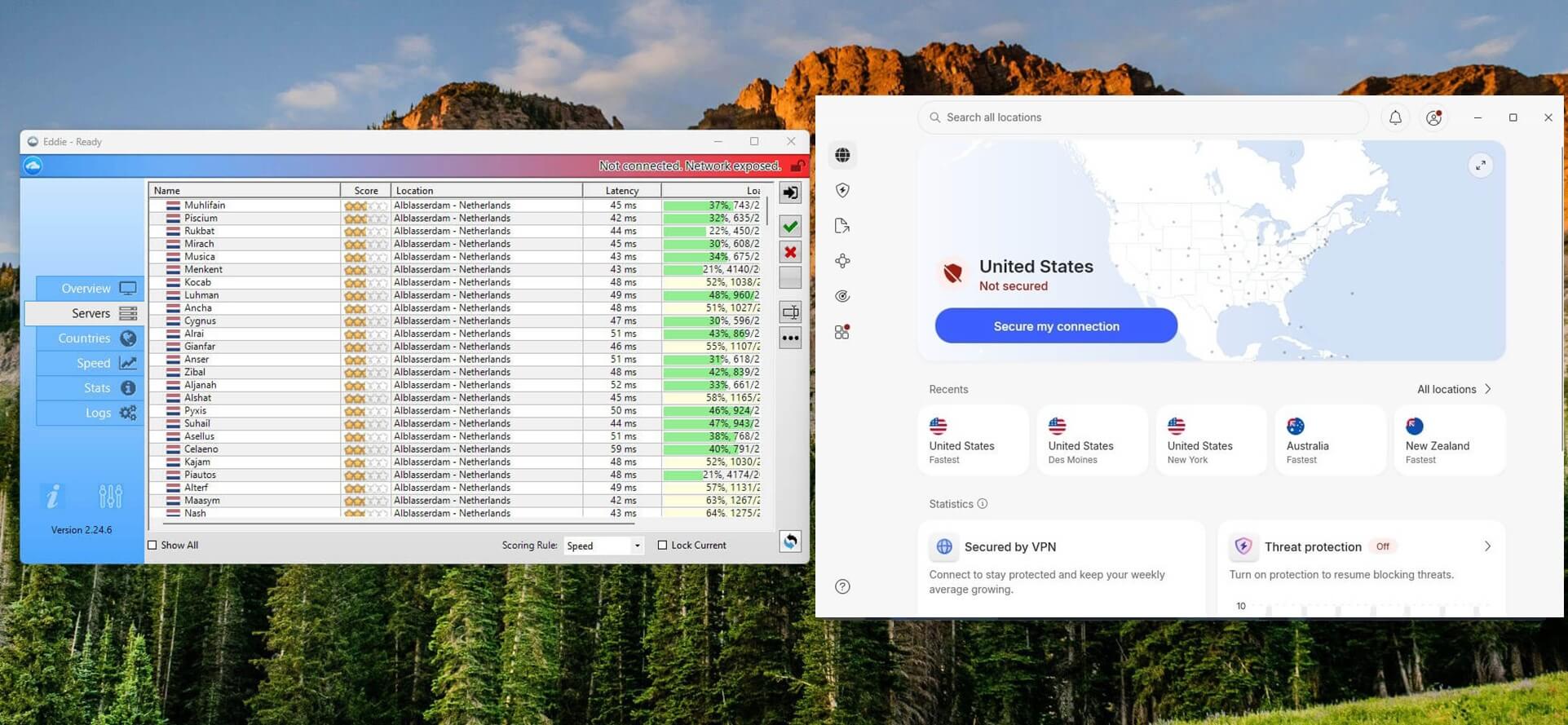
We also tested AirVPN on our Android phone, only to find out it’s outdated and rather ugly. Compatibility is on NordVPN’s side as well, and it’s also a more reliable VPN for Android. Apart from Android, both VPNs work on Windows, iOS, Linux, and macOS. You’ll also get full router support on both sides, but AirVPN lacks a few more apps. NordVPN works on an Android Smart TV; plus, you can use it on your Firestick
It’s also great for streaming on non-compatible devices thanks to Smart DNS. Lastly, NordVPN also has browser extensions for Chrome, Edge, Brave, and Firefox. They function like separate, in-browser VPNs, which also encrypt your traffic, spoof your location, and allow you to access restricted sites. Either way, NordVPN offers 10 simultaneous connections, while AirVPN limits you to 5, very low in 2026.
🏆 Winner: NordVPN
AirVPN is More Affordable Than NordVPN: Here’s Why
Refer to this article for more info on VPN pricing, but generally, VPNs cost very little, and here’s what to expect from both of them. We tested NordVPN and AirVPN in October 2026, and these prices match the current deals:
| Cheapest 1-Month Plan | Cheapest 1-Year Plan | Cheapest 2-Year Plan | Cheapest 3-Year Plan | |
| AirVPN | $8 | $56 annually | $90 biennially | $113 triennially |
| NordVPN | $14.99 | $66 annually | $95 biennially | / |
AirVPN is more flexible and offers three-day, six-month, and three-month plans, so you can pay only for the period you need the VPN. NordVPN offers traditional pricing, and its introductory, as well as renewal prices, are considerably higher. Both VPNs actually offer a 30-day money-back guarantee, so you can always quit if you don’t like them. While NordVPN has a 3-day trial on Android, AirVPN excludes this option.
But the good alternative, in my book, is the three-day plan at over $2, which isn’t too expensive, but still offers ample time to test it. All in all, AirVPN is a cheaper VPN, though not necessarily a better value for money, as you’ll learn.
🏆 Winner: AirVPN
NordVPN is More Secure Than AirVPN
Considering AirVPN’s scientific look, you’d expect tons of security features. During our NordVPN vs AirVPN duel, we were surprised just how superior NordVPN is. AirVPN is about customization rather than feature count. Let us explain.
Similarities: Actually, Only a Few
These VPNs share a few features, like most other VPNs we tested:
- 256-bit AES encryption
- Kill switch (app-level in NordVPN)
- Split tunneling
- OpenVPN and WireGuard protocols
- In-house DNS server
- Forward Secrecy
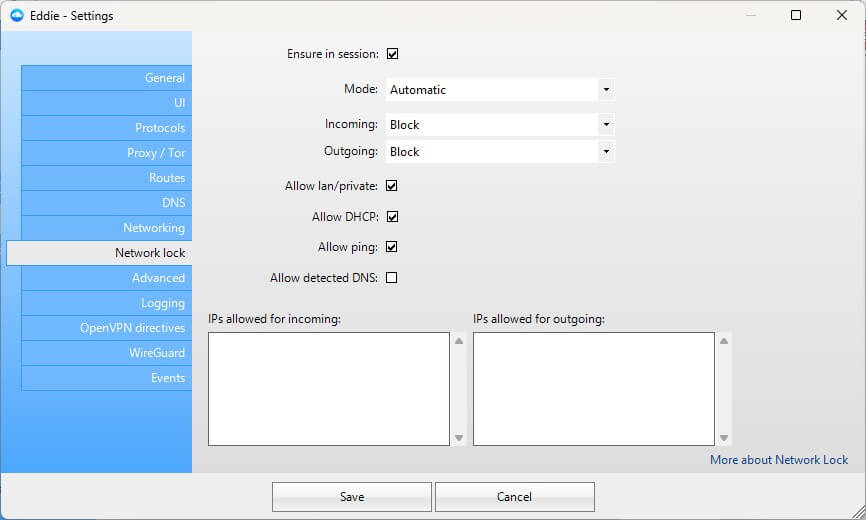
Basic stuff, but executed differently. NordVPN’s advanced kill switch can block traffic if the VPN malfunctions OR whenever you’re not connected, meaning you must use a VPN to go online at all. It can also be applied to specific apps only. AirVPN calls its kill switch Network Lock. If that sounds familiar, ExpressVPN uses the same name, but AirVPN’s version goes further: you can individually block or allow incoming and outgoing traffic, and even specify which IPs each direction accepts.
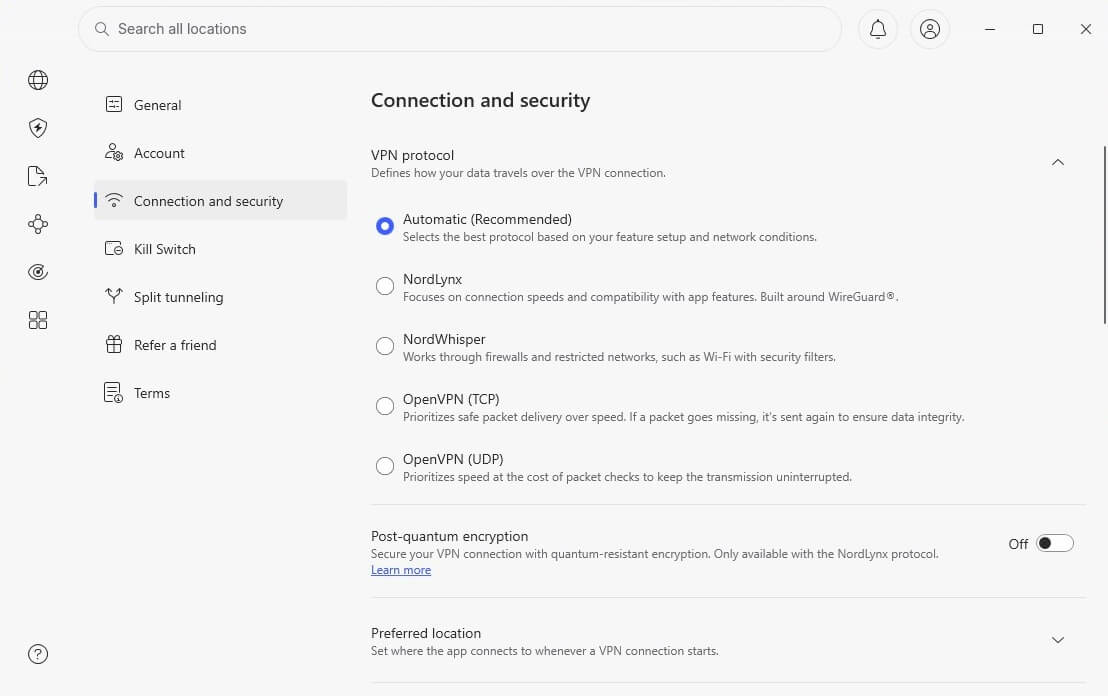
Protocols follow the same pattern. NordVPN offers OpenVPN, NordLynx (WireGuard), and NordWhisper for bypassing network filtering.
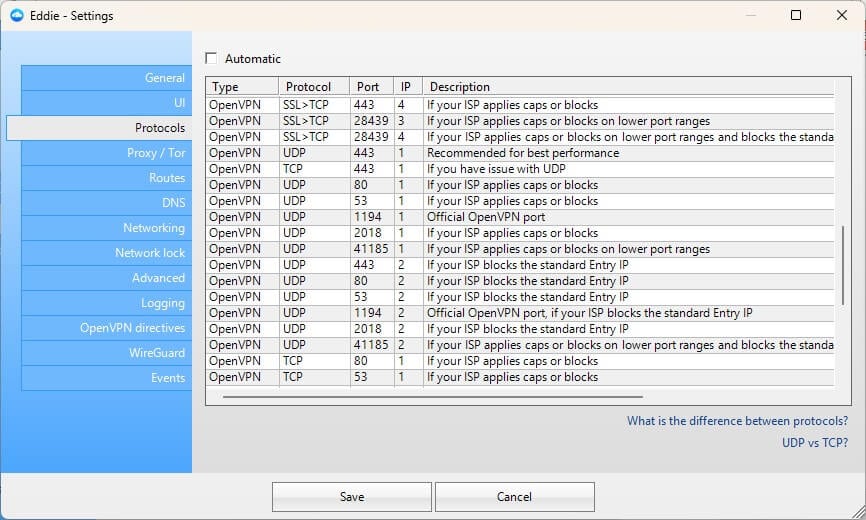
AirVPN sticks to OpenVPN and WireGuard but lets you pick individual ports (53, 80, 1194, 2018), each described in the app: some overcome ISP blocks, others favor performance.
Unique Features: NordVPN is a Showstopper
This is where the contest ends. AirVPN has no extras: no MultiHop, no ad-blocking, nothing beyond menus for tuning your UI, networking, DNS, and router connections. Seasoned tinkerers will enjoy that. Beginners won’t. NordVPN’s advantage isn’t just that the features exist. It’s that every one of them is a single click away. Want two layers of encryption? Open the server list, pick a Double VPN server, done: your traffic now passes through two servers with two rounds of encryption.
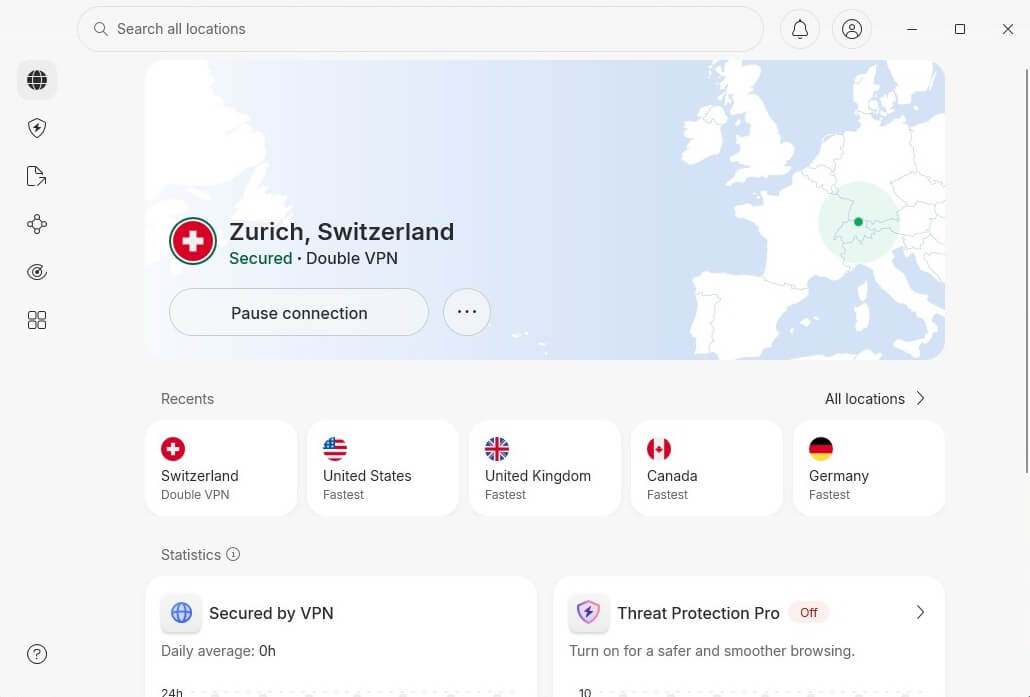
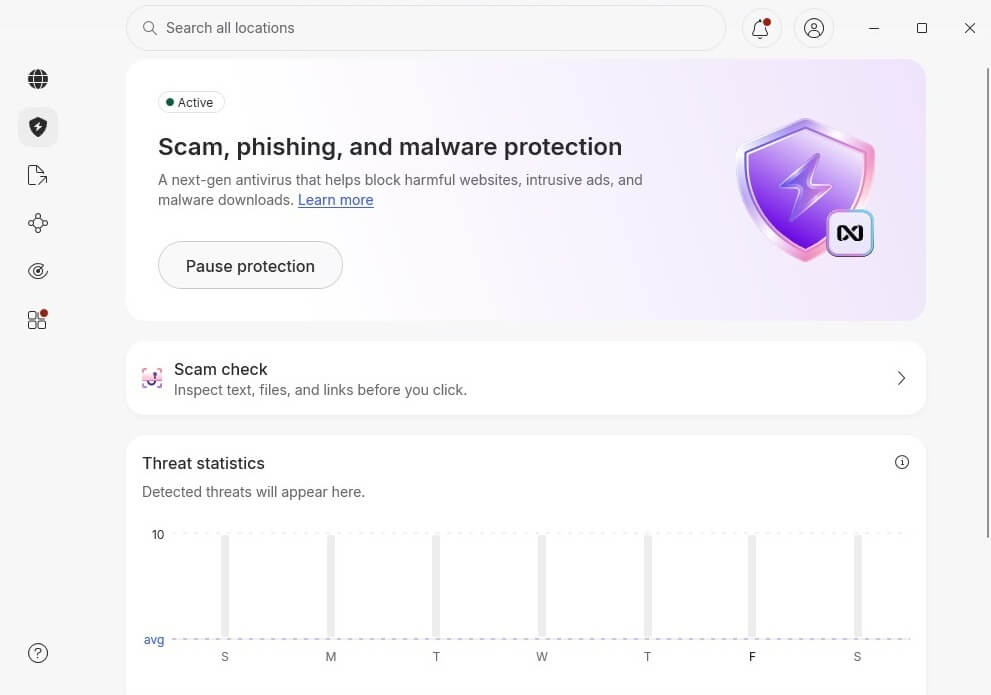
Threat Protection Pro blocks malware, ads, and trackers, and works on all devices; one toggle and it runs in the background. Dark Web Monitor emails you when your credentials leak so you can change them before damage is done. Meshnet adds free file sharing and remote device access.
And if you go for the highest-spec package, NordProtect adds identity theft protection, something AirVPN doesn’t offer in 2026. We tested NordVPN many times and discovered that everything the company advertises is 100% true and working. The same goes for AirVPN; we can’t lie. It’s a shame it lacks so many modern features.
🏆 Winner: NordVPN
NordVPN and AirVPN Store No Logs (With a Caveat)
NordVPN and AirVPN share the mission of keeping their users safe from hackers, snoopers, ISPs, and other surveillance-loving entities. NordVPN is based in Panama, while AirVPN resides in the land of olive oil, pizza, and good wine (Italy). Panama is the friendlier jurisdiction on paper, but as our Private Internet Access review confirmed, location isn’t destiny: PIA keeps no logs despite sitting in the USA.
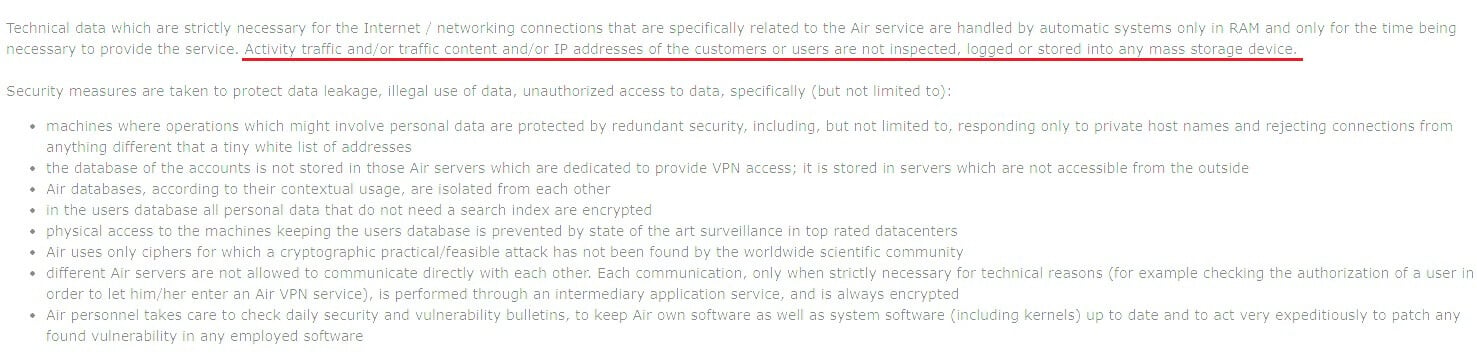
The good news: neither provider stores logs. That means no records of your:
- IP address
- Original location
- DNS requests
- Browsing history or visited websites
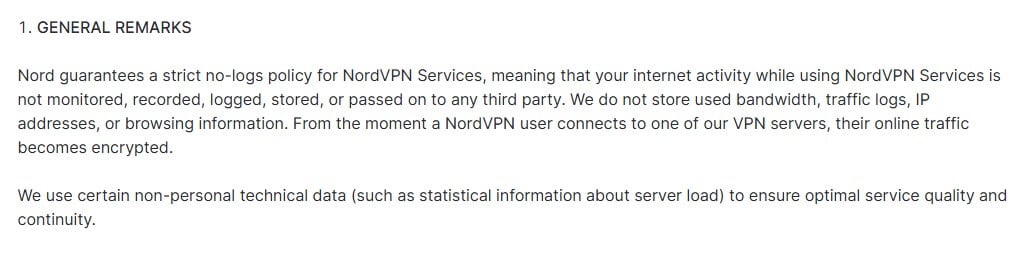
Both keep the bare operational minimum, like your number of active connections, to enforce device limits. Nothing there can identify what you do online.
Where NordVPN Actually Wins: Security Audits
Is AirVPN better than NordVPN here? Not even close, and for once, the reason is sympathetic. AirVPN is a small operation started by a hacktivist group in Italy, owned by Paolo Brini and based in Perugia. Independent audits cost serious money and take months, so it’s easy to see why a company this size hasn’t commissioned one. Its no-logs policy is a promise you take on trust.
NordVPN doesn’t ask for that trust. Deloitte has run SIX independent security audits on its no-log policy, with the last one in February 2026. Each audit unmistakably concluded the VPN works as promised. For a category built on trust, verified beats unverified every time, and it’s why I trust NordVPN more.
🏆 Winner: NordVPN
NordVPN is Faster Than AirVPN: Here’s Proof
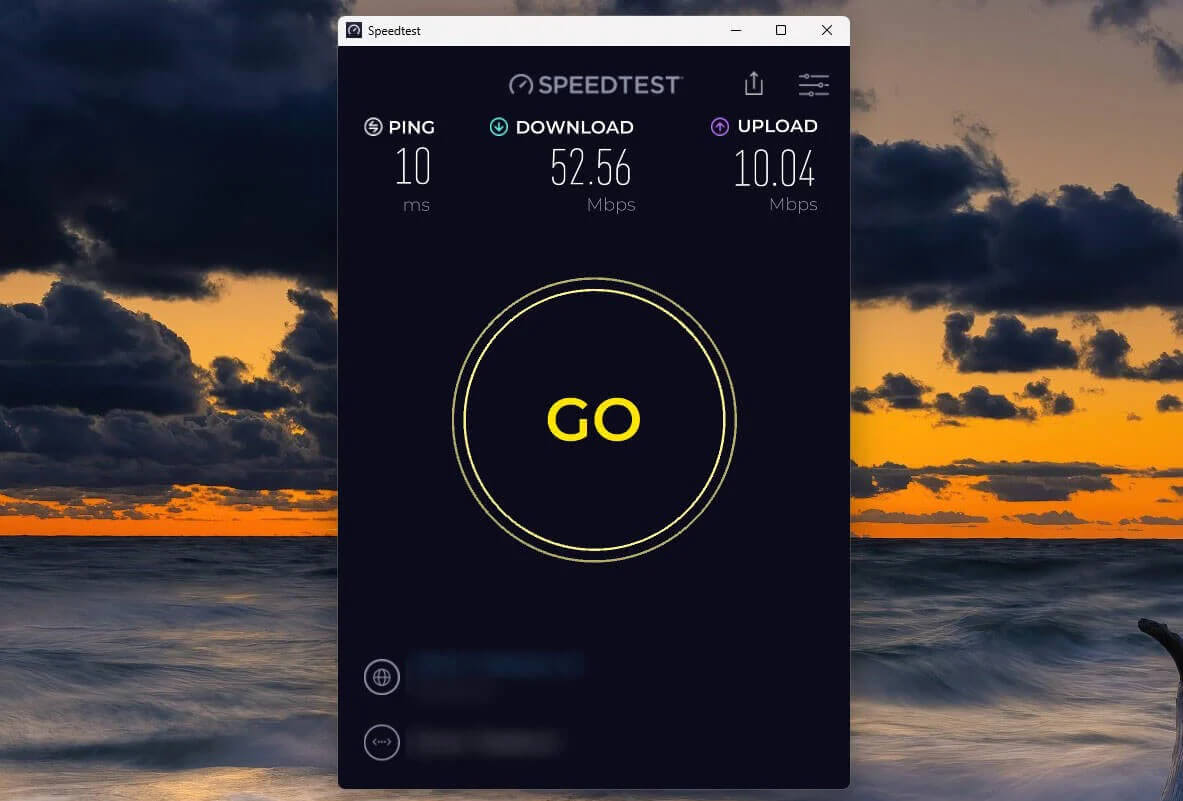
It’s time to see how NordVPN and AirVPN handle actual traffic. First, a reference point. We tested from Europe, where our connection without a VPN measured 50 Mbps down and 10 Mbps up, as shown below.
We then ran each VPN through 3 tests a day, over 3 days, across 3 server locations: the UK, the USA, and Japan. Averaging the speed losses across all servers gives the picture below. AirVPN is respectable, but NordVPN is quicker.
| AirVPN | NordVPN | |
| Download Speed Loss | 32% | 18% |
| Upload Speed Loss | 7% | 7% |
The per-location breakdown shows where that gap comes from:
| AirVPN | NordVPN | |
| UK (Download/Upload) | 28.49/9.41 Mbps | 47.30/9.43 Mbps |
| US (Download/Upload) | 39.91/9.23 Mbps | 42.81/9.24 Mbps |
| Japan (Download/Upload) | 32.15/8.97 Mbps | 32.86/9.03 Mbps |
Oddly, AirVPN’s weakest result came on the UK server, the closest location to us, despite it showing just 13% load at test time. On the distant Japan route, the two were nearly even. NordVPN’s edge, then, comes from consistency: it delivered near-native speeds where AirVPN wobbled.
🏆 Winner: NordVPN
NordVPN Beats AirVPN in Streaming and P2P
You’re here for a hands-on AirVPN vs NordVPN streaming and P2P comparison, so we ran both. The results were discouraging for AirVPN; take a look.
Streaming Results
Let’s be direct: AirVPN is unreliable for streaming. After repeated testing, we were surprised how poorly a premium VPN can perform here. It failed to unblock American Netflix entirely, and the story repeats with BBC iPlayer, Hulu, and beyond (we couldn’t watch any UK TV channels while in the US). With no Smart DNS and no streaming-focused features, this outcome isn’t shocking. AirVPN doesn’t even advertise streaming on its website, and it’s easy to see why.
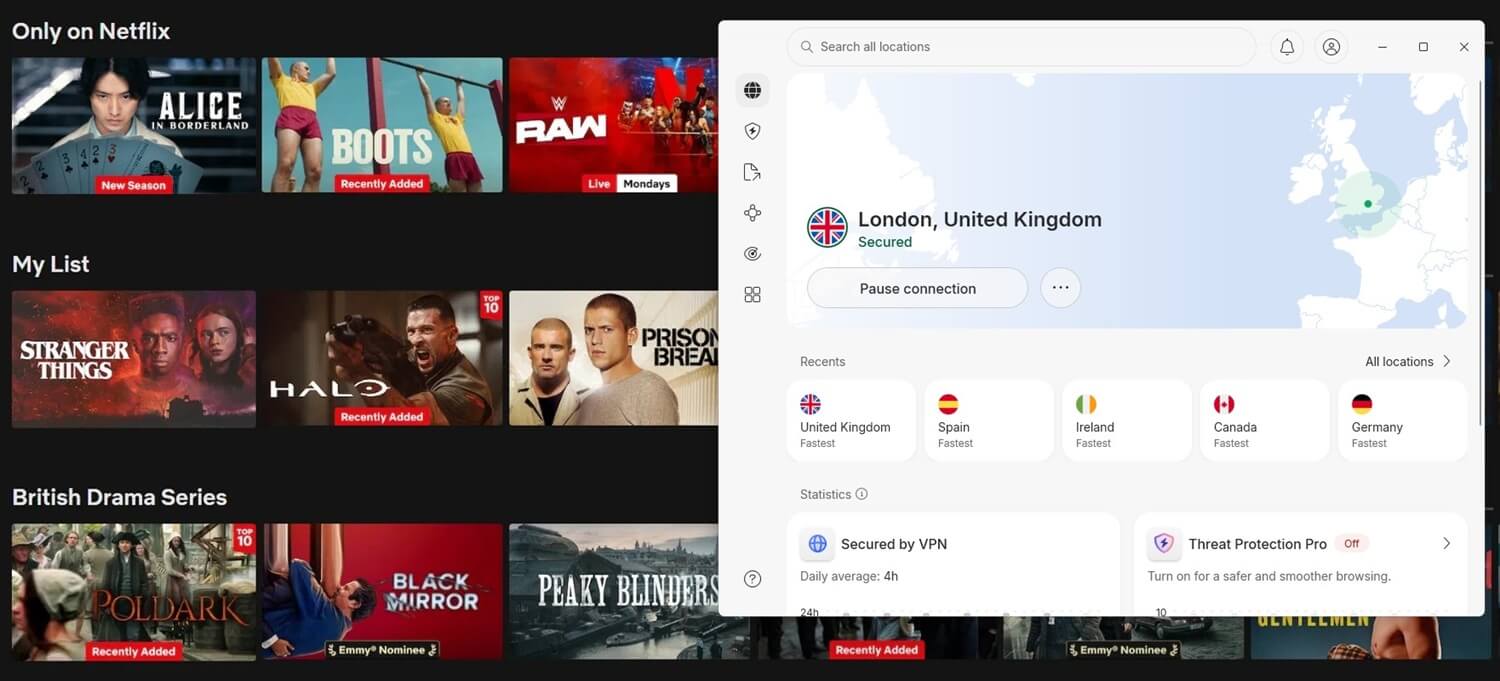
NordVPN is great for Netflix, working with around 20 libraries in our tests. Add SmartDNS and browser extensions with location spoofing, and it’s an easy pick for binge-watchers. The full list of services it unblocks would run long, so we’ll keep it short: expect both reach and speed, with Ultra HD on Netflix Premium playing silky smooth. You can also access Paramount Plus abroad or live-stream sports on free TV channels worldwide. It’s so effortless.
Torrenting Results
AirVPN punches back in torrenting, though not hard enough to overthrow NordVPN. Both VPNs are P2P-optimized and ran without a hitch in our tests. Each supports SOCKS5, configurable directly in your torrent client; it does nothing for privacy, but it speeds up P2P downloads noticeably in some cases.
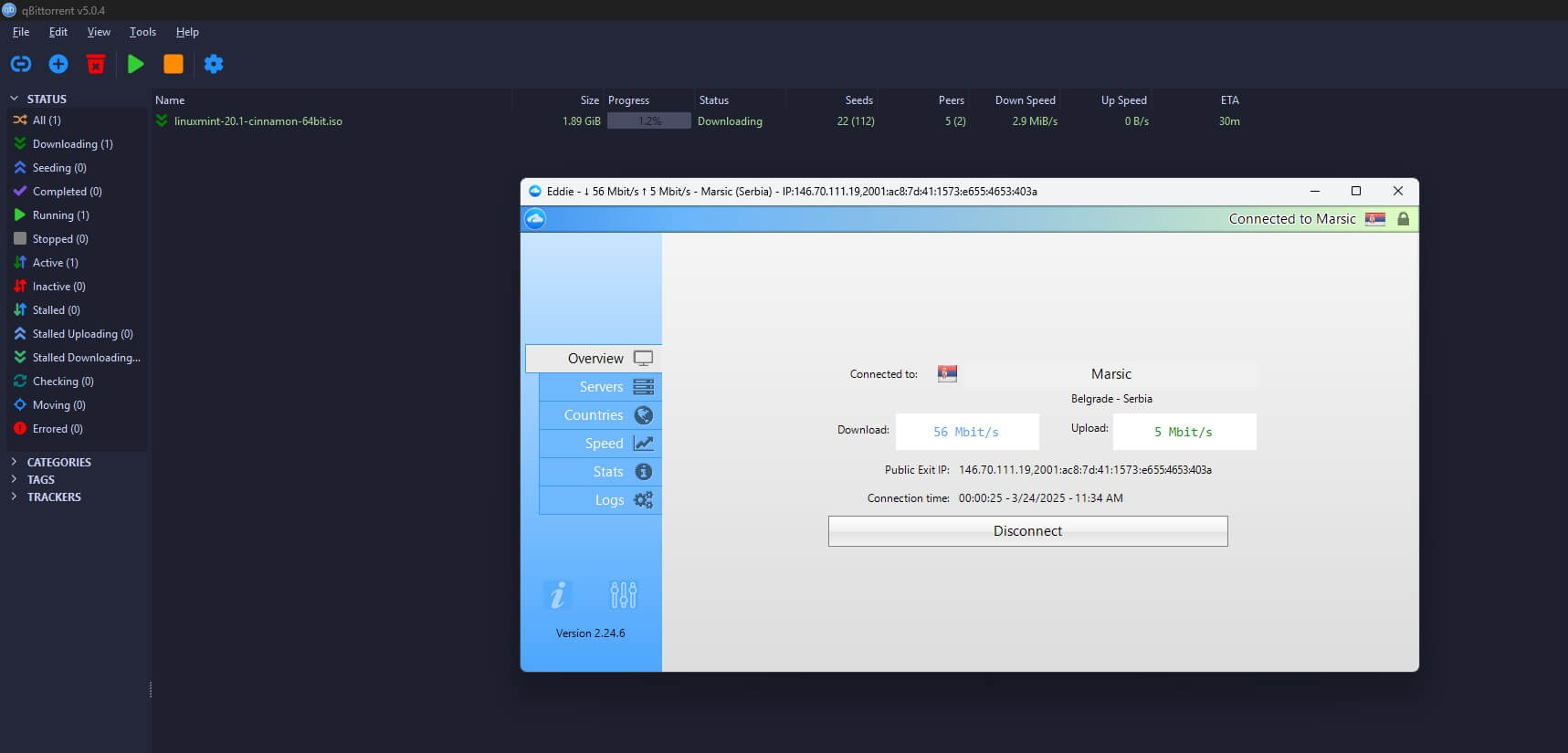
AirVPN’s trump card is port forwarding, which NordVPN lacks. It helps with speed and seeding stability, and on nearby European servers we saw virtually no performance drop. That’s a genuine win for AirVPN.
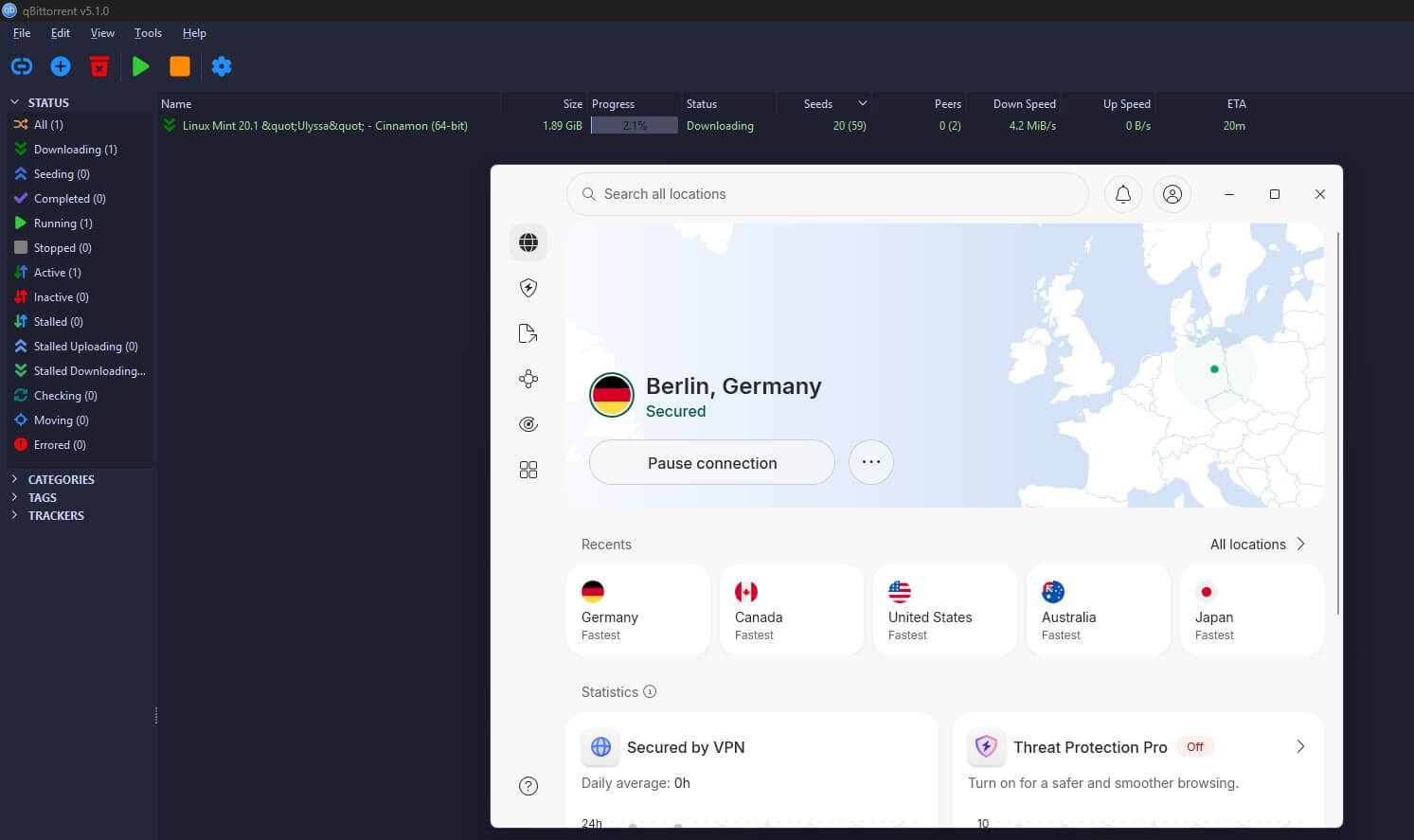
NordVPN still retained speed better, but for torrenting you’ll stick to nearby servers. On safety, both deliver what P2P needs: 256-bit encryption, Forward Secrecy, and audited-or-promised no-logs policies to keep you private.
🏆 Winner: NordVPN
Servers: NordVPN Offers Multiple Times More
AirVPN’s small budget shows in its fleet: around 250 servers in 20-ish countries, no specialty servers or dedicated IPs. Europe hosts the bulk of them (160), followed by the Americas (78), Asia (16), and Oceania (3).
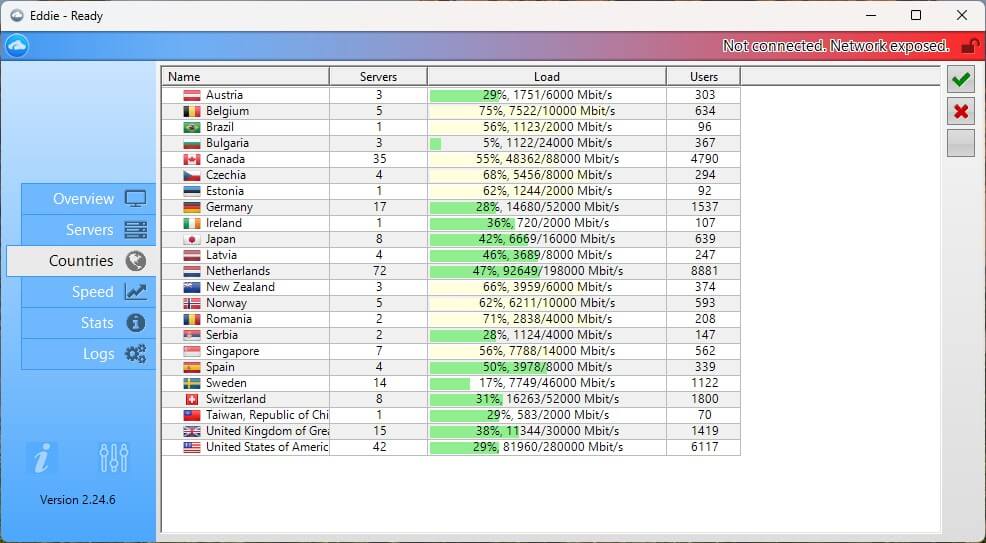
We did spot multiple Double-Hop servers for overcoming censorship, but these are internal and unavailable for direct connections. What we genuinely like is the transparency: AirVPN’s site documents every server, and the app displays live load percentages so you can pick a less congested one manually.
Congestion is the last thing on your mind with NordVPN, whose 9,500+ servers in 137 countries dwarf AirVPN’s network many times over.
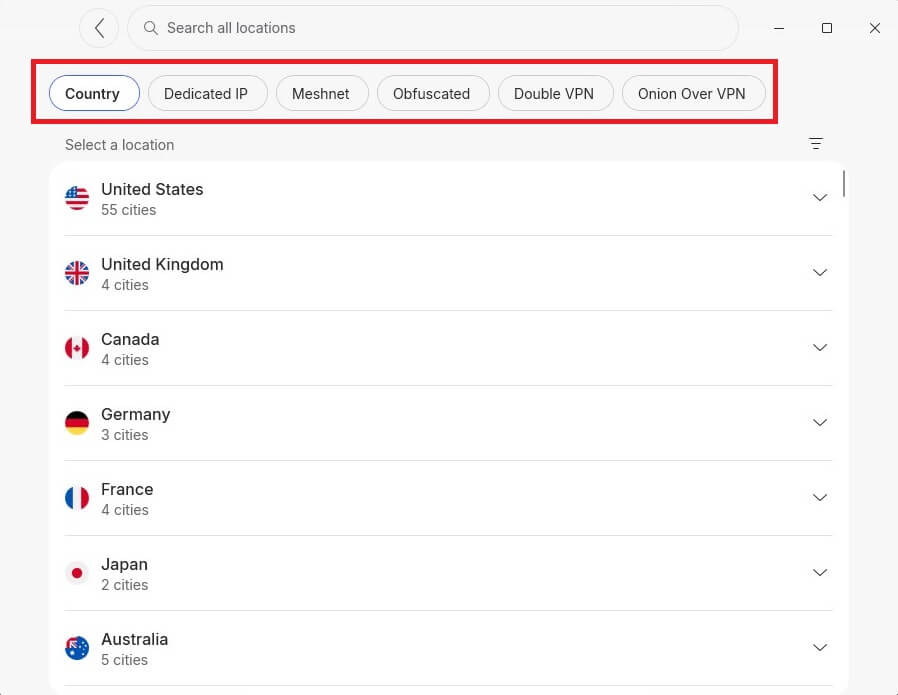
A fleet that size leaves room for specialty servers, too:
- Double VPN
- Obfuscated
- Onion Over VPN
- Dedicated IP
There’s no per-server documentation like AirVPN offers, but you won’t miss it. Choose a country, and NordVPN automatically connects you to the fastest option. That’s how a VPN should work.
🏆 Winner: NordVPN
Need a VPN in China? Pick AirVPN Over NordVPN
AirVPN works surprisingly well in censored regions, China in particular. Having tested it on the ground, we can confirm it connects reliably, though with slowdowns caused by obfuscation overhead and the Great Firewall’s interference. There are plenty of protocol combinations to experiment with; OpenVPN over SSH>TCP did the job for us. The VPN is also reliable for the UAE, Qatar, Russia, and similar regions.
No surprise; bypassing censorship is exactly what AirVPN advertises. NordVPN punches back with obfuscated servers, and they’re fairly dependable in China too, aside from occasional disconnections. When connected, it delivers stronger performance, but in China specifically it ran noticeably slower than AirVPN. Call this round for AirVPN: less speed on paper, more consistency where it counts.
🏆 Winner: AirVPN
Conclusion: NordVPN is Still Better Than AirVPN
Let’s not pretend this one was very close: NordVPN beat AirVPN in nearly every round that matters. Compatibility, ease of use, security, speed, streaming, servers, the score sheet reads NordVPN all the way down. AirVPN was just cheaper and displayed better performance in China in our tests. That tells you who AirVPN is really for: Users on a budget who need customization, reliability in censored regions, and don’t care about the spartan app or nonexistent streaming.
If that’s you, its lower price is fair value. Everyone else should pay the small premium. NordVPN brings audited no-logs privacy, one-click Double VPN and Threat Protection Pro, polished apps on every platform, 10 simultaneous connections, and speeds that barely dip from your native line. A VPN with this few compromises is rare, and after eight rounds of testing, the verdict was pretty evident.