
Spending more on a VPN can be a double-edged sword. Some VPNs offer less and cost more, while others earn every cent. In the Astrill VPN vs ExpressVPN matchup, neither has a reputation for being cheap, yet ExpressVPN is far easier on the wallet. There’s plenty to like about both. Strong privacy, high speeds, a deep bench of security features, torrenting prowess, unlimited bandwidth, and support that responds.
During our testing, ExpressVPN left the stronger impression of the two. It costs a fraction of Astrill’s price and delivers more for it, so it lands firmly on the “earns every cent” side. Astrill VPN keeps one trump card: it’s the better VPN for China, and if that’s your primary concern, you already have your answer. For every other answer, it’s wise to stay with us. We have multiple Astrill VPN vs ExpressVPN tests ahead.
ExpressVPN vs Astrill VPN: Quick Comparison
| 🏆 ExpressVPN | Astrill VPN | |
| Our Current Ranking 📋 | #2 | TBD |
| Prices 🤑 | Starting at $2.99/mo | Starting at $12.50/mo |
| Money-Back Guarantee 🪙 | 30 days | No |
| Free Version/Free Trial 🆓 | No/3 days on iOS/Android | No |
| Logging/Jurisdiction 🕵️ | No/British Virgin Islands | No/Seychelles |
| Protocols 🌐 | OpenVPN, Lightway, Lightway Turbo, WireGuard | OpenVPN, OpenWeb, StealthVPN, WireGuard |
| Servers 🏠 | 3,000+ in 105 countries | 300+ in 56+ countries |
| Specialty Servers ✅ | Dedicated IP | Dedicated IP |
| RAM-Only Servers 🛡️ | Yes | Yes |
| Working With Netflix 📺 | Yes (US, UK, JP, CA, …) | Yes (US, UK, …) |
| P2P Allowance ↔️ | Yes | Yes |
| Customer support ☎️ | Live chat, email | Live chat, email |
| Concurrent Connections 📟 | 10-14 | 5 |
Applications and Ease of Use
Astrill VPN and ExpressVPN cover a wide range of devices and systems, but ExpressVPN is slightly better. In a recent Firestick VPN ranking, we didn’t mention Astrill VPN because it doesn’t natively support this device. ExpressVPN, fortunately, does. Main desktop and mobile systems are there too, and we don’t need to list each. Both providers also come with router support, a wide list of them.
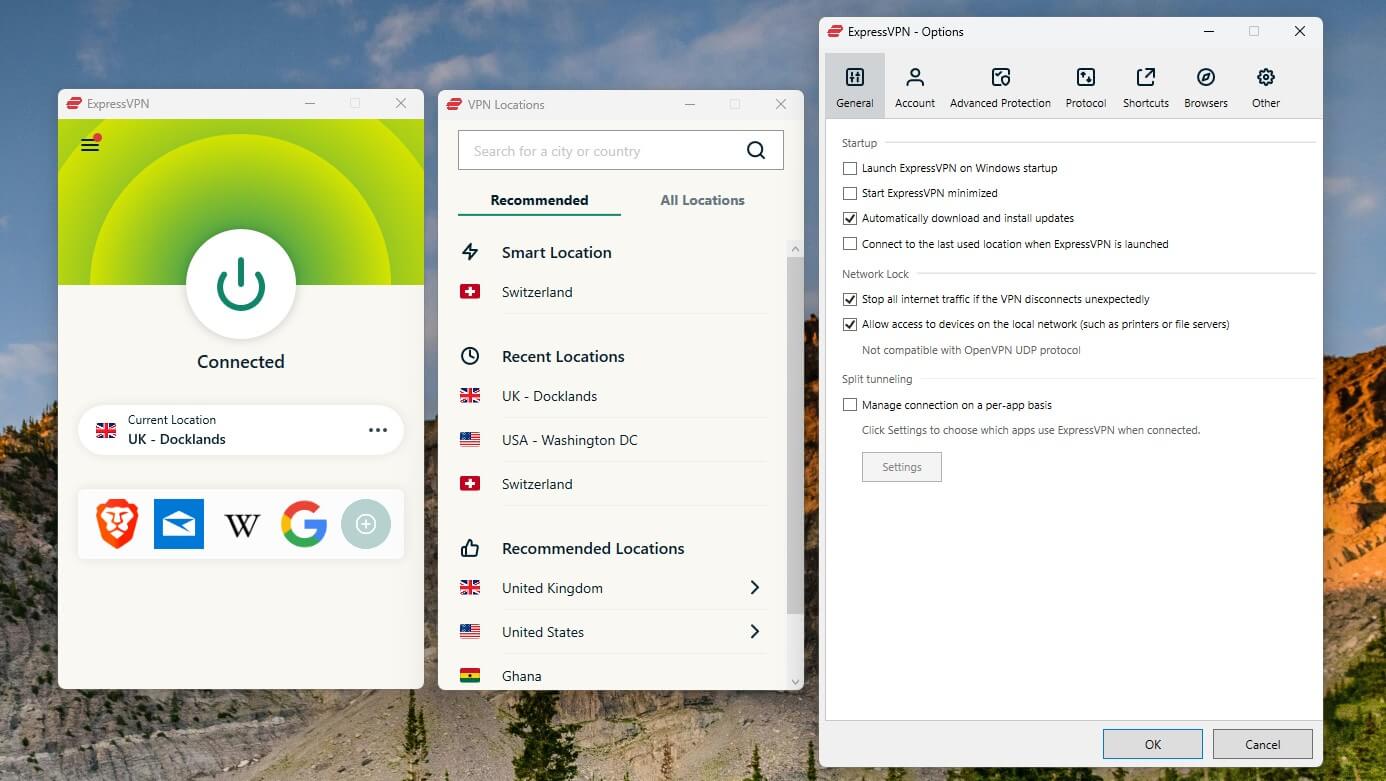
The gap is wide in simultaneous connections. ExpressVPN allows 10 to 14 depending on your plan, while Astrill VPN has 5, a number that felt dated years ago. Astrill VPN’s ease of use is… well, not great. The tiny desktop client is annoying, unintuitive, sluggish at times, and poorly designed. Astrill VPN’s mobile clients fare better, but don’t expect enjoyable VPNs for iPhones or Android phones.

ExpressVPN’s tiny desktop client is a bit larger. It follows the same minimalist idea but executes it properly, especially after the interface refresh it rolled out in early 2026. The connection button is right there, and the server you want turns up in seconds. Better yet, the app behaves identically wherever you install it, and we mean identically, from Windows to Android TV.
If you’re a VPN newbie, ExpressVPN will win you over with its usability and smoothness. Astrill VPN’s design will make you connect to a server and close the app fast, just to avoid tinkering with it longer than necessary.
🏆 Winner: ExpressVPN
ExpressVPN is Cheaper Than Astrill VPN in 2026
Look at flagship phones, cars, hardware, and so on. Premium always costs a fat pile of cash. ExpressVPN begs to differ, despite its old reputation for higher prices. Its 24-month Basic plan currently sits at 80% off with 4 free months, pulling the price down to $2.49 a month, around $78 billed upfront for 28 months. Prefer a shorter commitment? The annual plan runs $3.99 a month with 3 free months
| Monthly Price | Annual Price | Biennial Price | |
| ExpressVPN | $15.99 | $3.99/mo | $2.49/mo |
| Astrill VPN | $30 | $15/mo | $12.59/mo |
A 30-day money-back guarantee covers both. Whatever promotion is live when you read this, ExpressVPN’s coupon page has the fresh numbers. Inflation or not, Astrill VPN’s prices haven’t moved an inch, a dollar, or a cent. The 24-month plan with no free months stands proudly at $12.50 a month; the annual option asks $15, and the monthly plan costs $30, which makes Astrill VPN look silly.
That’s $300 upfront for two years, with no money-back guarantee and no free trial. You buy it and hope you chose well. And it protects 5 devices, fewer than CyberGhost’s 7 at nearly one-sixth of the price. Both VPNs offer extras. ExpressVPN’s dedicated IP now comes bundled with its Pro plan, while Astrill VPN charges $5 a month for one. Astrill also sells a VIP add-on with optimized latency for gamers and users in Asia, and 100 GB of VIP traffic runs $10/mo.
🏆 Winner: ExpressVPN
Security: Astrill VPN Actually Pulls Ahead
Astrill VPN’s redeeming factor is the number and quality of its features, and at $12.50 a month, it had better be. ExpressVPN has always run a tad lighter than its rivals here, though it covers more ground than its minimalist apps suggest. The basics first, all tested and working in both VPNs:
- 256-bit encryption
- Automatic VPN kill switch
- Split tunneling
- Ad-blocking and tracker protection
- OpenVPN and WireGuard protocols
Beyond the shared list, ExpressVPN offers parental control, which blocks porn sites (you can also unblock them with this VPN). Its Advanced and Pro tiers add ID theft protection and a dark web monitor for data breach alerts, though those identity tools mostly serve US subscribers. Then there’s Lightway, ExpressVPN’s in-house protocol, rebuilt in Rust and carrying post-quantum encryption.
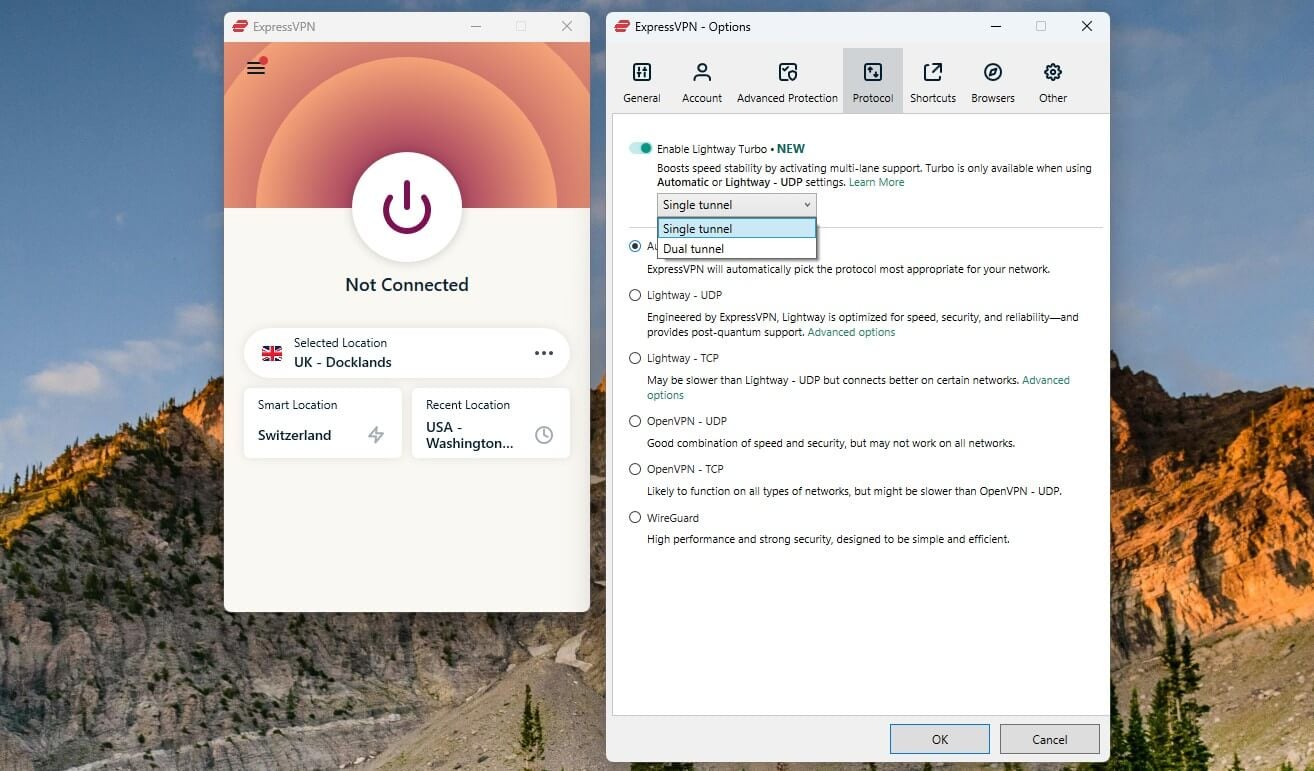
It guards today’s traffic against tomorrow’s decryption attempts. It’s fast, and it’s the reason obfuscation works automatically. Astrill VPN counters with MultiHop, which ExpressVPN lacks, plus three protocols of its own: OpenWeb and StealthVPN. WireGuard is well-known, but the other two are rarities, built to disguise your traffic and beat censorship in China, Russia, Turkey, and similar countries.
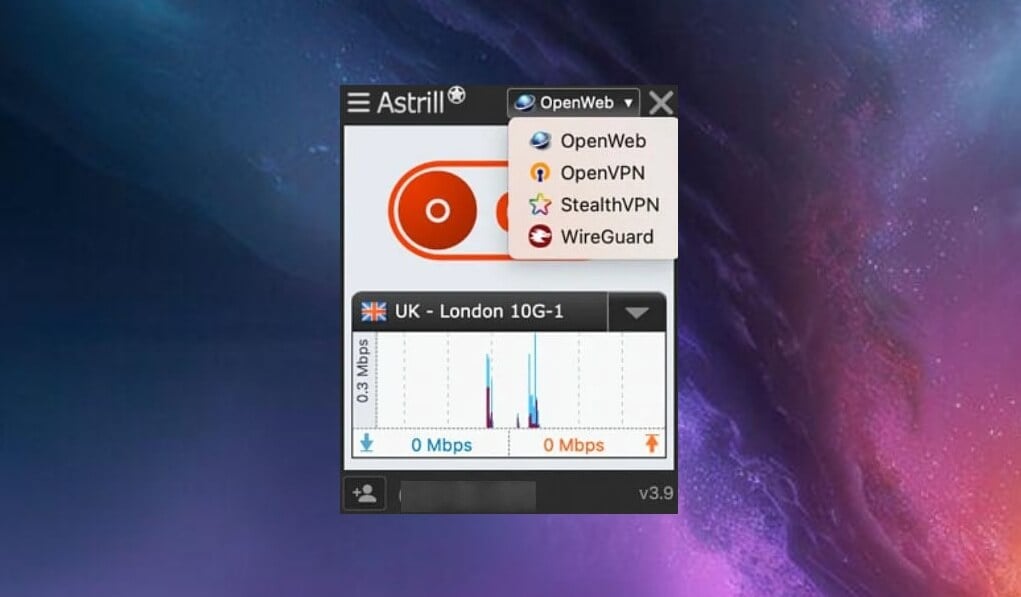
A few features stood out in our testing. VPN sharing turns your PC into a protected hotspot for other devices, Smart Mode automatically picks a server suited for slipping past censorship, and the app-specific kill switch allowed for more customization. For once in this comparison, the expensive option justifies itself: between MultiHop, two obfuscation protocols, and the sharing tools, Astrill VPN takes this round.
🏆 Winner: Astrill VPN
ExpressVPN and Astrill VPN Don’t Store Logs
If privacy is your primary concern, be happy that neither ExpressVPN nor Astrill VPN retains logs. Their headquarters help: the British Virgin Islands and Seychelles, respectively, both offshore jurisdictions with no data retention obligations, suited to hosting a VPN company. A read-through of their privacy policies is enough to settle the nerves. ExpressVPN and Astrill VPN don’t store your IP address, visited websites, location, DNS requests, or metadata.
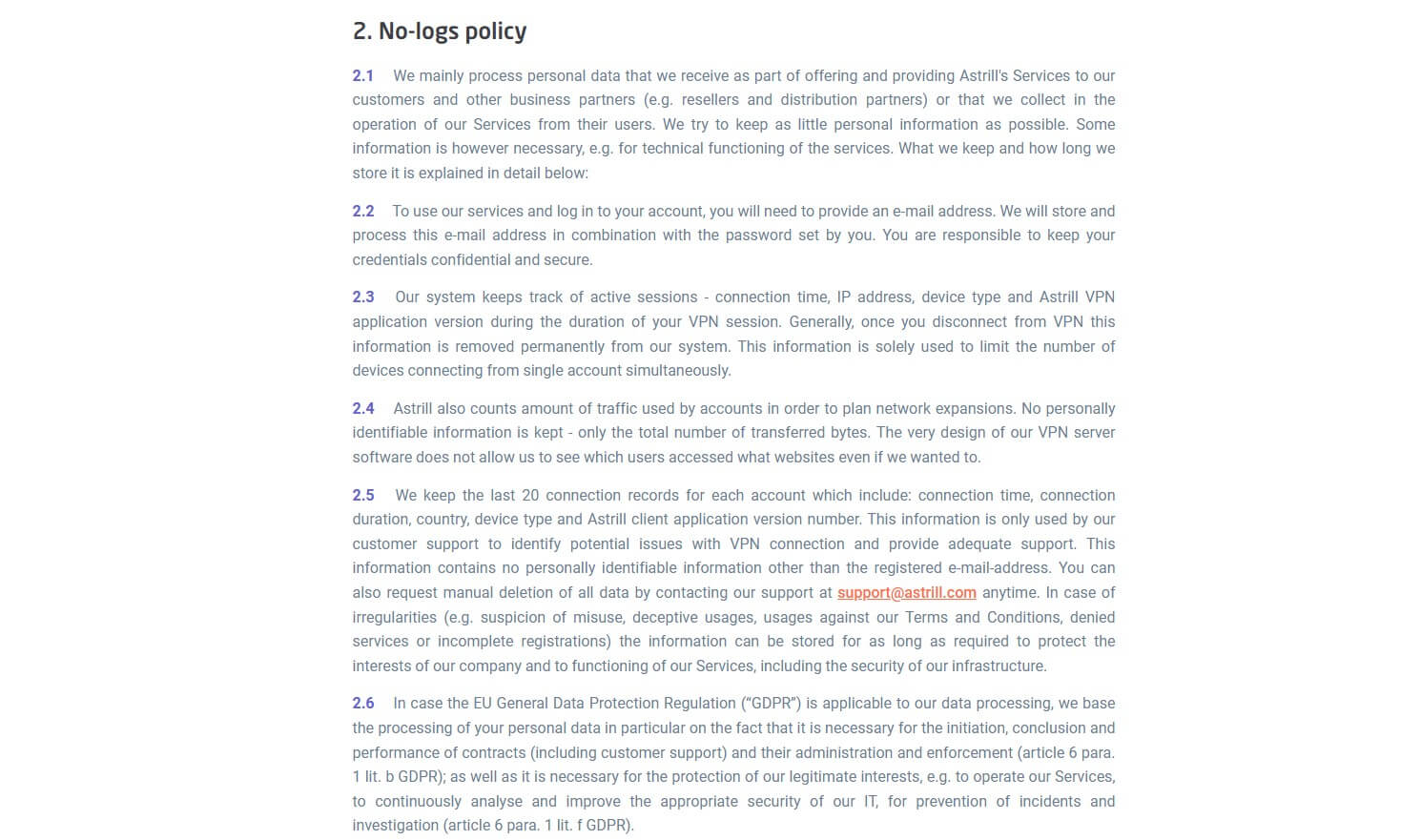
No VPN is 100% log-free, mind you; a service needs certain operational information just to function. That information, though, carries no identifying details and lives on the server only briefly before removal. ExpressVPN goes a step further with its TrustedServer infrastructure, where everything runs on RAM, so a reboot wipes the slate clean by design. In our Astrill VPN vs NordVPN evaluation, we criticized Astrill for the lack of third-party audits.
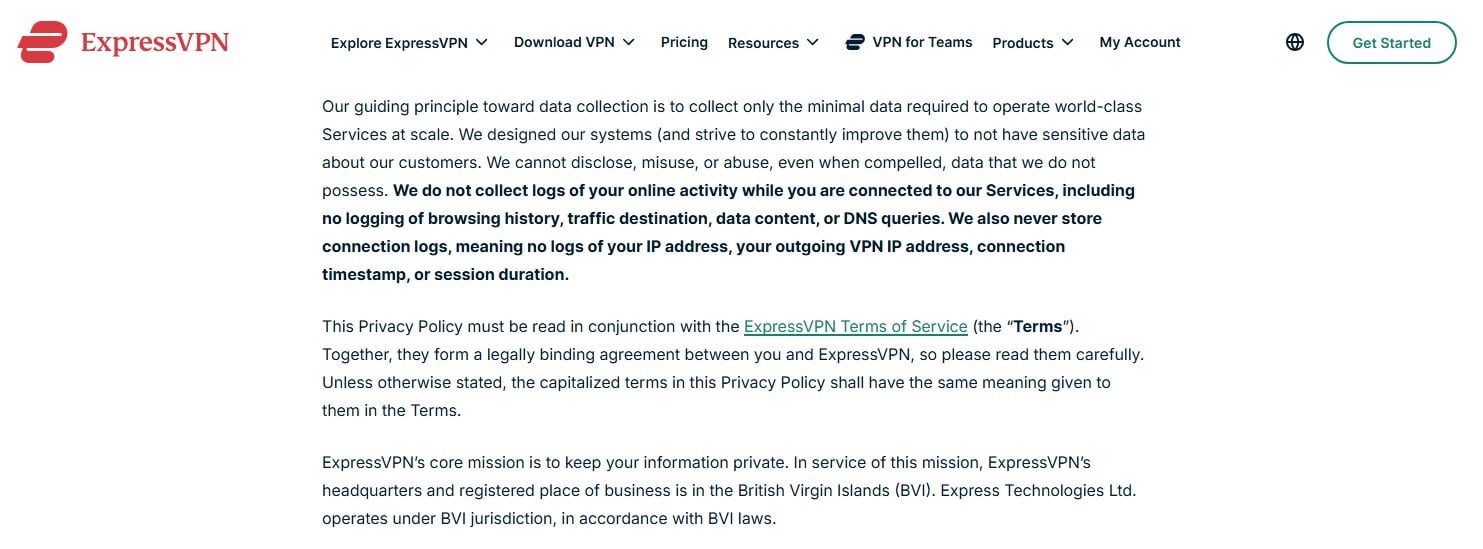
2026 sings the same song. Meanwhile, ExpressVPN has gathered 20+ third-party audits covering its privacy policy, the Lightway protocol, its applications, and other security parameters, with KPMG behind the most recent no-logs verification. To be clear, Astrill VPN’s claims aren’t false because no audit exists. Our point is narrower: ExpressVPN holds documented proof of its promises, while Astrill asks for your trust without an outside party vouching for it.
We lean toward believing Astrill, but belief and verification are different currencies in this industry. Winner: ExpressVPN, matching jurisdictions mean nothing separates them on paper, so the audit paper trail decides it.
🏆 Winner: ExpressVPN
ExpressVPN is Faster Than Astrill VPN
ExpressVPN is the faster of the two, and the upload numbers make it a rout rather than a contest. A word on procedure first. Our testers worked from Belgrade on a 50 Mbps download / 10 Mbps upload connection. Each VPN ran on its quickest protocol: Lightway Turbo for ExpressVPN, WireGuard for Astrill VPN.
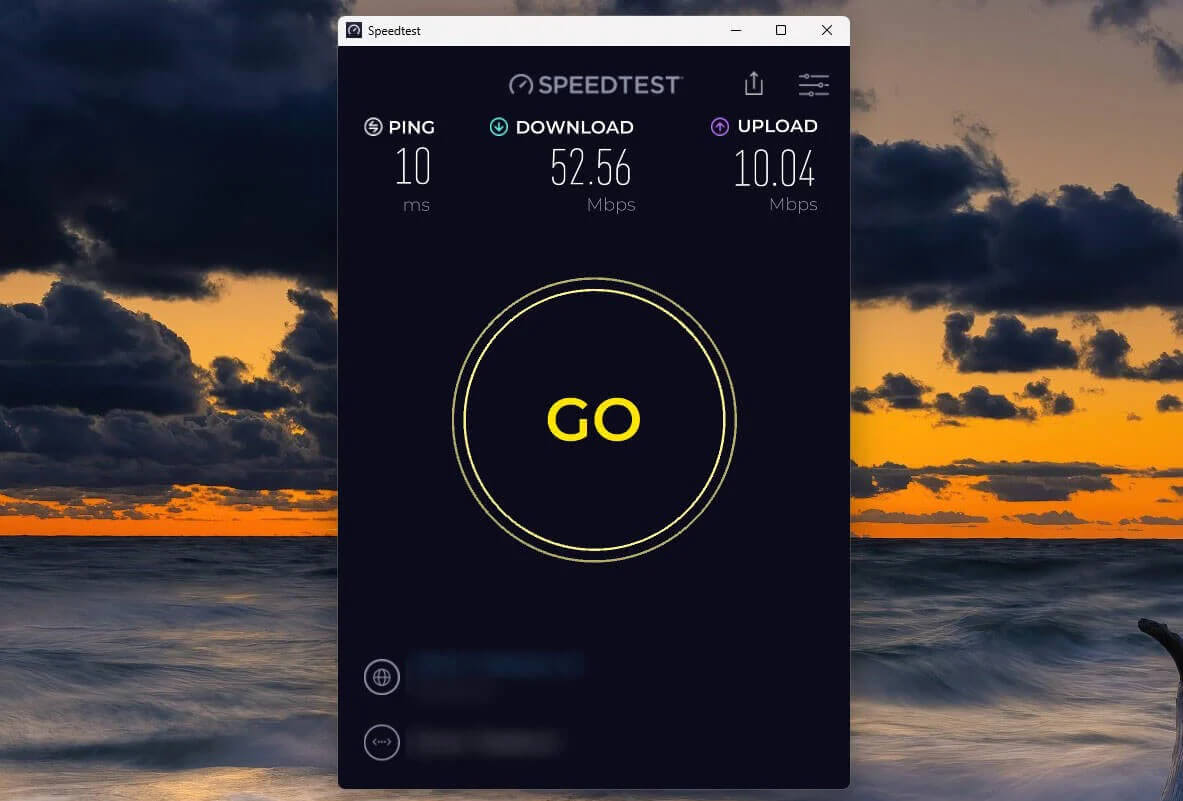
From there, we measured both VPNs 3 times a day across 3 consecutive days, on servers in the United Kingdom, the United States, and Japan. The distant locations are deliberate; they expose how much speed each VPN preserves over long routes.
| ExpressVPN | Astrill VPN | |
| Download Speed Retention | 76% | 64% |
| Upload Speed Retention | 91% | 48% |
The averages tell the story. ExpressVPN held a comfortable download lead, while Astrill VPN’s uploads collapsed to less than half our baseline, something we felt firsthand when posting videos to YouTube during testing.
| UK DL/UL Speeds | US DL/UL Speeds | Japan DL/UL Speeds | |
| ExpressVPN | 46.25/9.53 Mbps | 42.04/9.34 Mbps | 32.06/8.65 Mbps |
| Astrill VPN | 45.21/5.02 Mbps | 36.26/6.32 Mbps | 19.45/3.11 Mbps |
The per-location averages above complete the picture. Note the Japan column, where Astrill VPN dropped to 19.45 Mbps against ExpressVPN’s 32.06, the widest gap of the entire test. Latency deserves a brief mention: no meaningful difference between the two. Both hovered around 40 ms on the UK server and climbed past 230 ms in the US and Japan, which also makes ExpressVPN the more sensible gaming pick given its stronger throughput.
🏆 Winner: ExpressVPN
Streaming and Torrenting Performance
First up, we’ll analyze their streaming prowess. Astrill VPN performs okay and is mostly dependable on Netflix, especially on popular libraries. Still, it unblocks just a few of them and occasionally struggles with BBC iPlayer. At least it’s suitable for watching ITV abroad, but don’t expect streaming heroics from it. ExpressVPN sits a few notches ahead. It employs a stellar browser extension with location spoofing, capable of clearing streaming geo-blocks on its own.
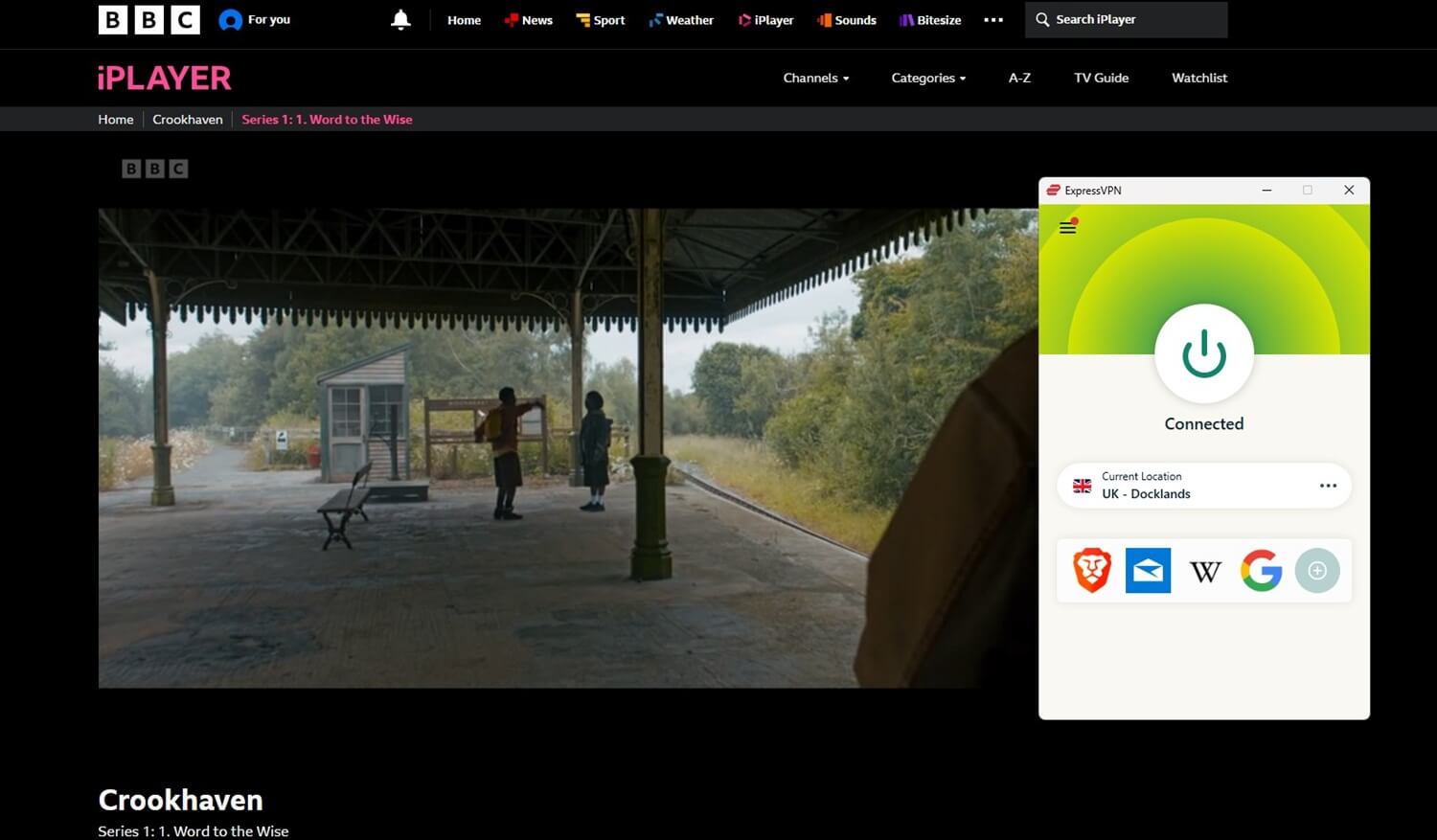
The apps hold up their end too: across all devices, they work with 15+ Netflix catalogs, BBC iPlayer, Hotstar, Hulu, and other famous streaming giants. With ExpressVPN, we also enjoyed a free live stream of the Super Bowl at the season’s end and managed to unblock our hometown channels overseas. There’s MediaStreamer as well, ExpressVPN’s SmartDNS, which brings streaming to devices that can’t run VPN apps. Torrenting is satisfying with either VPN.

ExpressVPN skips port forwarding and SOCKS5, but its speeds keep download times short enough that you won’t miss them. Astrill VPN’s slower speeds won’t bother you much, since a nearby server does the heavy lifting for P2P. Astrill has SOCKS5 and port forwarding, both popular among P2P veterans. A nice addition on paper, though in practice it didn’t make a world of difference for us.
🏆 Winner: ExpressVPN
Server Locations: ExpressVPN Has Way More
Both server fleets check several quality boxes: 10 Gbps ports, dedicated IP addresses on offer, and Forward Secrecy, with ExpressVPN adding its RAM-only TrustedServer infrastructure on top.
The numbers, however, aren’t remotely close:
- Astrill VPN has 300+ servers in 56+ countries
- ExpressVPN has 3,000+ servers in 105 countries
With ten times more servers in nearly twice as many countries, ExpressVPN trumps its opponent. Neither VPN chases server variety; there are no specialty servers for Onion over VPN, torrenting, or streaming here. In our experience, you won’t miss them. Regular servers work fine. ExpressVPN lets you connect to a server and do anything you want, from making WhatsApp calls in the UAE to gaming.
The same applies to Astrill VPN. Its problem is the map itself: 56+ countries is a weak spread when ExpressVPN, NordVPN, Proton VPN, and many others cover almost 150. Proton VPN and NordVPN, specifically.
🏆 Winner: ExpressVPN
Astrill VPN is Better than ExpressVPN for China
At the beginning of our Astrill VPN vs ExpressVPN 2026 comparison, we mentioned Astrill VPN’s main advantage: squashing censorship. This VPN works wonderfully in restricted regions and is particularly popular among Chinese residents and visitors looking for more online freedom and privacy. Having tested it first-hand, we can confirm its StealthVPN and OpenWeb protocols deliver.
We mostly relied on OpenWeb, but StealthVPN passed too, clearing the Great Firewall on nearly every attempt. Speeds held up remarkably well for such a hostile environment. It’s worth noting that Astrill VPN’s VIP add-ons truly work as advertised, a shame given the price. We tested 100 GB of VIP traffic in China and enjoyed stable performance, with MultiHop available to layer the encryption.
ExpressVPN works in China, but not like it used to. Obfuscation applies to connections automatically, yet results are willy-nilly. Its performance behind the Great Firewall is okay in 2026, nothing more, as the censorship tightens. Other countries pose no threat. As one of the leading VPNs for Qatar, the UAE, Turkey, Russia, and Iran, it’ll serve you fine. Astrill VPN’s advanced obfuscation simply makes it the sturdier pick wherever online freedom runs thinnest.
🏆 Winner: Astrill VPN
Conclusion: ExpressVPN Still Beats Astrill VPN
The dust has settled, and hopefully it didn’t make you cough too much. ExpressVPN takes the victory, and in the majority of cases, it will be the more enjoyable companion: a VPN you can use for traveling, streaming, gaming, or browsing in privacy, with apps on practically every device. Astrill VPN does the same job, but at an enormous price that undermines an otherwise powerful VPN. No refund policy, no free trial, prices several times the market rate, and it lost most of our rounds.
Its one decisive win, bypassing censorship in China, is a specialist’s argument, and if you’re that specialist, it’s a strong one. For everyone else, ExpressVPN’s 24-month plan at $2.49 a month scratches the itch for a fifth of Astrill’s price. Don’t overspend on Astrill VPN unless the next year or two of your life runs through China.