A VPN doesn’t make your browsing disappear. It moves it. Every site you visit now passes through the VPN company’s servers, so the company sees what your internet provider used to see. So the privacy you get depends on who operates those servers and where the company is based.
It also depends on whether its promise to keep no records has ever been put to the test. Some VPN companies have had that promise verified by auditors, courts, and even police raids. Others ask you to take their word for it, and many free VPNs pay their bills with the data you hoped to protect.
We compared policies, audit records, and built-in blockers to see which VPNs deserve that trust. Here are the 5 we’ll discuss below.
The Most Private VPNs Right Now
- NordVPN: Best overall. Audited no-logs policy and servers that keep nothing after a restart.
- Proton VPN: Best under Swiss law. Open-source apps and a no-logs audit every year.
- ExpressVPN: Best server privacy. A server seized by police contained no user data.
- Private Internet Access: Best tracker blocker. The strongest built-in blocker we tested, at a low price.
- Surfshark: Best for identity masking. Disposable sign-up details on every plan.
Privacy VPNs Compared
The blocking score is the share of ad and tracker domains on d3ward’s ad-block test page that each VPN’s built-in blocker stopped.
| VPN | Headquarters | Ad and tracker blocking | Multi-hop | Average speed loss | Price |
|---|---|---|---|---|---|
| NordVPN | Panama | 76% | Double VPN | 7.8% | About $3.50/mo |
| Proton VPN | Switzerland | 93% | Secure Core | 10.2% | Under $3/mo |
| ExpressVPN | British Virgin Islands | 71% | None | 7.8% | About $3/mo |
| Private Internet Access | United States | 96% | Multi-Hop | 12.7% | About $2/mo |
| Surfshark | Netherlands | 79% | Dynamic MultiHop | 9.6% | About $2.50/mo |
The Five Most Private VPNs We Tested
1. NordVPN: Best Overall VPN for Privacy
Pros
- No-logs policy audited six times
- Servers wipe all data on restart
- Double encryption with almost no speed cost
- Kill switch that closes chosen apps
- Post-quantum encryption
Cons
- Tracker blocking weaker than expected
- Higher price after the first term
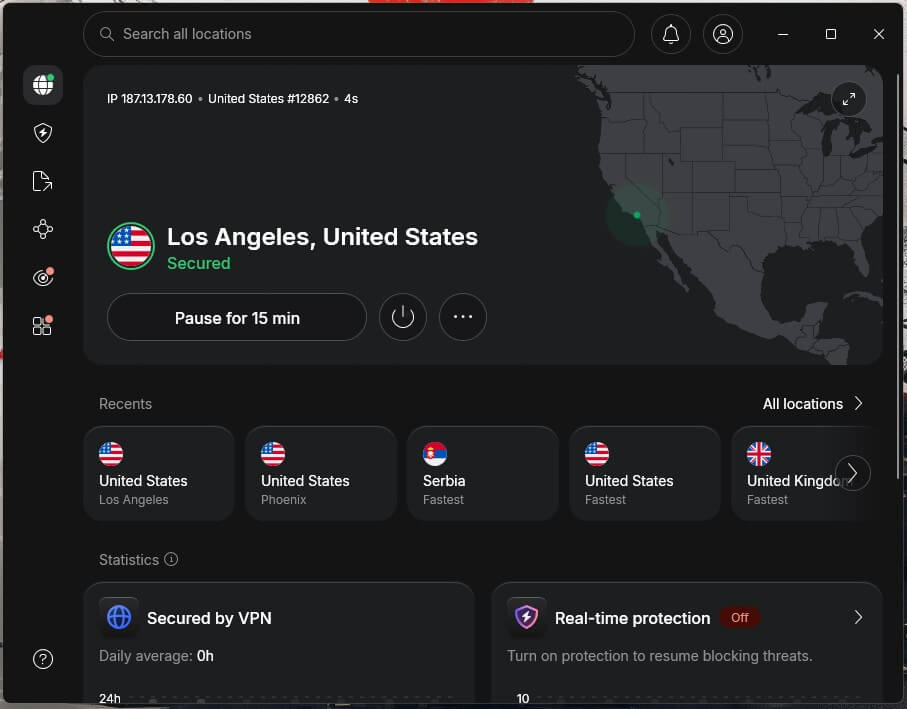
NordVPN is based in Panama, which has no law forcing companies to keep user data. Outside firms have audited its no-logs policy six times. Its servers are also RAM-only, so a restart wipes them clean. Together, that means there’s nothing on NordVPN’s side to hand over if authorities come asking.
For extra cover, Double VPN routes your connection through two servers in different countries, each adding its own layer of encryption. In our tests, it slowed the connection by only 2.9%. On top of that, its app-level kill switch closes the apps you choose, such as a messaging app or a torrent client, the moment the VPN drops.
Its tracker blocking was weaker than I expected, however. The next-gen antivirus on the Complete plan caught 76% of the test domains, a modest result for software with that name. If tracker blocking is your priority, add a browser blocker.
The Basic plan costs about $3.50 a month with the current NordVPN deal, and the 30-day money-back guarantee covers the first month.
2. Proton VPN: Best Swiss Privacy VPN
Pros
- Swiss jurisdiction with strong privacy laws
- Open-source apps experts can inspect
- Yearly independent no-logs audits
- Accepts cash and Bitcoin
- Blocks most ads and trackers
Cons
- Secure Core costs some speed
- Encrypted disks instead of RAM-only servers
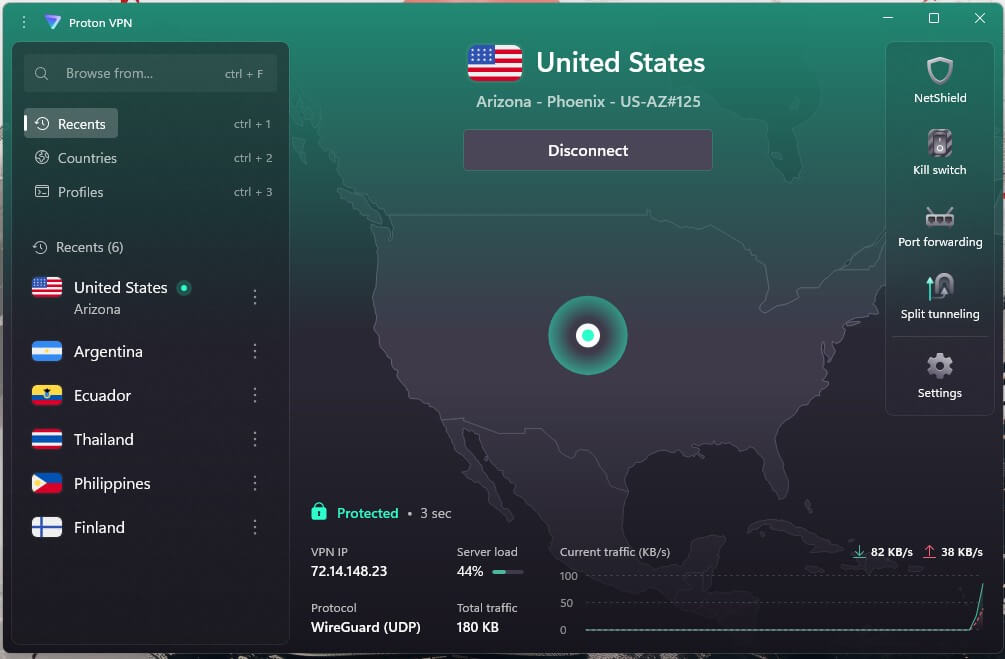
Proton VPN is based in Switzerland and made by the company behind Proton Mail. Swiss law doesn’t require it to keep a record of what users do. An auditor has reviewed its no-logs policy every year since 2022, and its apps are open source, so outside experts can read the code for themselves. NetShield, its blocker, filtered out 93% of them in our test.
Secure Core, on the paid plans, first sends your traffic through a server in Switzerland, Iceland, or Sweden. As a result, a person monitoring the final server can’t trace where you connected from. It slowed our connection by about 12%, a fair price for that protection.
Proton VPN is also the only VPN here that accepts cash by mail, alongside Bitcoin, so your bank never sees the subscription. Unlike the other four, Proton VPN doesn’t use RAM-only servers. Instead, it encrypts every server’s disk and keeps the keys elsewhere, and a powered-off server reveals no more than a RAM-only one would.
That’s a reasonable answer, but if RAM-only servers are on your checklist, choose NordVPN or ExpressVPN. Proton VPN Plus is under $3 a month if you sign up for two years.
3. ExpressVPN: Best RAM-Only Server Network
Pros
- No user data found on a seized server
- RAM-only servers across the network
- Private DNS on every server
- Post-quantum encryption
- Accepts Bitcoin
Cons
- Built-in blocker misses many trackers
- Ad blocking limits protocol choice
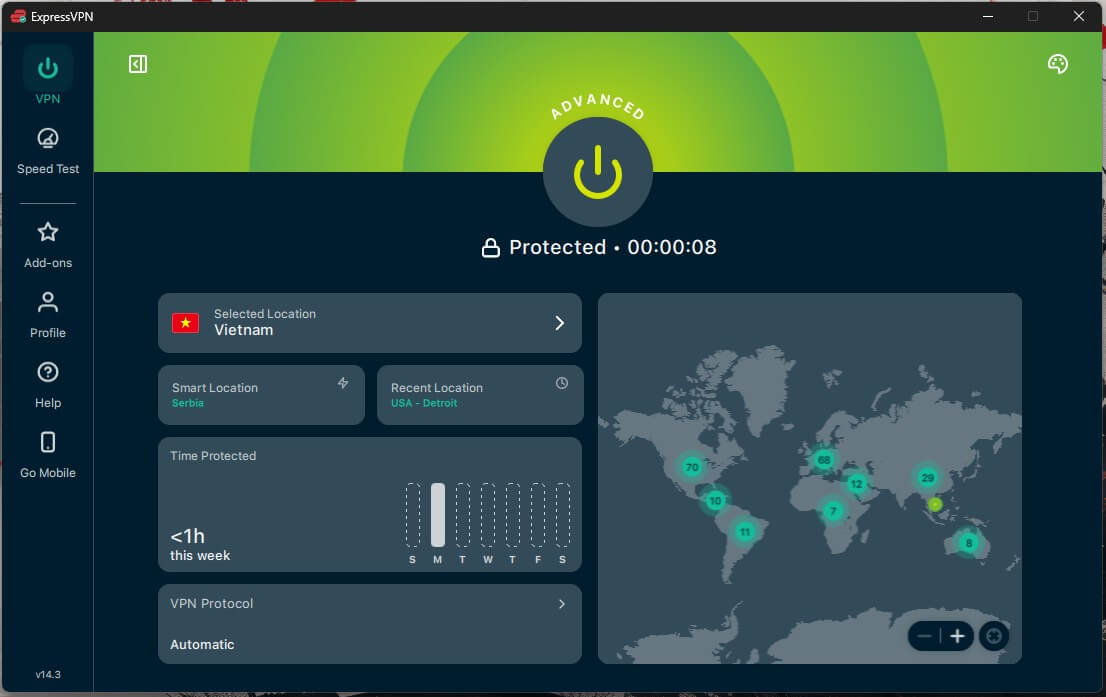
ExpressVPN has the clearest proof outside an audit. In 2017, Turkish police seized one of its servers during a murder investigation and found no user data on it. Today, every ExpressVPN server is RAM-only, so nothing remains after a restart, and auditors have examined its no-logs claims several times since.
ExpressVPN is registered in the British Virgin Islands, which has no data retention law. It also operates its own private DNS on every server, so your lookups never go to a third party. Lightway, its in-house protocol, now includes post-quantum encryption, which protects recorded traffic against future computers that could break today’s encryption.
It also tied NordVPN as the fastest VPN we tested, and you can pay with Bitcoin. Its tracker blocking is the weak part. Advanced Protection blocked 71% of the domains on the same test, and enabling it limits you to the Automatic or Lightway protocols.
If tracker blocking is important to you, PIA and Proton VPN do far better, while ExpressVPN’s case rests on its servers. ExpressVPN’s Basic plan works out to about $3 a month over two years.
4. Private Internet Access: Best for Blocking Trackers
Pros
- Strongest ad and tracker blocking we tested
- Court cases confirmed it keeps no logs
- Open-source apps
- Unlimited devices
- Low long-term price
Cons
- Kill switch leaked traffic after a restart
- Based in a Five Eyes country
Private Internet Access is based in the US, part of the Five Eyes intelligence-sharing alliance with the UK, Canada, Australia, and New Zealand. That would normally be a warning sign, but its record answers it. In 2016 and 2018, US authorities demanded user data in criminal cases, and PIA had none to hand over.
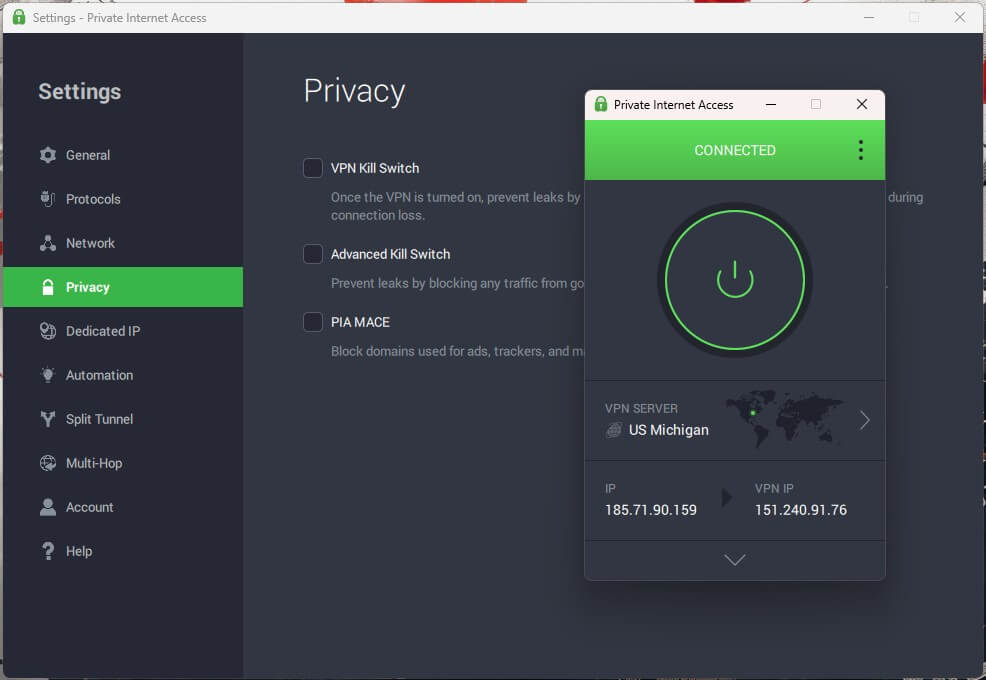
Since then, independent auditors have confirmed the policy, and its apps are open source. Its blocker, MACE, caught 96% of the tracking domains in our test, the best score of the five. It’s also the best-value VPN here, at about $2 a month with unlimited devices.
Multi-Hop routes your traffic through a proxy in another country first, at the cost of noticeably slower speeds. One result surprised me. When I restarted the PC with PIA’s kill switch enabled, unencrypted traffic got out before the VPN reconnected.
I didn’t expect that from a VPN that leads with privacy, especially since NordVPN and Surfshark passed the same test. Luckily, it’s easily fixed by enabling the advanced kill switch, which appears to be PIA VPN’s permanent kill switch.
5. Surfshark: Best for Masking Your Identity
Pros
- Masked email and identity on every plan
- Choose both countries in a multi-hop connection
- No-logs policy audited twice
- RAM-only servers
- Unlimited devices
Cons
- Based in a Nine Eyes country
- Antivirus requires the One plan
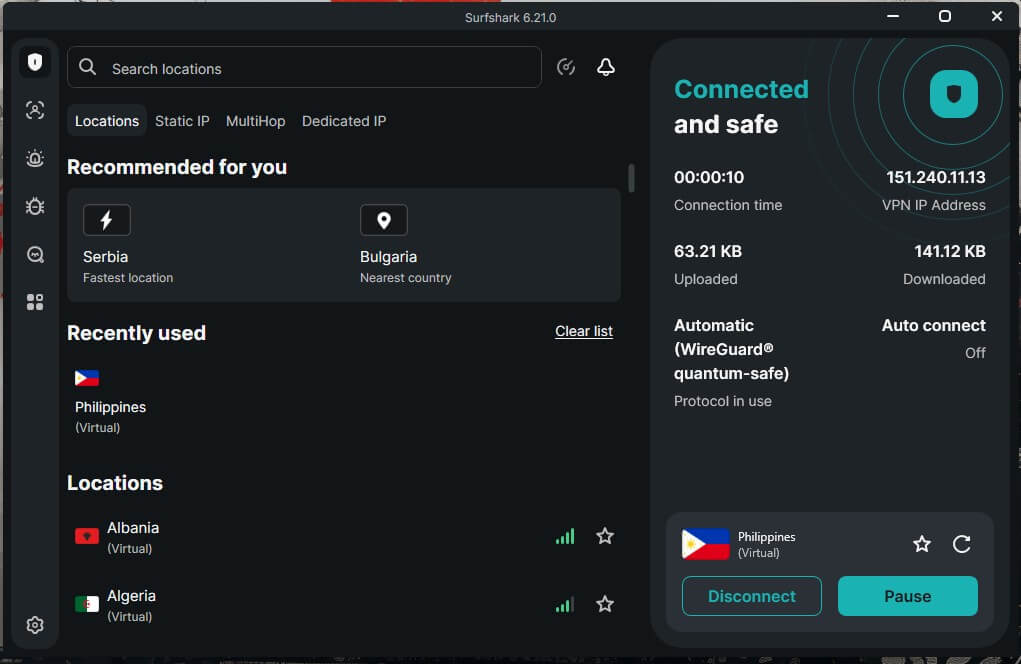
Surfshark’s privacy tools go further than the VPN connection. Alternative ID, included on every plan, creates a masked email address and a made-up online identity for sign-ups. That way, shops and newsletters never receive your actual details. CleanWeb, its ad and tracker blocker, stopped 79% of the domains in our test.
Dynamic MultiHop lets you choose both countries your traffic passes through. Surfshark operates from the Netherlands, one of the Nine Eyes countries, which adds Denmark, France, the Netherlands, and Norway to the Five Eyes.
Even so, two independent audits have backed its no-logs claims, and its servers are RAM-only, so there’s little stored for authorities to request. Where jurisdiction is the deciding factor, Proton VPN is the safer bet.
Surfshark Starter is about $2.50 a month on a long plan and includes Alternative ID, while antivirus starts at the One plan. For privacy alone, Starter is enough, and our Surfshark review breaks down what the higher plans add.
What Makes a VPN Good for Privacy
Security features, such as kill switches and encryption strength, decide which VPN is most secure. Privacy depends on what the company can see and keep, and these are the points we used to rank the five:
- Proof of no logs: A policy is only a promise. Independent audits, court cases, and seized servers show whether it’s true, and we rank the evidence on our best no-log VPN page.
- Jurisdiction: Where a company is based decides which courts can demand its data. A US or Dutch VPN can still be private, as PIA and Surfshark show, but only because it stores nothing worth handing over.
- Server setup: RAM-only servers lose everything when they restart. Encrypted disks with the keys kept off-site, Proton VPN’s approach, protect a seized server in a similar way.
- Private DNS: The top VPN services operate their own DNS servers, so the sites you look up don’t pass through Google or your internet provider.
- Built-in blocking: Trackers follow you even through a VPN, so a VPN with an ad blocker removes another layer of data collection.
- How you pay: A card payment links the account to your name. Bitcoin, which NordVPN, ExpressVPN, Proton VPN, and Surfshark accept, or Proton VPN’s cash option keeps your bank out of it.
What a VPN Can’t Hide
A VPN protects your connection, but it doesn’t make you anonymous. Sites still recognize you when you sign in to an account, and cookies follow you from one session to the next. On top of that, your browser’s settings form a fingerprint that trackers can match.
Clear cookies regularly, keep logged out of accounts you don’t need, and use a browser built to resist fingerprinting. Remaining anonymous online takes a few more steps, covered in how to remain anonymous on the internet.
For the highest level, Tor Browser sends your traffic through three volunteer relays, and it’s also the tool you need to access the dark web.
Are Free VPNs Good for Privacy?
Most aren’t. A VPN with no paid plan still has to cover its servers, and the money often comes from your data. Hola’s free version, for example, routes other users’ traffic through your device.
Proton VPN, Hide.me, and PrivadoVPN come from companies that also sell paid versions, so they don’t need to sell yours. The best free VPNs we’ve tested follow the same model.
Proton VPN Free
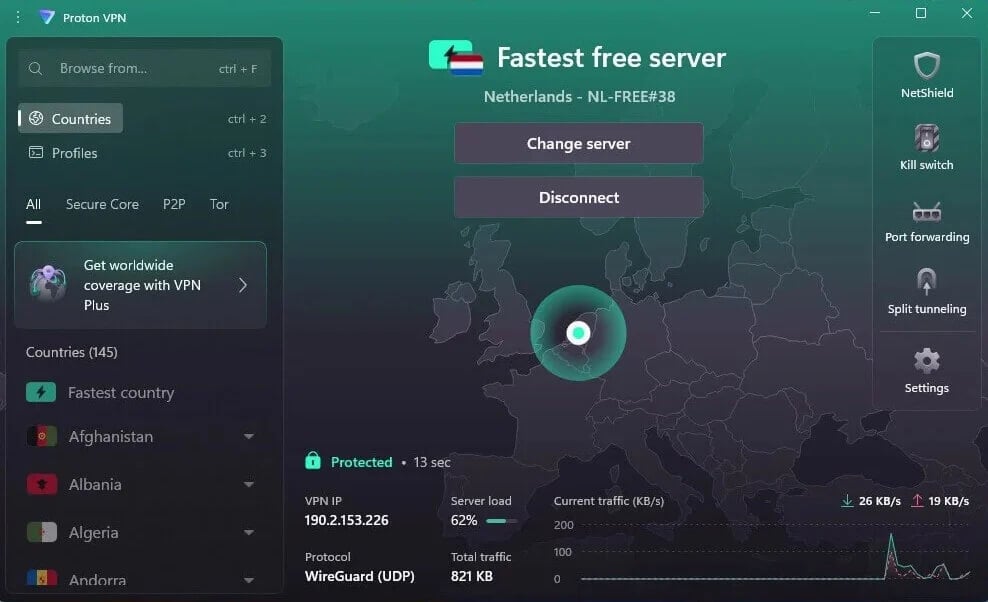
Proton VPN’s free plan follows the same no-logs policy and uses the same encryption as the paid one, with no data cap and no ads. It also includes Stealth, which disguises VPN traffic on networks that block it.
However, you can’t choose a server, since the app assigns one automatically, and it leaves out Secure Core, NetShield, and torrenting.
Hide.me
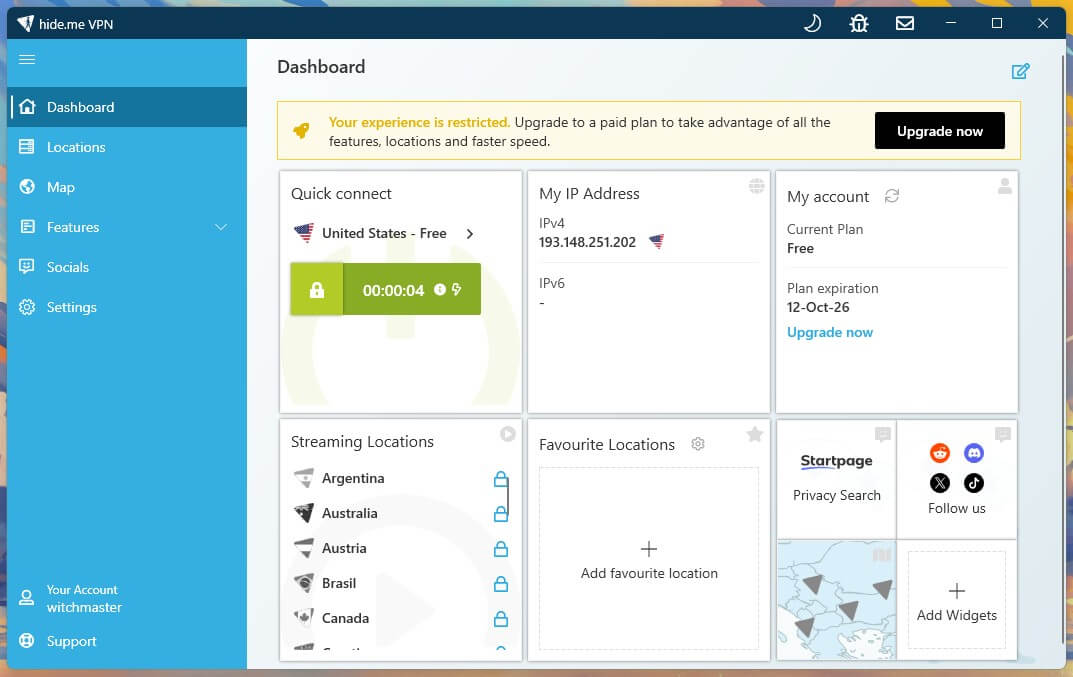
Hide.me is based in Malaysia, has no data cap on its free plan, and applies its no-logs policy to free users too. You can choose from seven free countries, including the US, the UK, and Germany, and it includes DNS leak protection.
On the other hand, the free plan blocks torrenting and doesn’t unblock streaming services, so treat it as a privacy tool for browsing.
PrivadoVPN
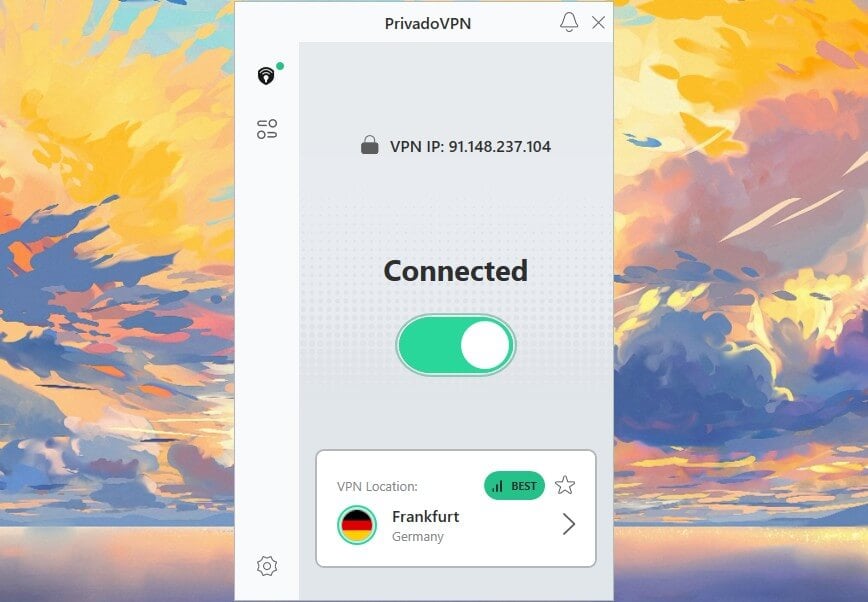
PrivadoVPN is based in Iceland, and its free plan includes a kill switch, WireGuard, and Scramble, an option that disguises VPN traffic. It was also the fastest free plan we tested. The limit is data: 10 GB a month, and you have to renew the allowance manually.
Its Control Tower blocker for ads and trackers is reserved for the paid plan, so pair the free version with a browser blocker.
Verdict
A privacy policy is only as good as the evidence behind it, and NordVPN has the strongest mix of proof and everyday usability. It’s our first recommendation for most people. The decision between NordVPN and Proton VPN depends on what you’re protecting against.
Proton VPN’s Swiss base, open code, and cash payments make more sense if you want as little as possible tied to your name. No VPN fixes a browser that’s signed in everywhere, so pair your VPN with cleaner browsing habits.
FAQ
What is the most private VPN?
NordVPN and Proton VPN are the most private mainstream VPNs. They have audited no-logs policies and multi-hop servers, and Proton VPN adds open-source apps, Swiss jurisdiction, and the option to pay in cash.
Does a VPN make you anonymous?
No. A VPN hides the IP address and encrypts traffic on the local network, but sites still identify users through accounts, cookies, and browser fingerprinting. Full anonymity requires tools like Tor Browser.
Are proxies better than VPNs for privacy?
No. Most proxies don't encrypt traffic, so the network and the proxy operator can read it, and they protect only one app or browser. A VPN encrypts the connection for the whole device.
Can you protect your privacy without a VPN?
Yes, partly. A privacy browser, tracker blockers, and encrypted DNS limit tracking, but the network operator can still see which sites are visited. A VPN or Tor Browser covers that remaining exposure.