The gap between these two is narrower than their reputations imply. PureVPN has spent the past few years rebuilding after a 2017 privacy failure, and the rebuild has worked better than most people realize. Surfshark still wins 5 rounds to 1, with two ties. PureVPN takes speed and matches it on privacy and censorship. Details below.
Surfshark vs PureVPN: Quick Breakdown
| Surfshark 🏆 | PureVPN | |
| Our Current Ranking 📋 | #5 | #9 |
| Prices 🤑 | Starts at $2.49 monthly | Starts at $2.15 monthly |
| Money-Back Guarantee 🪙 | 30 days for all plans | 31 days for all plans |
| Free Version/Free Trial 🆓 | No/7 days iOS and Android | No/7 days for $0.99 |
| Logging/Jurisdiction 🕵️ | No logging/Netherlands | No logging/British Virgin Islands |
| Independent Audits | Deloitte, Cure53 | KPMG, four audits plus always-on |
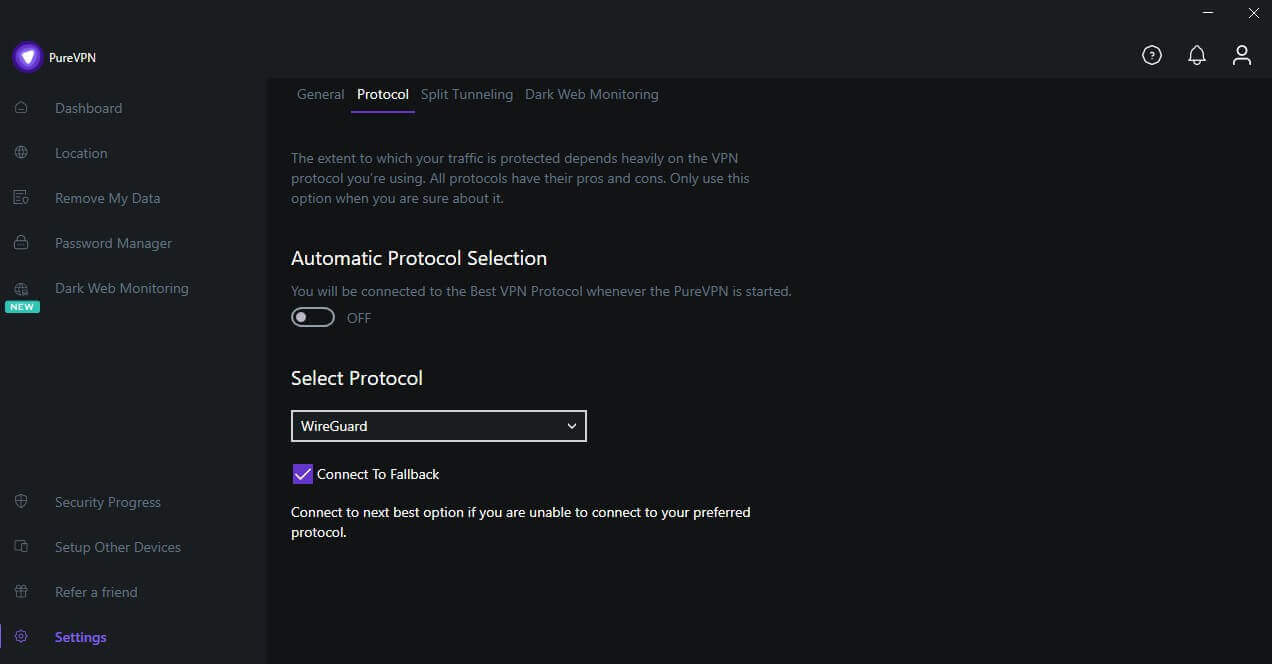
| Protocols 🌐 | WireGuard, OpenVPN, IKEv2, Dausos (macOS) | WireGuard, OpenVPN, IKEv2 |
| Servers 🏠 | 4,500+ in 100 countries | 6,500+ in 78+ countries |
| Specialty Servers ✅ | Multi-Hop, Dedicated, and Static IP | Port Forwarding, Quantum-Resistant, P2P, Streaming |
| Ad Blocking 🔺 | Yes, CleanWeb | Yes |
| RAM-Only Servers 🛡️ | Yes | Yes |
| Working With Netflix 📺 | Yes (25+ catalogs) | Yes, major libraries only |
| P2P Allowance ↔️ | Yes | Yes |
| Concurrent Connections 📟 | Unlimited | 10 |
Ease of Use and Compatibility
Coverage is equivalent. Desktop, mobile, Smart TVs, Fire TV Sticks, Apple TV, Nvidia Shield, and routers are handled by both, and each publishes proper setup guides for households running many devices. The device allowance separates them. Surfshark permits unlimited connections against PureVPN’s 10. Running our team on a Surfshark account was easy.
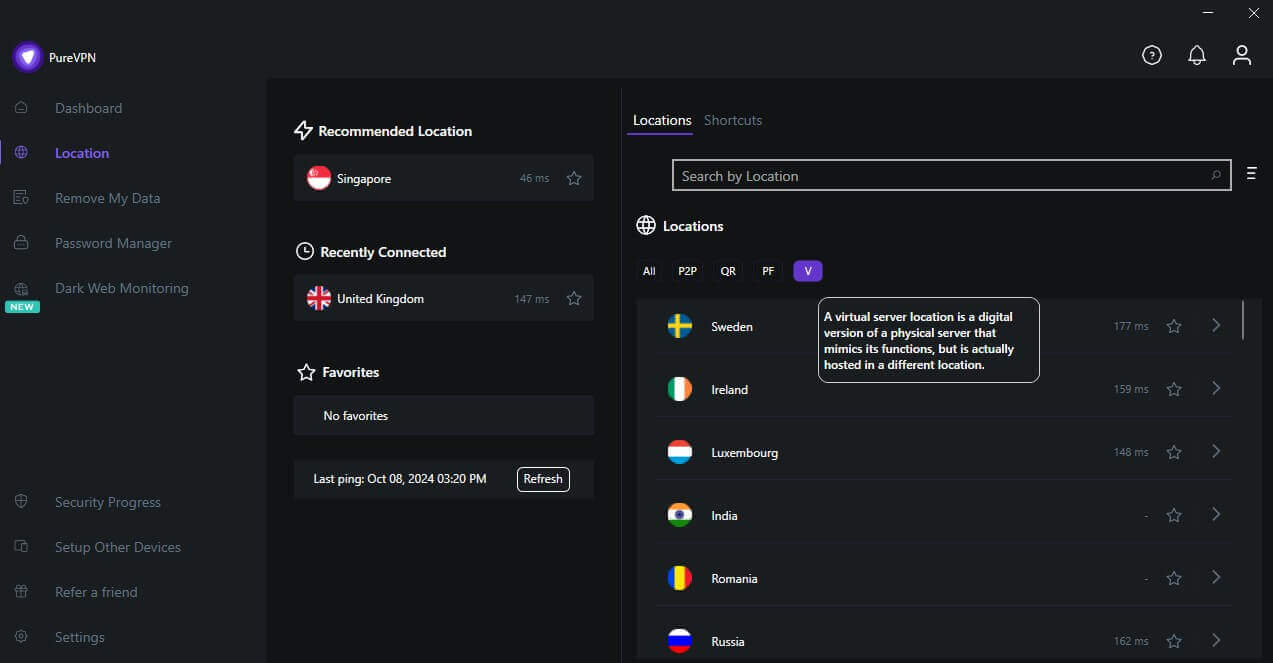
On PureVPN, we regularly had to disconnect someone to stay under the cap. Surfshark’s app client is the tidier of the two, with servers on the home screen, settings down the left, and the bonus tools pulled out into their own section so they aren’t buried. PureVPN’s app is capable but busier.
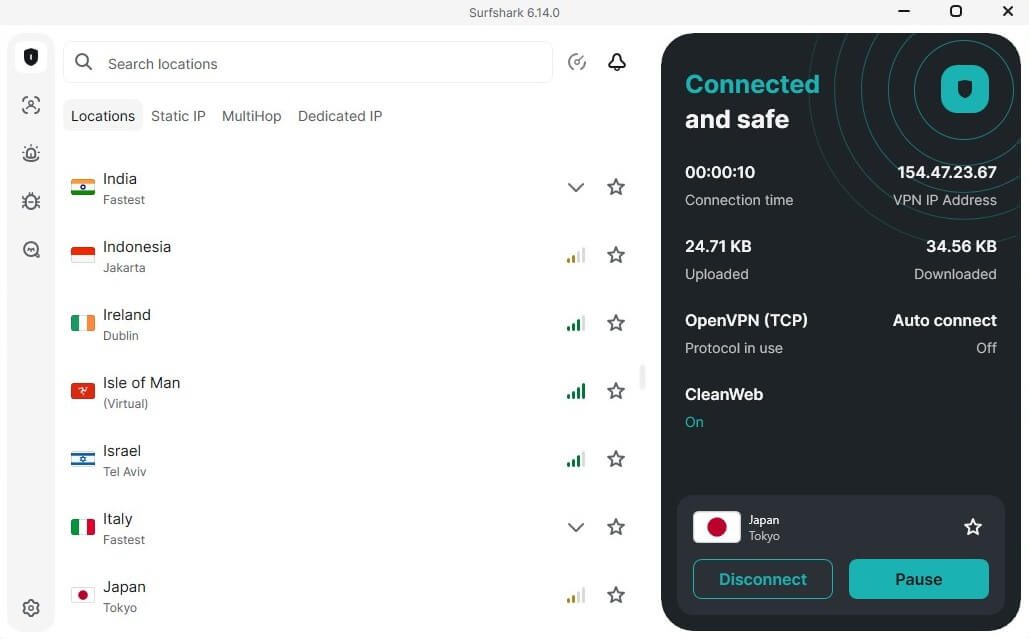
Servers sit on the right, a long list of features on the left, and the whole thing takes longer to learn. Our PureVPN review rated its feature set highly and its interface as average. Its mobile clients are the better half, being simpler and quicker to respond.
Winner: Surfshark
No device cap and cleaner software. PureVPN isn’t far behind on either count, and 10 connections covers most households anyway.
PureVPN is Cheaper Than Surfshark: Price Comparison
PureVPN runs three tiers, and every 2-year plan carries three extra months, so the billed term is 27 months (a dedicated IP is a paid add-on on any tier):
- Standard at $2.15/mo, 83% off, billed $58.20, renewing at $47.95 a year. VPN and tracker blocker.
- Plus at $2.73/mo, 85% off, billed $73.80, renewing at $69.95 a year. Adds a password manager.
- Max at $3.55/mo, 82% off, billed $95.85, renewing at $84.95 a year. Adds data removal, dark web monitoring, and 3 GB of eSIM data.
Surfshark’s Starter plan is $2.49 monthly on the 2-year term, covering the VPN and Alternative ID. Surfshark One at $2.79 adds antivirus and the wider security suite. Annual terms begin at $3.39; both include three free months, and monthly billing is expensive on either service. Renewals matter. Surfshark Starter climbs to $79 a year once the promotion ends.
| 2-Year Price | 1-Year Price | Monthly Price | Renewal Price | |
| PureVPN | $58.20 | $40.80 | $12.95 | $47.95 annually |
| Surfshark | $67.23 | $50.85 | $16.45 | $79 annually |
PureVPN Standard renews at $47.95, around $31 less every year from that point on. Two details cut the other way. PureVPN charges around $0.99/mo for port forwarding, and its 7-day trial costs $0.99 rather than nothing. Refunds run 30 days at Surfshark, and 31 at PureVPN, and both accept crypto, which Bitdefender VPN and similar bundled services don’t.
Winner: PureVPN
Cheaper to buy and considerably cheaper to keep. Standard undercuts Surfshark Starter, matches its three bonus months, and renews $31 a year lower. Surfshark’s counter is unlimited devices, which brings the per-person cost down in a household, and the first round credits that. Both VPNs sit at the affordable end of the market.
Surfshark is More Secure Than PureVPN
Here are my findings after extensive testing.
Shared Features
Both cover 256-bit encryption, an automatic kill switch, split tunneling, DNS and IPv6 leak protection, and WireGuard alongside OpenVPN. Neither leaked in testing. Ad blocking, dark web monitoring, and data removal appear on both, though monitoring and removal sit on higher tiers at each and data removal is region-restricted.
How Are They Different?
PureVPN’s quantum-resistant servers are its clearest technical edge. Available on a subset of the network, they guard against future decryption in a way Surfshark hasn’t matched. Surfshark’s Alternative ID generates a working alias, complete with name, email, and date of birth, so you can sign up to things without handing over your own details. It also bundles Search.
It’s a tracking-free browser, and you get an antivirus across every platform, unusual at this price. Pairing antivirus with a VPN closes a gap neither tool covers alone. Three more sit on Surfshark’s side:
- Camouflage Mode, obfuscation that disguises VPN traffic
- Multi-Hop, chaining two servers for a second encryption layer
- IP Rotation, cycling your address every 10 minutes
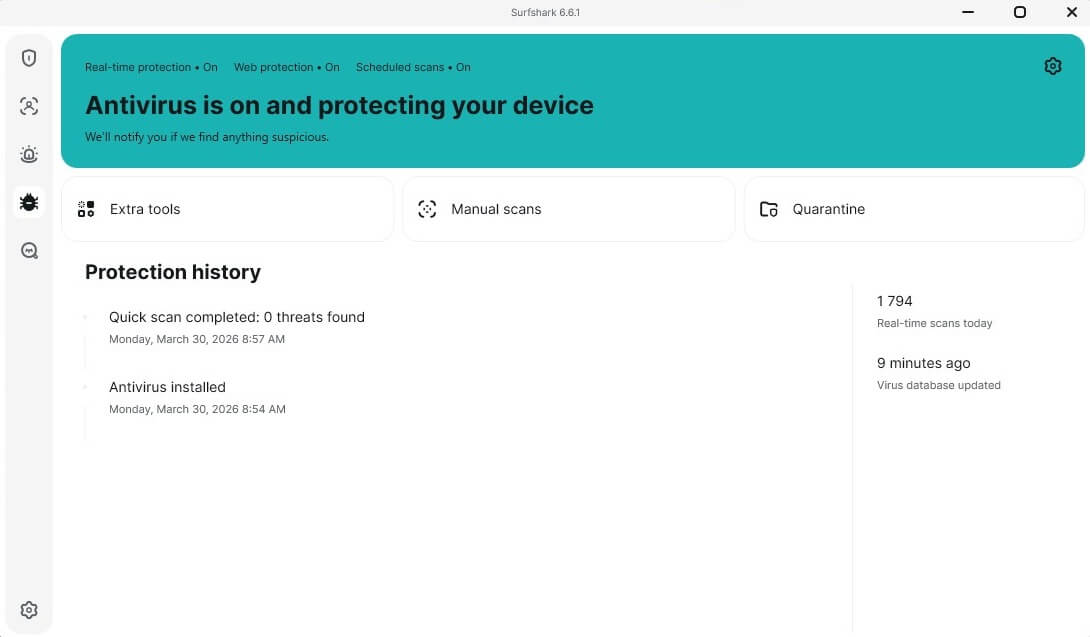
PureVPN counters with dedicated IPs, which Surfshark also sells, and port forwarding as a paid add-on. Surfshark lacks port forwarding, though; honestly, whenever I torrent, I never use it (due to privacy risks).
Winner: Surfshark
More in the box for the same money. Quantum-resistant servers are a genuine point for PureVPN, and antivirus, Alternative ID, Multi-Hop, and obfuscation outweigh it.
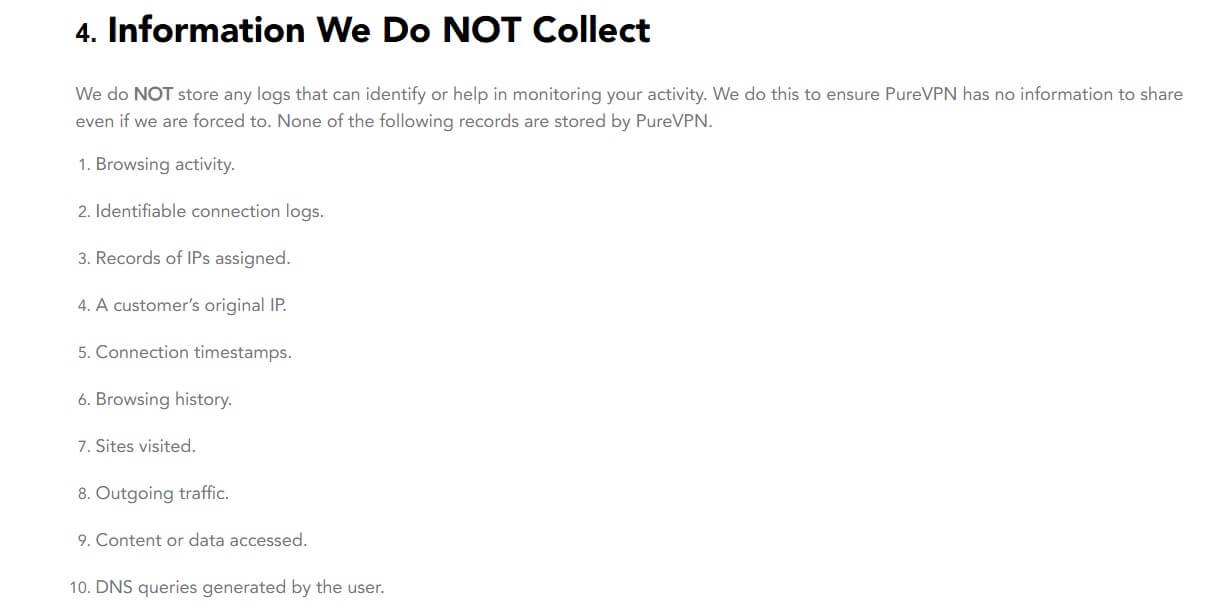
Surfshark and PureVPN Don’t Store Any Logs
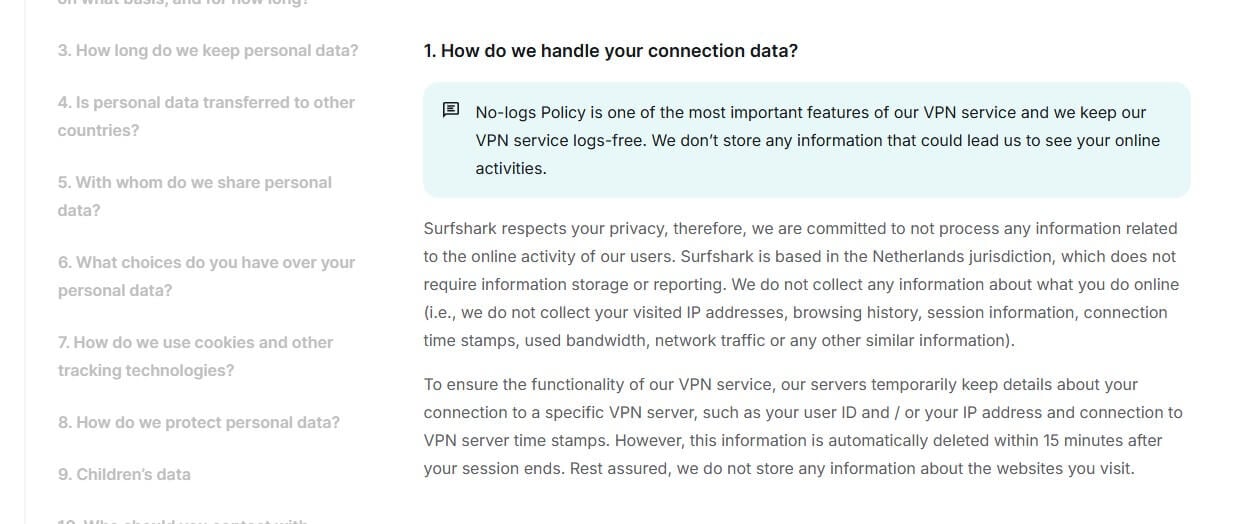
Neither retains browsing history, IP addresses, or DNS queries, and both run RAM-only servers that clear on restart. Surfshark operates from the Netherlands, inside the 9 Eyes alliance, with its no-logs policy verified by Deloitte and its infrastructure examined by Cure53. Its record is unblemished. PureVPN’s story is more complicated and, in one respect, more impressive.
In 2017, it handed user data to the FBI during a cyberstalking investigation while advertising itself as a no-log service. That was a serious breach of the core promise a VPN makes. What followed is unusual. Parent company GZ Systems relocated to the British Virgin Islands in 2021, a jurisdiction with no data retention requirement, and commissioned four independent KPMG audits.
It adopted an always-on audit framework, letting KPMG inspect without advance notice at any time, with the reports published openly. It also holds ISO 27001:2022 certification. No VPN submits to unannounced auditing; respect.
Winner: Tie
One has the cleaner history, the other the stronger jurisdiction and the more demanding audit regime. PIA shows a US base needn’t be disqualifying, and the same logic applies here in reverse: a 2017 failure needn’t be permanent when the response has been this thorough.
PureVPN is Faster Than Surfshark: Speed Test Results
Testing ran over three days, 3 times daily, from Southeastern Europe, across the UK, US, and Japanese servers with protocols left on automatic. NordVPN remains quicker than either, and it’s the fastest we measure.
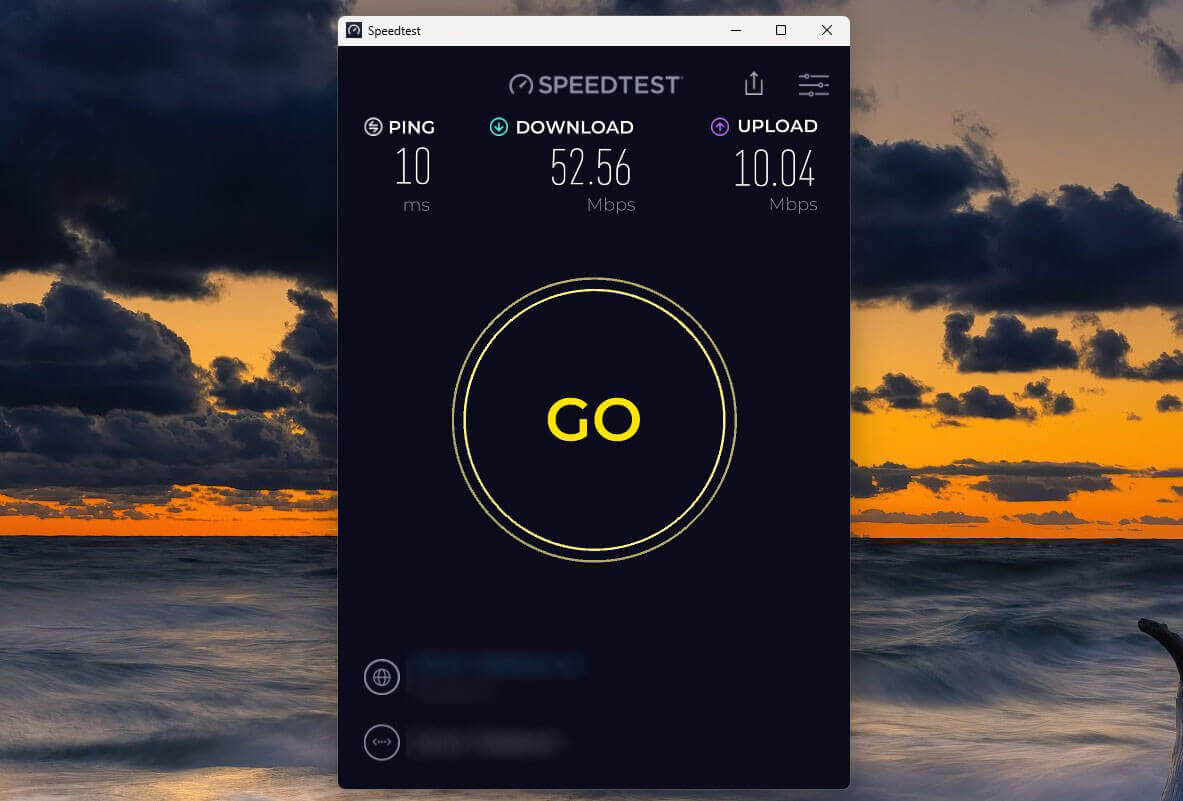
Here are the test results:
| PureVPN | Surfshark | |
| Download Speed Retention | 68% | 67% |
| Upload Speed Retention | 95% | 76% |
Downloads are nearly level, one percentage point apart, and Surfshark was quicker on the Japanese server. Uploads are where they part: 95% retention against 76% is wide enough to matter for seeding torrents, video calls, and large transfers.
| UK (Download/Upload) | US (Download/Upload) | Japan (Download/Upload) | |
| PureVPN | 46.77/9.64 Mbps | 37.31/9.22 Mbps | 22.6/9.74 Mbps |
| Surfshark | 40.99/8.33 Mbps | 35.74/9.53 Mbps | 27.85/4.82 Mbps |
Winner: PureVPN
Uploads decide it. Downloads are a coin toss, and PureVPN gave up almost nothing on the way up. It wins.
Surfshark is Better for Streaming and Torrenting
I found Surfshark to be better overall, and here’s why.
Streaming (Surfshark)
Surfshark opened 25+ Netflix catalogs, from the obvious US, UK, Australia, Canada, and Japan through to smaller South American, Asian, and African libraries. That puts it among the better Netflix VPNs at any price, helped by a browser extension that actually poofs location separately. BBC iPlayer, Hulu, ESPN Plus, Discovery Plus, and Max all worked too, with zero issues.
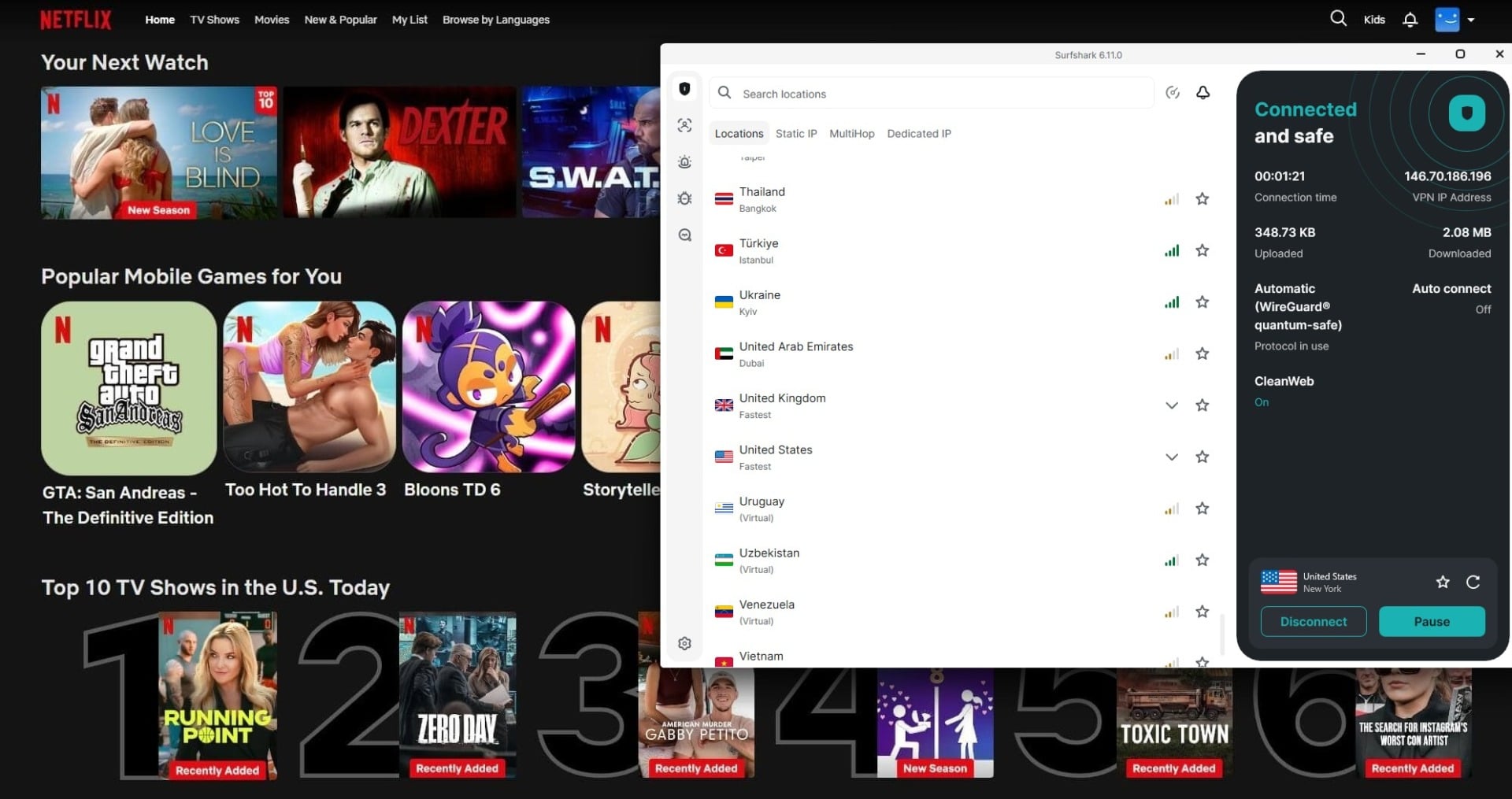
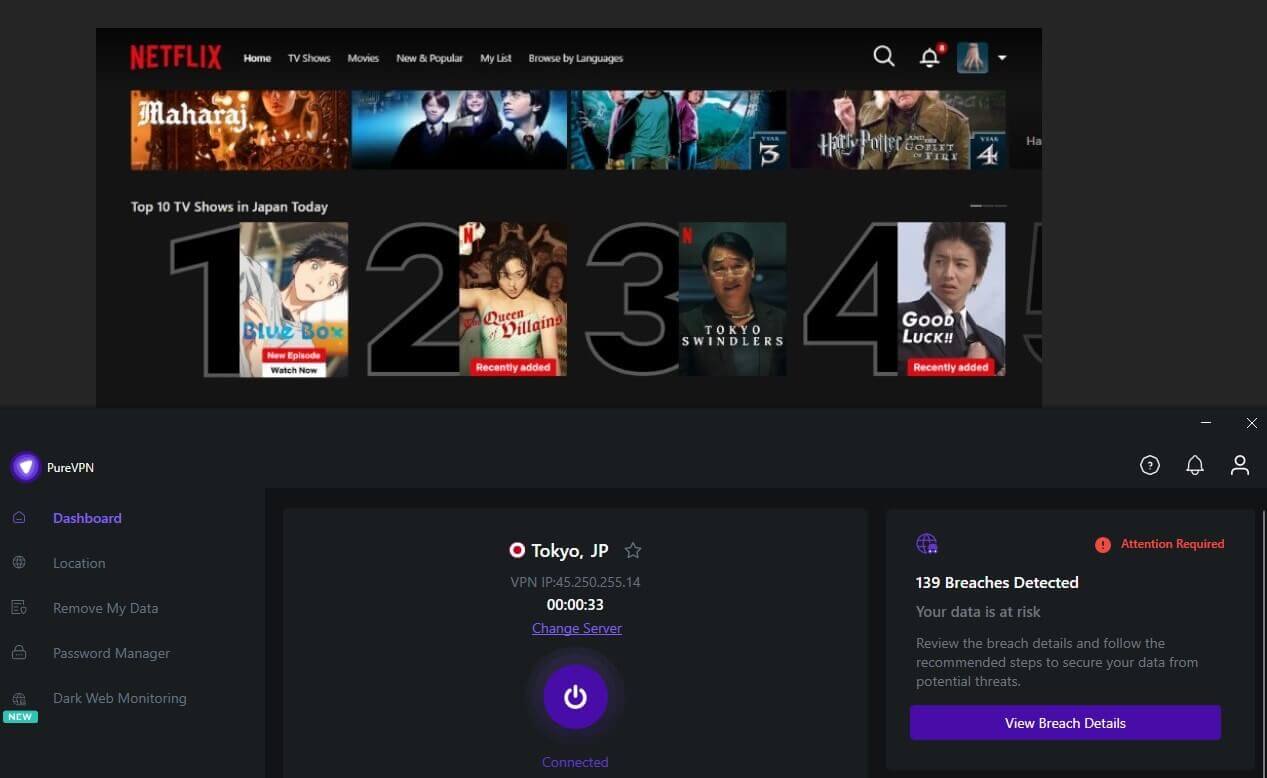
PureVPN cleared the major Netflix libraries plus BBC iPlayer, Disney+, and Hulu using its streaming-optimized servers, which you should select deliberately rather than picking any location. It stumbled on Prime Video regional catalogs and occasionally on Max. Both handled 4K without buffering.
Torrenting (Tie)
Level. Nearby servers cost Surfshark almost nothing in throughput, and PureVPN behaved the same across European locations.
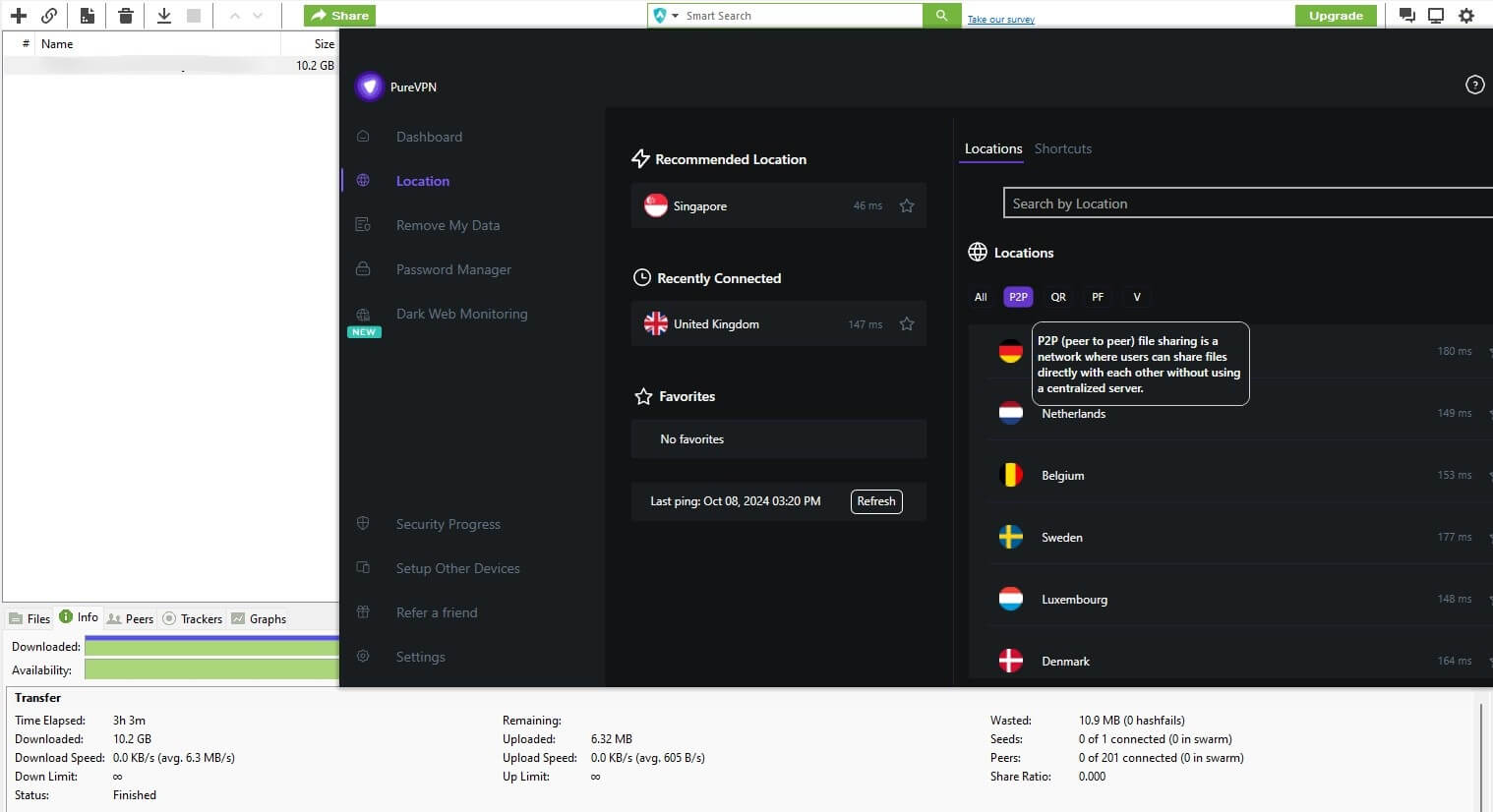
PureVPN adds port forwarding, which should improve peer connectivity, though it’s a paid add-on and our results with it were unremarkable. It also labels dedicated P2P servers, where Surfshark permits torrenting network-wide without designating any. It’s a bit more convenient in my eyes.
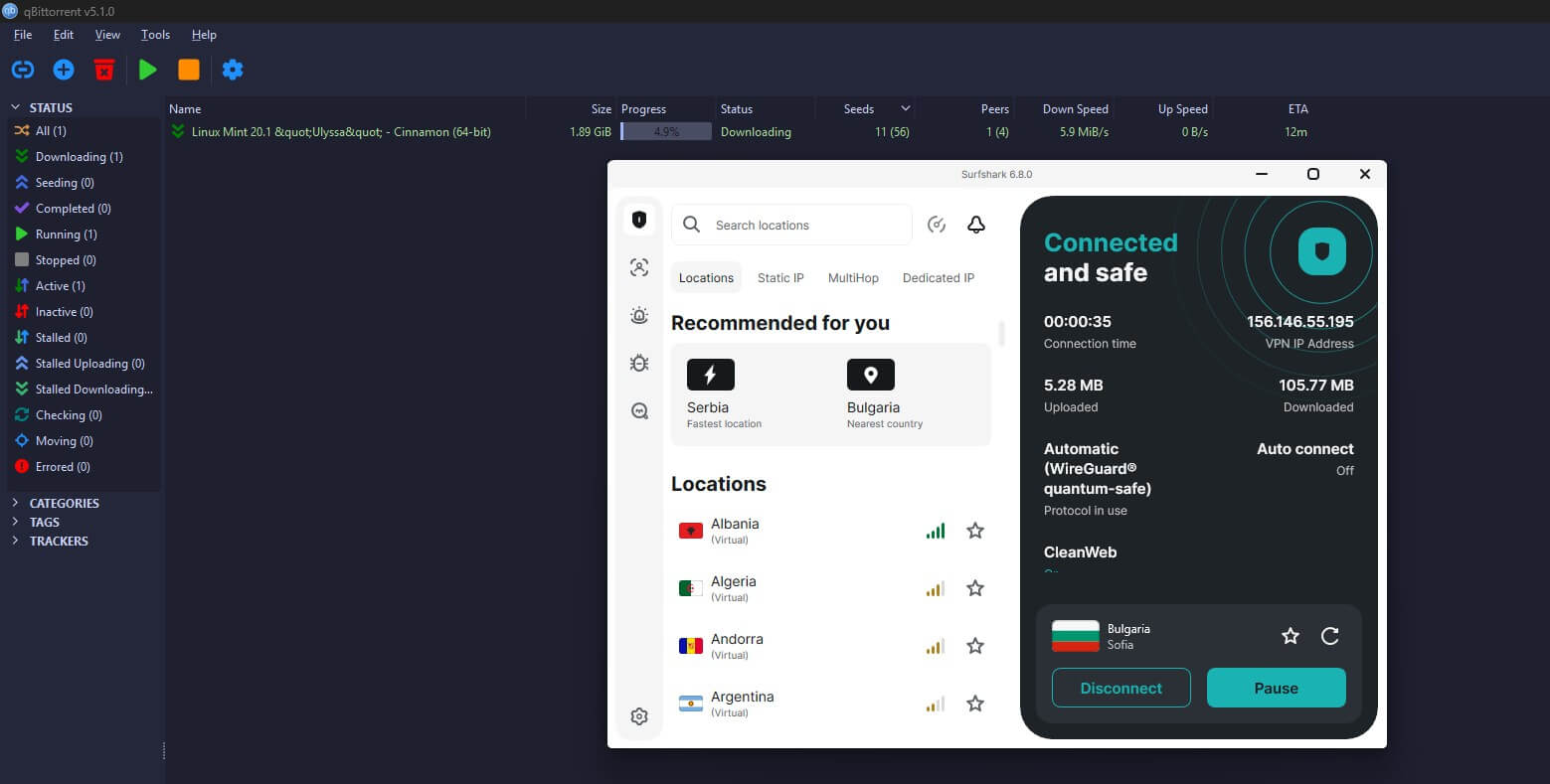
In the end, both VPNs allow torrenting, while PureVPN has special P2P servers for this scenario. Whether you use them or Surfshark’s “unlabeled” servers, speed, privacy, and security won’t be lacking.
Overall Winner: Surfshark
Streaming carries the round. Torrenting is a genuine tie, and 25 catalogs against the majors is a clear margin for Surfshark.
Server Locations: Why I Like Surfshark More
- Surfshark: 4,500 servers in 100 countries
- PureVPN: 6,500+ servers in 78+ countries
PureVPN fields around 2,000 more servers; Surfshark spans 22 more countries. Capacity against coverage, in other words, and coverage tends to be what people actually notice. Placement differs too. Surfshark runs Indian servers where PureVPN holds locations in China. Both networks are RAM-only on 10 Gbps ports, so hardware quality isn’t the variable.
Winner: Surfshark
Twenty-two more countries. This is the closest round on the page, and PureVPN’s larger fleet is a fair counterargument if congestion is your concern.
Bypassing Censorship: Both Are Very Good
China is the real test, and neither passes it comfortably. The Great Firewall has tightened considerably, and both providers connected roughly half the time with obfuscation switched on, at speeds sufficient for browsing and streaming once through. Elsewhere they’re dependable.
Both worked in the United Arab Emirates, and our contacts report the same from Turkey and Qatar, which makes either a reasonable travel companion.
Winner: Tie
Neither is a China specialist, and both handle everywhere else very reliably. Turn obfuscation on before you travel, since neither works reliably in a censored country without it.
Summary: Surfshark is Better Than PureVPN
Surfshark wins 4 rounds to 2, with 2 ties. It takes apps, features, streaming, and servers on the strength of unlimited connections, bundled antivirus, Alternative ID, 25+ Netflix libraries, and 22 more countries. PureVPN’s case is stronger than the scoreline implies. It’s cheaper to buy and $31 a year cheaper to renew.
It’s also faster on uploads; its quantum-resistant servers have no Surfshark equivalent, its British Virgin Islands base beats a 9 Eyes jurisdiction, and its always-on KPMG audit framework is the most demanding transparency commitment either company has made. The 2017 incident is no longer the whole story.
For most buyers, Surfshark is the better package, and you can claim an exclusive Surfshark coupon to bring the 24-month plan down further.