
Does Surfshark work in China? Yes, on one condition that most guides skip: the app has to be running OpenVPN. Leave it on the default protocol and the feature that gets you past the Great Firewall never activates. That confusion is worth clearing up before anything else, because it’s the difference between a working connection and twenty minutes of cycling servers in a Pudong hotel room.
Surfshark has two features that sound interchangeable and aren’t. This guide covers which one does the work, how to switch it on, and what to try when the connection still won’t hold. Surfshark remains a cheap VPN, so if the setup works for you, it’s the least expensive route through.
Surfshark China 2026: NoBorders and Camouflage Mode Tutorial
- Subscribe to Surfshark before you reach the mainland, or from Hong Kong if you’re already in the region.
- Install the app on every device you’re bringing.
- In Settings → Protocol, select OpenVPN (TCP). This step is the one that matters, and it comes first.
- Confirm Camouflage Mode is on, then enable NoBorders and the Kill Switch. CleanWeb (ad-blocking) is optional and free.
- Connect to a server outside China. Japan, Taiwan, and Singapore give the best latency for browsing, gaming, and streaming.
Does Surfshark Work in China Now?
Yes, when it’s configured properly, and that qualifier carries more weight in China than anywhere else on earth. Success rates swing by city and by carrier. Readers on China Mobile in smaller cities report far fewer problems than anyone on China Telecom in Beijing during a national holiday, when filtering tightens noticeably.
What separates a working setup from a dead one comes down to two tools that Surfshark’s own marketing does a poor job of distinguishing:
- Camouflage Mode is obfuscation. It runs OpenVPN Scramble, an XOR-based technique that repackages your traffic so deep packet inspection reads it as ordinary HTTPS. It only functions on the OpenVPN protocol. Select WireGuard or IKEv2, and it does nothing.
- NoBorders is server curation. When the app spots a restricted network, it serves up a shortlist of endpoints that tend to survive those conditions and connects you to the nearest. Useful, but it leaves your traffic untouched.
Put plainly: NoBorders picks a better door; Camouflage Mode is what stops the guard recognizing you. In China you need both, and Camouflage is the one people miss because it’s gated behind a protocol change nobody tells them to make.
How to Use Surfshark in China in 2026?
Using Surfshark in China is entirely possible, but as said, it’s not a single button press. But, like many top VPN providers, Surfshark offers a user-friendly interface that helps you set it up without a fuss. Let’s see how to do it in a few simple steps.
1️⃣ Subscribe to a Surfshark Plan
Surfshark is paid-only. The Starter plan costs $2.49/mo on the two-year term and covers everything discussed; One and One+ add antivirus and identity tools you don’t strictly need for this. Our Surfshark coupons page has the current rate. There’s a 30-day refund window, worth knowing given how variable results are.
2️⃣ Install the Surfshark App
Grab the app from the Download tab before you fly. Native builds cover Windows, macOS, Linux, Android, and iOS; all of the main platforms.
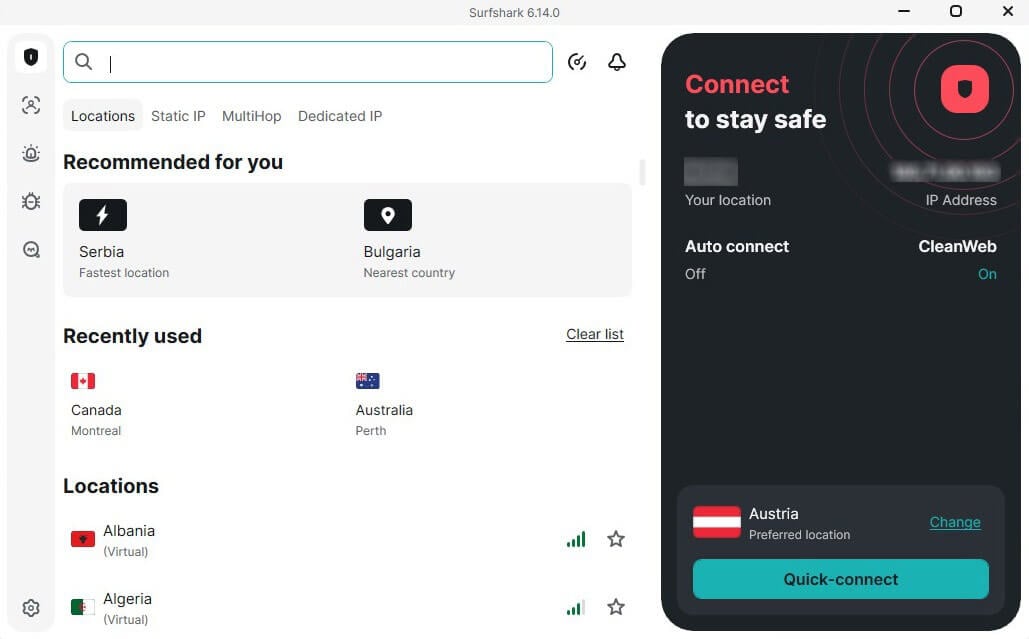
Unlimited simultaneous connections is the feature that earns its keep. Laptop, phone, tablet, Fire Stick, all covered by one subscription, and no rationing when something stops working and you need to test on a second device.
3️⃣ Configure Relevant Settings
Log in, then open VPN Settings before you connect to anything. Set the Protocol to OpenVPN (TCP) first. TCP is slower than UDP but holds up better on congested or filtered links, which describes most Chinese networks. With OpenVPN selected, Camouflage Mode becomes available and runs on every server.
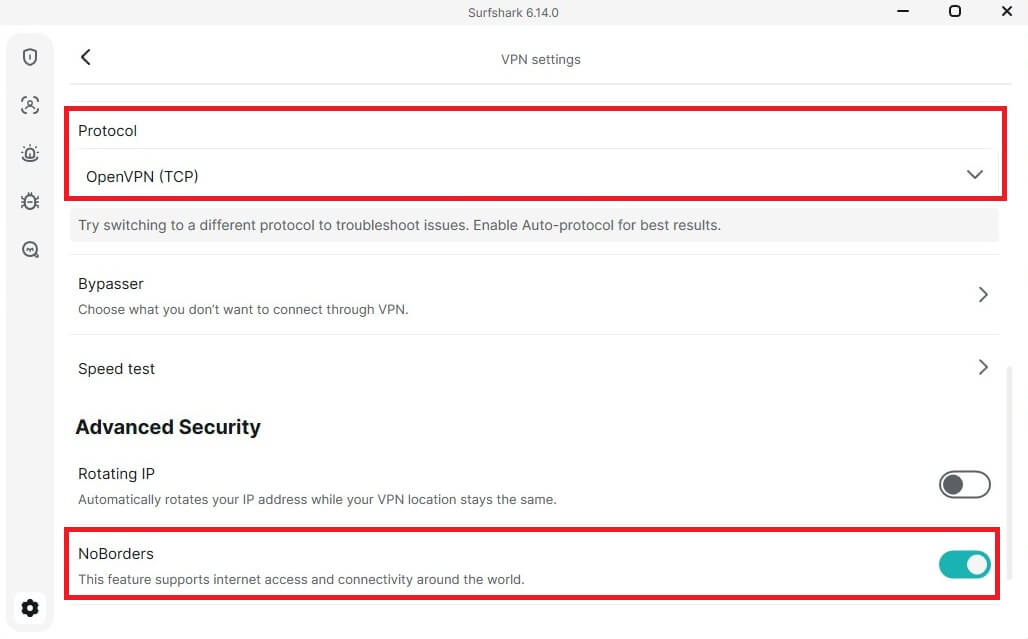
After that, turn on the Kill Switch so a dropped tunnel doesn’t expose your traffic mid-session, and flip on NoBorders in the Advanced tab. CleanWeb blocks ads, trackers, and malicious domains at no extra cost on any plan, so there’s little reason to leave it off, no matter your location.
4️⃣ Connect to a VPN Server Outside China
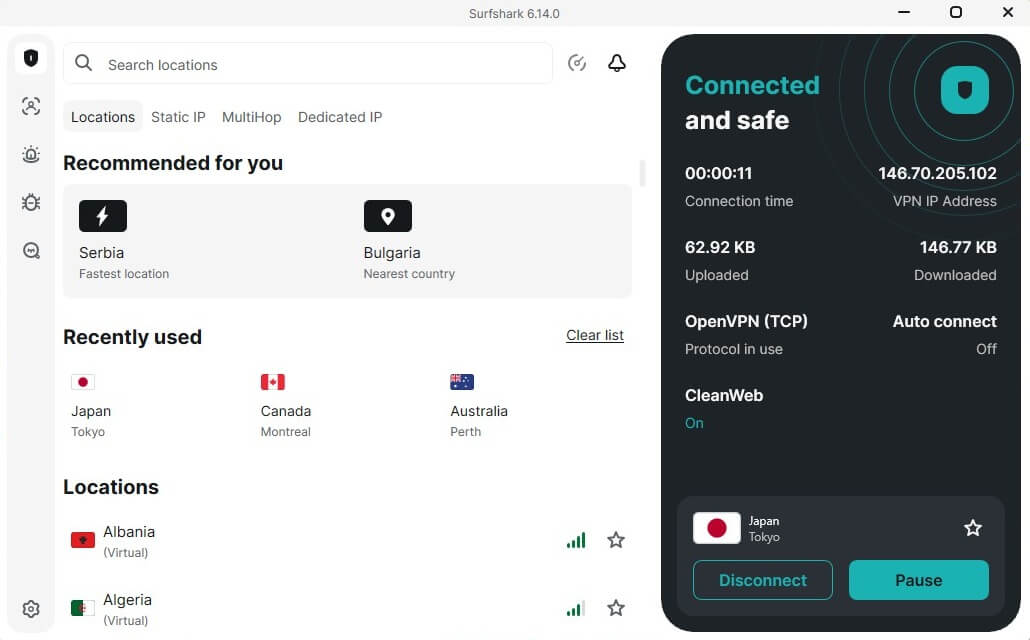
Back on the home screen, pick a nearby uncensored country. Japan, Taiwan, and Singapore keep round-trip times low enough for video calls. The Recommended list works too, though manual selection gives you something to vary when a route stops responding.
5️⃣ Verify Your Connection and Use Surfshark in China
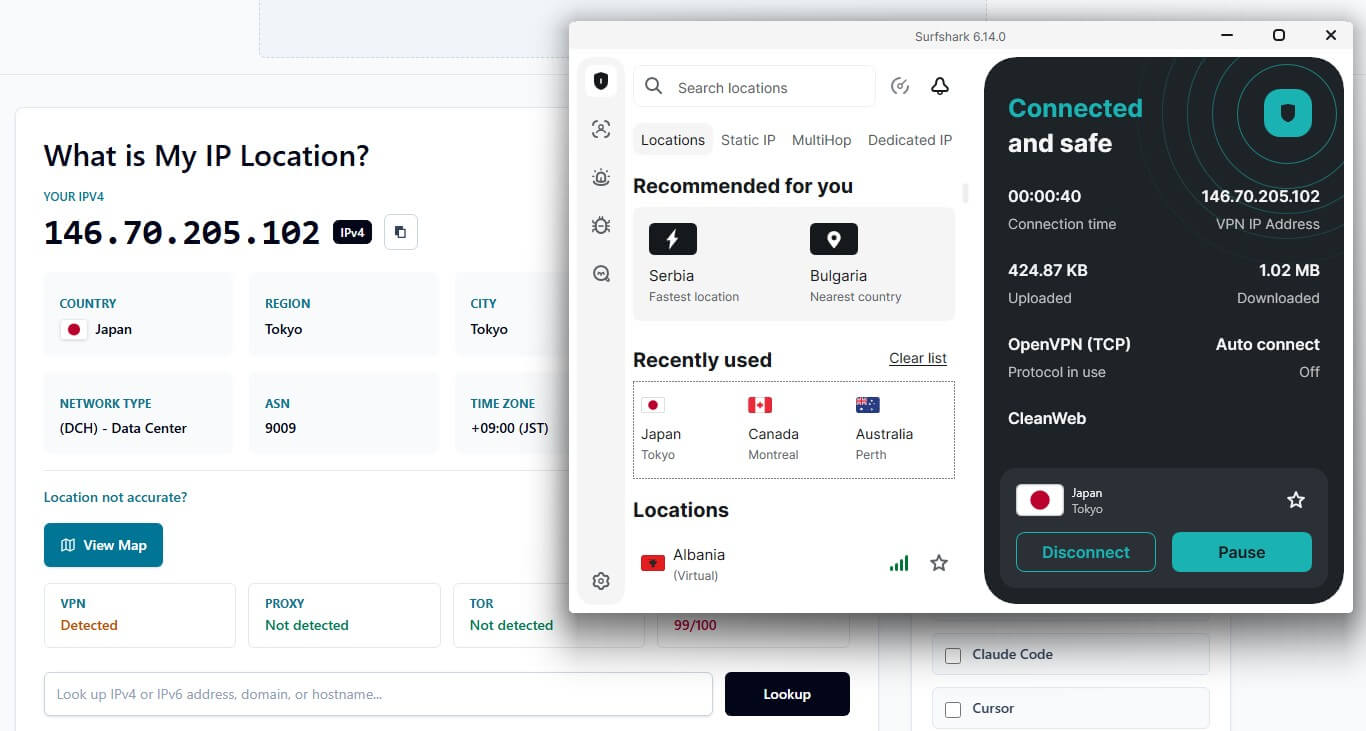
Check the connection before you rely on it. An IP lookup takes five seconds and tells you whether the tunnel is actually carrying your traffic. Once it’s confirmed, you can use YouTube in China, run VoIP calls, and reach the rest of what the Great Firewall of China blocks.
Why You Should Use Surfshark in China in 2026
Many VPNs are more reliable behind the firewall, and our China VPN rankings put NordVPN first for good reason. Surfshark’s case rests on different ground.
- Price. Nothing else that works there costs $2.49/mo. If the setup holds on your network, you’ve solved the problem for the price of a coffee a month.
- Obfuscation. Camouflage Mode isn’t cosmetic. OpenVPN Scramble is a proven technique, and Surfshark applies it across the whole network rather than restricting it to a handful of special servers the way some competitors do.
- Device count. Unlimited connections matter more here than in ordinary use, because troubleshooting means testing across devices.
- Security. AES-256, DNS leak protection, dynamic MultiHop, and a no-logs policy audited by Deloitte. It sits comfortably among the most secure VPNs available.
- Network reach. Over 4,500 servers across 100 countries, including Japan, Taiwan, and India. Proximity is what keeps a censored connection usable.
- Speed, with a caveat. WireGuard puts Surfshark among the fastest VPNs in normal conditions. Camouflage Mode forces you onto OpenVPN, so expect a drop. That’s the trade, and it’s worth making.
Our full Surfshark review covers how it performs outside restricted regions, where it also ranks well for streaming and on school networks.
Surfshark Not Working in China? Troubleshooting Tips
- Check the protocol before anything else. Nine times out of ten, the app has reverted to WireGuard or Automatic, which means Camouflage Mode is off. Do not leave the protocol on Automatic in China. Set it explicitly.
- Try OpenVPN UDP instead of TCP. Both support Camouflage. UDP is quicker when the network allows it.
- Rotate servers. Individual endpoints get blacklisted constantly. Work through the nearby countries before assuming the service itself is down.
- Update the app. Obfuscation is an arms race, and the patches matter.
- Message support. Live chat works 24/7 and can tell you which servers are holding up on the mainland, which is information you can’t get from the app.
Does Surfshark Work in China: Final Verdict for 2026
Surfshark gets through, provided you make the protocol change nobody mentions. Configured correctly, it’s the cheapest thing on the market that stands a chance behind the Great Firewall. Configured out of the box, it will fail, and most people who report that it doesn’t work in China never enabled the obfuscation at all.
Set it up before you fly and test it on your home network first, so you know what a working connection looks like before you’re troubleshooting somewhere the provider’s own website is unreachable. If reliability matters more than cost, pair it with one of the stronger providers and keep Surfshark as the cheap fallback.
Bypass censorship in China with Surfshark
Surfshark China Performance FAQ
🛠️ Is Surfshark NoBorders mode working in China?
It works, but on its own it isn't enough. NoBorders detects the restriction and offers servers suited to it. The disguising is handled by Camouflage Mode, a separate feature that requires the OpenVPN protocol. Enable NoBorders by all means, just don't expect it to hide your traffic, because that isn't its job.
✅ Does Surfshark VPN work in China?
Yes, with the right configuration. Switch the protocol to OpenVPN so Camouflage Mode engages, add NoBorders and the Kill Switch, then connect somewhere nearby and uncensored. Skip the protocol step, and it almost certainly won't connect.
⚖️ Is it legal to use Surfshark in China?
It sits in a grey area. Chinese law permits only state-approved VPNs, and Surfshark isn't one, so using it isn't legally protected. Enforcement against individuals is rare and has focused on people distributing or selling access rather than travellers checking their email, though fines have been issued to residents in some provinces. Treat it as tolerated rather than permitted, and don't assume the position is fixed.