
Surfshark is a strong VPN. It’s quick, it costs little on a long plan, and it puts no cap on devices, which almost nobody matches. It also has gaps. Its network is the smallest among the major VPNs, its monthly rate is steep, and the Netherlands sits inside the 9 Eyes alliance. Five providers fix one or more of those.
Surfshark Alternatives Compared
| Servers / Countries | Devices | 2-Year Price | Audit | Where it beats Surfshark | |
|---|---|---|---|---|---|
| Surfshark | 4,500 / 100 | Unlimited | $2.49/mo | Deloitte, Cure53 | |
| NordVPN | 9,500+ / 149 | 10 | $3.49/mo | Deloitte, February 2026 | Speed, network size, streaming |
| Proton VPN | 20,000+ / 148 | 10 | $2.99/mo | Audited, apps open source | Swiss base, free plan, cheaper |
| ExpressVPN | 3,000+ / 113 | 10 to 14 | $3.49/mo | 20+, including KPMG in 2025 | Simplicity, post-quantum, Smart DNS |
| Private Internet Access | 26,000+ / 91 | Unlimited | $2.19/mo | Deloitte, court-tested | Price, open-source apps |
| CyberGhost | 12,000+ / 100 | 7 | $2.19/mo | Deloitte, quarterly | 45-day refund window |
Surfshark Alternatives Tested and Reviewed
None of these fixes everything Surfshark does well. Pick the one that solves your particular complaint. The first three are entirely better, though.
1. NordVPN: Best Surfshark Alternative Overall
Pros
- Over 9,500 global servers
- Faster than Surfshark in tests
- Stronger obfuscation
- Capable malware protection
- Post-quantum encryption
Cons
- 10-deice cap
- Pricier than Surfshark
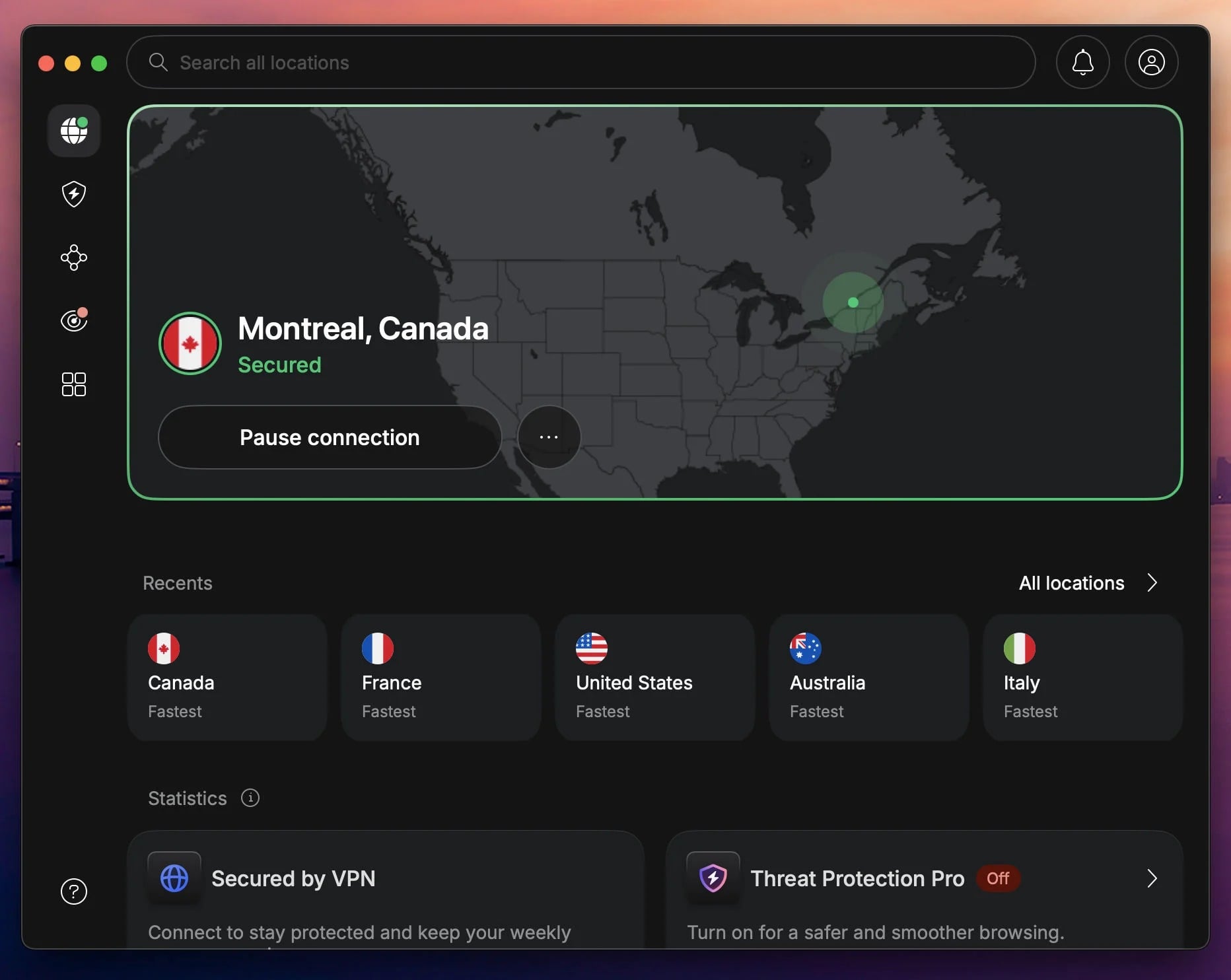
NordVPN is our top-rated provider, and it addresses Surfshark’s two clearest weaknesses at once. The Panamanian company fields 9,500+ servers across 149 countries, roughly twice Surfshark’s fleet in 49 more countries. Speed follows from that density. NordLynx, built on WireGuard, gave up less throughput than anything else, which holds up for 4K streaming and gaming.
Unblocking is equally strong, clearing 20+ Netflix catalogs without server-hunting. P2P works on every server since NordVPN retired its standalone P2P category, meaning safe downloading requires no hunting for the right location. Security covers AES-256, a kill switch, DNS leak protection, Threat Protection, Double VPN, and post-quantum encryption on NordLynx.
Surfshark answers it only through its macOS-only Dausos protocol. Panama imposes no data retention requirement, and Deloitte has verified the no-logs policy every year since 2018. You get 10 connections against Surfshark’s unlimited, which is the trade-off. A 30-day refund window applies to every plan.
2. Proton VPN: Most Secure Surfshark VPN Alternative
Pros
- Over 20,000 servers
- All apps are open-source
- Strong privacy pedigree
- Secure Core routing
- Faster than Surfshark
Cons
- Pricier than Surfshark
- 10-device cap
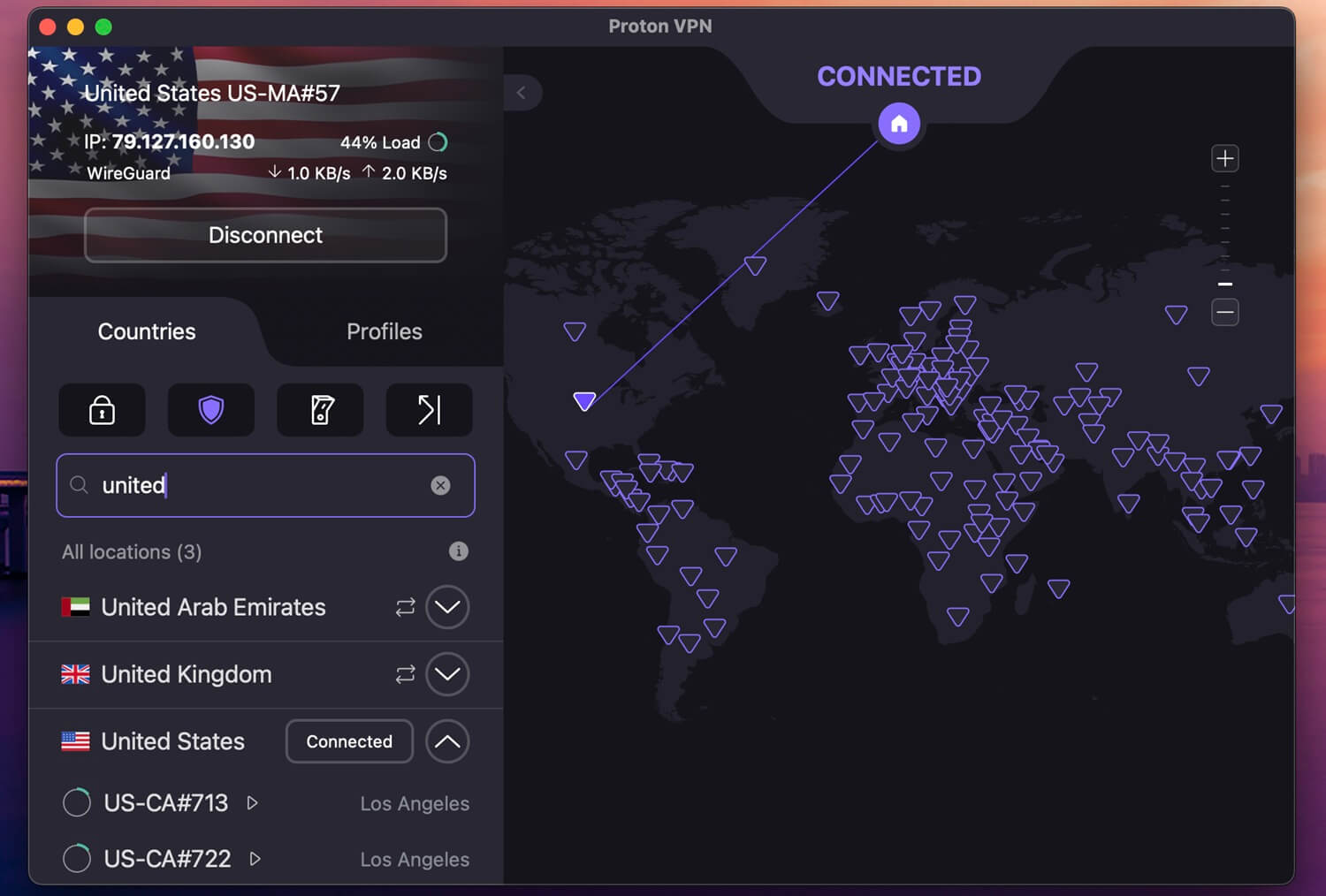
Nobody closes Surfshark’s network gap as hard. Where Surfshark fields 4,500 servers, Proton VPN has more than 20,000 across 148 countries, four and a half times the hardware in 48 more countries. Jurisdiction is the other draw of one of the best Surfshark alternatives. Surfshark files its paperwork in the Netherlands, a 9 Eyes participant; Proton VPN answers to Swiss regulators.
Switzerland imposes no obligation to retain anything about subscribers. It also publishes the source for every client, so researchers audit the software rather than a description of it. Secure Core adds a hop through Proton-owned hardware, Tor works without a separate browser, and NetShield filters ads and malware. Our testing opened Netflix, Prime Video, Hulu, and YouTube TV, too.
Plus costs $2.99 monthly on the two-year term, fifty cents above Surfshark. The network and the jurisdiction are what that buys.
3. ExpressVPN: Faster Surfshark Alternative
Pros
- Beginner-friendly apps
- Post-quantum encryption
- Smart DNS is included
- Faster than Surfshark
- Automatic obfuscation
Cons
- Steep renewal price
- No MultiHop
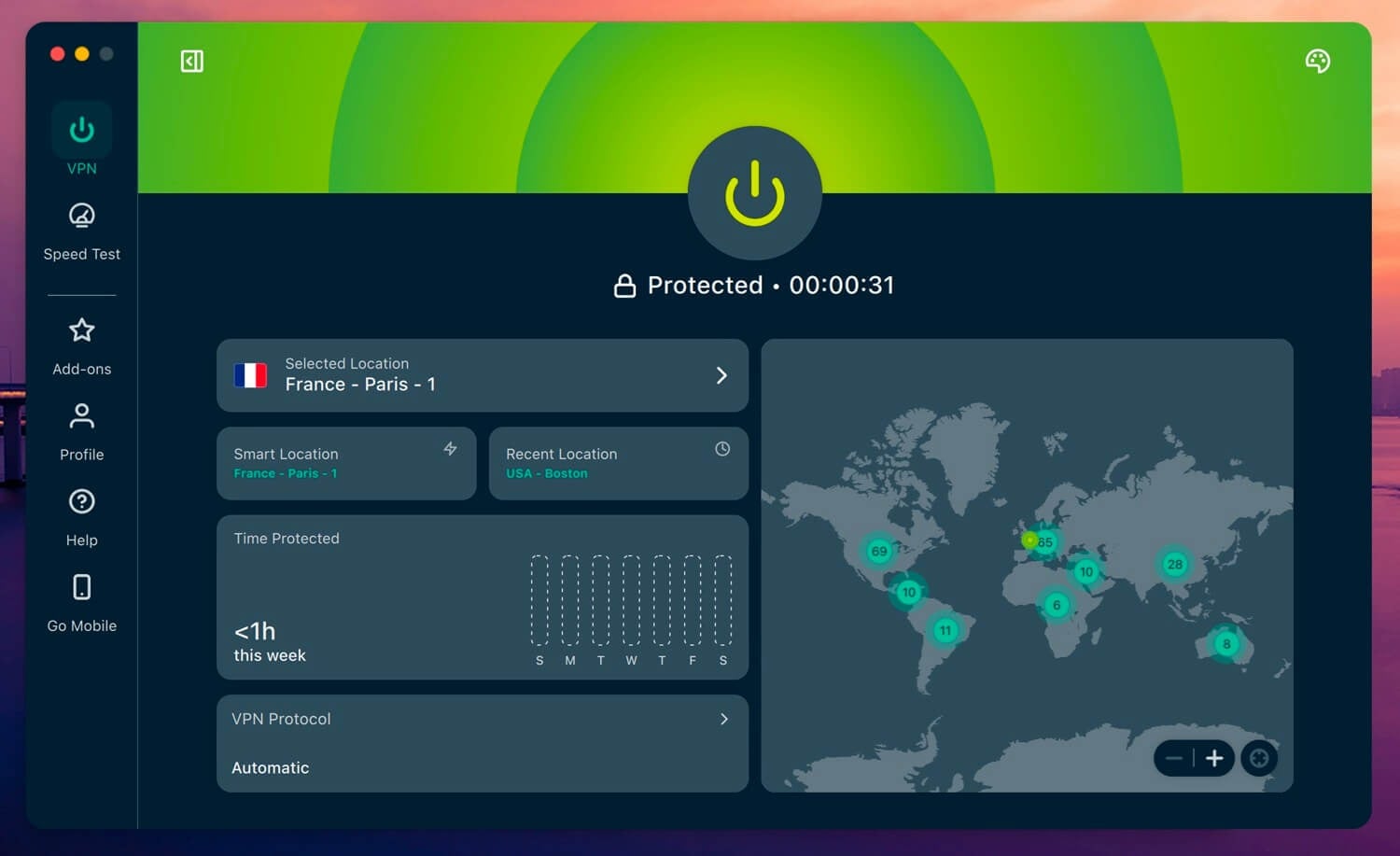
ExpressVPN suits anyone who found Surfshark’s feature list overwhelming. Its apps do one thing plainly, and 3,000+ servers across 113 countries and 214 locations put a connection point near most people. Those 10 Gbps servers handle 4K without stutter, and Netflix US opened instantly in testing, with Hulu and Prime Video needing no server swaps. Smart DNS pushes access onto games consoles and ageing televisions, something Surfshark cannot do at all.
Lightway, rebuilt in Rust, is the quickest protocol, and its post-quantum protection is on from the start rather than on one platform in beta. Underneath sit AES-256, a kill switch, leak protection, and TrustedServer, ExpressVPN’s RAM infrastructure. Its British Virgin Islands registration falls beyond the reach of the Eyes alliances.
Device counts start with 10 on Basic to 14 on Express Pro plans, short of Surfshark’s unlimited, though router support closes some of that gap.
4. Private Internet Access: Cheapest Surfshark Alternative
Pros
- Very customizable
- Unlimited devices
- Cheaper than Surfshark
- No-log proven in court
Cons
- US jurisdiction, 5 Eyes
- Inconsistent streaming
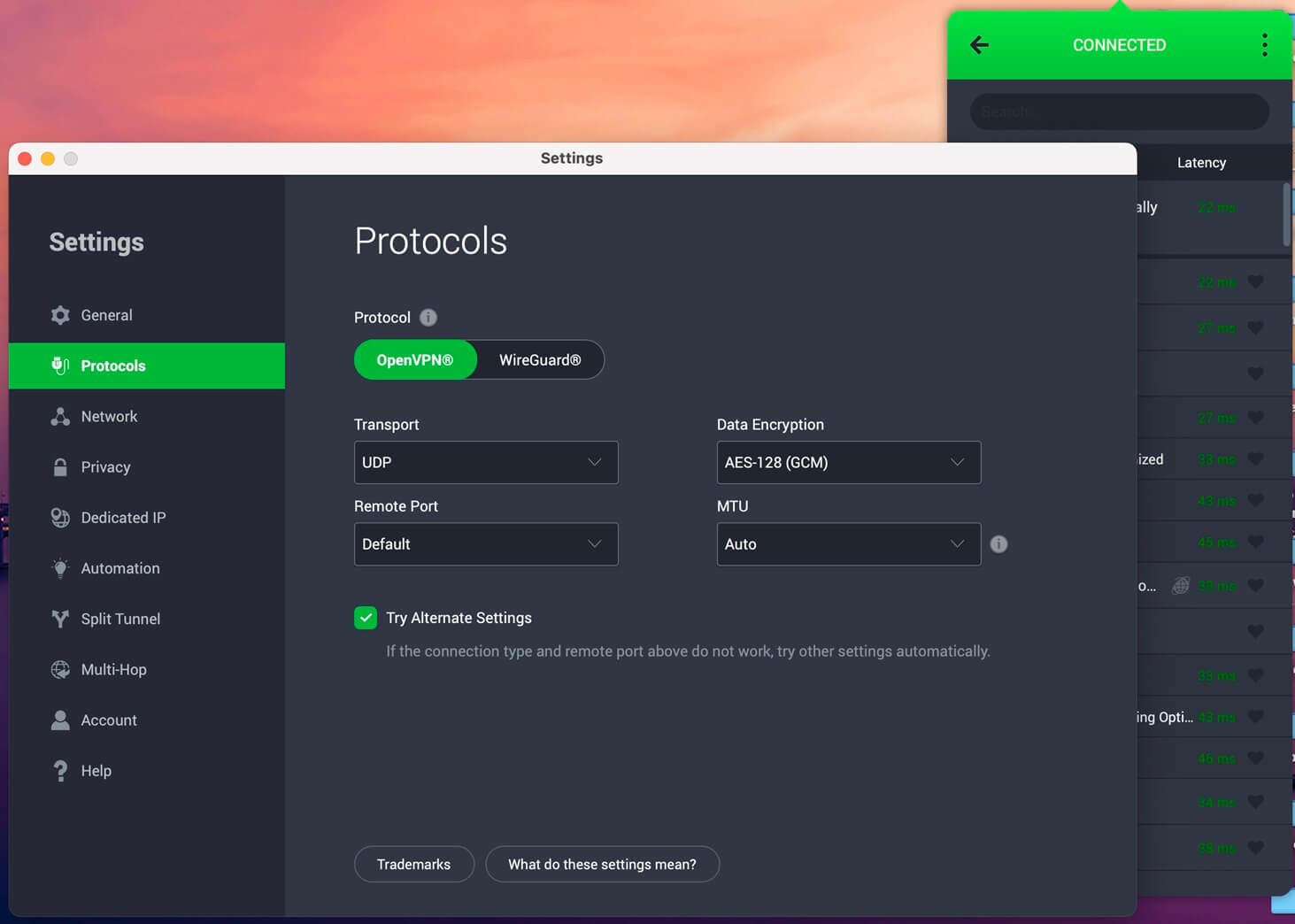
PIA is the pick if Surfshark’s price is the issue while its unlimited device policy isn’t. It matches that policy exactly and costs $2.19 monthly, and its 26,000+ servers in 91 countries dwarf Surfshark’s fleet, and all 50 US states have their own location. Speed holds up on local servers, and ping labels on each location help you skip the congested ones.
Unblocking reaches Netflix US and most American channels, though it stumbles more often than NordVPN or ExpressVPN; BBC iPlayer is among the sticking points. It remains a strong torrenting VPN with port forwarding and SOCKS5. Its American base gives some readers pause, and the counterargument is unusually strong.
Courts have demanded PIA’s records on more than one occasion and received nothing; Deloitte reviewed the policy, and the apps are all open source. Encryption, MultiHop, an advanced kill switch, and leak protection round it out. Apps cover Windows, macOS, Linux with a GUI, iOS, Android, and Fire TV Stick, and a 30-day money-back guarantee covers the purchase.
5. CyberGhost: Best Surfshark Alternative for Streaming
Pros
- Streaming servers
- 45-day guarantee
- Optimized for P2P
- Quarterly Deloitte audits
Cons
- 7 simultaneous connections
- No VPN obfuscation
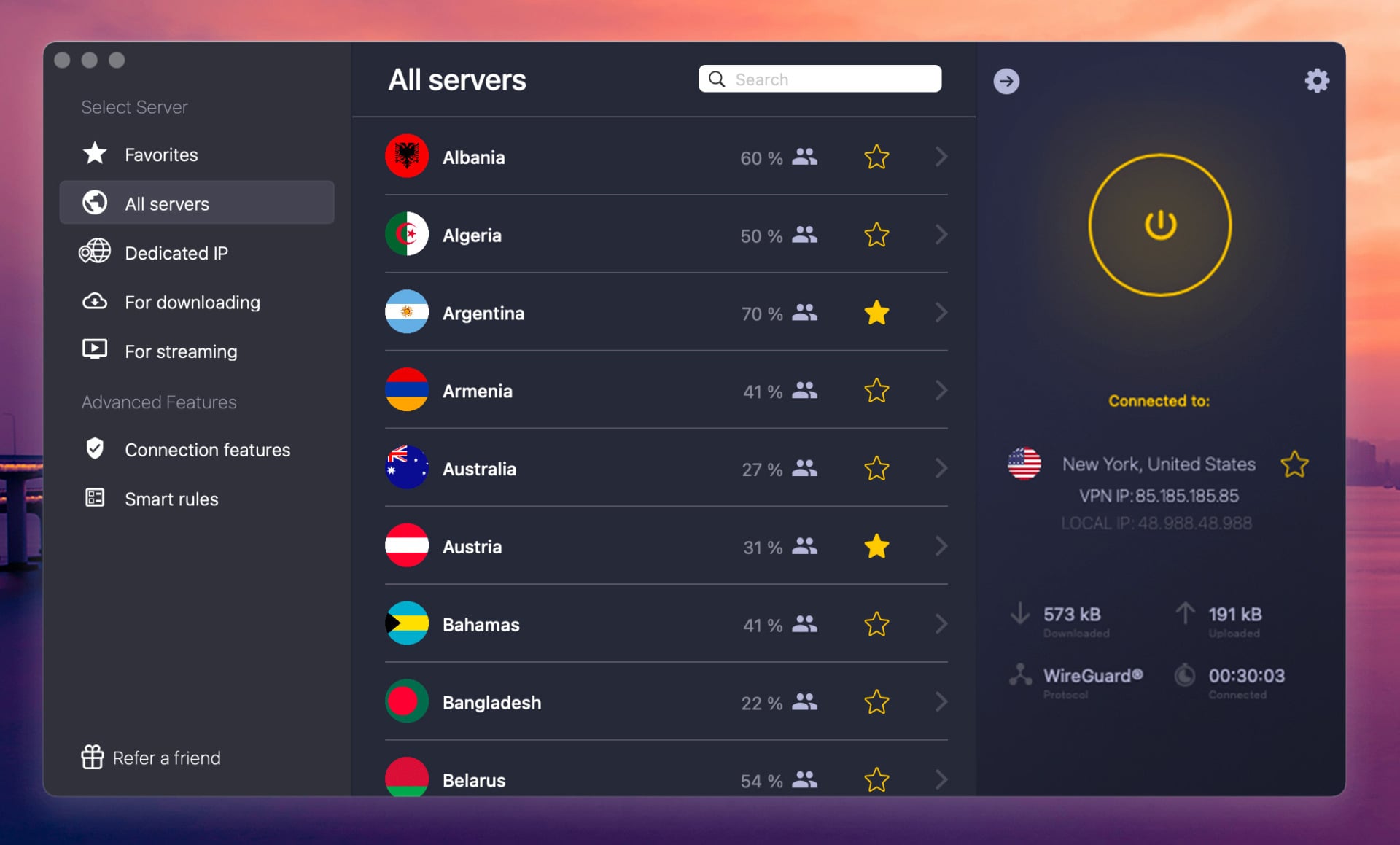
CyberGhost’s clearest advantage over Surfshark is time. Its 45-day money-back guarantee stretches the trial by an extra fortnight, which matters when you want to test across a full billing cycle. The network spans 12,000+ servers in 100 countries, and its specialty lineup is the broadest: servers tuned for streaming, gaming, and P2P.
The streaming ones handled Netflix, Prime Video, and Hulu in testing, and torrenting locations kept download speeds steady. Security includes AES-256 alongside leak protection and a kill switch. Romania sits outside the 5, 9, and 14 Eyes alliances, and CyberGhost’s audit record is the least discussed of its strengths: Deloitte has examined it every quarter since 2011.
Two limits matter. 7 devices is the tightest allowance here against Surfshark’s unlimited. Obfuscation is absent, which rules out China, Iran, and Russia, places where Surfshark’s Camouflage Mode frequently succeeds.
What to Look For in Surfshark Alternatives
Three things push people away from Surfshark. Here’s what to look for:
- A bigger network. Surfshark’s 4,500 servers in 100 countries is the smallest fleet among the major providers. NordVPN doubles it, Proton VPN reaches 148 countries, and PIA has 26,000+. If your nearest location is congested at peak hours, that’s the gap.
- More speed. Surfshark earns its place in our fastest VPN rankings, but NordVPN and ExpressVPN both retain more throughput over distance, and neither dents your line much. Surfshark’s Dausos protocol targets exactly this and currently works on macOS only.
- A lower price. In the long term, Surfshark is genuinely a budget option. Month to month it isn’t, and neither is its renewal. PIA and CyberGhost both undercut it at $2.19, and Proton VPN at $2.99.
Can You Use a Free VPN as a Surfshark Alternative?
Rarely. Surfshark is a premium service, and free tiers give up the things that make it worth paying for. Most rely on small server pools, which means congestion and few unblocking options. Data caps are standard, encryption is often weaker, and providers without subscription revenue frequently monetize browsing data instead, which defeats the point entirely.
A short list of free services clears the bar for light browsing. None of them replaces a paid subscription, because every one restricts the things people leave Surfshark to get: server choice, streaming access, P2P, and speed.
Conclusion: What are the Best Surfshark Alternatives?
NordVPN is the strongest overall swap, matching Surfshark’s strengths and beating it on network size, speed, and streaming. Proton VPN is the sharper answer if jurisdiction or transparency is your concern, since Swiss law and open-source apps address something Surfshark structurally cannot.
PIA keeps the unlimited devices for 30 cents less, ExpressVPN is the gentlest software, and CyberGhost buys you an extra fifteen days to decide. All five refund within 30 days at minimum, so testing one costs nothing but the wait.
Frequently Asked Questions
🏮 What is the best Surfshark alternative in China?
It's NordVPN, which consistently bypasses the Great Firewall with obfuscated servers. It's also faster, so it provides stabler connections within China.
🆓 Is there a free Surfshark substitute?
No, there's no good free Surfshark substitute. While a free VPN may be safe and offer zero data caps, it's still not as fast, not as secure, and not as capable for streaming and torrenting. Plus, most free VPNs store logs and monetize your data, so they're actually bad for your privacy.
🏆 What are the top Surfshark alternatives?
The top Surfshark alternatives are NordVPN, Proton VPN, and ExpressVPN. While not less expensive, they're faster, more secure, and with more consistent performance. The only caveat is the device limit. While they're locked primarily to 10, Surfshark protects an infinite number of devices at a time.