This CyberGhost vs Surfshark 2026 comparison has the answer you’re after. Which budget VPN wins? Based on our extensive testing, Surfshark comes out ahead. We put both through 8 rounds, covering ease of use, streaming, torrenting, privacy, security, and value for money.
But the winner isn’t the whole story. This detailed CyberGhost vs Surfshark breakdown digs into the nuances and explains which VPN is better for whom. Surfshark is the objectively stronger pick, yet CyberGhost might still suit you better. Let’s figure out which one is in 2026.
CyberGhost vs Surfshark Comparison Overview
| CyberGhost | Surfshark | |
| Our Current Ranking 📋 | #6 | #5 |
| Starting Price 🤑 | $1.59-$2.19/mo | $2.49/mo |
| Money-Back Guarantee 🪙 | Up to 45 days | 30 days |
| Free Version/Free Trial 🆓 | No/Yes, 24 hours on Windows/macOS, 3 days on Android, 7 days on iOS | No/Yes, 7 days on iOS/Android |
| Logging/Jurisdiction 🕵️ | No/Romania | No/Netherlands |
| Protocols 🌐 | OpenVPN, WireGuard, IKEv2 | OpenVPN, WireGuard, IKEv2 |
| Servers 🏠 | 12,000+ in 100 countries | 4,500+ in 100 countries |
| RAM-Only Servers 🛡️ | Yes | Yes |
| Specialty Servers ✅ | Streaming, torrenting, dedicated IP, gaming, NoSpy | Dedicated and static IP, MultiHop |
| Working With Netflix 📺 | Yes, ~10 libraries | Yes, 30+ libraries |
| P2P Allowance ↔️ | Yes | Yes |
| Simultaneous Connections 📟 | 7 | Unlimited |
Apps and Ease of Use: Surfshark Wins
Both VPNs support every desktop and mobile system. The same goes for streaming systems and platforms, like Fire TV Stick (Fire OS and Vega OS), Apple TV, and Nvidia Shield TV. They are also great VPNs for Linux, with support for all distros. While compatibility is top-notch, CyberGhost drops the ball by offering 7 simultaneous connections. Surfshark offers unlimited, making it more suited to users with a substantial number of devices or large households.
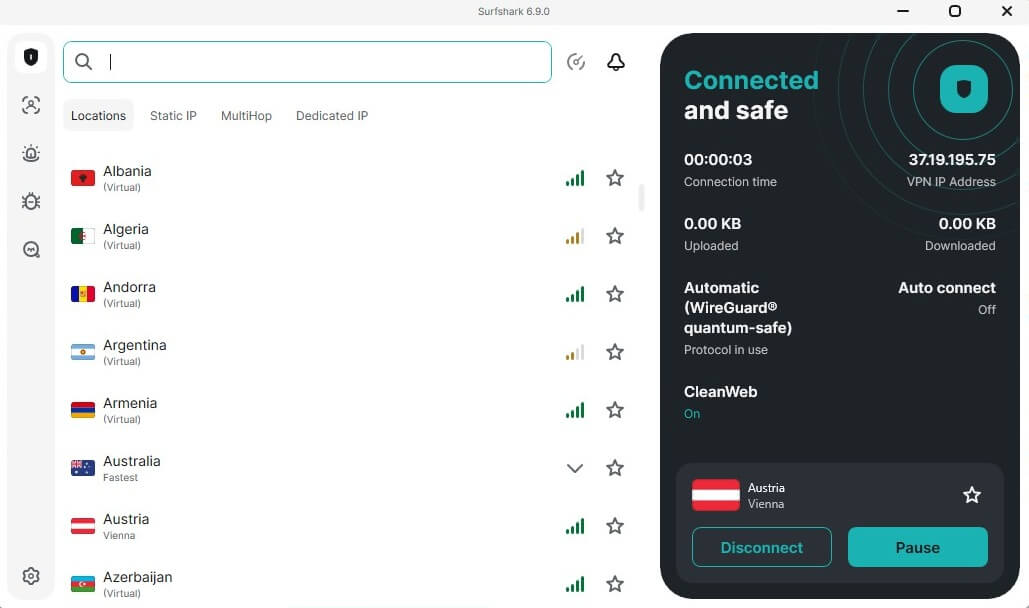
Ease of use is also on Surfshark’s side. Its modern-looking apps are unrivaled. The home screen has access to all servers, to which you can connect in seconds. The left-hand side houses settings and other advanced features. Surfshark is smooth and responsive, giving a fresh and premium vibe.
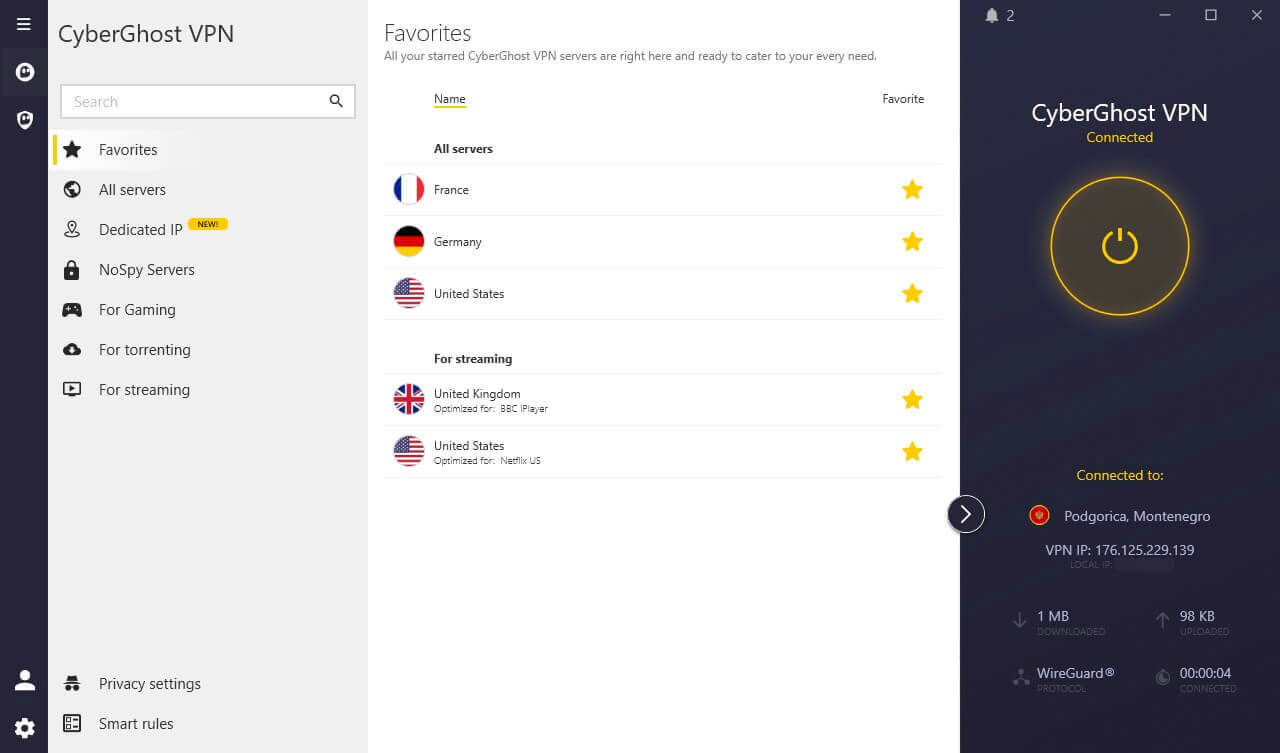
In the meantime, CyberGhost set its design language long ago. It’s the same app with no striking visuals and a rather basic feeling. The Settings menu is still convoluted, so some features are in Settings, and some are in Privacy Settings and Smart Rules, leaving a bad first impression.
Winner: Surfshark 🏆
The first Surfshark vs CyberGhost battle is a no-brainer. Surfshark offers unlimited simultaneous connections and easier-to-use apps. CyberGhost, while widely compatible, can’t match Surfshark’s overall prowess.
Pricing: CyberGhost is Much Cheaper Than Surfshark
How much does a VPN cost in 2026? Generally speaking, the price range fluctuates and goes from about two monthly quid to ten times more. Whichever you choose, Surfshark or CyberGhost, you’ll be closer to the lower side of the spectrum. We’ll examine CyberGhost’s simple pricing structure first:
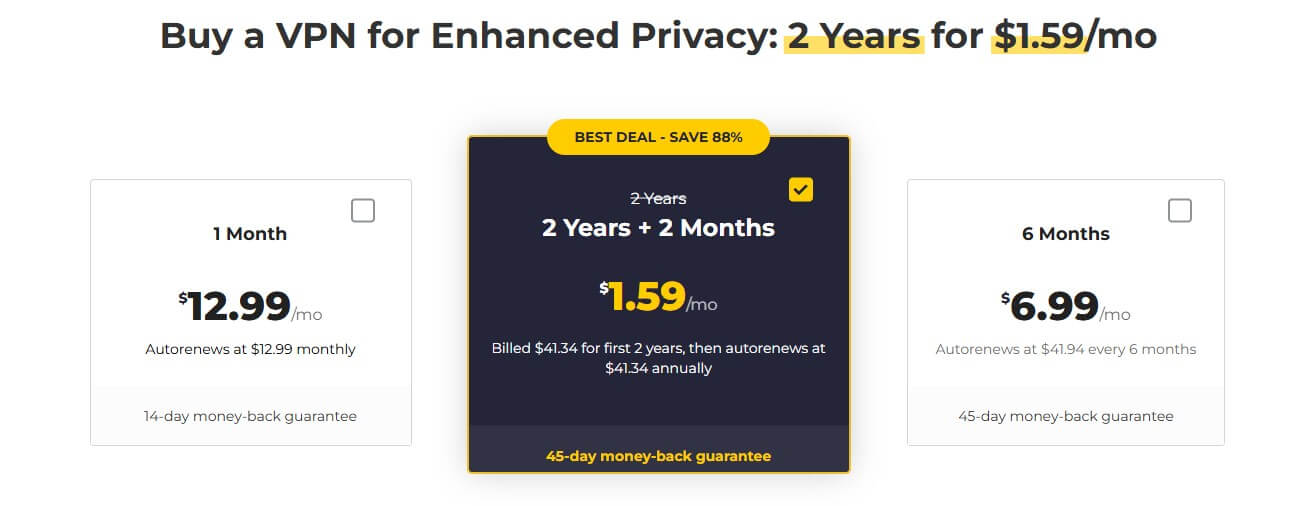
At $1.59 per month for the 2-year plan at 89% off, CyberGhost has outdone itself one more time. Not to mention 2 free months on top, which drops the price to a meager $41.34 for the initial period. Another brave deed: a 45-day money-back guarantee for 2-year and 6-month plans, setting new records.
CyberGhost offers optional extras like a Security Suite for Windows and a dedicated IP. Both are affordable, giving CyberGhost 2.49 per month with 3 free months. Surfshark has a tiered plan list.
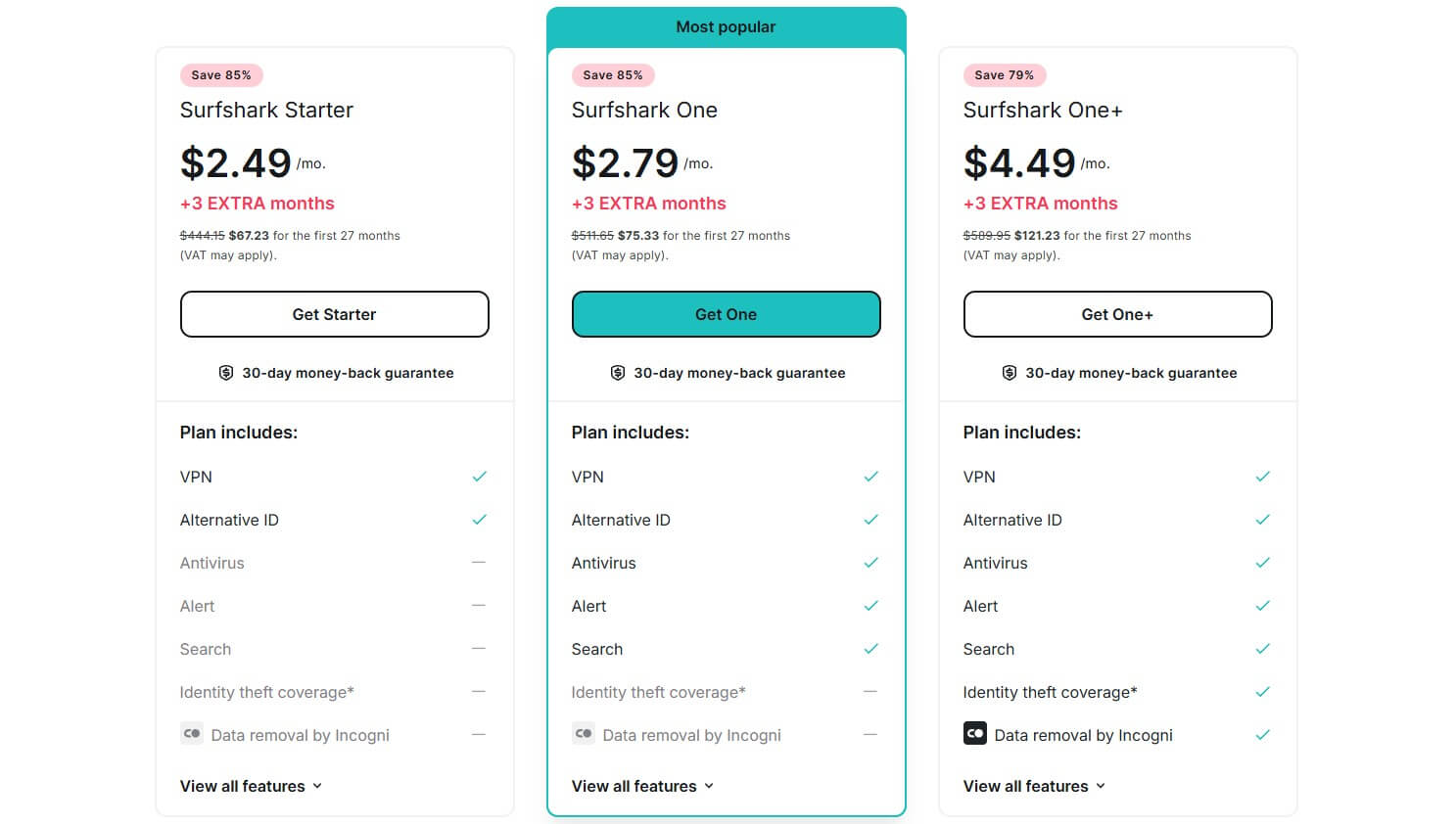
Our favorite is the Surfshark One plan at $2.78 per month, with built-in antivirus protection and other advanced security features. The Surfshark One+ plan is the highest one, and has Incogni for shielding you against data theft. An interesting thing about Surfshark is that its annual plans are highly affordable.
Our experts reviewed Surfshark and were blown away by its prices. So, who do we have at the podium in the end? Their introductory prices are similar, but Surfshark is now a lot more expensive and renews at a higher price, so…
Winner: CyberGhost 🏆
Again, it’s CyberGhost with its record-low starting price of only $1.59 per month. CyberGhost more than justifies its value with speed, security, and privacy, as you’ll soon learn in this 2026 comparison.
Security: Surfshark is Safer to Use Than CyberGhost VPN
So far, you trusted our words blindly. We said you’re getting more juice out of Surfshark, but in this round, we’ll prove our observations. We’ll discuss security features, both essential and optional, so let’s go down the rabbit hole.
🟢 Shared Features
Surfshark and CyberGhost aren’t sister companies, but they share plenty of features, and in our analysis, these were the most basic VPN features, such as:
- 256-bit bank-grade encryption
- Automatic VPN kill switch
- Split tunneling (CyberGhost offers it only on Android)
- IP/DNS leak protection
- Ad-blocking + tracker protection
- Antivirus (paid additionally in CyberGhost)
- WireGuard and OpenVPN protocols (Surfshark recently introduced Dausos, a macOS-exclusive protocol for faster tunneling speeds and privacy)
On paper, we have ample similarities, but the practice tells another tale. Surfshark has split tunneling on all devices, while CyberGhost offers it on Android. Windows users have this Exceptions feature. Is this genuine split tunneling or what? Sort of. It lets you exclude some domains from using a VPN tunnel.
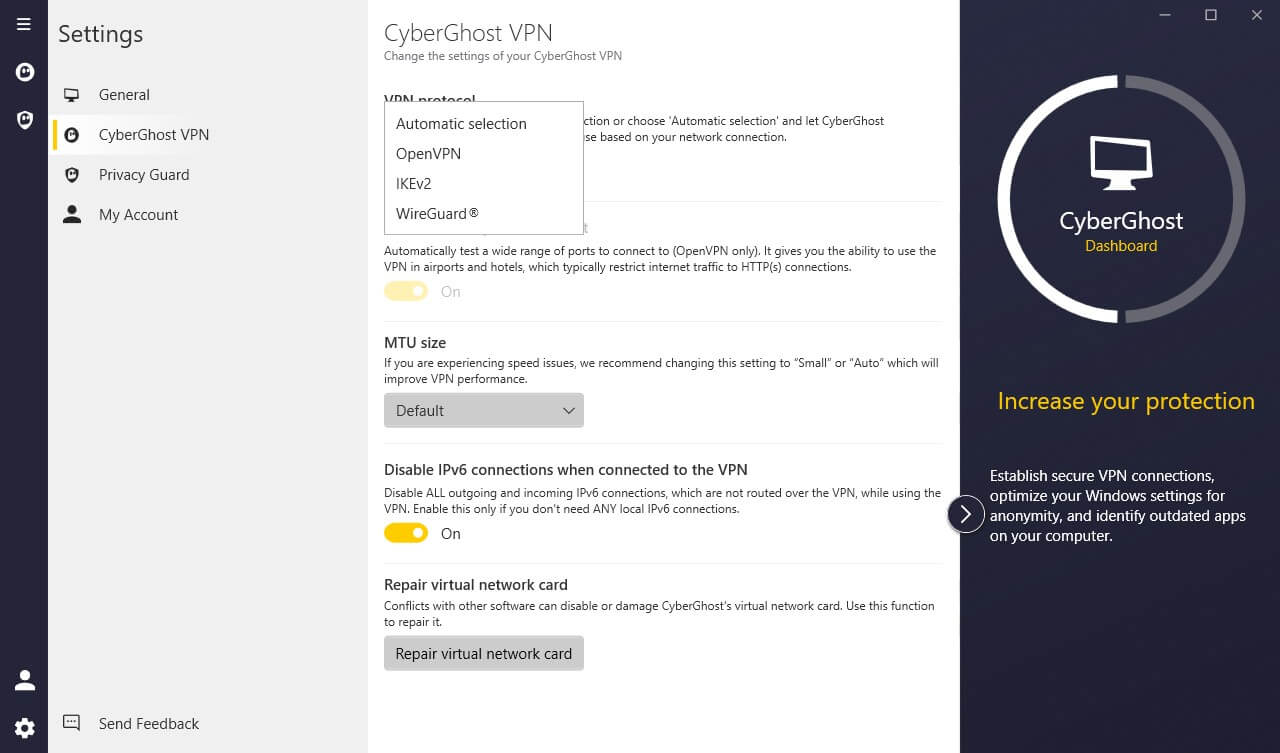
Surfshark’s split tunneling works as expected, and lets you do the same with apps. Find more info about split tunneling and its meaning here, but also be aware that antivirus software is facilitated differently. CyberGhost charges you $1 per month on top, while its rival includes it in the Surfshark One plan.
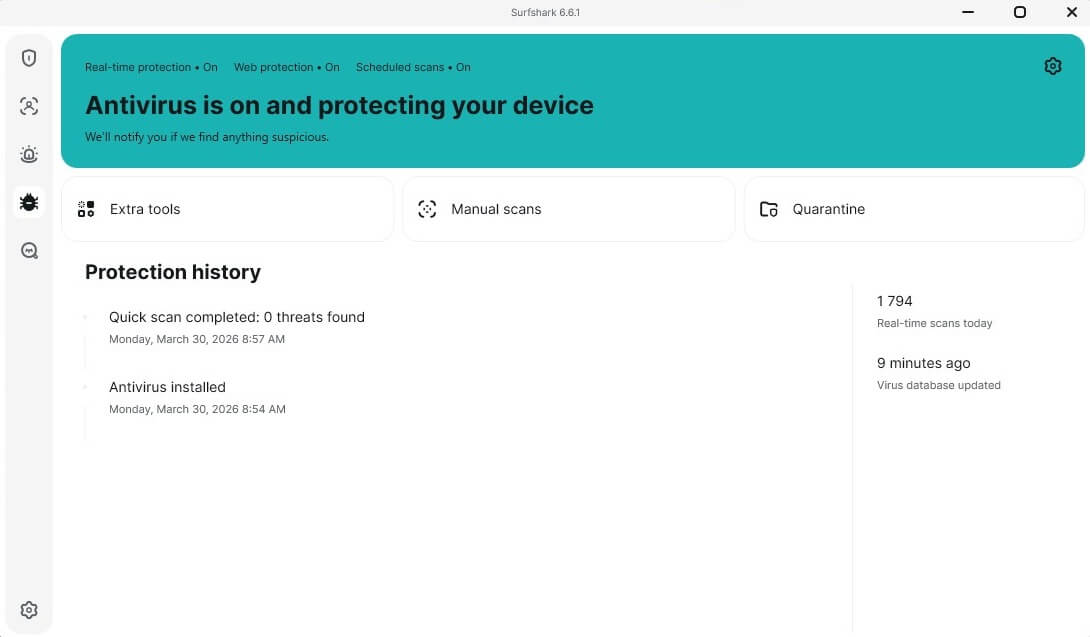
CyberGhost protects your PC, while Surfshark also protects your mobile devices. Same but not the same. We won’t delve deeper into their passive security features like leak protection, Private DNS, and RAM servers. As flagship VPNs with the Premium badge, they don’t really skimp on anything.
🔴 Unique Features
Unique features are pretty much described in the case of CyberGhost. Though it’s worth mentioning a few from both VPNs. We’ll discuss them right after that:
- NoSpy servers in CyberGhost
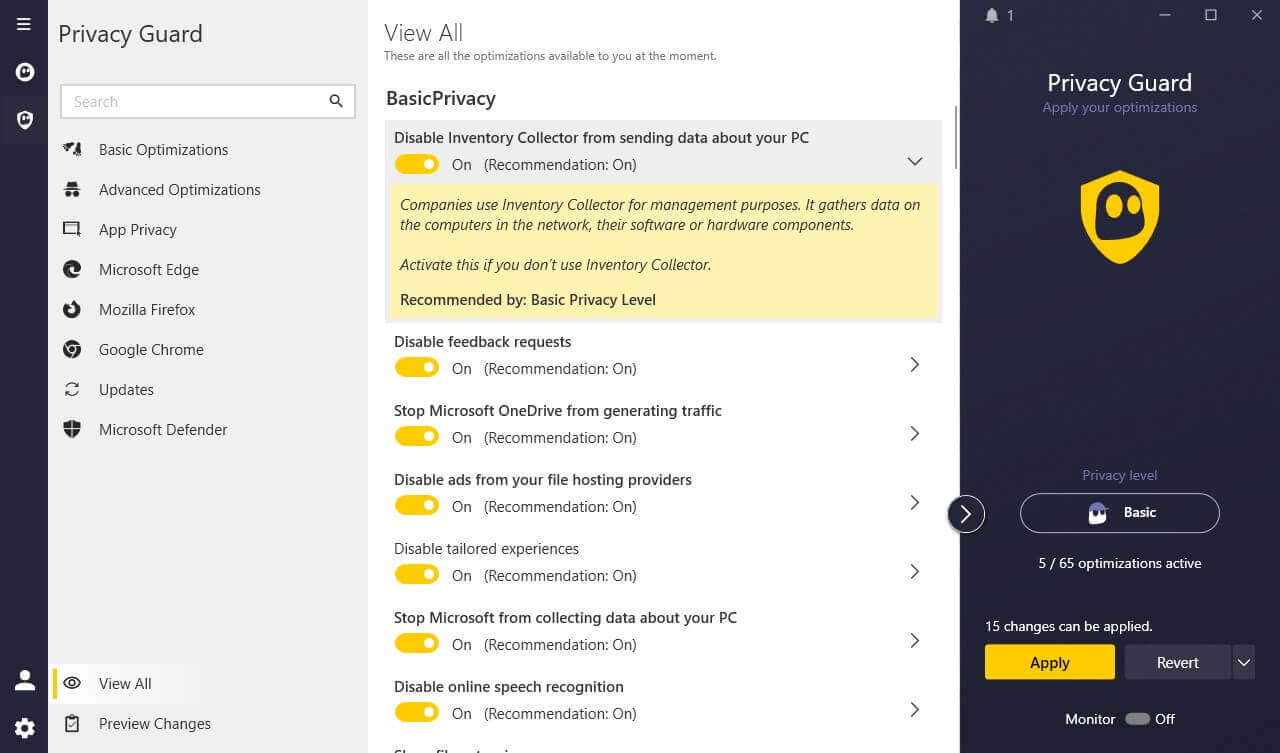
- Privacy Guard in CyberGhost
- Optional security features of Surfshark
- Integral security features of Surfshark
➡️ CyberGhost
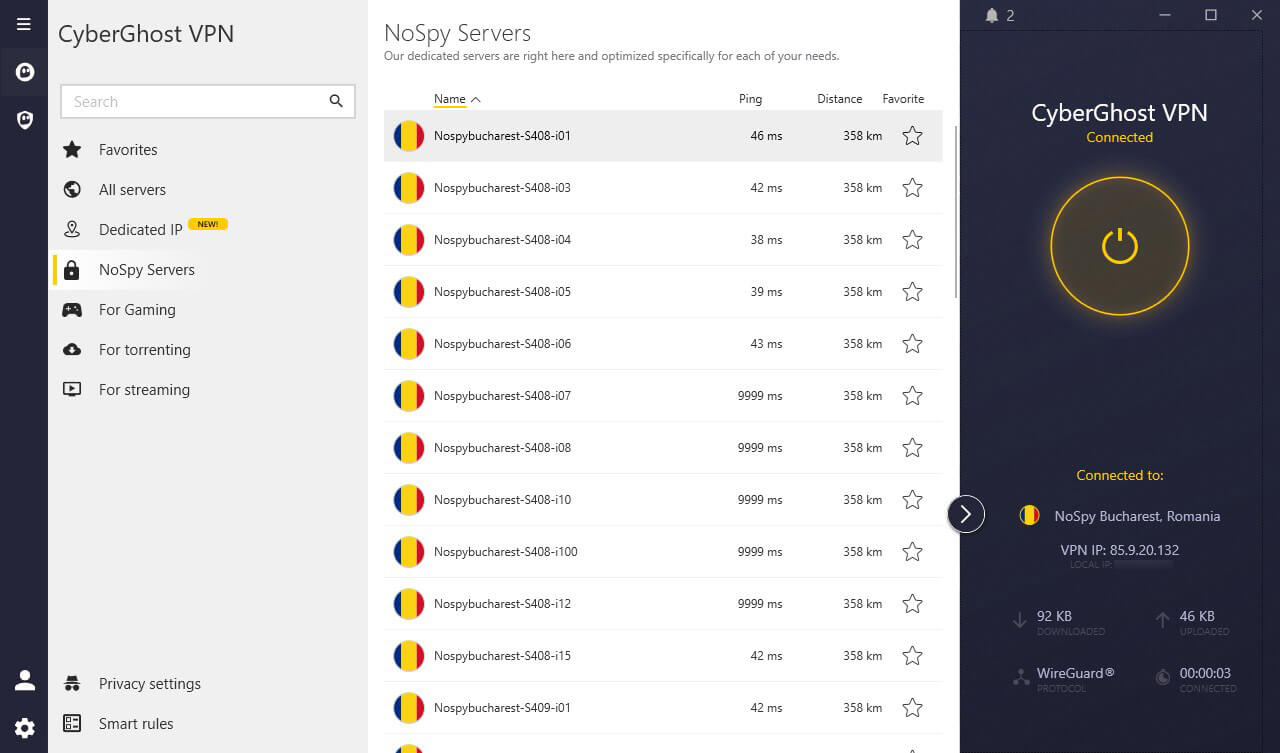
NoSpy servers aren’t MultiHop servers. No MultiHop can be found. However, NoSpy servers are great for privacy geeks who want CyberGhost’s self-operated servers without 3rd party ownership. You get plenty in Romania.
Privacy Guard is a new add-on for Windows users. It prevents your OS, Windows, from spying on you and infringing on your privacy. It blocks all data retention and even prevents app updates that often bring more bad than good.
➡️ Surfshark
Now, Surfshark’s optional and advanced features include:
- Antivirus protection
- Alert (dark web monitoring)
- Search (a browser without tracking)
- Alternative ID (a new ID to replace your old one)
- Web Content Blocker
- Email Scam Checker
We discussed the first one, but Alert is excellent for data breach monitoring. Search is a private search engine with organic results, no censorship, and maximum privacy. Finally, Alternative ID lets you take on another person by generating an alternative email, persona, and number.
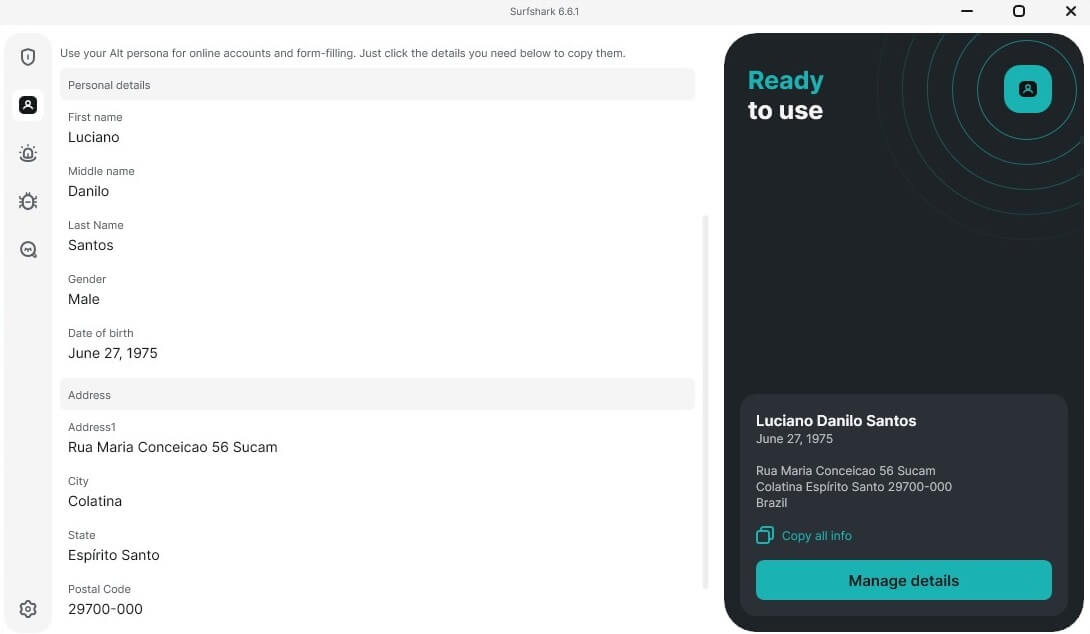
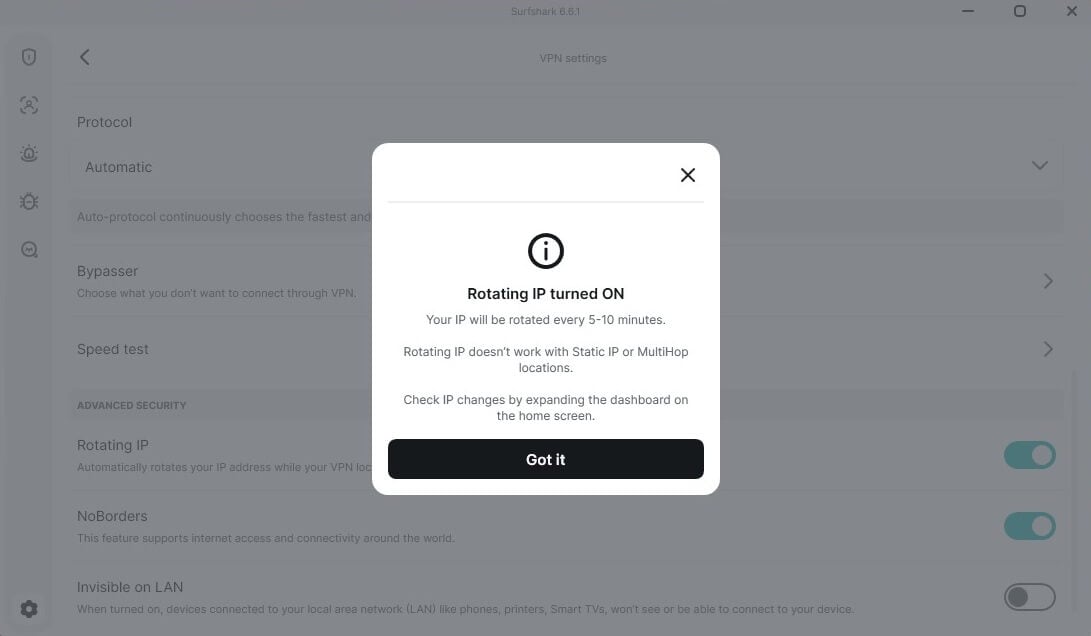
All of these are part of the Surfshark One plan and above, so be mindful of that. Even if you don’t opt for the bonus suite, you’ll still get essentials, such as Camouflage Mode for bypassing censorship, MultiHop for two encryption layers, and Rotating IP, which rotates your IP every 5 to 10 minutes for more privacy.
Camouflage Mode is obfuscation, which renders the VPN usable in China. During our comparison, we discovered that CyberGhost doesn’t offer it, making it a lot less reliable in countries with restricted internet. We’ll finally address its Web Content Blocker, useful for blocking unwanted sites.
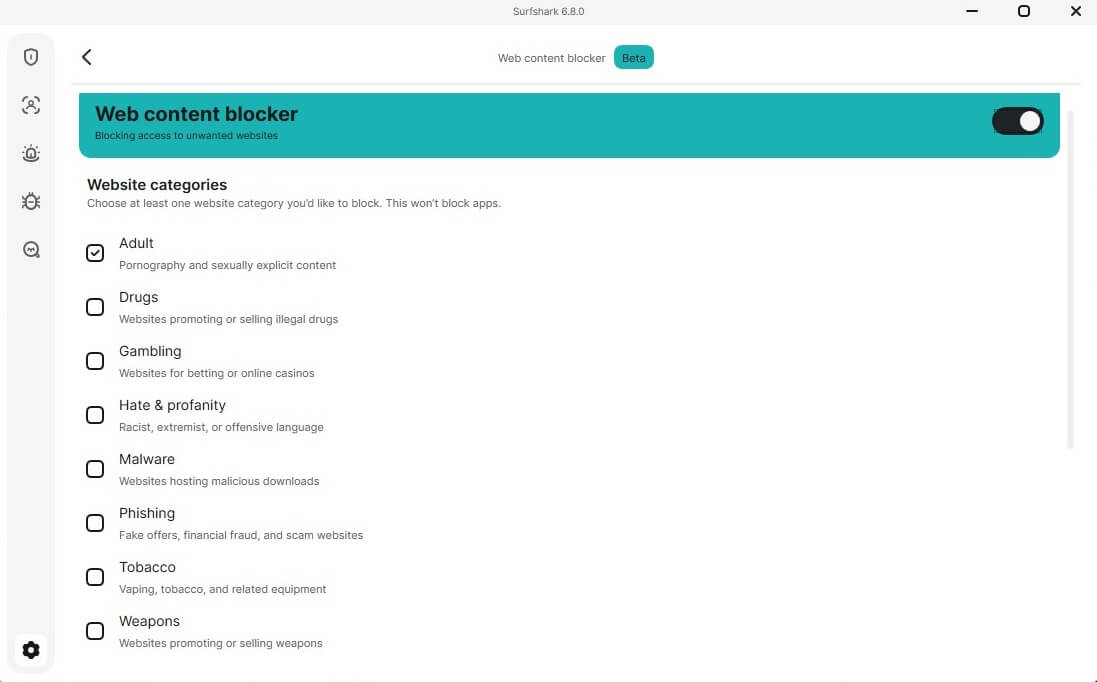
During our CyberGhost vs Surfshark duel, we used it extensively to block pornography or even tobacco sites. It worked well and without a single issue. The same goes for its Email Scam Checker, which accesses your email and detects phishing patterns, helping you dodge the bullet.
Winner: Surfshark 🏆
The dust has settled, and Surfshark has taken another round with its extensive suite of security features that offers more than CyberGhost’s. While the yellow team is by no means bad, it still has work to do to match Surfshark’s innovations.
Logging: CyberGhost and Surfshark Don’t Store Logs
They don’t, and that’s the beauty of both. Surfshark is stationed in the Netherlands, known for its 9 Eyes participation. However, this doesn’t seem to influence this and other similar VPNs because they uphold no-log policies. CyberGhost, on paper, has better jurisdiction. As hinted at, it’s Romania.
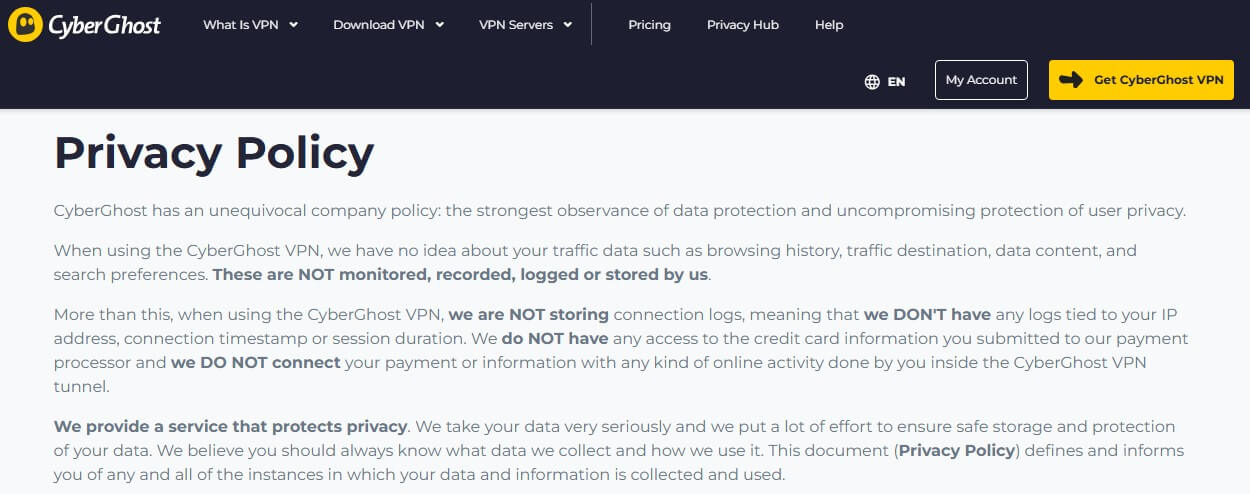
Romania isn’t subject to privacy-infringing laws, laying the perfect groundwork for this famous company. After examining their privacy policies, we discovered how pure they are. In short, neither stores sensitive information like:
- Your IP address, originating or assigned by the VPN
- Browsing or downloading history
- Traffic logs and visited websites
- Various location data
It’s worth noting that advanced tools, like an antivirus, have different logging rules. However, all collected information is anonymized, plus it’s deleted shortly after your session ends (in 15 minutes) to minimize privacy risks. The best way to ensure these VPNs don’t store logs is an audit, and both have them.
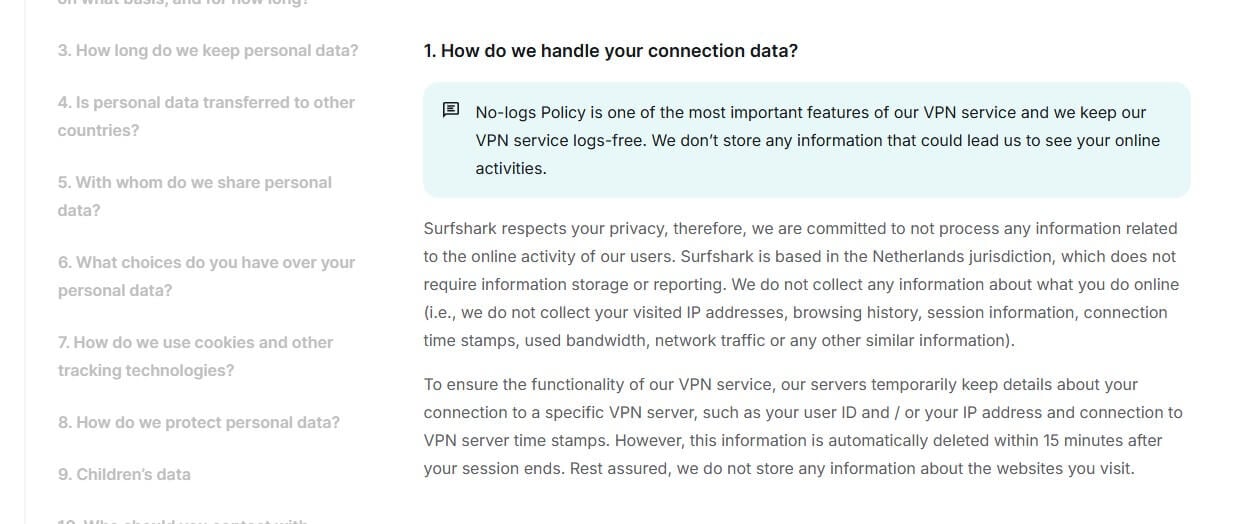
Both VPNs have been audited by at least one third-party security firm. Surfshark’s no-logs policy was verified by Deloitte when the VPN switched its jurisdiction from the British Virgin Islands to the Netherlands (actually, in 2023 and 2025). Deloitte performed independent audits on CyberGhost’s no-log policy (2022, 2024, and 2025) with the same results. We addressed these audits in our CyberGhost review.
Winner: Tie ⚖️
Whichever you choose, Surfshark or CyberGhost, expect the highest level of privacy and an ironclad no-logging policy. Audits, RAM-only servers, and every other technology are here for your peace of mind.
Speed Tests: Surfshark is Faster Than CyberGhosts
Next on the repertoire is the Surfshark vs CyberGhost speed test. For the best accuracy, we tested them for 3 consecutive days, 3 times a day. Using 3 server locations (the UK, the US, and Japan), we performed 9 tests in total. The speed test results we’ll elaborate on are the best ones based on the 9 tests performed. At the time, we were in Serbia, and these were our non-VPN speed test results from speedtest.net:
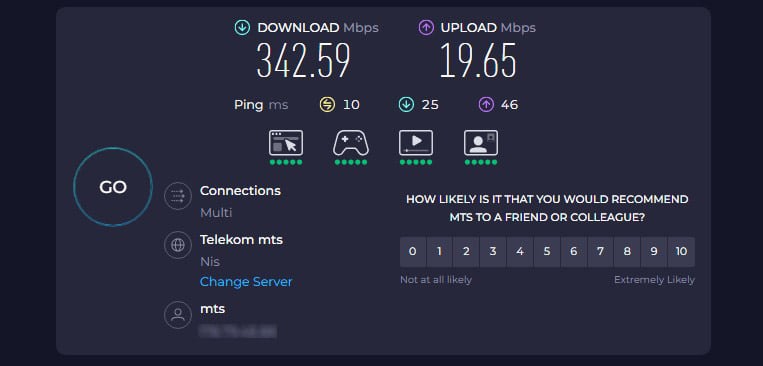
Here are their average download and upload speed losses using their best results. You notice that Surfshark is 16% faster in downloads, but 23% slower in uploads. As it’s generally much faster for downloading, it’s often listed as one of the most reliable VPNs for torrenting. Uploading performance is subpar.
| Surfshark | CyberGhost | |
| 📥 DL Speed Loss | 27% | 43% |
| 📤 UL Speed Loss | 32% | 9% |
But let’s take another look, this time, at the concrete test results. Let’s regurgitate that these were the best results from our comprehensive tests. We notice Surfshark’s superiority in all download speed tests. CyberGhost’s upload superiority makes it better for content creators and faster content delivery.
| 🟢 Surfshark | 🟡 CyberGhost | |
| UK (Download/Upload) | 306.48/16.97 Mbps | 243.07/18.55 Mbps |
| US (Download/Upload) | 253.79/12.47 Mbps | 190.96/18.25 Mbps |
| Japan (Download/Upload) | 191.07/10.90 Mbps | 161.22/16.87 Mbps |
Winner: Surfshark 🏆
Surfshark is the ultimate winner because it displayed better download speeds, more important for most people. Its higher speed also resulted in lower latency in our test, perfect for streamers, gamers, and casual browsing. Pick CyberGhost if you need some of the best upload speeds.
CyberGhost vs Surfshark for Streaming and Torrenting
We call this the entertainment round, but really, some VPN users only care about that. They want to unblock NFL live streams, download in P2P, and whatnot. In this CyberGhost vs Surfshark duel, we’ll check out how capable they are.
Streaming Performance: Surfshark is Notably Better
We highlighted earlier that Surfshark is a bit more stable for streaming performance-wise. 4K is a bit smoother here, while CyberGhost’s lower speed retention produces buffering, but it’s not as intense as you’d think. What about unblocking prowess? How do these two compare? On this front, Surfshark is way better.
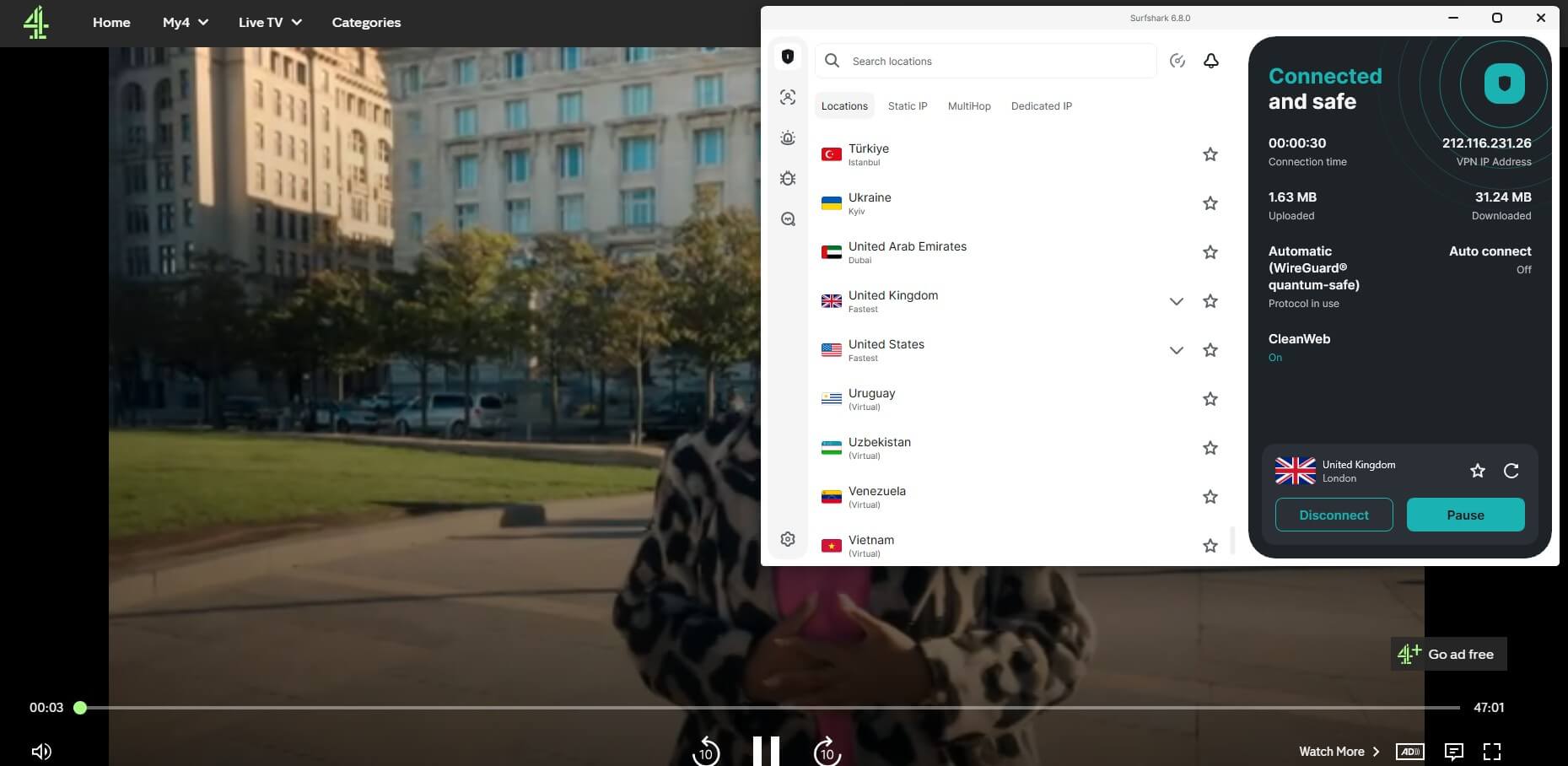
CyberGhost has dedicated streaming servers. However, during tests, they weren’t as reliable as Surfshark’s regular servers. We saw that Surfshark unblocks more than 30 Netflix catalogs, while CyberGhost unblocks 10. The former also has a helpful browser extension with location spoofing.
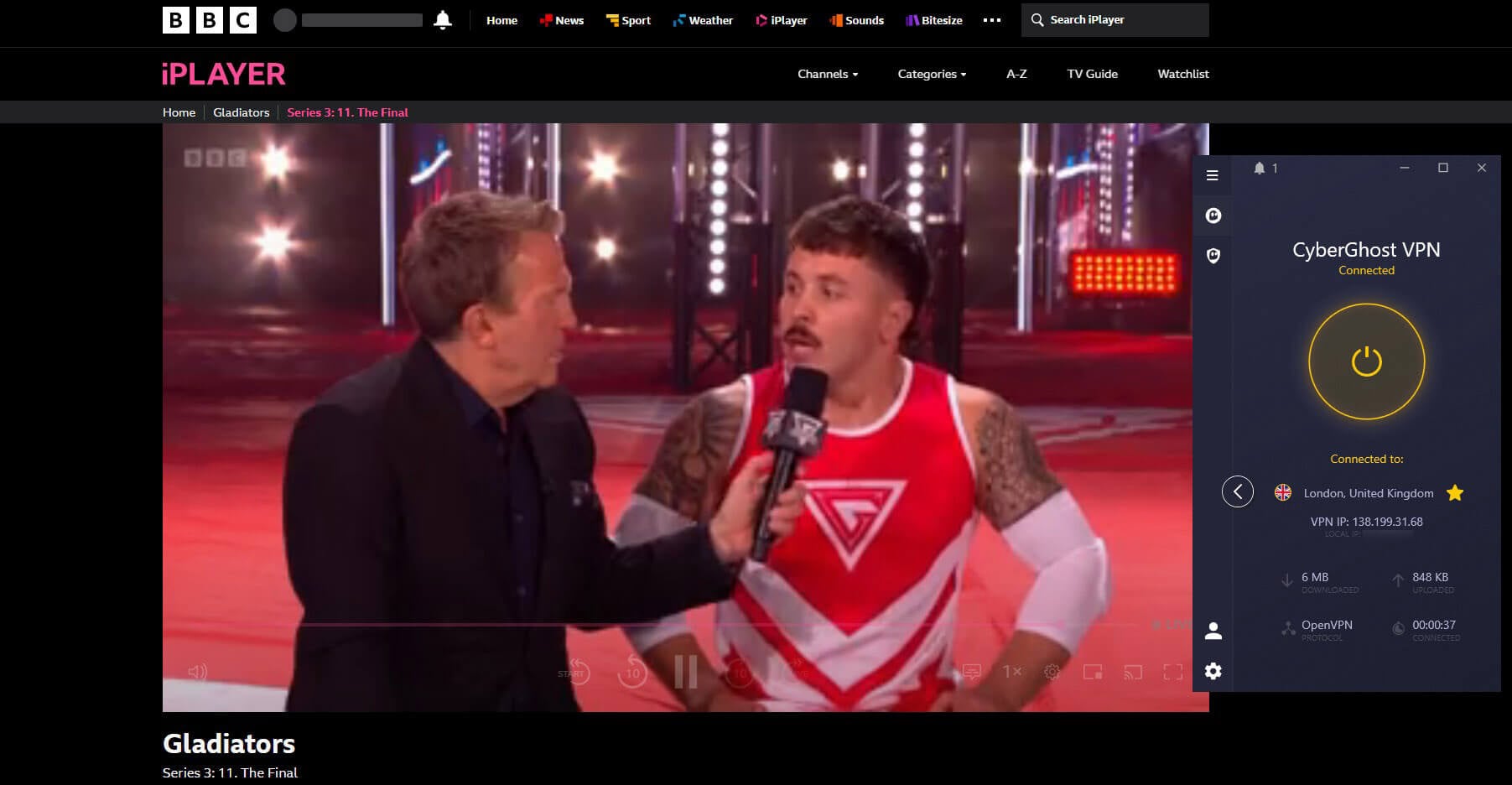
This allows it to unblock more stubborn platforms, useful when you want to watch ESPN+ outside the USA or access one of many restricted betting sites. Overall, Surfshark is more convincing, with better superior prowess and faster speeds for Full HD and 4K streaming without noticeable buffering.
| Surfshark | CyberGhost | |
| Netflix US | ✅ Works | ✅ Works |
| Prime Video US | ✅ Works | 🔒 Occasionally blocked |
| BBC iPlayer | ✅ Works | ✅ Works |
| Sky Sports | ✅ Works | 🔒 Occasionally blocked |
| HBO Max | ✅ Works | ✅ Works |
| Paramount+ | ✅ Works | ✅ Works |
| YouTube TV | ✅ Works | ✅ Works |
Torrenting Performance: Surfshark Offers Faster Downloads
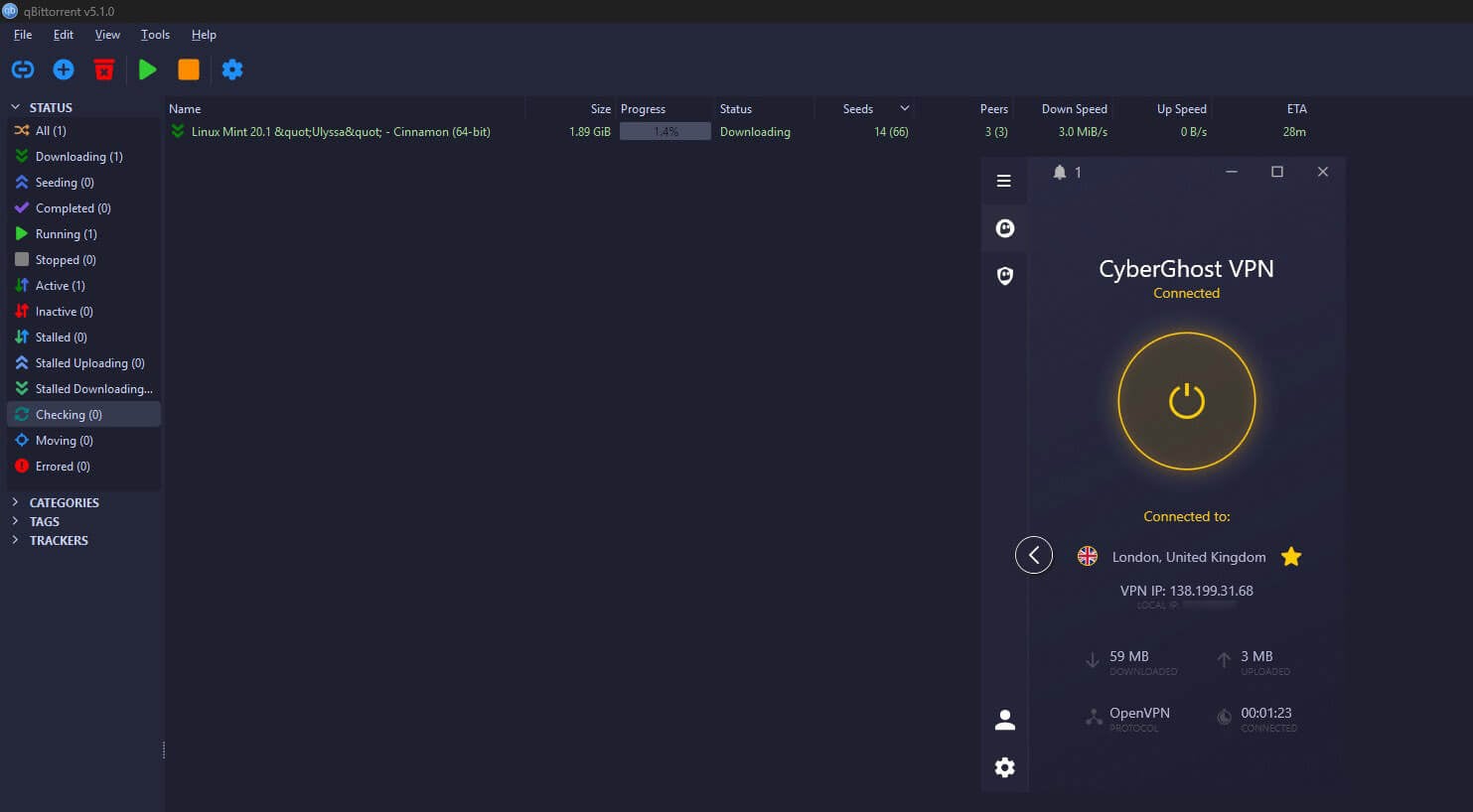
CyberGhost’s dedicated P2P servers are optimized for speed and security. We used them, and as promised by the VPN, our downloading was fuss-free. Its upload speeds allowed quick seeding. CyberGhost lacks torrenting extras, such as port forwarding or SOCKS5, but they’re unnecessary either way.
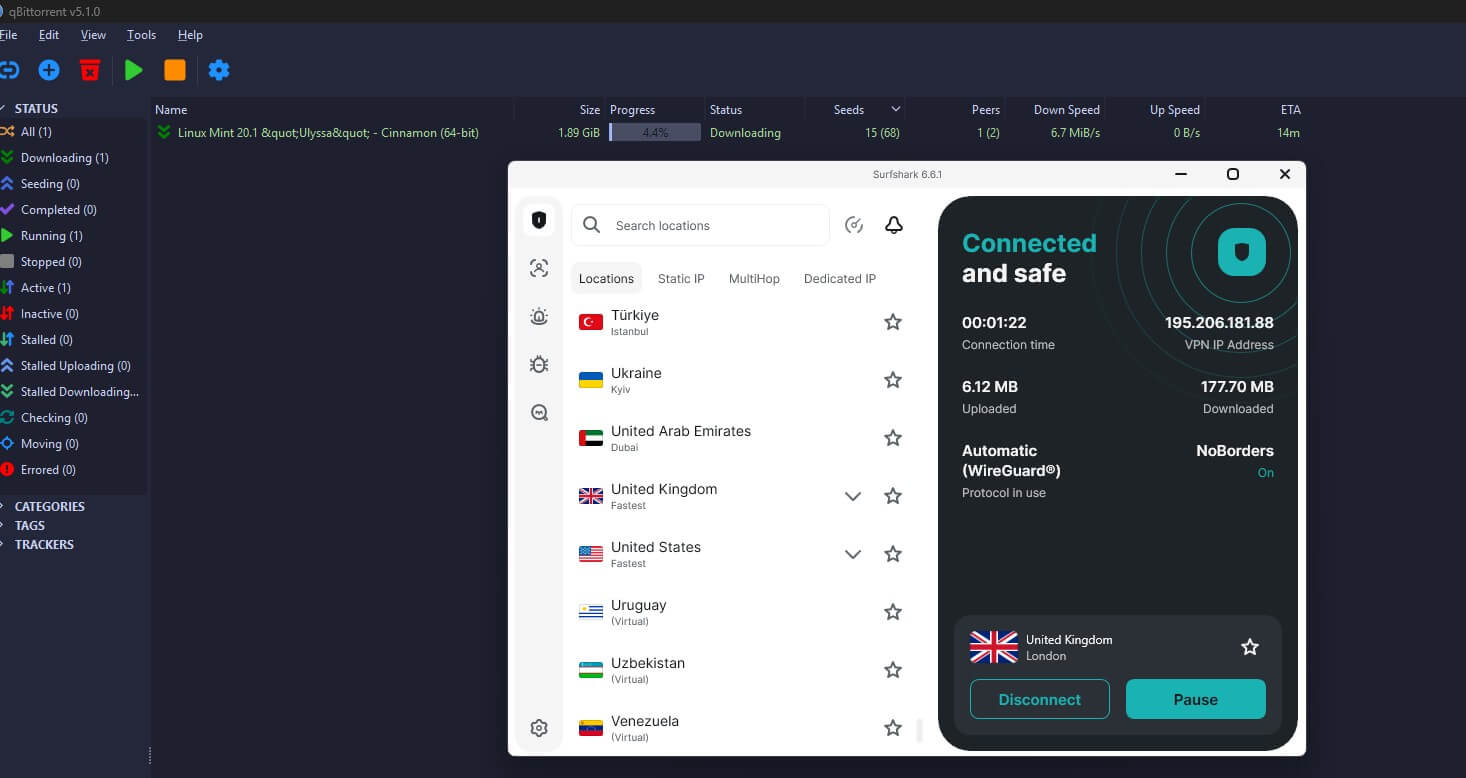
Surfshark has no dedicated torrenting servers, but this isn’t an obstacle. All 4,500 servers are torrent-friendly, so you have to pick one and start. Performance-wise, Surfshark was on par, if not better, particularly in download speeds. Port forwarding is unavailable in these VPNs, but PIA, which we tested as well, offers it.
Winner: Surfshark 🏆
Surfshark takes the streaming round due to its superior unblocking prowess. Torrenting is almost a tie, but Surfshark’s higher download speeds may be more optimal for avid torrenters. As a whole, it’s a more complete package.
Servers: CyberGhost Has a Larger Server Fleet
If you’ve read the Surfshark vs CyberGhost comparison, you’ve noticed that we have already unraveled Surfshark’s number of servers. If you weren’t so meticulous, let’s directly compare CyberGhost vs Surfshark and see which one flexes harder. Excluding the first column, the two providers are similar.
| Server Count | Countries | Dedicated IP | RAM Servers | 10 Gbps Ports | |
| Surfshark | 4,500+ | 100 | 21 locations | Yes | Yes |
| CyberGhost | 12,000+ | 100 | 19 locations | Yes | Yes |
They offer high-quality 10 Gbps servers based on RAM, with an added variety of dedicated IPs and dedicated servers in CyberGhost. Surfshark even offers static IP address servers, which we haven’t touched on. However, CyberGhost plays a strong number game and decimates Surfshark effortlessly.
We usually don’t put too much emphasis on the number of servers. Instead, we’re fans of a higher server spread, i.e., the number of countries. But when the server count is this high, it’s hard to stay neutral. On top of that, CyberGhost offers more dedicated IP locations, which are also cheaper than Surfshark’s equivalent.
Winner: CyberGhost 🏆
This time, it’s a no-brainer. While they have the same country span, CyberGhost has at least 7,500 more servers than Surfshark, with more dedicated IP address locations and lower prices for a dedicated IP.
Bypassing Censorship: Surfshark Wins, CyberGhost Fails
Overcoming censorship is one of the VPN’s key merits. However, having tested hundreds over the past 15+ years, we noticed a declining trend. An example is CyberGhost, a VPN that lacks obfuscation with no plans to implement it. For years, CyberGhost has been struggling to work in China. Unfortunately, it’s the same in 2026. We tested CyberGhost in other countries like Turkey and Qatar, but since they impose weaker censorship, it was reliable enough.
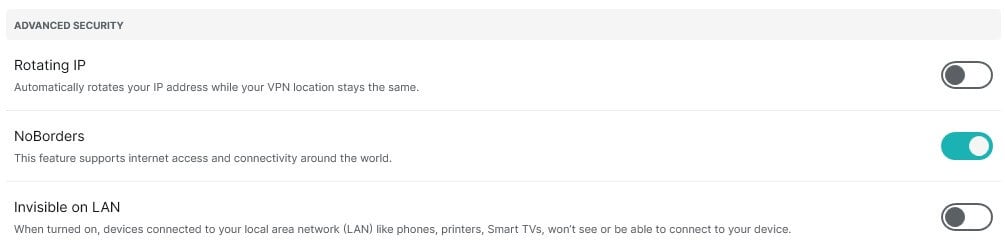
Now, Surfshark, which uses Camouflage Mode as its means of obfuscation, is considerably better. Despite its low price, it even works in China. Surfshark essentially masks VPN traffic and makes it look regular to bypass deep-packet inspection or DPI. Camouflage Mode works when you switch to OpenVPN TCP and connect to a server. It’s actually automatically applied, so you don’t have to manually tweak anything.
During my testing, I also used NoBorders, a feature often reported to make Surfshark work in China reliably. However, NoBorders on its own is insufficient, and you may still need OpenVPN TCP to make it past the Firewall.
Winner: Surfshark 🏆
While not necessarily more reliable than Astrill VPN and NordVPN, Surfshark holds its own against the fierce Chinese Great Firewall. Coupled with its insanely low price, Surfshark VPN again triumphs against its adversary.
CyberGhost vs Surfshark: Conclusion for 2026
This CyberGhost vs Surfshark 2026 analysis makes it clear that two similarly-priced VPNs can deliver very different experiences. CyberGhost is built around a massive server network, essential security, and strong privacy. You get what you pay for, plain and simple, and that’s a perfectly respectable deal. Surfshark takes a different approach. It keeps the price low while having almost no weak spots: unlimited simultaneous connections, solid speeds, strong security, robust privacy, and more.
Surfshark is a more complete VPN. If you want to see how it stacks up against its closest rival, we compared Surfshark and NordVPN too. The real question is whether you want to get what you paid for or get more. That’s why Surfshark edges out CyberGhost, both in quality and in long-term savings.
Frequently Asked Questions
🚀 Is Surfshark faster than CyberGhost?
Yes, it is slightly faster because it offers better speed-oriented protocols. It uses WireGuard and Dausos (macOS-exclusive) and is, overall, slightly faster for downloads, streaming, and gaming, due to lower latency. However, CyberGhost offers more servers, so congestion is less likely during peak hours.
💰 Does CyberGhost cost more than Surfshark?
No, CyberGhost actually costs less than Surfshark, and is cheaper both at the start and for renewals. While CyberGhost's price never goes above $2.19/mo for the 2-year plan, Surfshark often costs up to $2.49 for the same period, plus, it renews at a considerably higher price.
🔴 Is Surfshark better for streaming than CyberGhost?
Yes, it is. Surfshark works much better for popular streaming services, especially Netflix, where Surfshark unblocks over 25-30 highly sought-after libraries, including the USA, Canada, Japan, Australia, the UK, and more. CyberGhost still works well for streaming, but often fails to unblock Prime Video and Sky Sports with strong anti-VPN algorithms, which Surfshark bypasses.