PrivadoVPN is a decent place to start if you’re new to VPNs. It’s got a generous free plan, Swiss jurisdiction, and support for modern protocols like WireGuard. But when it comes to daily use, especially streaming, privacy, or switching between multiple devices, it starts to feel a little limited.
If you’ve hit those limits and are looking for reliable PrivadoVPN alternatives that work, here are the best VPNs that go above and beyond.
Why PrivadoVPN Might Not Be Enough
On paper, PrivadoVPN checks some important boxes. It offers a 10 GB free plan (which makes it a good free VPN service) with access to WireGuard, a strict no-logs policy, and is based in privacy-friendly Switzerland. But once you go beyond casual use, the limitations start stacking up.
- Free Tier Runs Out Fast: The 10 GB monthly data cap is fine for browsing and light app use, but it barely covers a week of streaming or large downloads. After that, you’re pushed to “Lite Mode,” which offers slower speeds and fewer server options. It’s a useful trial but not a long-term solution for daily VPN use.
- Limited Server Network: PrivadoVPN’s paid plan gives you access to servers in 60 cities, but that’s a small number compared to providers like NordVPN, which covers nearly 120 countries with over 7,000 servers. If you’re traveling, streaming international content, or need stable access to different regions, fewer server options can mean more congestion and slower speeds.
- Mixed Streaming Results: In our tests, PrivadoVPN worked with Netflix and Prime Video most of the time. But Hulu and ESPN+ were unreliable, with frequent proxy errors and inconsistent performance. If streaming is a top priority, you’ll need a VPN that actively maintains access to global platforms and rotates IP addresses to avoid detection.
- Missing Privacy Transparency: While PrivadoVPN claims a no-logs policy, it hasn’t undergone an independent audit to back that up. In contrast, VPNs like NordVPN have completed multiple third-party audits, proving they stick to their privacy promises. Without this kind of validation, users have to take the provider’s word for it, and in today’s climate, that’s not enough.
- No Real Power Features: PrivadoVPN covers the basics but lacks advanced features like split tunneling on all platforms, built-in ad or malware blocking, or obfuscated servers for bypassing censorship. For users who want more control over how and where their VPN works, this can be a dealbreaker.
PrivadoVPN isn’t bad, but it’s just built for light users. If you’re serious about privacy, speed, or streaming, it’s worth switching to a provider we’re covering below.
The Best PrivadoVPN Alternatives (Tested & Ranked)
We tested dozens of VPNs to find the ones that outshine PrivadoVPN in the areas that matter most: speed, streaming, security, and long-term usability. Each of these providers brings something different to the table, whether it’s verified privacy, unlimited connections, or full-speed streaming across platforms.
1. NordVPN — Best Overall PrivadoVPN Alternative
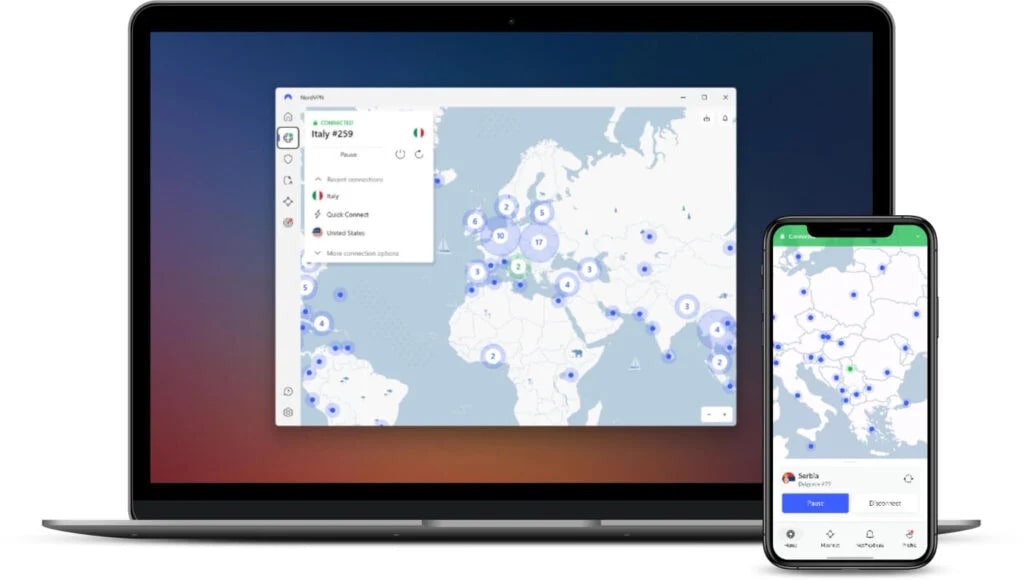
Based on our hands-on tests, NordVPN is the best upgrade from PrivadoVPN in 2026. If you’ve hit Privado’s speed limits, struggled with inconsistent streaming, or want better transparency around privacy, NordVPN handles all of that with ease.
With over 8,000 servers in 126+ countries, NordVPN delivered fast, stable connections across every location we tested. It consistently unblocked Netflix, Hulu, Max, BBC iPlayer, Hotstar, and more, including regional libraries that PrivadoVPN couldn’t access. It also gives you city-level control in major countries, which makes a huge difference when accessing local services.
But where NordVPN really pulls ahead is privacy. Unlike PrivadoVPN, which hasn’t been independently audited, NordVPN has completed five audits of its no-logs policy. It also uses RAM-only servers, so no data is ever written to disk, and Threat Protection actively blocks malware, trackers, and ads even when the VPN is off.
Advanced users get even more to work with. Features like Meshnet (secure device-to-device networking) and Double VPN (multi-layered encryption for sensitive activity) are built right in and work smoothly. None of these exist on PrivadoVPN’s platform.
You can connect up to 10 devices at once, and NordVPN supports just about everything: Windows, macOS, iOS, Android, Linux, smart TVs, Fire Stick, routers, and more. That’s a big leap from PrivadoVPN’s more limited app lineup.
At just over $3 per month on long-term plans, it’s a solid value. You also get a 30-day money-back guarantee and a 7-day free trial on Android to try it out risk-free.
If you’re sold on the service, check out our article featuring the latest deals and offers from NordVPN.
Pros
- Fast, reliable servers in 126+ countries
- Great for Netflix, Hulu, Hotstar, and more
- Audited no-logs policy and RAM-only servers
- Threat Protection and Meshnet built-in
- Works on routers and Linux
- 30-day money-back guarantee
Cons
- No free plan
2. ExpressVPN — Best for Seamless Streaming
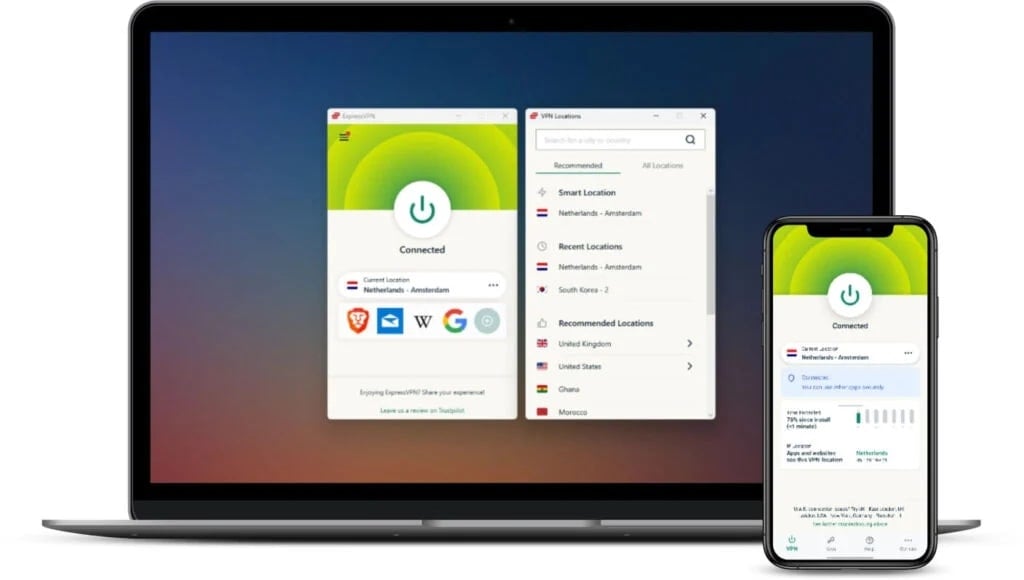
If PrivadoVPN’s inconsistent streaming or clunky app experience has you frustrated, ExpressVPN is a breath of fresh air. It’s the smoothest PrivadoVPN alternative we’ve tested for everyday use.
ExpressVPN runs 3,000+ high-speed servers across 105 countries, and the difference in streaming quality was immediate. Whether it was Netflix, ESPN+, or YouTube TV, everything loaded fast and stayed stable, even on weaker networks.
The real secret sauce here is Lightway Turbo, ExpressVPN’s in-house protocol. It connects almost instantly, uses fewer resources, and kept our speeds steady across long-distance hops, even when testing from mobile hotspots. Compared to PrivadoVPN, which struggled with random buffering or drops during streaming, the difference was night and day.
On the privacy front, ExpressVPN runs exclusively on RAM-only TrustedServer infrastructure. Its no-logs claims have been independently audited multiple times, and the platform has even passed real-world tests, including a government server seizure where nothing was found.
ExpressVPN supports 8 simultaneous connections and works across all major devices, including Windows, macOS, Android, iOS, Fire TV, Apple TV, routers, and even smart TVs. Setup is beginner-friendly, and the apps are intuitive with minimal configuration needed.
It’s priced higher than most, at around $5 per month on longer plans, but you get a 30-day money-back guarantee and 24/7 live chat if anything goes wrong. If you just want a VPN that works reliably, securely, and without a learning curve, this is it.
Pros
- Fast, consistent streaming across platforms
Lightway Turbo for instant connections - RAM-only servers with audited no-logs policy
- Clean, user-friendly apps on every platform
- 30-day money-back guarantee
Cons
- More expensive than other picks
- No advanced tweaks for power users
3. Private Internet Access — Best for Customization and Control
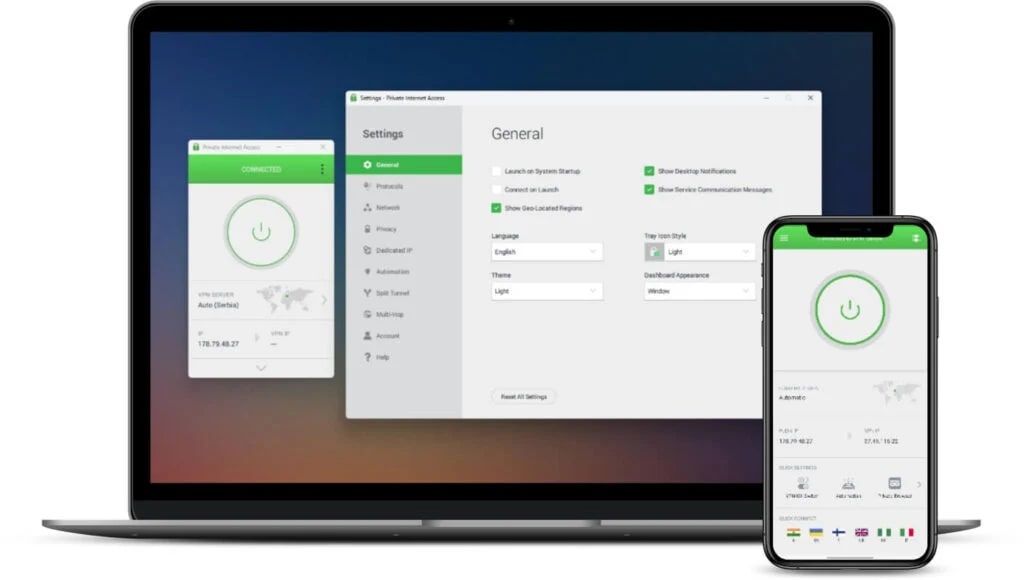
If you like to tinker or want a VPN that gives you total control, Private Internet Access is a major step up from PrivadoVPN. It’s packed with power-user features, offers serious transparency, and comes in at one of the lowest prices on the market.
PIA has one of the largest server networks in the world, with 30,000+ servers across 91 countries, including city-level servers in the US and Europe. In our tests, it reliably unblocked Netflix, Hulu, Amazon Prime Video, and even regional platforms, which is something PrivadoVPN often failed to do consistently. For example, you can count on PIA to watch Sky Sports live from the United States, Australia, or elsewhere.
Where Private Internet Access really takes the cake is customization. You can toggle between WireGuard and OpenVPN, choose between different encryption levels, and even set custom DNS. None of these options is available on PrivadoVPN, which sticks to basic one-click settings.
Privacy is another strong suit. PIA’s apps are fully open source, and its no-logs policy has been proven in court multiple times. You also get leak protection, a reliable kill switch, and full IPv6 support, which many cheaper VPNs skip entirely.
With support for unlimited devices, you can run Private Internet Access on everything, and even browser extensions for Chrome, Firefox, and Opera. It worked well in multi-user households, remote work setups, and mobile hotspot scenarios.
Plans start at just over $2 per month on long-term deals, with a 30-day money-back guarantee. If you’re coming from PrivadoVPN and want something more customizable without sacrificing streaming or privacy, PIA is one of the best-value options out there.
Try Private Internet Access Now
Pros
- Fully customizable settings and protocols
- Open-source apps with a no-logs policy
- MACE ad and malware blocker included
- Unlimited device support
- Extremely budget-friendly
Cons
- Interface may feel dense for beginners
- Not the fastest on long-distance connections
4. Surfshark — Best PrivadoVPN Altenative for Everyday Affordability
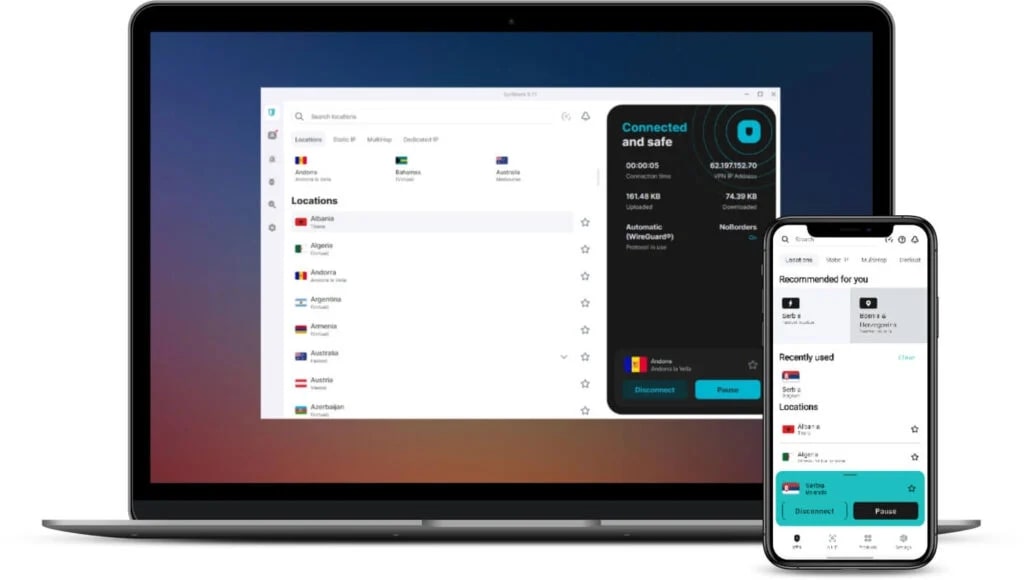
If you’ve outgrown PrivadoVPN’s device and data limits, Surfshark is the no-compromise upgrade that won’t blow your budget. It’s one of the most generous VPNs around, offering unlimited device support, a massive feature set, and streaming that just works, all for a price that rivals even Privado’s paid tier.
With over 3,200 servers in 100 countries, Surfshark delivered great speeds in our tests, even when connecting from remote regions or crowded networks. It consistently worked with Netflix, ESPN+, HBO Max, BBC iPlayer (you can easily watch BBC programs from the US, for example), and more. Unlike PrivadoVPN, which struggled to keep up during peak hours, Surfshark handled long-distance hops like a pro.
Privacy is rock solid, too. Surfshark runs on RAM-only servers, has been independently audited, and includes CleanWeb, a built-in blocker for ads, trackers, and malware. It also offers advanced tools like MultiHop (double VPN), Camouflage Mode (obfuscation), and even GPS spoofing on Android.
You can use Surfshark on as many devices as you like, whether it’s Windows, macOS, Android, iOS, Linux, Fire TV, smart TVs, or routers. We tested it with five simultaneous streams running across different platforms and didn’t run into any slowdowns.
Pricing is one of Surfshark’s biggest strengths. Plans start at around $2 per month if you commit long-term, and you still get a 30-day money-back guarantee to try it out.
Pros
- Unlimited simultaneous connections
- Great speeds and consistent streaming
- CleanWeb and obfuscation tools
- Budget-friendly plans
Cons
- Desktop app could use better layout
- Occasionally slower on distant servers
5. Proton VPN — Best Free Privado VPN Alternative With Real Privacy
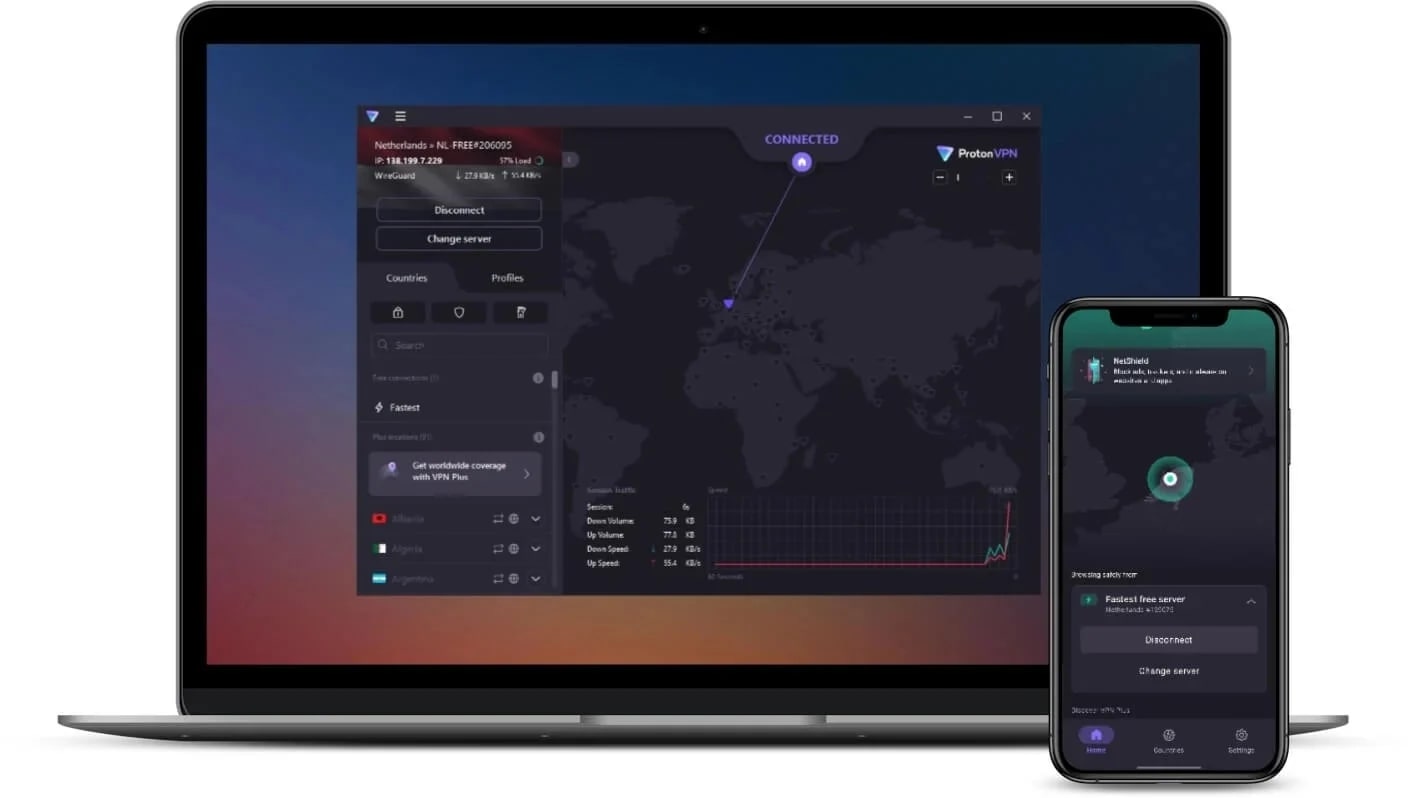
If you like the idea of a free VPN but find PrivadoVPN’s 10 GB limit too restrictive, Proton VPN is the clear winner. It’s the only truly free VPN that offers unlimited data without selling your information or sneaking in ads.
Based in Switzerland, Proton VPN is built by the team behind Proton Mail, and it puts privacy first. Its no-logs policy has been independently audited, and all its apps are fully open-source, so anyone can inspect the code. It uses strong encryption, includes Perfect Forward Secrecy, and supports WireGuard and OpenVPN, which is a solid security foundation that free VPNs rarely offer.
With Proton VPN Free, you get access to servers in five countries, including the United States, the Netherlands, Japan, Poland, and Romania. You can’t pick specific cities or unlock advanced features like streaming servers or Secure Core, but it still held up well in our day-to-day use.
What you won’t get is full streaming access. Free servers don’t unblock Netflix or Disney+, and the connection is limited to one device at a time. But that’s the trade-off for a free VPN that doesn’t throttle, track, or push you into paying with annoying ads.
Pros
- Unlimited free data with no ads
- Independently audited no-logs policy
- Open-source apps with strong encryption
- WireGuard and OpenVPN support
Cons
- Free tier limited to 1 device
- Doesn’t unblock most streaming platforms
- Fewer countries on the free plan
Final Thoughts
PrivadoVPN is a solid entry point into the VPN world, but once you need more than 10 GB or want better streaming, speed, and privacy features, it quickly shows its limits. Whether you’re after unlimited connections, customizable settings, or real no-logs protection, there are better options on the table.
If you’re ready to upgrade, NordVPN is the strongest all-rounder. It offers verified privacy, blazing speeds, and advanced tools that go far beyond what PrivadoVPN offers without complicating the experience.