ExpressVPN vs Bitdefender VPN is a clash of two very different philosophies. Bitdefender built its name on antivirus and device security, then added a VPN to the package a few years ago. ExpressVPN has done nothing but VPN from day one, with privacy and anonymity as its entire business. So does the antivirus giant’s side project stand a chance against a dedicated specialist in 2026?
From our experience, ExpressVPN is the better choice overall, but Bitdefender VPN has quietly improved and might surprise you in a few rounds. How good each one is, and more importantly, how they stack up head-to-head, is exactly what this comparison covers. Let the battle commence.
ExpressVPN vs Bitdefender VPN: Quick Comparison
| 🏆 ExpressVPN | Bitdefender VPN | |
| Our Current Ranking 📋 | #3 | TBD |
| Prices 🤑 | Starting at $2.49/mo | Starting at $2.92/mo |
| Money-Back Guarantee 🪙 | 30 days | 30 days |
| Free Version/Free Trial 🆓 | No/3 days on iOS/Android | Yes/7 days on all devices (no credit card) |
| Logging/Jurisdiction 🕵️ | No/British Virgin Islands | Some logging/Romania |
| Protocols 🌐 | OpenVPN, Lightway, Lightway Turbo | OpenVPN, IKEv2, WireGuard |
| Servers 🏠 | 3,000+ in 105 countries | 3,000+ in 100 countries |
| Specialty Servers ✅ | Dedicated IP | Multihop |
| RAM-Only Servers 🛡️ | Yes | No |
| Working With Netflix 📺 | Yes (US, UK, JP, CA, …) | Yes (US, UK, JP, CA, …) |
| P2P Allowance ↔️ | Yes | Yes |
| Customer support ☎️ | Live chat, email | Live chat, email, phone |
| Concurrent Connections 📟 | 10-14 | 10 |
Applications and Ease of Use
Both sides offer ample VPN clients, and if you only need desktop and mobile platforms, both are phenomenal. ExpressVPN goes further, though. Beyond its highly rated iPhone VPN, it supports Firestick, Apple TV, routers, Linux, and Chromebooks. Bitdefender VPN is limited to macOS, Windows, Android, and iOS, a disadvantage on arrival. Simultaneous connections are capped at 10. ExpressVPN goes up to 14.
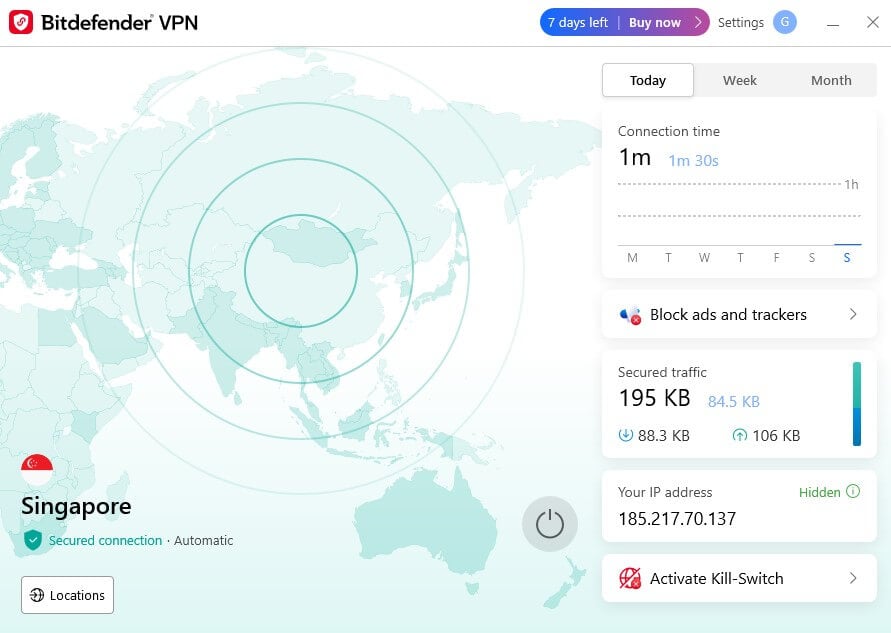
As for ease of use, we love both. Bitdefender’s Windows app looks sleeker than ever, and it’s identical on iOS and Android. The world map, the sprawling connection info, the snappy connections. It’s all there.
ExpressVPN is minimalistic in a different style, equally snappy, with a connection button that begs to be pressed, and the same aesthetics across all its devices.
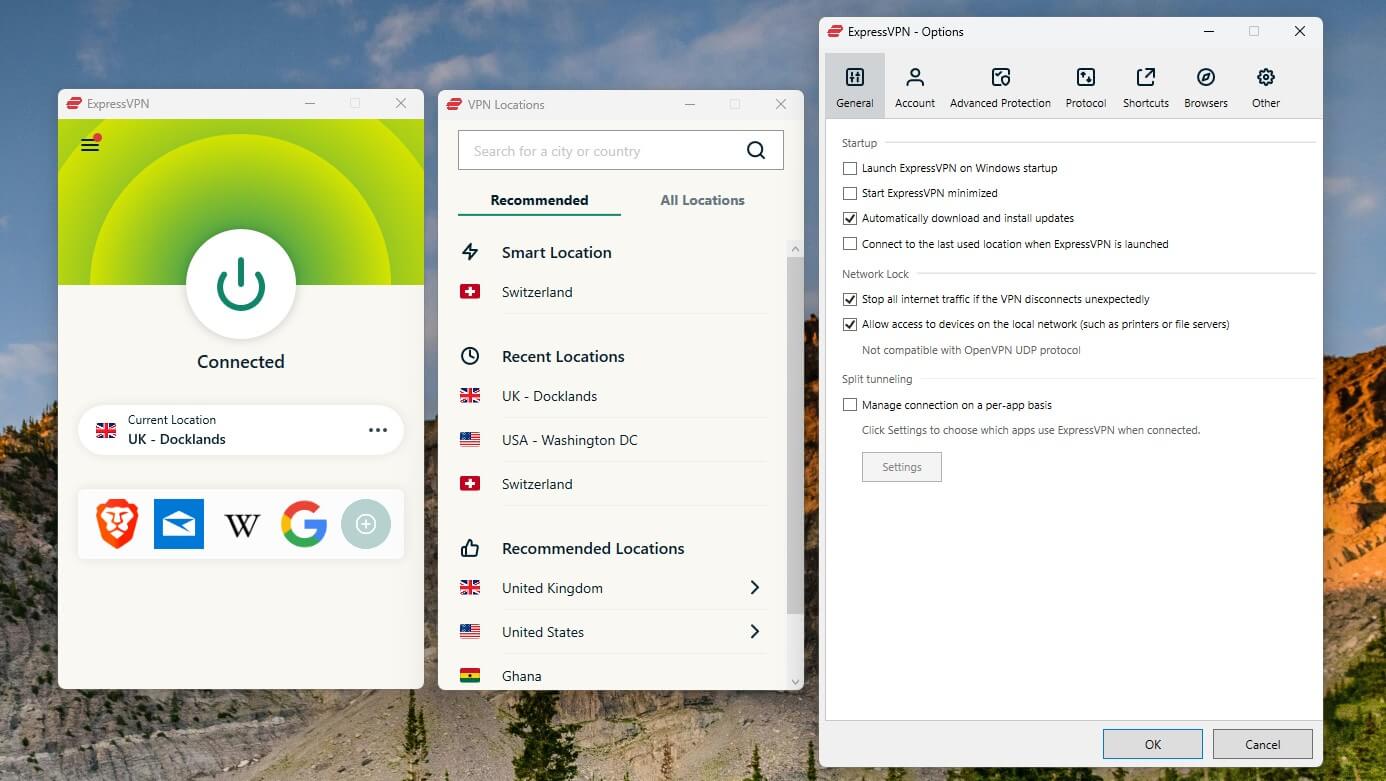
Both VPNs are exceedingly easy to use and beginner-friendly, so the apps themselves are a tie. Device support decides it: ExpressVPN wins this round because it runs on far more platforms, and no amount of extra connections helps if the app won’t install on your device in the first place.
🏆 Winner: ExpressVPN
Bitdefender Costs Less than ExpressVPN in 2026
Things usually work this way: you pay more for better stuff. In the VPN world, you’re never sure, and cheap providers can often surpass pricier rivals, although free VPNs are never better than paid VPNs. Bitdefender’s annual plan at $2.92/mo for the first year redefines monthly VPN prices. There’s even a free plan, though with only 3 server locations, 500 MB of data, one device, and in-app ads.
| Monthly Price | 1-Year Price | 2-Year Price | |
| ExpressVPN | $15.99/mo | $3.99/mo | $2.49/mo |
| Bitdefender VPN | / | $2.92/mo | / |
ExpressVPN has no free plan, which is a bummer. Its 24-month plan is discounted by 84% thanks to 4 free months at $2.49/mo for the initial period, and no ExpressVPN coupon code is required. Still a solid deal, but Bitdefender VPN is much cheaper. Sorry, ExpressVPN. Both offer a 30-day money-back guarantee and a 3-day free trial, but Bitdefender’s trial covers all devices and needs no credit card, while ExpressVPN’s is limited to iOS and Android and requires one.
Bitdefender VPN renews at $69.99 annually, while ExpressVPN jumps to $99.95 per year. Bitdefender VPN takes the pricing round, but as said, you often pay more for a better VPN. As you’ll see, it’s the case here.
🏆 Winner: Bitdefender VPN
ExpressVPN and Bitdefender VPN are Equally Secure
A few years back, Bitdefender VPN was ill-equipped to handle premium rivals. Nowadays, it’s chock-full of improvements and even offers a few things ExpressVPN lacks. First, the similarities:
- 256-bit AES encryption
- Automatic kill switch
- Split tunneling
- Ad and tracker blocking
- DNS and IPv6/IPv4 leak protection
All the basics are covered. Both VPNs aced our IP leak test, with zero leaks across every country on offer, and yes, we tested them all.
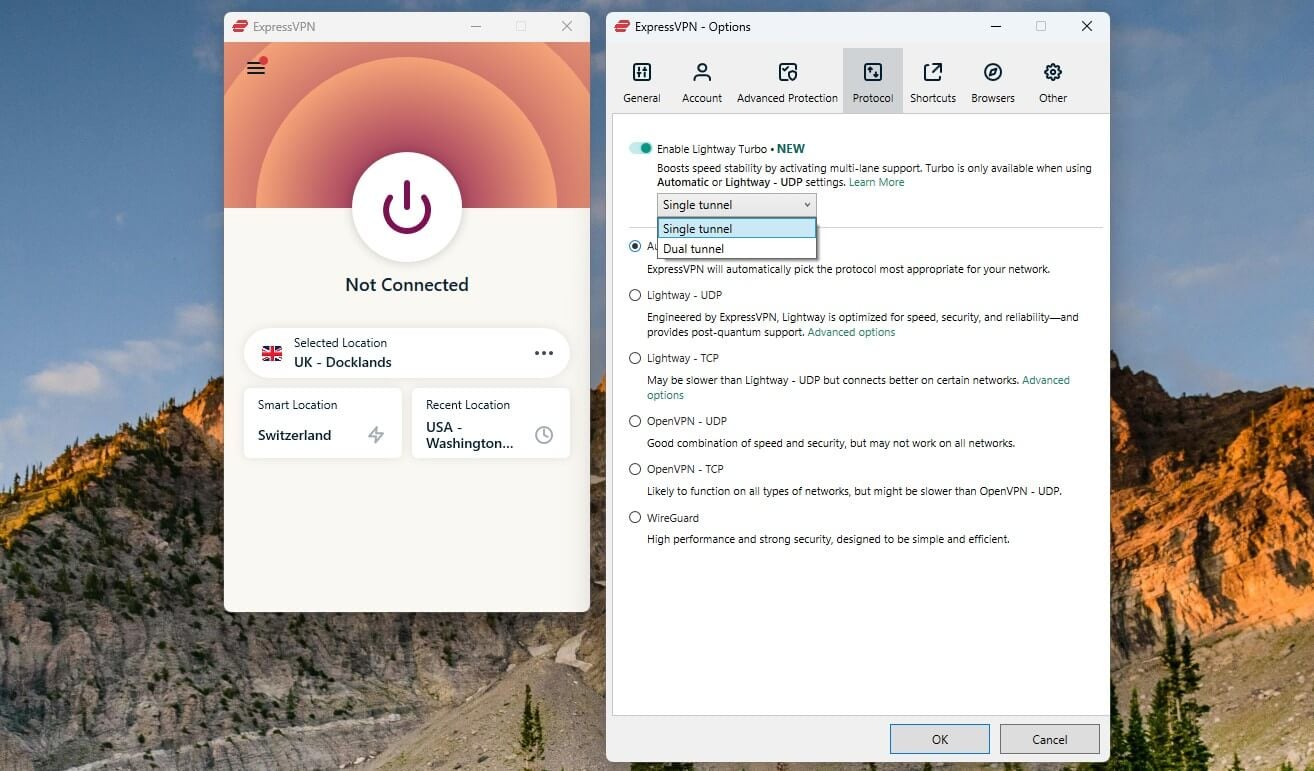
Protocols are where they diverge:
- Bitdefender relies mostly on WireGuard, a fast and reliable protocol also used by IPVanish, Hide.me, and other famous VPNs.
- ExpressVPN runs on Lightway, its in-house protocol a tad quicker and more secure, boosted further by Lightway Turbo with multi-lane connection support. Lightway has since been reimplemented in Rust for stronger security and now includes post-quantum protection by default, keeping your traffic safe from quantum-computing attacks. It also recently added a post-quantum version of WireGuard as a parallel protocol option, so you get both worlds.
On the protocol front, ExpressVPN clearly leads. However, it lacks Multi-hop, which Bitdefender VPN offers. We love this feature and use it whenever possible to double our encryption and shut out ISP tracking.
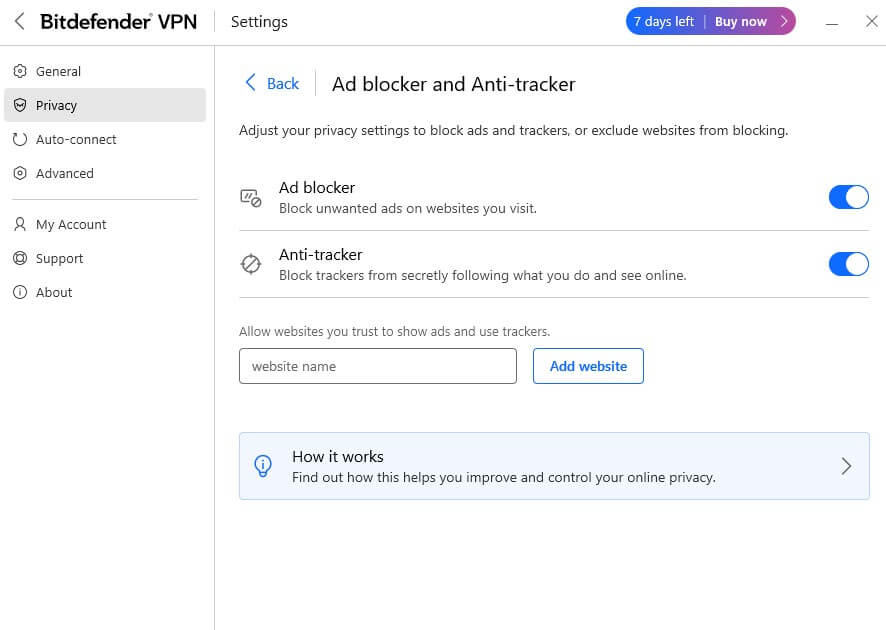
Bitdefender VPN’s ad-blocking is also more flexible. You can whitelist specific websites where you want ads and trackers, while ExpressVPN’s Advanced Protection is a simple on/off switch. One discouraging discovery: Bitdefender VPN doesn’t use RAM-based servers at all. ExpressVPN’s TrustedServer technology fills that void with a RAM-based fleet, noticeably improving privacy and security.
⚖️ Winner: Tie
Bitdefender VPN and ExpressVPN Don’s Store Logs
When you hear the words Virtual Private Network, you expect the middle word to be the star of the show. You’re connecting to a remote network that should be private, after all. Many providers take that middle word for granted, but not ExpressVPN. This renowned VPN keeps no logs of your digital footprint. IP addresses, DNS requests, browsing history, timestamps: nothing is stored on its RAM-based servers.
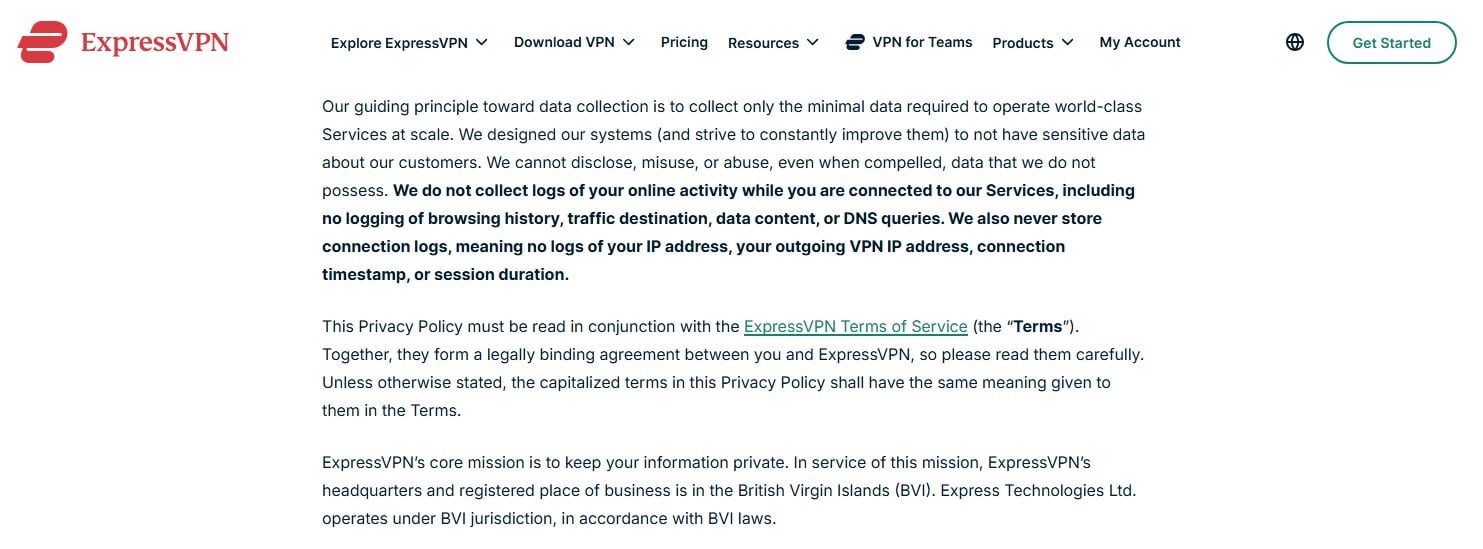
Its no-logs policy is also straightforward for almost anyone to understand. The stamps of quality are there too. KPMG has audited its no-log policy multiple times, the last time in mid-2025. Best of all, it’s stationed in the British Virgin Islands for that extra privacy edge. Bitdefender VPN is based in Romania, a great jurisdiction for a privacy-emphasizing VPN, and its privacy policy looks promising.

The good news is that Bitdefender no longer asks you to take its word for it. In 2025, its VPN infrastructure underwent an independent audit that verified the no-logs policy and confirmed its systems comply with the stated privacy practices. It’s meaningful, though one audit against ExpressVPN’s several is a lopsided scoreboard, and the audit covers Bitdefender’s own logging practices, not the full third-party infrastructure stack underneath.
ExpressVPN takes the round on audit depth and jurisdiction, but the gap is narrower than it used to be just a few months ago.
🏆 Winner: ExpressVPN
ExpressVPN is Slightly Faster Than Bitdefender VPN
Both VPNs offer protocols built for speed. Our very first test made it clear this wouldn’t be a walkover for Bitdefender VPN. It’s relentlessly fast and only a tad slower than ExpressVPN, which is surprising given ExpressVPN sits among the speediest picks around. We tested them according to our 3-3-3 principle:
- Three server locations: the USA, the UK, and Japan
- Three days of testing in a row: Friday, Saturday, and Sunday
- Three tests a day: morning, midday, and evening
Our testing location at the time was Belgrade, in Southeastern Europe.

For the best speeds, we used Lightway Turbo in ExpressVPN and WireGuard in Bitdefender VPN. Here are the retention figures from the best results:
| ExpressVPN | Bitdefender VPN | |
| Download Speed Retention | 76% | 72% |
| Upload Speed Retention | 91% | 92% |
We warned you it would be a tough battle. Bitdefender VPN edged uploads by 1%, which is negligible, while ExpressVPN’s 4% download advantage is the only gap. The table shows what that looks like in practice. After these tests and daily use, we struggled to pick a winner, though ExpressVPN was only marginally faster, with only a smidge lower latency figures. It’s what made the final decision.
| UK DL/UL Speeds | US DL/UL Speeds | Japan DL/UL Speeds | |
| ExpressVPN | 46.25/9.53 Mbps | 42.04/9.34 Mbps | 32.06/8.65 Mbps |
| Bitdefender VPN | 42.04/9.53 Mbps | 37.31/9.35 Mbps | 34.16/8.73 Mbps |
🏆 Winner: ExpressVPN
Streaming and Torrenting Tests: Why I Prefer ExpressVPN
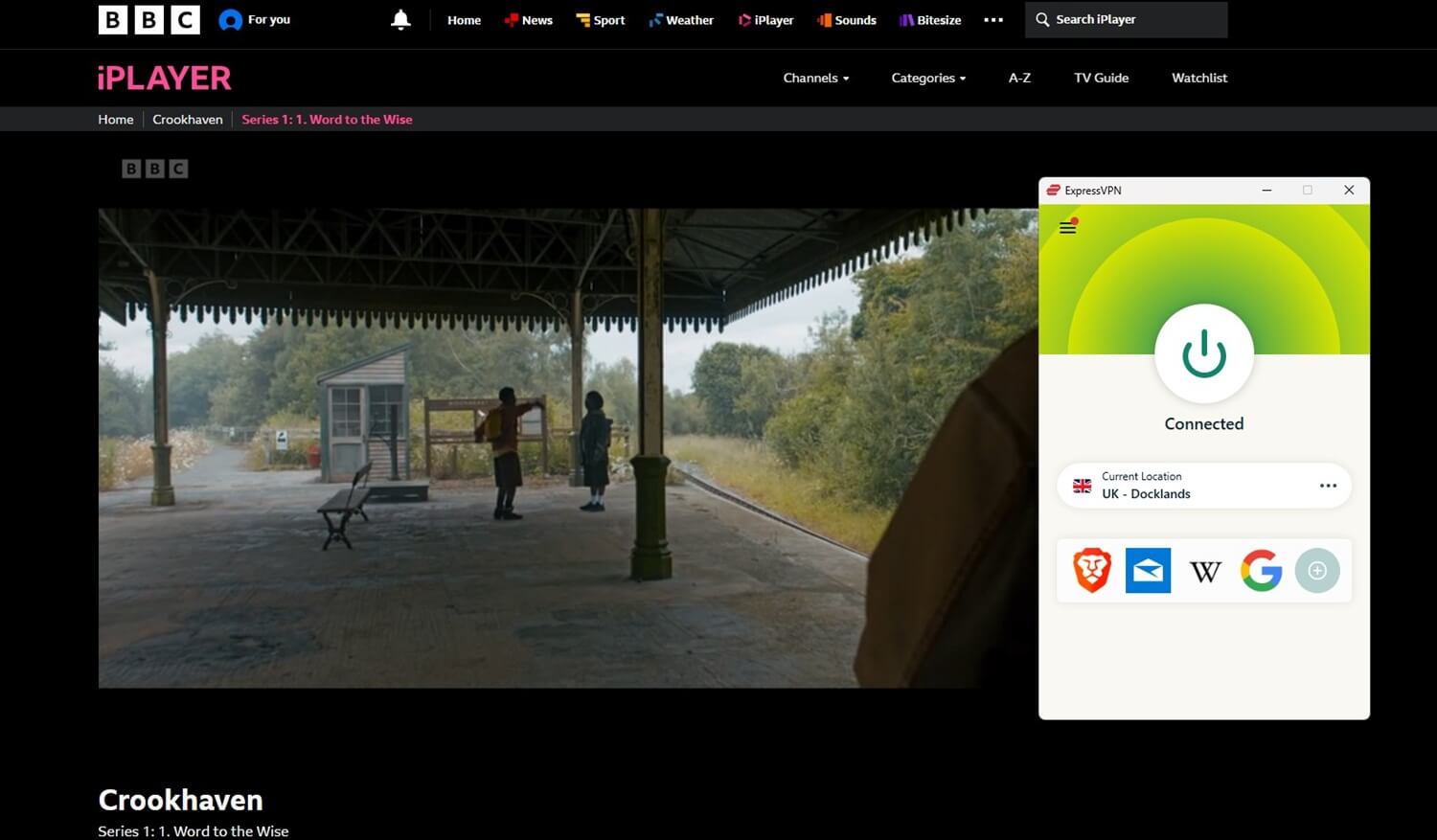
Our speed test was a close call, and this round promises a similar stalemate. Streaming performance was comparable in our testing. Both worked with several Netflix catalogs and other popular platforms, and both can watch Max abroad or unlock free live sports like Roland Garros.
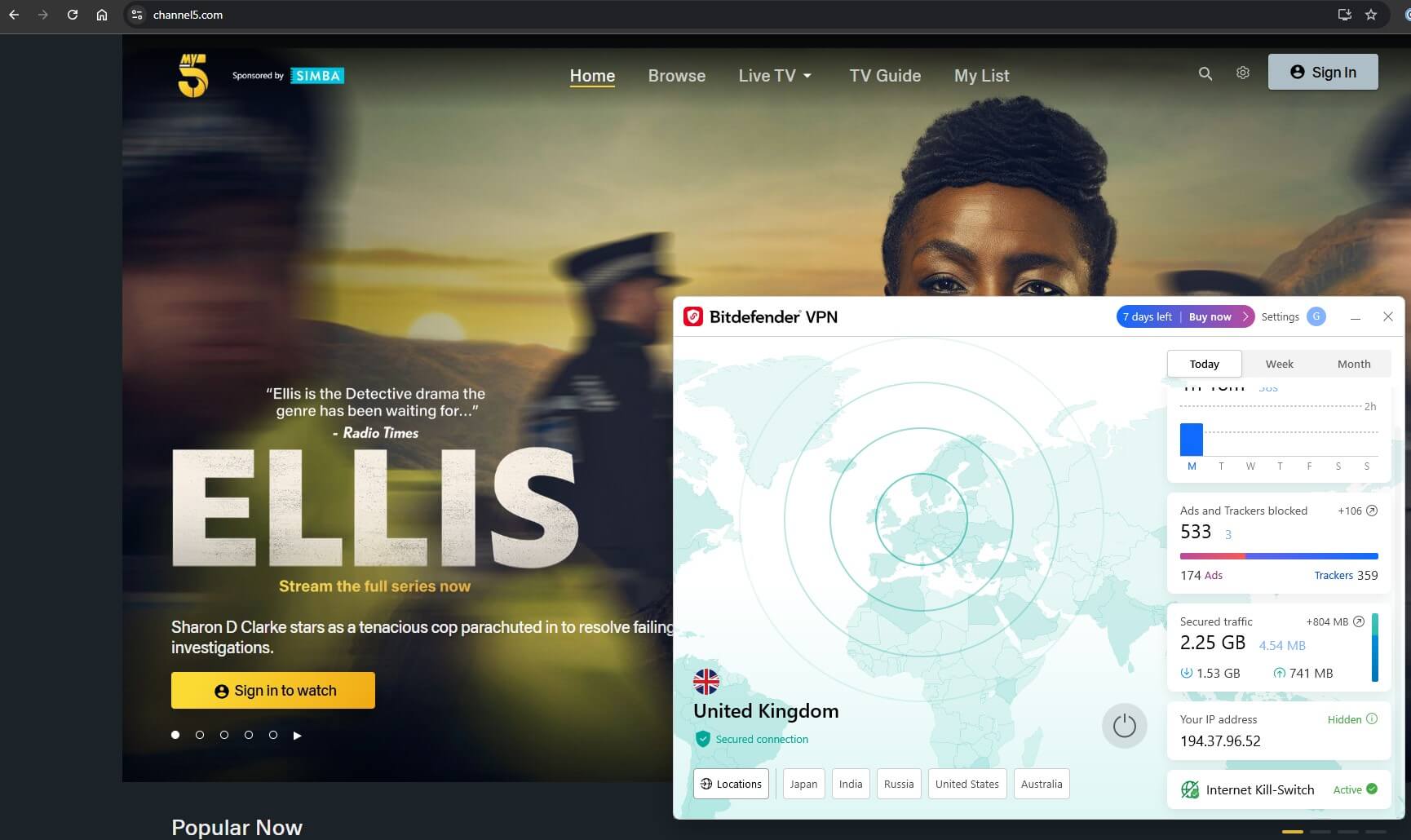
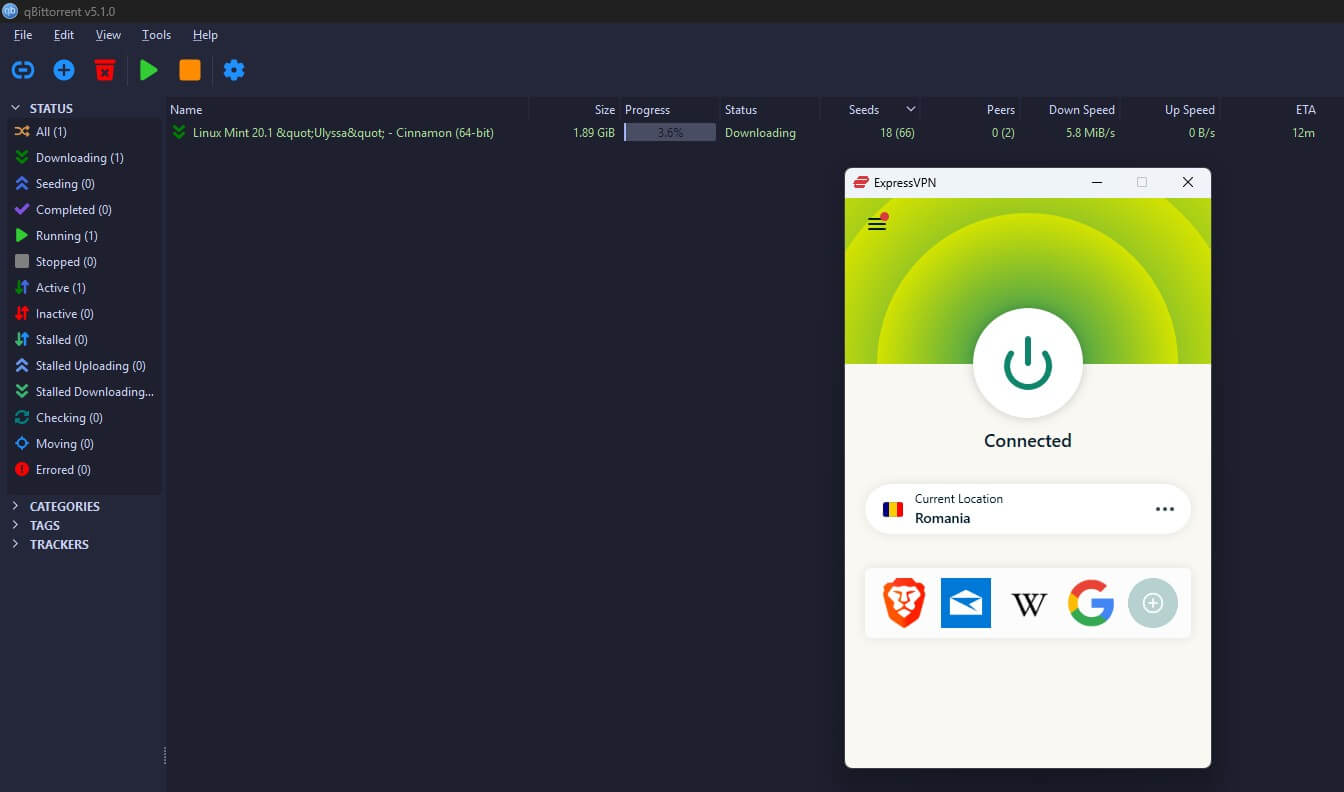
ExpressVPN edged ahead by unblocking more Netflix libraries. It also packs a formidable browser extension with location spoofing, plus Smart DNS for streaming on non-VPN-compatible devices like gaming consoles and first-generation Firesticks. Torrenting is where the gap closes completely.
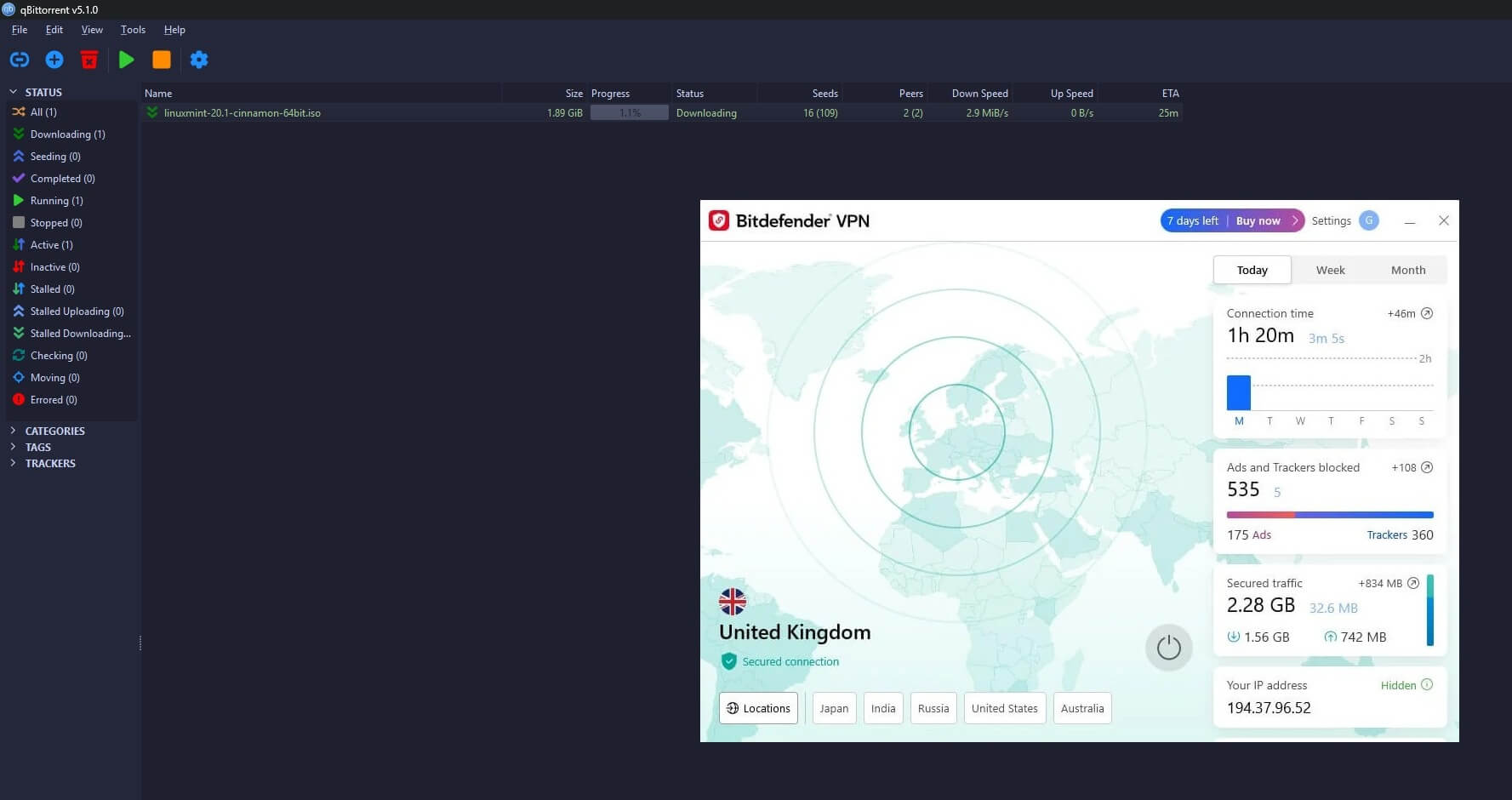
Both performed identically in our tests.
Bitdefender VPN even includes Peer-to-Peer Apps, which automatically connect to a VPN server the moment you start torrenting. It’s a handy safety net for anyone who forgets to fire up the VPN first.
Speeds were excellent on local servers, and our curiosity-driven tests on distant ones succeeded too. It’s a shame both lack port forwarding and SOCKS5, two features used for safe torrenting very frequently.
🏆 Winner: ExpressVPN
ExpressVPN Has More City-Level Locations
It would be unwise to call these VPNs small, but calling them the largest would also be a lie. Balance is key, and both providers struck it well:
- 3,000+ servers in 105 countries with ExpressVPN
- 3,000+ servers in 100+ countries with Bitdefender VPN
The numbers game is tight, but ExpressVPN’s country- and city-level span is slightly larger; that matters more than raw server counts. More locations mean more possibilities for unblocking foreign TV channels and a larger IP pool. Bitdefender VPN counters with famous Multihop servers, while ExpressVPN offers dedicated IP addresses useful for business or hosting game servers.
Quality tips the scale further. Both use 10 Gbps ports, but Bitdefender still runs its servers on outdated hard drives, while ExpressVPN’s RAM-based infrastructure is more modern and dependable. Chasing big numbers is never smart; someone always outsizes you. ExpressVPN wins on reach and infrastructure.
🏆 Winner: ExpressVPN
ExpressVPN Works in China, Bitdefender VPN Doesn’t
Bitdefender VPN isn’t great for China, though it’s no worse than other “antivirus” VPNs, as many call them. ExpressVPN is the stronger pick here, but temper your expectations. In our first-hand experience, it works in China with occasional connection problems, slowdowns, and outright refusals. OpenVPN TCP works properly for the most part, Lightway can pose a problem, and not all servers cooperate.
Before traveling, contact ExpressVPN’s support for current server advice. Other censored countries are less problematic. You’ll happily use ExpressVPN in the UAE, Qatar, Saudi Arabia, Russia, and Turkey, and the same more or less applies to Bitdefender VPN. Bitdefender VPN is less efficient than NordVPN in this arena, and NordVPN is roughly on par with ExpressVPN. Astrill VPN may beat them all in China.
However, it costs several times more. Don’t expect miracles, and you won’t be disappointed. ExpressVPN takes the round by far this time.
🏆 Winner: ExpressVPN
Summary: ExpressVPN Beats Bitdefender VPN in 2026
Bitdefender VPN has improved drastically, to the point where it stands shoulder-to-shoulder with leading VPN services. In our ExpressVPN vs Bitdefender VPN analysis for 2026, it came out more affordable and held its own on security, while our speed tests showed staggering similarities, with Bitdefender even edging ahead on occasion. As a whole package, though, ExpressVPN is more fulfilling.
It won on compatibility, streaming, bypassing censorship, server locations, and download speeds. Most importantly, ExpressVPN is ahead on privacy, and in the VPN world, that factor carries the most weight. So if you can afford it, go with ExpressVPN over Bitdefender VPN. A quick reminder: it’s currently 84% off thanks to 4 free months, so grab the discount below while it lasts.